Food Poem – Monday by Cindy Gregg

On this first day of November
it is cold as a cave,
the sky the color
of neutral third parties.
I am cutting carrots
for the chicken soup.
Knife against carrot
again and again
sends a plop of pennies
into the pan.
These cents,
when held to the gray light,
hold no noble president,
only stills
of some kaleidoscope
caught being pensive...
and beautiful,
in the eye of this beholder,
who did not expect
this moment of marvel
while making an early supper
for the hungry children.

Cindy Gregg, “Monday” from Suddenly Autumn. © 2010 Cindy Gregg published by Wordplay Press. From The Writer’s Almanac November 1, 2021

Food Poem: Living in the Body by Joyce Sutphen

Body is something you need in order to stay
on this planet and you only get one.
And no matter which one you get, it will not
be satisfactory. It will not be beautiful
enough, it will not be fast enough, it will
not keep on for days at a time, but will
pull you down into a sleepy swamp and
demand apples and coffee and chocolate cake.

Body is a thing you have to carry
from one day into the next. Always the
same eyebrows over the same eyes in the same
skin when you look in the mirror, and the
same creaky knee when you get up from the
floor and the same wrist under the watchband.
The changes you can make are small and
costly—better to leave it as it is.

Body is a thing that you have to leave
eventually. You know that because you have
seen others do it, others who were once like you,
living inside their pile of bones and
flesh, smiling at you, loving you,
leaning in the doorway, talking to you
for hours and then one day they
are gone. No forwarding address.

Joyce Sutphen, “Living in the Body” from Coming Back to the Body from the Writer’s Almanac, 9/20/21

I eat a slice of chocolate cake every year to celebrate a loss I’ve had. This poem reminds me of living and of celebrating despite and because of loss. Some years I bake a cake to freeze slices to enjoy throughout the year. A way to keep both the sadness and the gratitude in my body.

The body is everything. Let’s promise to be in ours today.

With warmth,

Hungryphil

P.S. Next time I bake a cake for the occasion, I’ll have to take a picture to share. For now, I rely on stock photos online.

Food Poem: Breakfast by Joyce Sutphen

My father taught me how to eat breakfast
those mornings when it was my turn to help
him milk the cows. I loved rising up from

the darkness and coming quietly down
the stairs while the others were still sleeping.
I’d take a bowl from the cupboard, a spoon

from the drawer, and slip into the pantry
where he was already eating spoonfuls
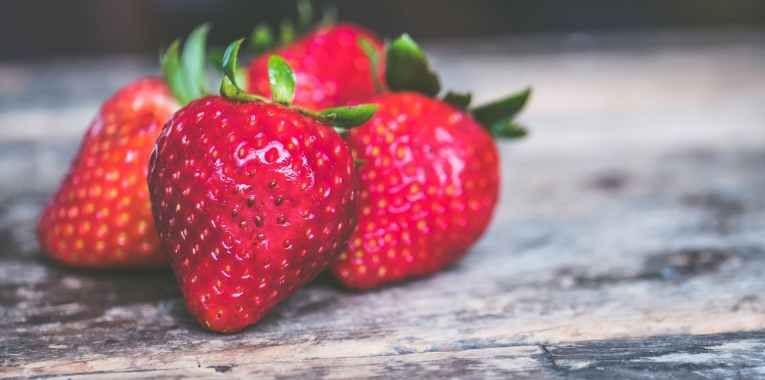
of cornflakes covered with mashed strawberries

from our own strawberry fields forever.
Didn’t talk much—except to mention how
good the strawberries tasted or the way

those clouds hung over the hay barn roof.
Simple—that’s how we started up the day.


Joyce Sutphen, “Breakfast” from First Words, Red Dragonfly. from the Writer’s Almanac, Monday 9/13/21

A simple start to the day with a loved one is so comforting. What is your favorite morning ritual?

Food Poem by Brad Ricca

The Beautiful Sandwich

She could always make
the most beautiful sandwich.
Laced swiss cheese: sliced
crossways, folded once.
Ham in rolls like sleeping bags.
Turkey piled like shirts.
Tarragon. Oregano. Pepper.
Herb dill mayonnaise the color of
skin. On top: the thin, wandering line of
mustard
like a contour on a map
in a thin, flat drawer.
Or a single, lost vein.
The poppyseeds hold on,
for now.

Placed on a plate like isolated
driftwood
or a large, solemn head.
The spilled chips in yellow piles
are like the strange coins
of tall, awkward islanders.
The thin dill pickle: their boat
slides into
the green-sour sea.

Brad Ricca, “The Beautiful Sandwich” from American Mastodon, © Black Lawrence Press. Shared from the Writer’s Almanac email, Wednesday, February 17, 2021

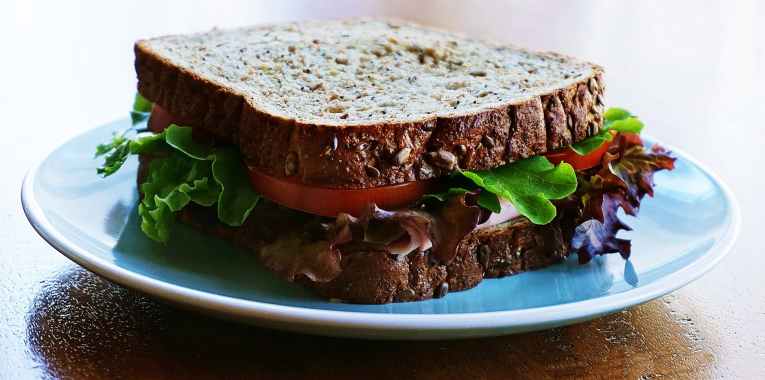
What a beautiful landscape of designed care in a sandwich!

Happy sandwich making,

Hungryphil

Savory Corn Pancakes

I’m not sure how I started making these pancakes. My addiction to recipe, cooking shows, food writing makes sources difficult to trace. My daughter asked to learn how to make this when visiting on break from college. She made the pancakes pictured in this post. I’m a proud foodie mommy. We like the balance of savory and sweet, Deshi flavors delivered in Western form. A perfect Bengali in Indiana recipe.

  • 1 Can of Creamed Corn
  • 1 Cup of pancake mix or flour
  • 1 egg
  • 1 Tbsp chopped shallot
  • 1 Tsp chili pepper
  • 1 Tsp of chopped cilantro (Atiya has a complicated relationship with cilantro, omitted in these pancakes)
  • Salt, pepper
  • Milk or water for desired consistency: a loose batter will be more “custurdy/eggy”, a thicker batter more bread-like.

Mix ingredients in a bowl. Heat a pan. Add a sliver of butter or olive oil to coat the bottom of the pan. Adjust heat while cooking as needed to avoid burning the pancakes.

Serve with warm maple syrup or blueberry compote to balance sweet and savory. Adjust the recipe to your own taste and enjoy!

Forgive me, if this is a repeat recipe post but I promised Atiya I would post this for her to find.

Cooking in the time of Corona

The restlessness to get back to “normal” was so vivid for me yesterday as we past a local water park teeming with children and families. No masks, no 6 feet distance, no indication of a pandemic. It was an almost nostalgic surreal vision. Addressing our level of comfort with safety and health is now personal and subjectively enforced (the effectiveness of masks-handwashing-social distance use has been proven). Without public mandate, it can be confusing and challenging to self-monitor and so easy to judge the choices of others. Everyday warrants revision of the boundaries to the question, “am I protecting others from viruses I am hosting?”

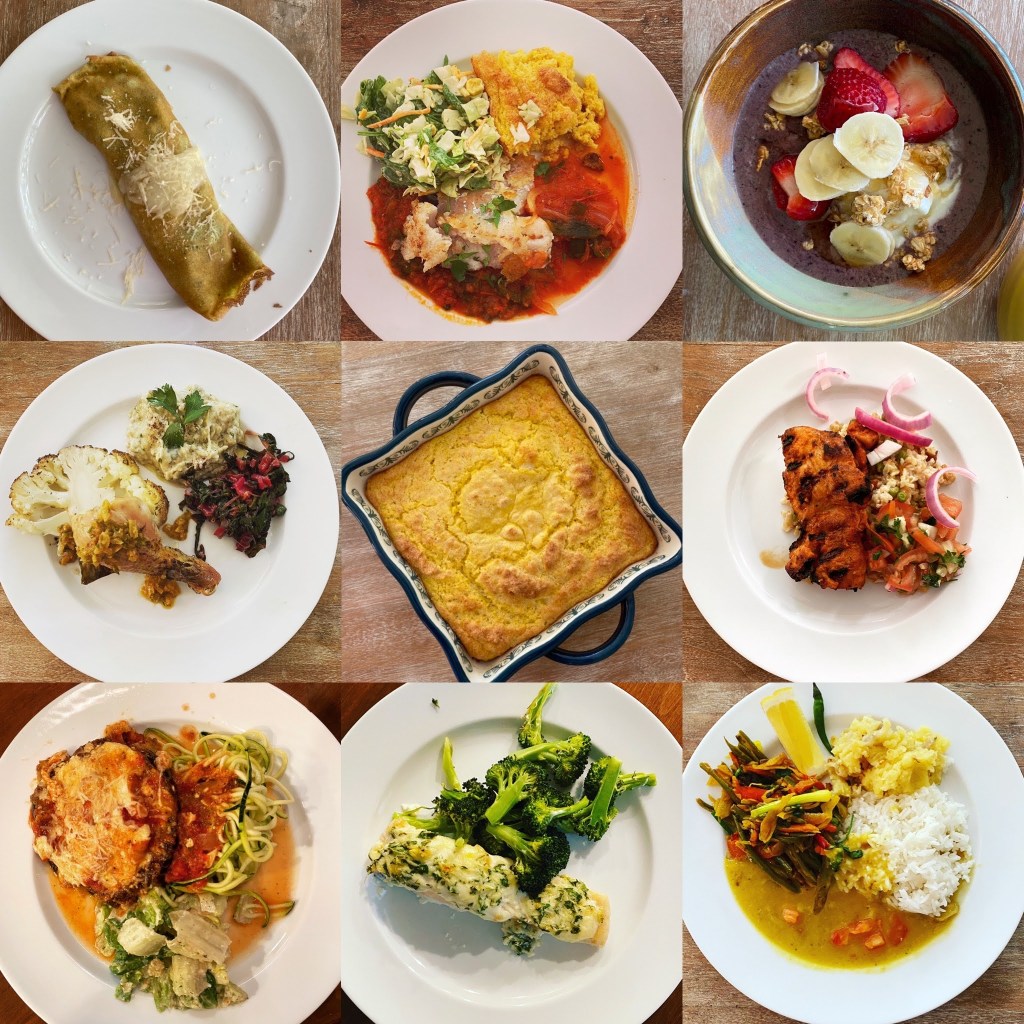
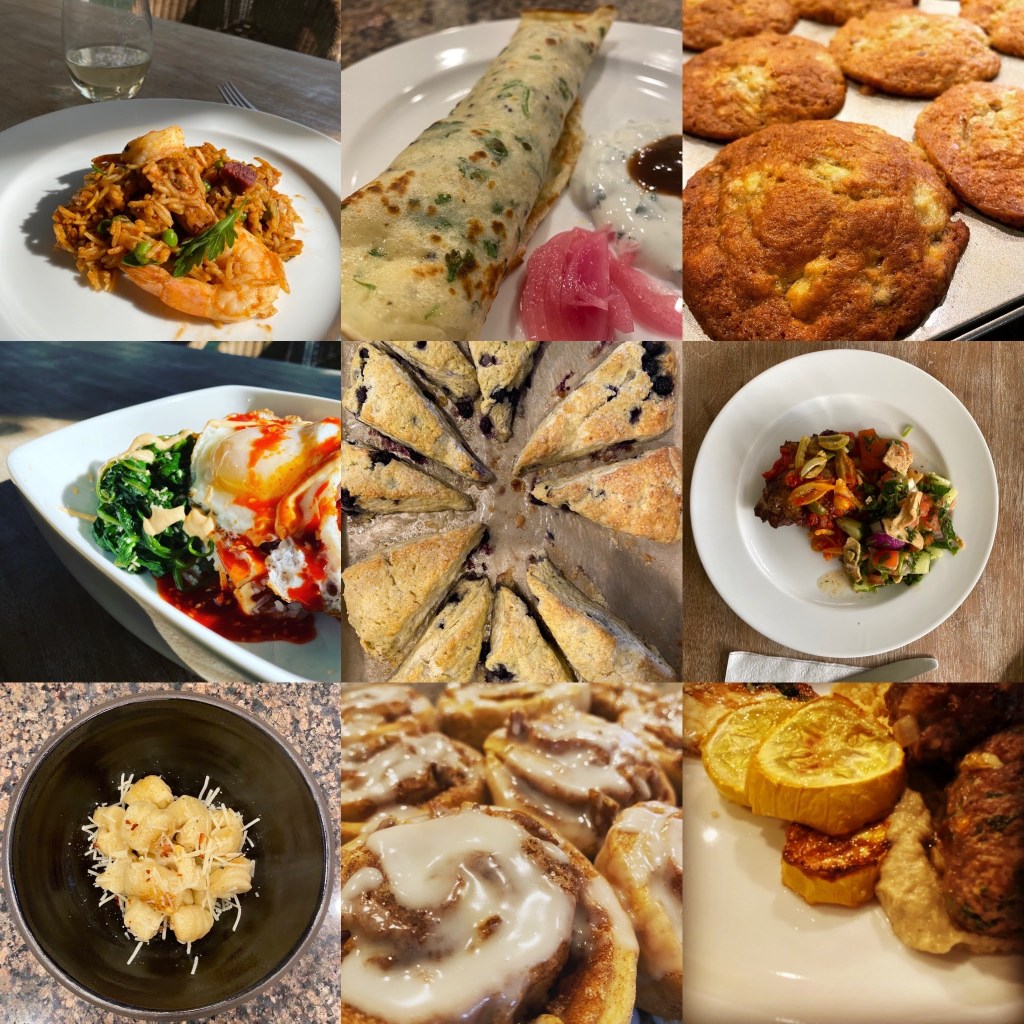
Within this uncertainty and confusion, I found comfort in the regularity of meals together and the kitchen. So, today I offer a food retrospective of my last three months in social isolation with family. As I watched drenched children scurry back to the water-slide steps, I was thinking about the last few months at home, things I miss, things I enjoyed. I miss eating out: the sound of dishes, muffled conversations, laughter, smells, wide exotic and familiar views, and sitting across from loved ones and friends. But, I can’t complain, what a privilege its been to cook for family who will disperse again too soon.

Hoping you continue to find your way to comforting routine as we move through the phases and cycles of Covid-19,

Hungryphil

Food Poem- Hymn to the Belly

ROOM! room! make room for the bouncing Belly,
First father of sauce and deviser of jelly;
Prime master of arts and the giver of wit,
That found out the excellent engine, the spit,
The plough and the flail, the mill and the hopper,
The hutch and the boulter, the furnace and copper,
The oven, the bavin, the mawkin, the peel,
The hearth and the range, the dog and the wheel.
He, he first invented the hogshead and tun,
The gimlet and vice too, and taught ’em to run;
And since, with the funnel and hippocras bag,
He’s made of himself that now he cries swag;
Which shows, though the pleasure be but of four inches,
Yet he is a weasel, the gullet that pinches
Of any delight, and not spares from his back
Whatever to make of the belly a sack.
Hail, hail, plump paunch! O the founder of taste,
For fresh meats or powdered, or pickle or paste!
Devourer of broiled, baked, roasted or sod!
And emptier of cups, be they even or odd!
All which have now made thee so wide i’ the waist,
As scarce with no pudding thou art to be laced;
But eating and drinking until thou dost nod,
Thou break’st all thy girdles and break’st forth a god.


“Hymn to the Belly” by Ben Jonson. Public domain.

From the Writer’s Almanac Podcast, June 11, 2020.

This poem is dedicated to Agatha, my belly. She likes mysteries and is sometimes cranky. Due to pandemic related social isolation and coping by cooking, she has grown in the past three months. We relate to the last fragment of this 16th century poem: “thou break’st all thy girdles and break’st forth a god.”

May you make room for your belly,

Hungryphil

Bittermelons and Brownies: How to Eat Eggplant

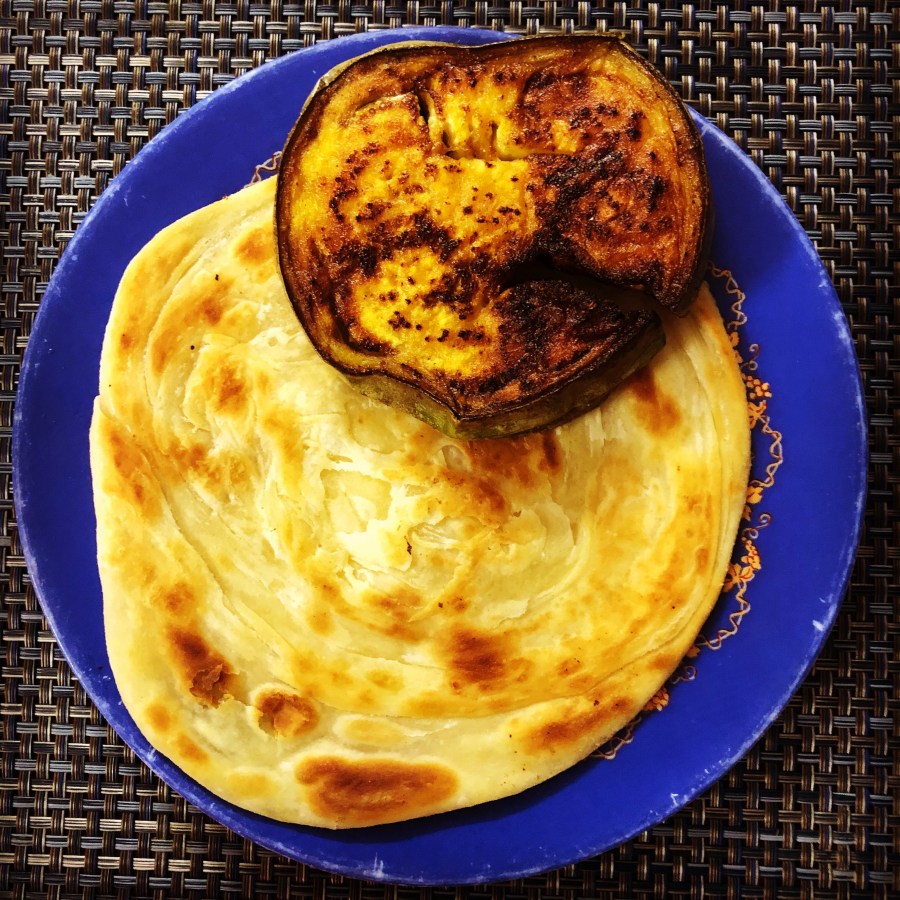
“I liked eggplant long before Atiya ever did,” complains Amani, my eldest. In my kitchen, eggplant fuels simmering sibling jealousy over a pot of shared taste. The rivalry started when they were young with Bengali Eggplant Bhaji. Sliced eggplant fried in a combination of spices and mixed with rice delivers a simple taste though a complex textures: crispy skin, moist flavorful flesh and roasted spiced oil coated rice. Eggplant bhaji with rice introduced warm heat to otherwise mild child-fare of daal or classic chicken and potato curry. “Begun” in Bengali, literally translates to “no virtue.” Unlike the celebrated bittermelon, eggplant’s nutritional authority is sadly suspect in South Asian cultures.

Italian eggplant can be bitter. Most recipes suggest salting and draining sliced eggplant before cooking. I accepted the occasional eruption of bitterness that destroys dinner as punishment for my laziness. Thankfully it doesn’t happen often. I rarely cook eggplant for guests. The unpredictable bitterness of eggplant gives it a dangerous, naughty vegetable vibe. According to my minimal online research, eggplant can be bitter when young and female (more seeds to protect from seed eaters). This thought invites too many jokes about protective moms and bitter young females. Yes, there are boy and girl eggplants. Apparently, identifiable by the navel, a slit or long line suggests a girl eggplant and a round navel, a boy. This determination is easier said than done. Basically, you want a heavy, ripe, boy eggplant with a round belly button. Contemporary sexual connotations of the eggplant emoji, I’m told by my teenager, makes my advice extra unsavory.  I’ll leave the implications of gendered vegetables for another time. Long and lighter in color, Japanese eggplant is rarely bitter. When given a choice, or not making eggplant parmesan, I always opt for the Japanese variety. You note your risk when choosing and cooking eggplant. Like many potential bitter things, it is worth the effort.

Eggplant and mushrooms are like meat for vegetarians. These vegetables have hearty structure and absorb flavors like a sponge. Peeled, chopped and cooked, eggplant can be smooth and creamy. Thinly sliced and fried, eggplant can be light like summer squash. Sliced, in rounds, with the skin, eggplant can have structure and chew. The vegetable has moods (insert inappropriate young female joke here).  In the Food Network Chopped kitchen, eggplant is the rare actor who can play any role. 

A member of the nightshade family with cousins like the tomato and potato (all three go very well together), eggplant can make undue demands on sensitive stomachs. According to Ayurvedic tradition, eggplant aggravates both Pitta and Vata constitutions. One must be not only careful with the taste of the eggplant but also the effects. Eggplant has personality and power you may not be ready to ingest. Purple eggplant flowers are beautiful and in classic eggplant nuance, have thorns. A vegetable with such personality! No wonder my girls fight over it.

Ingredients

  • 1 medium eggplant or 2 Japanese Eggplant
  • 1 teaspoon turmeric
  • ½ teaspoon chili powder
  • 1 teaspoon cumin powder
  • 1 teaspoon coriander powder
  • 1 teaspoon salt
  • 1 teaspoon flour (optional)
  • ¼ cup vegetable oil

1. Slice the eggplant into ¼ inch rounds. Salt generously. Let sit and sweat for ½ hour. Rinse and let dry. If using long Japanese eggplants, skip this step. Or just risk it.

2. Make a spice mix of 1-teaspoon of each turmeric, cumin, coriander and salt, ½ teaspoon of chili. Add flour, if uncomfortable with spiced oil laden eggplant. The key is to mix the spiced oil and soft eggplant with plain white rice. The spiced eggplant oil infuses the rice. Eaten alone, this eggplant dish can feel very heavy and oily. Alternatively, adding flour will make a crispy coating. Add enough water to make a batter that clings to the eggplant slices to floured and un-floured spice mix.

3. Heat enough oil in a pan to cover the bottom. Dip each slice of eggplant in the spice mixture, encouraging the spice to cling, and shallow pan-fry each piece, over medium heat, until soft and brown. If using less oil and no flour, cover and allow steam to soften eggplant. In this case the eggplant with have a less roasted flavor.

The eggplant fried with flour in particular does not keep well. It can taste slimy once refrigerated and reheated.

If you find the eggplant bhaji bitter have an egg sandwich instead.

Like life, you eat eggplant by embracing unpredictable bitterness, absorbed atmosphere of flavors, potential indigestion, and a diversity of expression that ranges from light and creamy to dark and roasty.

Begun Bhaji with paratha

Bittermelons and Brownies: How to Eat Lentils (Daal)

Life boils over like daal. It is eventually, inevitable. You can put a wooden spoon across the top of the pot, add salt (risking chewy lentil soup) and do other tricks, regardless assume you will have to clean the stove after cooking a pot of lentils. Sometimes like a pot of boiling daal our lives spill over despite our best efforts.

The world of lentils is a vast array of colors, shapes and sizes. The health benefit of plant-based diets that includes lentils is well documented. Lentils (along with beans) can also cause uncomfortable gas. To reduce the magic of lentils to what it can do for us flattens the story. Instead I like to consider how we interact with lentils from growing, collecting, distributing, cooking and eating.

My relationship with my pot of daal is always mixed, full of suspicion and familiarity. Daal is like family, always comforting and nourishing yet sometimes boiling over, chewy and messy. The first tastes of both my daughters included mushy rice with light daal or kitchuri. Their taste palate expanded each time I added a tiny bit of vegetable or meat to the neutral rice and lentil base.

Lentils bloom when they meet water and fire. The rush of expansion makes them explode beyond their confinement. It can be both liberating and traumatic. The softening and rise of cooking lentils have a lot to teach us. Transformative events break us down, fuel our growth, make us softer, sometimes spill over, and sometimes create a mess. There is risk, and reward.

As a location in existence my pot of lentils encounter water, heat and me to become daal. Lentils are more than mere vegetable protein, nourishment for humans, in ways that our human centric mind may not fathom. Lentil transform into daal by virtue of all the things that are not lentils, not it. Lentils left alone would remain in its grain state. Everything around it not lentils in a specific combination help alter its state into a soup. A good source of fiber, lentils and legumes absorb flavors. In this way, lentils are similar to flavor absorbing eggplant with the added benefit of fiber.

Eating daal with the right hand is an art form. Learning how to eat soupy rice takes practice. The angle and speed of delivery from plate to mouth requires careful modulation. Culturally, thicker daals are served during winter months, while light lemony daals are enjoyed during the summer months. Khichuri (a dish of rice and lentils) would be served mostly during Monsoon months with fried eggplant.

This was one of my first dishes I learned to make after learning how to cook rice and fry an egg. Thank you Bhabi for teaching me to make daal and bhaji.

Rice, daal and fried eggplant. This is a good start for a Bengali meal.

Ingredients (You’ll find the proportions that suit your preference)

  • 1 cup Lentils
  • 2-3 cups Water
  • 3 Tablespoons Ghee
  • 1 teaspoon Tumeric
  • 1 Medium Onion or 3 small shallots
  • 1 clove of Garlic
  • 1 teaspoon Cumin Seeds

1. Boil the rinsed lentils over a medium flame (red, split pea, yellow, azuki, kidney, urad etc.) until soft. Add at least double amount of water. Add more water, the bigger the bean. You want the water to cover the beans by at least an inch.

2. Once the lentils are soft, add tumeric and salt. A teaspoon of each for every cup of lentils is usually enough.

3. This where you can get as fancy or keep as simple as you like.  Saute in ghee or the oil of your choice: onion slices for a basic dal.

At this point you can also include: garlic, ginger, tomatoes, cumin seeds, garam masala, coriander leaves, dry chili peppers, bay leaves, depending on what you have and like.

You can also add coconut milk or cream for the heavier beans like kidney or adzuki to give the daal, heartiness. On the other end of the spectrum for a light summer daal you can boil and strain red or yellow lentil fibers add lemon juice, cilantro and mint for a bright broth.

Pour the flavored oil with the spices and fried onions over the soup. Mix in or leave the flavored oil and toasted spices floating above the rich soup. Enjoy with steaming rice or hot flaky bread.

Food Poem – Easy by Roland Flint

While she starts the water and measures the pasta,
he sets the table and peels the garlic.
She cuts up broccoli, strips snow peas, readies fish—
he presses the garlic, fixes her a kir, and him a gin.
She sautés the vegetables while he grates cheese,
readies the candles, and puts flowers on the table.
She puts pasta in the boiling water, and fixes salad,
which he takes to the table with the cheese.
She mixes a salad dressing, he opens the wine
and takes it to the table, where everything is ready,
except for the pasta, so he lights the candles
and puts salad from a big walnut bowl into small ones.
 Now she or he brings the pasta, greens and fish
mixed in, and they sit to talk, drink wine and eat.
Though October, they sit on a small screen porch
in the back of the house where they have lived
for twelve years of their twenty together,
the last six, the children gone, alone.
Once, during dinner, if they stop talking
and listen to the music, they may, without drama,
hold hands a moment, almost like a handshake
by now, most friendly, confirming the contract,
and more. She is a pretty woman of 51, who has
kept herself trim and fit. He is 56 and hasn’t.
 Later, they will clear the dishes and clean up,
and she will bring tea and fresh fruit to bed,
where they will watch a little television or not,
with herbal tea and the fruit. After that, if
they make love or not, they will talk a long time,
her work or his, the budget, the Middle East,
this child or that, how good dinner was, how
easy it is, the times like this, when it’s simple.

 “Easy” by Roland Flint from The Yellow Shoe Poets: Selected Poems 1964-1999. © Louisiana State University Press, 1999.
From Writer’s Almanac Podcast

Wishing you all loving simplicity this weekend,

Hungryphil