SUPER Easy Chicken Curry….Seriously.

photoI’ll admit it, South Asian curries are sometimes not the best looking. This one with its deep red is reminiscent of a rich pasta sauce which makes it a less intimidating for those new to South Asian cuisine. The flavors and mouth feel of tomato and cream are also very familiar. Works well for my chopped and blended cultural family. You can chose to add more exotic flavors or not. Up to you and your picky, ahem….. “discerning” eaters.

I make this curry often since its so easy. I’m not kidding. Made this with my 10 year old. It’s a one pot, throw in, with no frying or sauteing. Put all the ingredients in a pot and simmer until the chicken is soft. If you cook it low and slow the flavors will develop like a rich bolognese.

Here’s the basics:

1. Six Boneless skinless chicken thighs cut into bite size pieces (did I mention the recipe is cheap too!)

2. Sour Cream 1/2 cup ( I had light sour cream on hand)

3. Tomato puree 1 small can

4. Salt and Pepper to taste

The rest of the ingredients are optional….add what you have or feel like. The base of sour cream and tomato puree will make a yummy sauce on its own. With the following spices the recipe approaches a restaurant butter chicken taste.

5. Ginger paste 1 teaspoon

6. Garlic paste 1 teaspoon

7. Chilli powder 1/2 teaspoon

8. Coriander powder 1/2 teaspoon

9. Cumin powder 1/2 teaspoon

10. Onion one small chopped

11. Cilantro chopped 1 tablespoon

12. Oil 2 tablespoons

Serve with rice or naan. IMG_1322


I made a Coconut Rice Pulau  to go with it.

Basmati rice 1 cup

Coconut milk 1 cup

Hot Water 1 cup

Chopped Onion 1 tablespoon

Cinnamon, a generous pinch

Cardamom, a pinch

Salt to taste

Ginger 1/4 teaspoon

Cumin Seeds 1 teaspoon

Raisins about 10-12

Almond Slivers

Peas, 1/2 cup

Saute the onions and cumin seeds in a tablespoon of ghee or oil.

Add all the dry ingredients except peas. Saute until the rice turns translucent and smells nutty. Add hot water and coconut milk. More water may be needed to finish cooking the rice.

Cook rice until the water evaporates and the rice kernels are soft and yummy. Add water if needed. Add peas. Simmer on low for a few more minutes, top with fried onions or cilantro and then enjoy!



Standing Ovation for my Stand Mixer

As some of you know, I have a love-hate relationship with recipes. As I am preparing for a trip to visit my daughter in college, I’ve been packing a variety of pound cake for her and her friends. I decided to try Martha Stewart’s Double Chocolate pound cake recipe for its simplicity and potential for easy travel. I also made mini apple cider pound cakes using a recipe from the fall’s Southern Living and my daughter’s favorite Zucchini bread with dried pineapple and cranberries (my sister-in-law’s wonderful recipe). But back to the magic of the stand-mixer.

The recipe calls for the butter and sugar to be mixed 8 minutes. Yes….8 minutes says the queen of precision. The reason Ms. Stewart explains is that the cake gets its lift from the whipped butter and sugar instead of baking powder. Skeptical, I started mixing the butter and eggs around minute 4 something magical began to happen. The butter and sugar turned pale and fluffy. By minute 8 the mixture doubled in volume and had the consistency of a thick whipped cream. I could not have done this with my own arm power. I could not have made this cake without a stand mixer. The machine truly made the cake. For today, my stand mixer, Rosie, has earned her place on my counter.

Here is the link for the Double Chocolate Cake recipe:

http://www.marthastewart.com/351772/double-chocolate-pound-cake

I’ll have to let you know how it tastes once it reaches its destination. But it does look and smell good. I couldn’t just “follow” the recipe so I added dark chocolate chips, cinnamon and a bit of ground instant espresso. If it doesn’t work out I assume responsibility and will eat the cake.

IMG_1323


Recipe for salad (poem)

Recipe for a Salad

by Sydney Smith

To make this condiment, your poet begs
The pounded yellow of two hard-boiled eggs;
Two boiled potatoes, passed through kitchen-sieve,
Smoothness and softness to the salad give;
Let onion atoms lurk within the bowl,
And, half-suspected, animate the whole.
Of mordant mustard add a single spoon,
Distrust the condiment that bites so soon;
But deem it not, thou man of herbs, a fault,
To add a double quantity of salt.
And, lastly, o’er the flavored compound toss
A magic soup-spoon of anchovy sauce.
Oh, green and glorious! Oh, herbaceous treat!
‘T would tempt the dying anchorite to eat;
Back to the world he’d turn his fleeting soul,
And plunge his fingers in the salad bowl!
Serenely full, the epicure would say,
Fate can not harm me, I have dined to-day!

“Recipe for a Salad” by Sydney Smith. Public domain.


http://writersalmanac.publicradio.org/

Dinnertime Stories: Clean your plate….

……. “because there are starving children in Africa (China, Bangladesh…anywhere non-western apparently)” is the proverbial rationale for not wasting food. As kids these stories shaped our relationship with our dinner. As parents we perpetuate these relationships. There are certainly alternate stories told to children to finish their food. One story I heard in Bangladesh is that if you don’t finish your food the leftover rice grains will cry and complain to God. Either way wasted food disrespects others. The Bangladeshi story interestingly also suggests that wasting disrespects the food itself.

At my own dinner table, I struggle with the simple story. Why should we finish our plated food? Why not waste? Especially since the “clean your plate” guilt trap has been associated with obesity. Can we really blame hungry children in Africa for obese children in Indiana? Perhaps, starting off with smaller portions is a possible solution. Why pour yourself a whole glass of milk, if you’ll drink a half, why fill your plate with pasta that you will not eat? Why only eat dinner in the hopes of dessert? At restaurants, why do we struggle to finish and then waste the rest? What should be our code of conduct with our dinner?

Every night as I scrape off the wasted food, now garbage, I search for a convincing argument. Sure, each time I scrape, I regret my own misspent time, effort and money. I regret the hungry children in the world. I regret the lost nutritional value. I regret the farmers who labored, the grocery stores, the advertising, the transportation and the whole system of food, now wasted. I regret the lack of grace and gratefulness. Mostly, I regret the careless consumption it represents. I am guilty just as anyone.

I apologize to all the grains of crying rice that I am responsible for. Please share your dinnertime stories below. If  you have a new and improved version, I’d love to hear it!

http://abcnews.go.com/GMA/video/parenting-stories-mom-children-clear-plate-19891828

Freedom in Ratios not Recipes


The fact is, there are hundreds of thousands of recipes out there, but few of them help you to be a better cook in any substantial way. In fact, they may hurt you as a cook by keeping you chained to recipes. Getting your hands on a ratio is like being given a key to unlock those chains. Ratios free you.

Ratios are about the basics of cooking. They teach us how the fundamental ingredients of the kitchen — flour, water, butter, and oils, milk, cream, eggs — work and how variations in proportions create the variations in our dishes, bread rather than past, crepes rather than cakes.

from Ratio: The Simple Codes Behind the Craft of Everyday Cooking by Michael Ruhlman

As with any craft there is a creative difference between using a template and understanding the logic of the template. Cooking is no different. Recipes offer us the comfort of measure, guidance and direction that yields something predictably delicious. Sometimes out of necessity we find alternatives for ingredients or methods and accidentally discover something yummy. We watch our grandmothers and mimic. As with any craft, the step from imitation to creation involves understanding, risk and speculative thinking. Informed guessing.

Ruhlman’s recipe book presents a ratio and demonstrates its varied uses for a range of menu items from chocolate ganache to bread. Theory and practice combine to show, for example, what are the basic characteristics of custard or the difference between sponge cake and pound cake (that have the same ratio of ingredients but different sequencing). For a cross cultural cook like me, understanding the fundamentals of ratios and methods allow me to thoughtfully play with my ingredients. Can I make a tandoori bearnaise sauce, a lemon mustard vinaigratte, or a almond cardamom custard? Ruhlman translates between all my thematic cookbooks from Bengali Regional Cooking to Lydia’s Italian Table to Southern Community cook books.

I like the possibility of creative home cooking and Ruhlman helps. A LOT. But, I think even he would say keep your cookbooks just like we keep great works of art around. For direction, inspiration, reaction and sometimes rejection.

Help! My Bread is Dead!

 Danbarber0709

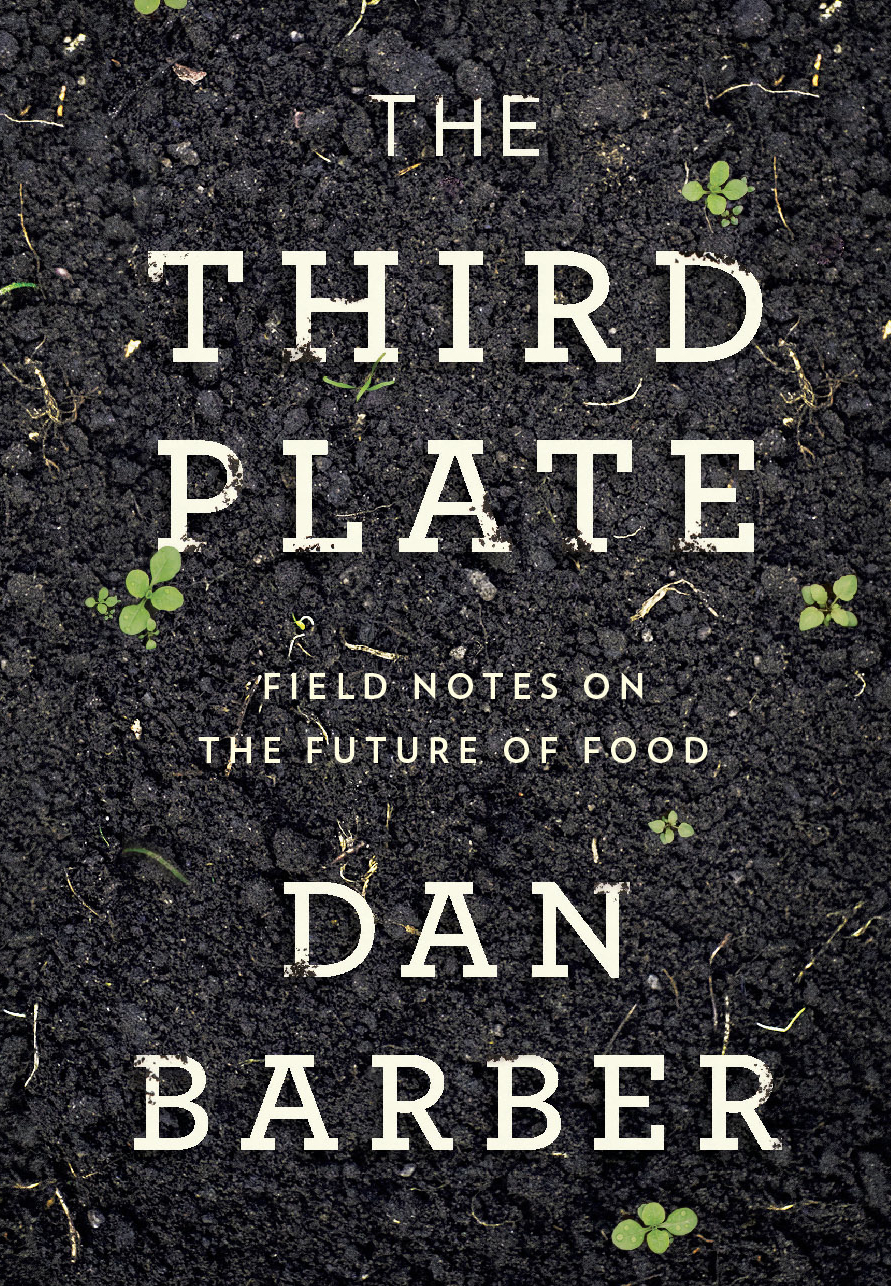
The whiter flour became, the greater the demand. To be fair, that’s been the history of wheat for thousand’s of years. But for all its efficiency, steel couldn’t match the old-school grindstone in two key respects. In fully removing the germ- that vital, living element of wheat — and the bran, the roller mill not only killed wheat but also sacrificed nearly all of its nutrition. While the bran and the germ represent less than 20 percent of a wheat kernel’s total weight, together they comprise 80 percent of its fiber and other nutrients. And studies show that the nutritional benefits of whole grains can be gained only when all the edible parts of the grain– bran, germ, and endosperm — are consumed together. But that’s exactly what was lost in the milling process.

There was another cost as well, just as devastating. Stone milled flour retained a golden hue from the crushed germ’s oil and was fragrant with bits of nutty bran. The roller mills might have finally achieved a truly white flour, but the dead, chalky powder, no longer tasted of wheat — or really anything at all. We didn’t just kill wheat. We killed the flavor.

from The Third Plate: Field notes on the future of food by Dan Barber

I did not know that until the 1880s and the roller mill, ground flour only had a shelf life of one week. Barber’s book certainly prompts us to consider the unaccounted and problematic system of food production hidden behind current “farm to table” intentions to honor ingredients. The aesthetic and technological evolution of wheat that Barber describes makes me think about our odd preference for dead, white, preserved flour at the cost of nutritional value and taste. Can we call white flour merely ornamental gastronomic pleasure, lacking in functional nutrition? Is white flour symbolic art while stone ground wheat functional design? Does how our produce look outweigh how our produce tastes? If so why? Do we equate a pretty apple with a nutritional, good-for-me apple? How much of my food suffers from competing tastes, visual and gastronomic, I wonder.

http://www.washingtonpost.com/lifestyle/food/dan-barber-on-the-third-plate-farm-to-table–has-a-fallacy-attached-to-it/2014/07/07/b71ee83a-021a-11e4-8572-4b1b969b6322_story.html

Food, Trolleys and Trucks in Dallas

DSC_0070

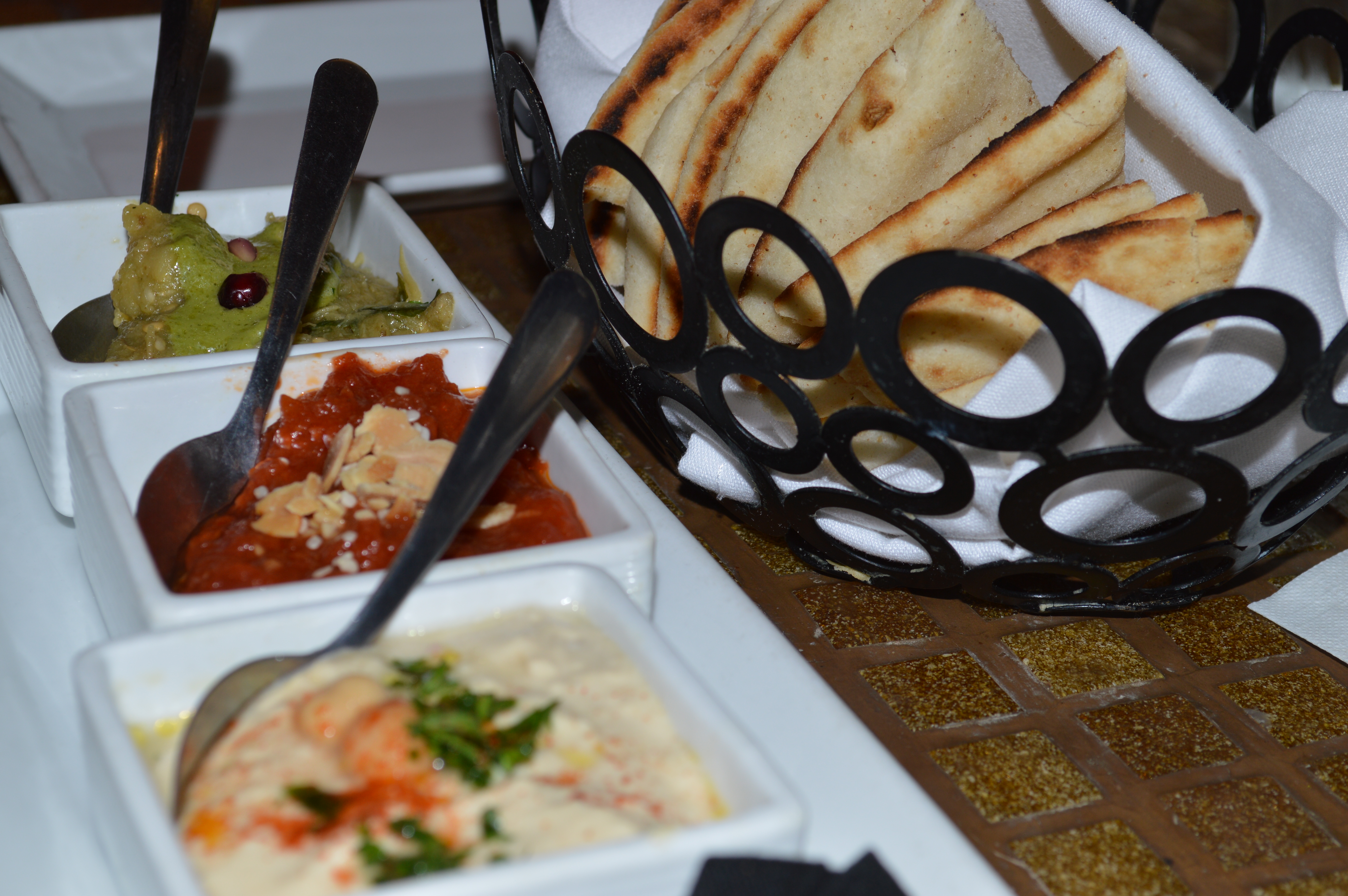
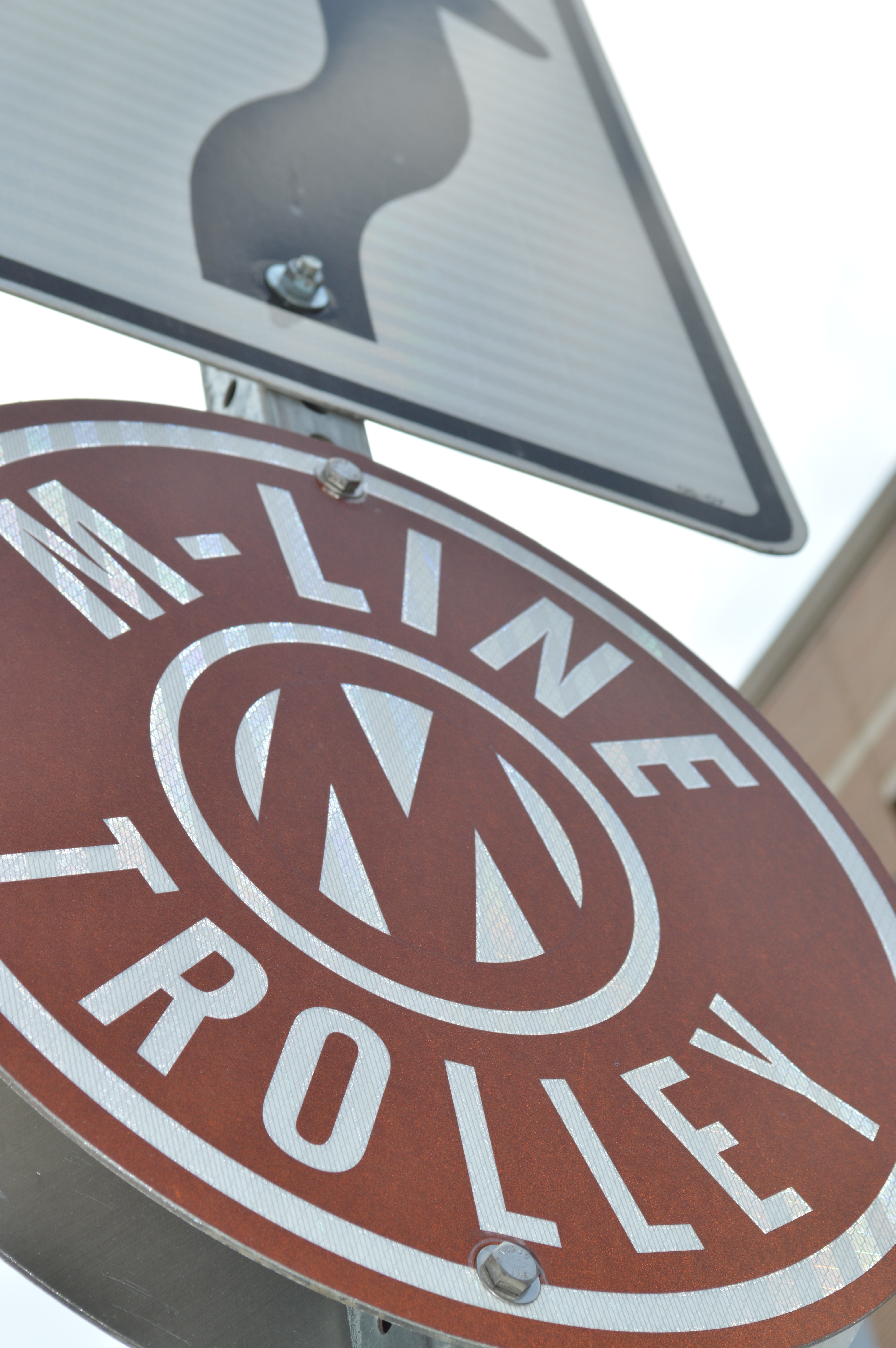
Who knew there was such a diversity of food in Dallas! The West Village Restaurant Hop offered a delicious and informative tour of cosmopolitan Dallas. Despite the “restaurant hop’s” focus on food, Jim our guide was well prepared and very knowledgeable about the area.  There were nine in our group making it a learning experience not only of Dallas food but also of each other. It was a fun activity to share and enjoy with my niece and daughter on a beautiful and unseasonably cool August day in Dallas. We even went back to the first restaurant after the tour ended to sip on sweet mint tea. I was surprised by the efforts of architectural preservation (many of the restaurants were converted homes) and the attention to civic space. The ride on a 1909 restored trolley was unexpected. As was the Arts District surrounding Klyde Warren Park (easily one of my favorite parks and civic spaces now). There were food trucks lined up  with tables in the park, including the architecturally inspired Ice-cream Sandwich Truck: Coolhaus. Sadly, after the tour, I was too full to try it. I must go back for a food truck tour on my next visit. People reading, eating lunch, kids with dripping ice-cream cones or just dripping with water after running through the dancing water sprinklers, all made for a beautiful relaxing way to spend an afternoon, even before entering the Art Museum or the Performing Arts Center. The food tour was a wonderful introduction to a tasty and beautiful Dallas I had not met despite my years in Texas. I’m convinced that the best way to know a place is eating through it, on foot with others. A culinary version of a Socratic dialogue.  Hmmmm, I wonder if its easier to listen to others because our mouths are busy chewing and we talk less because we’re eager to get back to eating. Sounds like a recipe for a good conversation. Eat, listen, talk, eat, listen, eat…eat…eat…repeat.

Wishing you happy consuming conversations in Dallas or anywhere,

The Hungry Philosopher

 DSC_0046

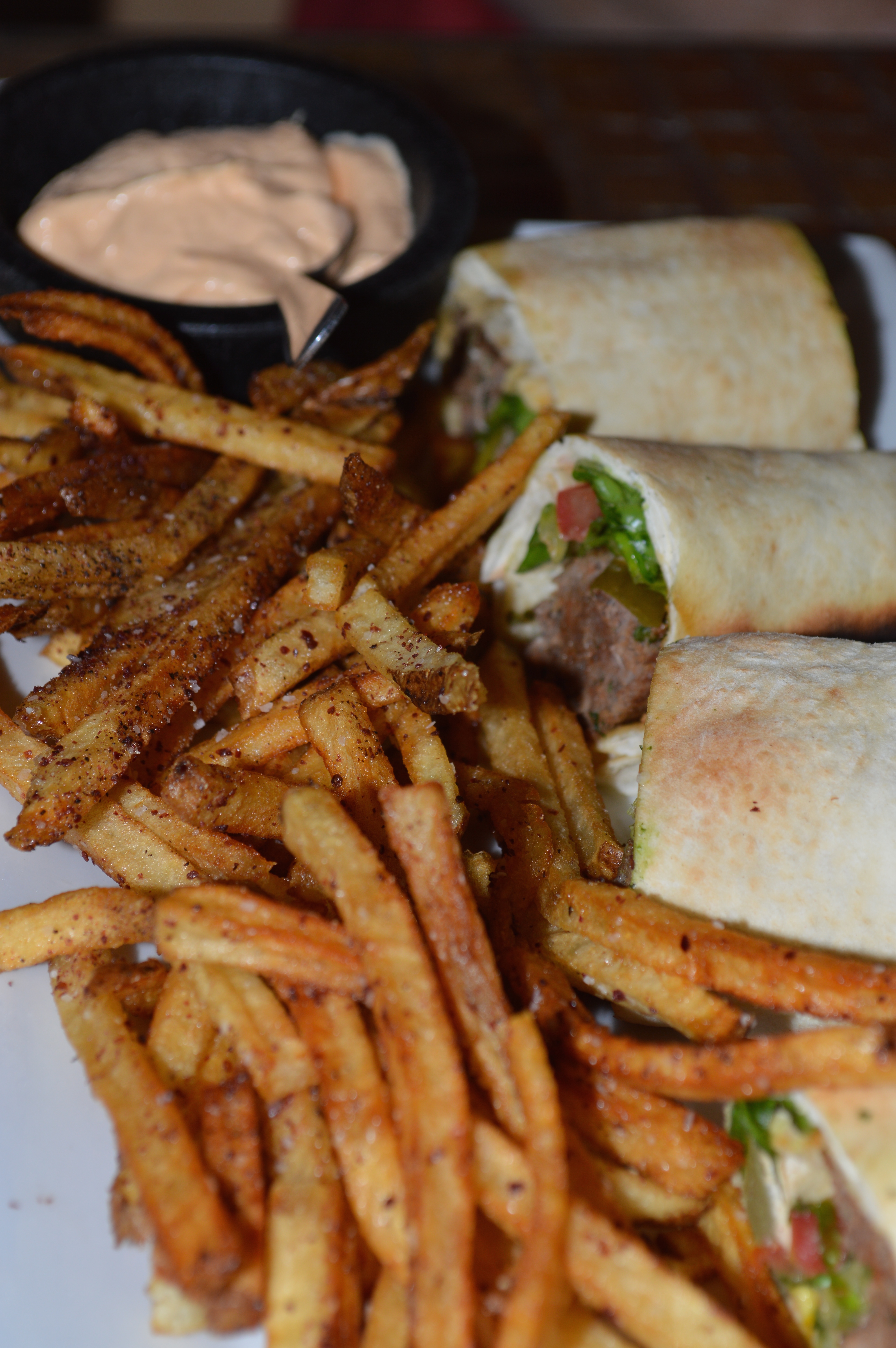
DSC_0047Moroccan kefta roll ups at Baboush was my favorite.


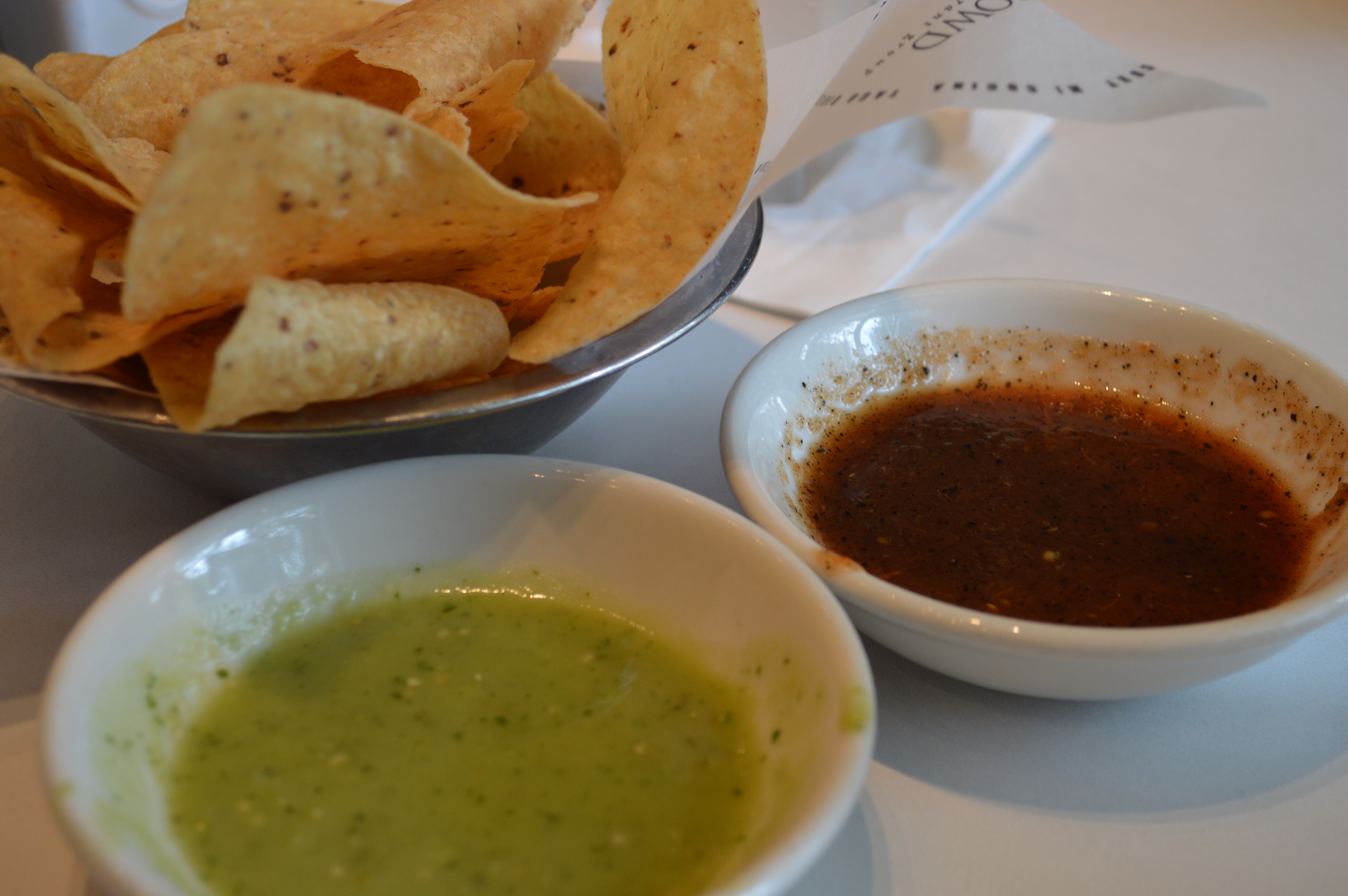
DSC_0052  DSC_0049  DSC_0051     The Salsas and Pineapple Chicken Tacos offered BIG flavors of roasty, sweet and spicey in small bites at TACO DINER.

DSC_0057

DSC_0058

DSC_0059              DSC_0085

http://www.toursdallas.net/

http://www.klydewarrenpark.org/

http://eatcoolhaus.com/

Kenny Shopsin’s Creative Process

As promised earlier, here is an excerpt from Eat Me: The Food and Philosophy of Kenny Shopsin about creativity.

“Cooking, for me, is a creative process, and I believe that people who are creative are creative for one of two reasons: Either they are going for truth and beauty, or they create as a way to dilute the venom produced by the subconscious minds. I cook for the second reason. When I cook, I am in a cathartic, recuperative process that calms me down and brings me from a neurotic state to a relaxed, functioning state.” ……

“I am not an Alice Waters type of cook who is inspired by ingredients and builds from there. The inspiration is mine — it comes from within me. But as a creative person, ingredients are the tangible medium I work with, so when I am inspired, when I am in the therapeutic, creative process of cooking, I start looking around, and the more ingredients I have, the more creative I can be.”

Cooking as creative therapy is certainly familiar to many us. When my children were young, cooking was a major creative outlet that I could share with my family everyday. I fondly remember my oldest sitting on the counter discovering new tastes as I was discovering new techniques and ingredients. Cooking became a visceral form of philosophy for me. I like Shopsin’s compulsive sense of creativity as a self-recovering urge. And, that his relationship with ingredients is collaborative rather than instructive. The emphasis on more….abundance, multiplicity, contradiction, duality (ying-yang bowls) reflects in his recipes. He is not searching for the true and the authentic. He talks about his “culinary fictions” that are dishes not authentically ethnic, like Carmine Street Enchiladas, but “feels” to him Mexican, Brazilian or Greek.

From a design historian point of view I see him adopting the early 20th century Aesthetic Movement stance that aspired to convey the sense and feel of  a culture, to mix and match as the designer or artist saw fit. It was a philosophy that embraced the joy of life and the freedom of artists, appropriately championed by Oscar Wilde. It was an era that produced incredibly standardization resistant, subjective and creative things like this, tongue vase by Christopher Dresser. IF

I feel like Kenny Shopsin would appreciate this vase. Although I don’t think we’ll find it at Walmart anytime soon.


Eat me – Shopsin’s Philosophy

41pV4Fd04hL

Eat Me: The Food and Philosophy of Kenny Shopsin is most definitely one of my favorite, cooking, food writing, philosophy and design books. Its witty, thoughtful, informative, blatantly honest and at times appropriately NYC gritty. I enjoy the images, as much as the words, that are profoundly mundane and real. Shopsin’s philosophy  implicitly fuels his life, cooking, business and becomes explicit, almost belatedly,  in his epilogue about the art of staying small,

“Running a restaurant for me is about running a restaurant. It is not a means to get someplace else. I wake up every morning and work for a living like a farmer. Running a restaurant is a condition of life for me. And I like everything about this life. I like waking up in the morning knowing I am going to the restaurant to cook, that something unexpected will happen to me in the kitchen, and that no matter what, I will learn something new. I like the actual process of cooking. I like shopping for the food that I cook, and I like my interactions with the people I meet while shopping. I like my customers, and I like working with my kids. It is a simple existence, but for me the beauty is in that simplicity. These are the things that bring me pleasure — and they bring me great pleasure on an extremely regular basis.

Living this way, pursuing your own happiness, is addictive and it’s the way I have tried to conduct my life. What this means is doing what it takes to make yourself feel good each day, not to make yourself less good today in the hopes that your life will be good in ten years because you’re working really hard now or because your property will be worth more money then. The way I figure it, if you make everyday of your life as happy as you can, nobody can take that away from you. It’s in the bank.”

Shopsin’s insistence on experience, on being in the present, on owning one’s pleasure, on loving a complete process, all point to his pragmatic life affirming philosophy just as his extensive menu is evidence of his lust for experimentation, learning and innovation. Next time, a quote about his thoughts on creativity. In the meantime,  read the book and its recipes. Its about food, philosophy and design that is perfect reading for hungry philosophers everywhere.


Rangpur Egg Curry

photo

IMG_0007

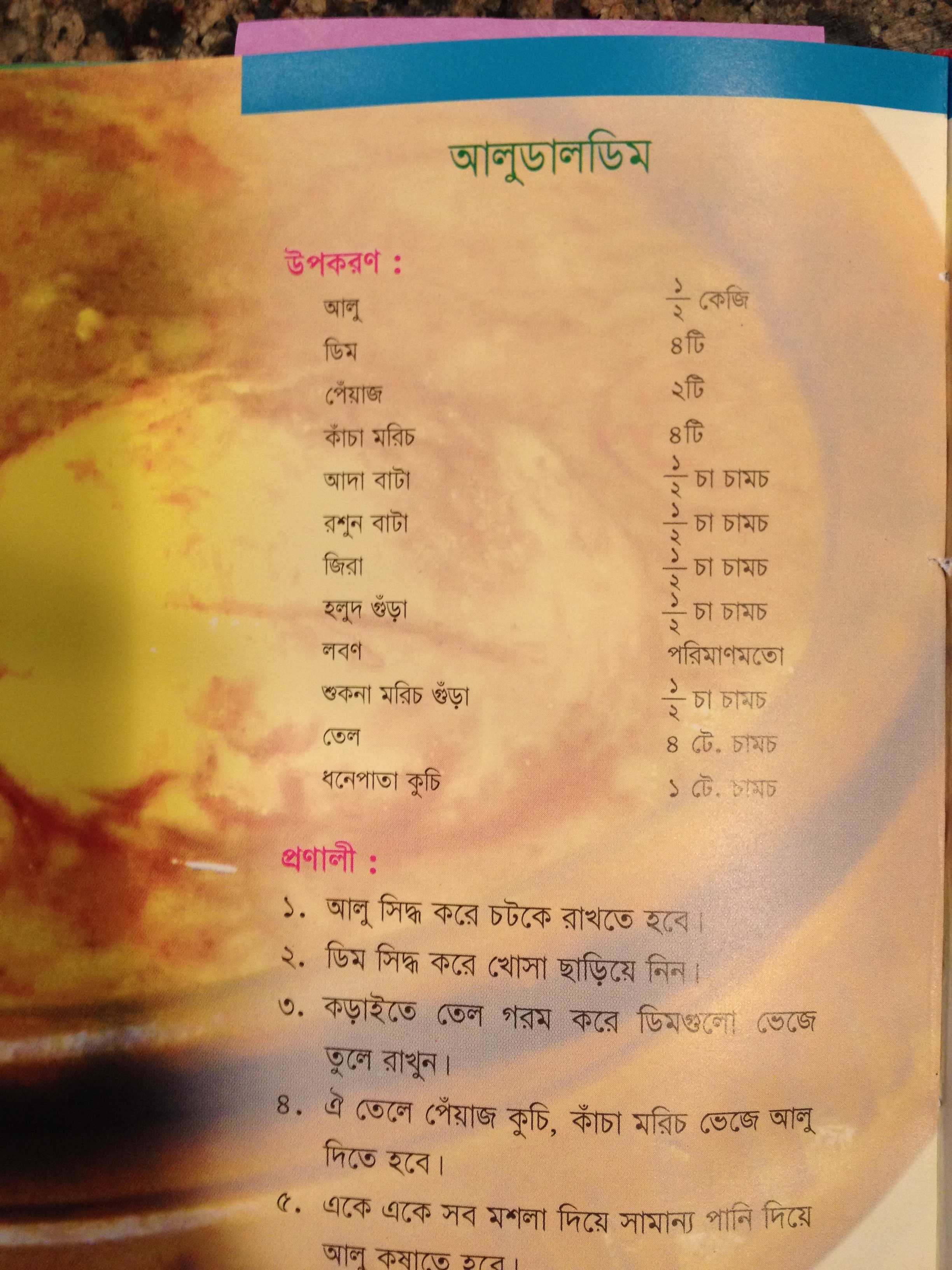
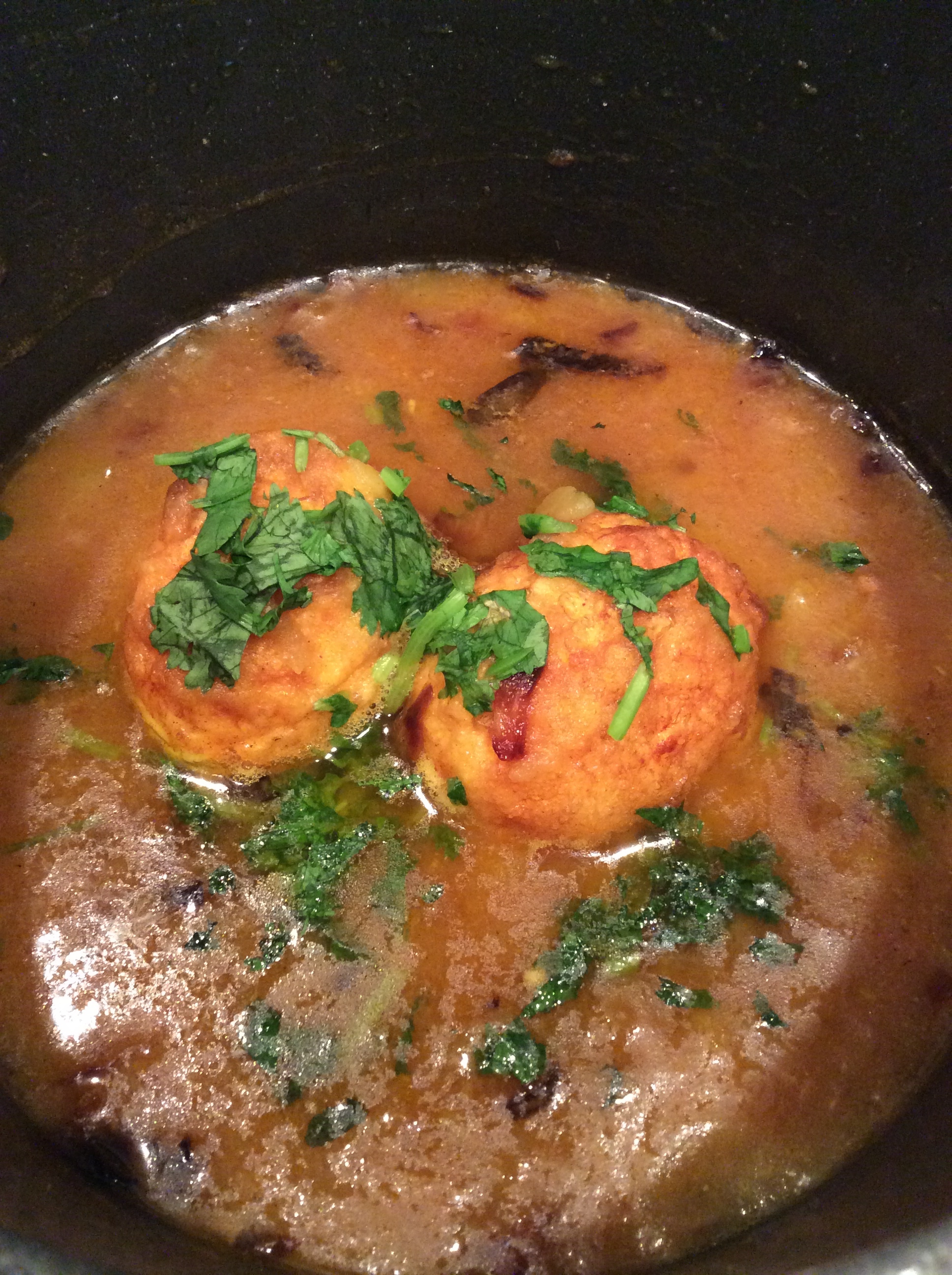
My mom gave me this cooking book about regional cuisine of Bangladesh. Most of the recipes I have never tasted. Its strange to re-taste a cuisine I thought I knew. Here is one of the recipes that I tried. Its an egg curry with a twist. The curry sauce includes potatoes that gives the sauce a delicious thick soup-like consistency. The flavorful sauce clings to the fried boiled eggs. Delicious with rice but would also be great to dip with bread. Here’s my translation and U.S. interpretation of the recipe from the Bangaladeshi Regional Cookbook by Runa Arefin.

Aloo Dal Dim

Potatoes 1lb (about 4-5 medium red potatoes)

Eggs  4

Onions 2 (1 large American yellow onion)

Green chili peppers, chopped 4 (I used 1)

Ginger Paste 1/2 teaspoon

Garlic Paste 1/2 teaspoon

Cumin Powder 1/2 teaspoon

Tumeric Powder 1/2 teaspoon

Salt to taste

Red Pepper Flakes 1/2 teaspoon

Oil 4 Table spoons

Cilantro 1 Table spoon

1. Boil potatoes and coarsely mash.

2. Boil eggs and peel.

3. Heat oil and fry eggs. The eggs will blister and the oil will pop…so be careful.

4. Take out eggs. In the same oil add and heat the onions and green chilies. Add Potatoes.

5. Add all the spices to the potato mixture. Add a little water. I put about 2 table spoons.

6. Once the spices are well incorporated and roasted. Add water to desired consistency. I added about 1/2 cup and simmered the curry a bit longer.

7. Add cilantro before serving.

Its not very spicy but feel free to adjust the heat or any of the spices to your taste. I just found the potato curry sauce an unusual surprise.