Food Poem- There will be things you do by Kim Dower

you won’t know why.
Maybe waiting to tie
your shoelaces

until everything else
is in place.
Could be you’ll slide

your egg yolks aside
eat every bit of bacon,
toast, whites while the forsaken

yellow orbs stare at you
from the side pocket
of your empty plate.

People will ask
why do you save
your yolks for last

and you won’t know—
won’t recall
the cousin from the south

came to visit one summer
ate his eggs so odd
your family said

stuck with you
like the way
you love to be kissed

on the back of your neck
can vaguely recollect
your mother’s kisses

after your bath
too gentle for memory.
There will be things you do

you won’t know why
like the way you look
up at the sky

when anxious or blue
it’s what your father
used to do

every family trip
when nothing else
was right

except those clouds
moving north by northwest
through the night

he showed you
what pilots knew:
factors for safe flying

are visibility
and how low
and mean the clouds are.

“There Will Be Things You Do” by Kim Dower from Last Train to the Missing Planet. © Red Hen Press, 2016.

From the Writer’s Almanac: http://writersalmanac.org/page/5/

Food Poem – Lobsters by Howard Nemerov

Here at the Super Duper, in a glass tank
Supplied by a rill of cold fresh water
Running down a glass washboard at one end
And siphoned off at the other, and so
Perpetually renewed, a herd of lobster
Is made available to the customer
Who may choose whichever one he wants
to carry home and drop into boiling water
And serve with a sauce of melted butter.

Meanwhile, the beauty of strangeness marks
These creatures, who move (when they do)
With a slow, vague wavering of claws,
The somnambulist’s effortless clambering
As he crawls over the shell of a dream
Resembling himself. Their velvet colors,
Mud red, bruise purple, cadaver green
Speckled with black, their camouflage at home,
Make them conspicuous here in the strong
Day-imitating light, the incommensurable
Philosophers and at the same time victims
Herded together in the marketplace, asleep
Except for certain tentative gestures
Of their antennae, or their imperial claws
Pegged shut with a whittled stick at the wrist.

We inlanders, buying our needful food,
Pause over these slow, gigantic spiders
That spin not. We pause and are bemused,
And sometimes it happens that a mind sinks down
to the blind abyss in a swirl of sand, goes cold
And archaic in a carapace of horn,
Thinking: There’s something underneath the world.

The flame beneath the pot that boils the water.

From http://writersalmanac.org/

Food Poem – Men After Work by Dana Gioia

IMG_0969

Done with work, they are sitting by themselves
in coffeeshops or diners, taking up the booths,
filling every other seat along the counter,
waiting for the menu, for the water,
for the girl to come and take their order,
always on the edge of words, almost without appetite,
knowing there is nothing on the menu that they want,
waiting patiently to ask for one
more refill of their coffee, surprised
that even its bitterness will not wake them up.
Still they savor it, holding each sip
lukewarm in their mouths, this last taste of evening.

From the http://writersalmanac.org/page/3/

Food Poem -A Quiet Life by Baron Wormser

fc83kt071-02_xlg.jpgWhat a person desires in life
is a properly boiled egg.
This isn’t as easy as it seems.
There must be gas and a stove,
the gas requires pipelines, mastodon drills,
banks that dispense the lozenge of capital.
There must be a pot, the product of mines
and furnaces and factories,
of dim early mornings and night-owl shifts,
of women in kerchiefs and men with
sweat-soaked hair.
Then water, the stuff of clouds and skies
and God knows what causes it to happen.
There seems always too much or too little
of it and more pipelines, meters, pumping
stations, towers, tanks.
And salt-a miracle of the first order,
the ace in any argument for God.
Only God could have imagined from
nothingness the pang of salt.
Political peace too. It should be quiet
when one eats an egg. No political hoodlums
knocking down doors, no lieutenants who are
ticked off at their scheming girlfriends and
take it out on you, no dictators
posing as tribunes.
It should be quiet, so quiet you can hear
the chicken, a creature usually mocked as a type
of fool, a cluck chained to the chore of her body.
Listen, she is there, pecking at a bit of grain
that came from nowhere.

Poem from the http://writersalmanac.org/

Image from http://www.finecooking.com/articles/how-to/boil-eggs-perfectly.aspx

Food Poem – On the Back Porch by Dorianne Laux

Notice how a bowl of soup in this poem evokes a sense of comfort and love. Makes me want to make a “simmering pot of soup.” Just wonderful. Enjoy.

The cat calls for her dinner.
On the porch I bend and pour
brown soy stars into her bowl,
stroke her dark fur.
It’s not quite night.
Pinpricks of light in the eastern sky.
Above my neighbor’s roof, a transparent
moon, a pink rag of cloud.
Inside my house are those who love me.
My daughter dusts biscuit dough.
And there’s a man who will lift my hair
in his hands, brush it
until it throws sparks.
Everything is just as I’ve left it.
Dinner simmers on the stove.
Glass bowls wait to be filled
with gold broth. Sprigs of parsley
on the cutting board.
I want to smell this rich soup, the air
around me going dark, as stars press
their simple shapes into the sky.
I want to stay on the back porch
while the world tilts
toward sleep, until what I love
misses me, and calls me in.

from http://writersalmanac.org/


Food Poem-Everybody Made Soups by Lisa Coffman

After it all, the events of the holidays,

the dinner tables passing like great ships,
everybody made soups for a while.
Cooked and cooked until the broth kept
the story of the onion, the weeping meat.
It was over, the year was spent, the new one
had yet to make its demands on us,
each day lay in the dark like a folded letter.
Then out of it all we made one final thing
out of the bounty that had not always filled us,
out of the ruined cathedral carcass of the turkey,
the limp celery chopped back into plenty,
the fish head, the spine. Out of the rejected,
the passed over, never the object of love.
It was as if all the pageantry had been for this:
the quiet after, the simmered light,
the soothing shapes our mouths made as we tasted.

“Everybody Made Soups” by Lisa Coffman from Less Obvious Gods. © Iris Press, 2013.

From the Writer’s Almanac

Italian Food – Food Poem by Shel Silverstein

I’m inspired to compose a dinner menu that rhymes! Any suggestions?

Oh, how I love Italian food.
I eat it all the time,
Not just ’cause how good it tastes
But ’cause how good it rhymes.
Minestrone, cannelloni,
Macaroni, rigatoni,
Spaghettini, scallopini,
Escarole, braciole,
Insalata, cremolata, manicotti,
Marinara, carbonara,
Shrimp francese, Bolognese,
Ravioli, mostaccioli,
Mozzarella, tagliatelle,
Fried zucchini, rollatini,
Fettuccine, green linguine,
Tortellini, Tetrazzini,
Oops—I think I split my jeani.

Poem From: http://www.huffingtonpost.com/2011/09/20/shel-silverstein_n_972217.html?1362426228

Here are more good food poem links:

http://www.saveur.com/article/blog/A-Feast-for-Bards-13-Favorite-Food-Poems

http://www.huffingtonpost.com/2013/03/05/food-poems-the-best-poetry_n_2806968.html

http://www.npr.org/sections/thesalt/2012/11/22/165489750/a-readable-feast-poems-to-feed-the-hungry-ear

How hunger shrinks the world – White Noise

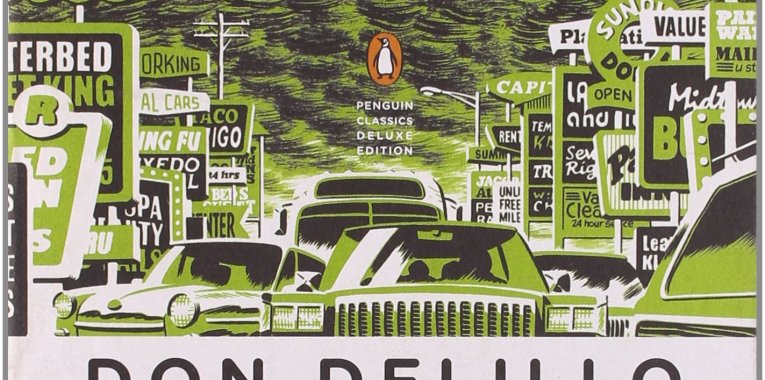
The last post about American Appetites and  Glynnis’ sadness about dessert marking the end of a meal reminded me of another 1980s literary classic, White Noise by Don Delillo and the scene of the family eating fried chicken in the car:

No one wanted to cook that night. We all got in the car and went out to the commercial strip in the no man’s land beyond the town boundary. The never-ending neon. I pulled in at a place that specialized in chicken parts and brownies. We decided to eat in the car. The car was sufficient for our needs. We wanted to eat, not look around at other people. We wanted to fill our stomachs and get it over with. We didn’t need light and space, We certainly didn’t need to face each other across a table as we ate, building a subtle and complex cross-network of signals and codes. We were content to eat facing in the same direction, looking only inches past our hands. There was a kind of rigor in this. Denise brought the food out to the car and distributed paper napkins. We settled in to eat. We ate fully dressed, in hats and heavy coats, without speaking, ripping into chicken parts with our hands and teeth. There was a mood of intense concentration, minds converging on a single compelling idea. I was surprised to find I was enormously hungry. I chewed and ate, looking only inches past my hands. This is how hunger shrinks the world. This is the edge of the observable universe of food. Steffie tore off the crisp skin of a breast and gave it to Heinrich. She never ate the skin. Babette sucked a bone. Heinrich traded wings with Denise, a large for a small. He thought small wings were tastier. People gave Babette their bones to clean and suck. I fought off an image of Mr. Gray lazing naked on a motel bed, an unresolved picture collapsing at the edges. We sent Denise to get more food, waiting for her in silence. Then we started in again, half stunned by the dimensions of our pleasure. (220-221)

For Glynnis, the elaborate birthday dinner carefully planned and sequenced was a performance and celebration of her skill. Food conveyed her economic privilege and social status. In contrast, the family consumes the delivered fried chicken intensely individually as a primal pack. The shared theme of death and consumption in both books rely on food to highlight the death of one in the case of Glynnis and death of all in the case of Jack and Babette’s family. Hunger and death may make us human but how we live seems to be determined by how we eat, whether our appetites are insatiable, mindless or sadly both.

Wishing you mindful and satisfying eating,

Hungryphil


The Sadness of Dessert

“In addition to the chocolate cake there is a crepe dessert prepared by Glynnis at the table, a light, delicious, orange and raspberry- flavored crepe, new to most the company, made with Chartreuse. How lovely, Glynnis thinks as the crepes flame up: that low bluish purple flame, a sort of child’s magic, and the aroma of alcohol and sugar; how lovely, how sad, things coming to an end.”

This is what Glynnis, cook book author and socialite, and soon to be deceased wife laments as the birthday dinner for her husband that she planned and labored over so meticulously comes to an end. Joyce Carol Oats’ 1989 novel American Appetite is the story of an unraveling American dream that takes place in a glittering glass house where elegant dinners  are hosted by power couple, Ian and Glynnis McCullough. The quote above prophetically announcing her own demise comes from one of the early chapters entitled “Celebration” that sets the complex stage by juxtaposing an elaborately descriptive analysis of the dinner courses served against fragmented confessions of infidelity.

While the dinner courses set a mood of abundance, skill and luxury, the dessert marks the violent bittersweet end. Food in this novel takes on a significant role in characterizing both Glynnis and the lifestyle of the McCulloughs. I havent’ finished reading the book yet. At the moment Ian is charged with murdering his wife by pushing her through one of their glass walls. I wonder if the book ends with a very different kind of meal?

How would I describe myself or my life through dinners I serve (hopefully that do not involve me being murdered…yikes!)?

A snack on the kitchen counter? A bowl of meatballs on a big round wood table for five? A pot of curry and rice for three? Or paper plates piled with pizza and wings in front of the television? Or a cup of tea in a low red chair that looks out towards the stop sign at the end of the cul-de-sac? All of the above?

How does food color and stage your life?

Wishing you happy desserts in appreciation of a good meal (instead of Glynnis’ sad desserts and insatiable appetite),

Hungryphil

Food Poem – Butter by Elizabeth Alexander

butter-store-400x400
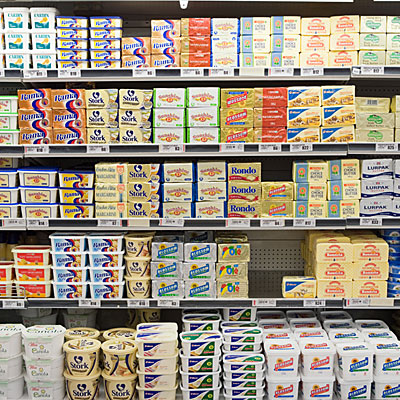
My mother loves butter more than I do,
more than anyone. She pulls chunks off
the stick and eats it plain, explaining
cream spun around into butter! Growing up
we ate turkey cutlets sauteed in lemon
and butter, butter and cheese on green noodles,
butter melting in small pools in the hearts
of Yorkshire puddings, butter better
than gravy staining white rice yellow,
butter glazing corn in slipping squares,
butter the lava in white volcanoes
of hominy grits, butter softening
in a white bowl to be creamed with white
sugar, butter disappearing into
whipped sweet potatoes, with pineapple,
butter melted and curdy to pour
over pancakes, butter licked off the plate
with warm Alaga syrup. When I picture
the good old days I am grinning greasy
with my brother, having watched the tiger
chase his tail and turn to butter. We are
Mumbo and Jumbo’s children despite
historical revision, despite
our parent’s efforts, glowing from the inside
out, one hundred megawatts of butter.
I’ll admit it.
I used 3 or 4 pounds (who knows … I lost count) of butter the last week. I’m glowing from the inside.
Maybe you are too.

“Butter” by Elizabeth Alexander. From Body of Life, published by Tia Chucha Press.

From http://www.poetryfoundation.org/poem/185537

Image from: http://www.health.com/health/gallery/0,,20509217,00.html