Poetics of Buttered Toast

Not Yet

by Jane Hirshfield

Morning of buttered toast;
of coffee, sweetened, with milk.

Out the window,
snow-spruces step from their cobwebs.
Flurry of chickadees, feeding then gone.
A single cardinal stipples an empty branch—
one maple leaf lifted back.

I turn my blessings like photographs into the light;
over my shoulder the god of Not-Yet looks on:

Not-yet-dead, not-yet-lost, not-yet-taken.
Not-yet-shattered, not-yet-sectioned,
not-yet-strewn.

Ample litany, sparing nothing I hate or love,
not-yet-silenced, not-yet-fractured; not-yet-

Not-yet-not.

I move my ear a little closer to that humming figure,
I ask him only to stay.

“Not Yet” by Jane Hirshfield from The Lives of the Heart. © Harper Collins, 1997. Reprinted with permission. (buy now)

From the Writer’s Almanac

#grapegate and onions

 -1

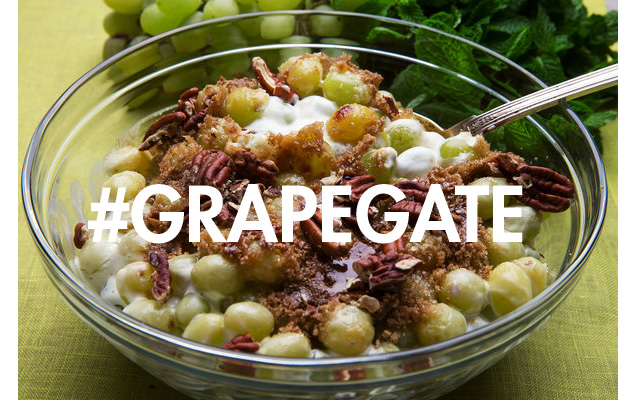
Usually we associate food with harmonious, benevolent, generous sharing. But….the angry response dubbed #grapegate to The New York Times article “The United States of Thanksgiving” (http://nyti.ms/1t9Ebcp) reminds us that food is deeply connected to how we identify ourselves. In this case the article offended the state of Minnesota with its attribution of grape salad as a gastronomic emblem. Alabama is not too happy either. Disagreement certainly fuels reviews, recipes, blogs, food writing, competitions and more. As Minnesota arrives at wild rice consensus we witness a region reclaiming it’s identity. Thanksgiving is not only a time of sharing but more importantly a time to confront tradition, nationally, regionally and personally. Whose recipes make it to the table? How are the recipes personalized? Imagine an Immigrant’s Thanksgiving Table…now there’s a great cookbook idea! As a cook in a chopped and blended family, I have to say, the dinner table is an exhausting culinary and cultural challenge with occasional exhilarating moments of delicious resolution (for us, usually in burgers and brownies).

(Dear Bobby Flay, yesterday I made your pumpkin bread recipe from the Epicurious recipe app. It was fantastic, moist, light, flavorful. I confess, I added dried cranberries making it even better. I feel you would approve. Recipes like rules are meant to be broken, sometimes with thought.)

May we all eat well and grow this Thanksgiving as we confront who we are and want to be together.

http://www.npr.org/blogs/monkeysee/2014/11/19/365194058/grape-salad-is-not-minnesotan-and-other-lessons-in-cultural-mapmaking


Here is a poem from today’s Writer’s Almanac that speaks to the intensity and intimacy of everyday culinary disagreements.

Recollection of Tranquility

The first time we ever quarreled
you were cutting an onion
in the kitchen of our rented cottage.
I remember vividly. We were making creole
for a late night supper with champagne,
and you were taking it seemed forever
to cut the onion.
Each time your dull paring knife
chopped on the counter, I shifted my feet,
and I saw once in a glimpse over my shoulder
a white wedge of onion wobbling loose.
I sighed inaudibly. The butter I stirred
had already bubbled and browned.
I was starting over with a new yellow lump
that was slipping on the silver aluminum
when you brought, cupped in your hands,
the broken pieces, the edges all ragged,
the layers separated, bruised and oozing
cloudy white onion juice.
I complained:
the family recipe stated specifically,
the onion must be “finely chopped,”
for what I explained were very good reasons.
Otherwise, the pungent flavors would be trapped
irrevocably in the collapsed cellular structure
of the delicate root.

You sighed, I guess, inaudibly
and adjusted your glasses carefully
with two fingers (a fidget
I have since come to know
as a sign of mild perturbation)
and explained:
the pungence of onions too finely chopped
would be simmered away. The original sharp
burning crispness could be retained
only in fairly large, bite-sized chunks.
But you wouldn’t fight tradition.
I mopped onion on the counter
with the dull knife, while you set the table
and figured the best way of popping the cork.

“Recollection of Tranquility” by Idris Anderson, from Mrs. Ramsay’s Knee. © Utah State University Press, 2008.

http://writersalmanac.org/

Eating and Dying to be human

bicentennial_man_05

“I am designing a system for allowing androids-myself-to gain energy from the combustion of hydrocarbons, rather than atomic cells.”

Paul raised his eyebrows. “So they will breathe and eat?”

“Yes.”

“How long have you been pushing in that direction?”

“For a long time now, but I think I have designed an adequate combustion chamber for catalyzed controlled breakdown.”

“But why, Andrew? The atomic cell is surely infinitely better.”

“In some ways, perhaps, but the atomic cell is inhuman.”

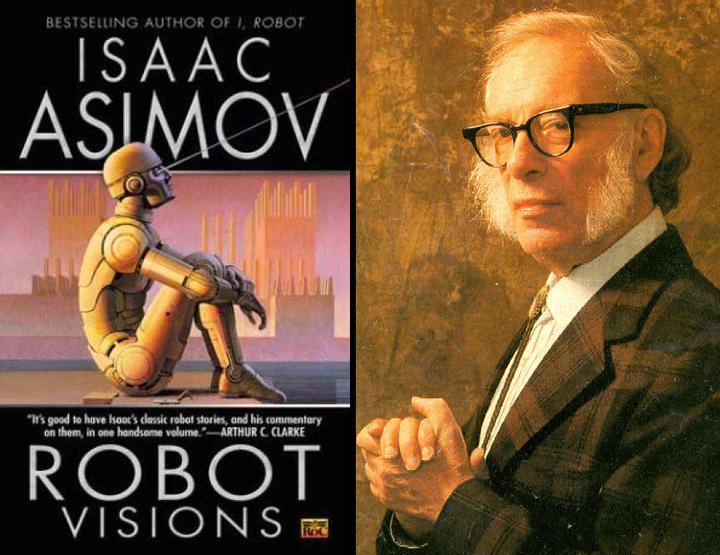
In previous post, I had written about the Golem’s pretense of eating in order to prove her humanity in the Golem and the Jinni by Helen Wecker. Another sci-fi classic version of the same pretense can be found in Isaac Asimov’s Bicentiennial Man, a story of transformation from robot to human that involves creativity, clothing, digestion, breathing and eventually death. Eating is the privilege of the living, organic and artificial, as the story suggests. Everyday, we limit or qualify our energy source, our food. Why don’t we all just take an efficient nutrition pill to sustain ourselves? (Our poor dog has been placed under a diet. He’s been extra needy. He really likes chicken and treats.) Anyway, back to our persistent effort to spice up, gluten free, sweeten, bake, fry, blend, season and plate our source of energy. If we put so much thought into what we put into our (and our pets) bodies as fuel, why don’t we worry about the energy we put into our lamps, heaters, cars, phones…all our stuff? Is it because our phones can’t taste or like chicken as Oreo the dog does? If my toaster worked better with one source of energy versus another would we care? Does the source of energy effect performance of things? I don’t know. Again…I digress. Asimov was on to something and anticipated this post-humanist era of thinking beyond the artificial/organic divide. I wonder if Andrew the prosthetic human ate meat?

As we approach the decadent and delicious feast of Thanksgiving, I wonder how could I feed my stove, refrigerator, stand mixer, blender? How can I show my appreciation for all my primitive robots that make a tasty dinner possible?

Seductive Consolations of Food

How could I have written all these posts without having mentioned Elizabeth Gilbert’s Eat, Pray, Love? So here it is…… an excerpt describing her first moment of recognized contentment in Italy after a good meal. Note: I said good satisfying meal, not overindulgent-stuffing-our-disappointments-down-with-candy-ice-cream and chips. One must be careful about gastronomic self-soothing. I’m sure many of us can relate. Enough said.

Eat,_Pray,_Love_–_Elizabeth_Gilbert,_2007

The first meal I ate in Rome was nothing much. Just some homemade pasta (spaghetti alla carbonara) with a side order of sauteéd spinach and garlic. (The great romantic poet Shelley once wrote a horrified letter to a friend in England about cuisine in Italy: “Young women of rank actually eat– you will never guess it — GARLIC!”) Also, I had one artichoke, just to try it; the Romans are awfully proud of their artichokes. Then there was a pop-surprise bonus side order brought over by the waitress for me for free — a serving of fried zucchini blossoms with a soft dab of cheese in the middle (prepared so delicately that the blossoms probably didn’t even notice they weren’t on the vine anymore). After the spaghetti, I tried the veal. Oh and also I drank a bottle of house red, just for me. And ate some warm bread, with olive oil and salt. Tiramisu for dessert.

Walking home after the meal, around 11:00 PM, I could hear noise coming from one of the buildings on my street, something that sounded like a convention of seven-year-olds — a birthday party, maybe? Laughter and screaming and running around. I climbed the stairs to my apartment, lay down in my bed and turned off the light. I waited to start crying or worrying, since that’s what usually happened to me with the lights off, but I actually felt OK. I felt fine. I felt the symptoms of contentment.