Strawberries – Food Poem by Paul Martin

It’s ripe strawberries that bring me
to my knees in the garden this morning,

impossibly big and red as those
on the covers of gardening magazines in January

and almost as sweet as the small wild ones
my brother and I picked up on Best’s Hill,

eating more than we dropped into the coffee cans
our mother fitted with wire handles.

If a cloud moved across that blue sky
casting a shadow, I didn’t notice,

the snakes we were warned about
never appeared, and who could see,

even in that brilliant light,
beyond the quiet hills all the way to Vietnam

and the war he’d carry back with him.
Heads down we browsed through the field

until we were filled and drowsy,
sprawled next to each other in the warm grass,

juice smeared across our T-shirts,
our mouths and hands.

“Strawberries” by Paul Martin from Closing Distances. © The Backwaters Press, 2009.

from http://writersalmanac.org/

Wobblyogi Wednesday – YTT Journal


What-Its-REALLY-Like-to-Teach-a-Yoga-Class-Illustrated-30.jpg

It has happened. I’ve taught my first 15 minutes of a real yoga class (outside the comfort zone of my fellow trainees) today. I mumbled, forgot to breathe, relied on notes too much, missed modification cues, was lost for a moment and probably missed other things I don’t even know. And…… it was wonderful! All my mistakes were loud and aggressive in my head but the experienced yogis in the studio graciously overlooked my inner panic. For a moment during a chaturanga, it occurred to me that I was sharing something I so enjoy with others. That moment made it all worth it. I could feel our energy collectively rise as we progressed through the sun salutations.

The conversion from practicing yoga to practicing yoga AND teaching yoga is challenging!

  1. During practice, I focus inward. It seems intrusive to be looking at others when teaching. I feel like a student spying on my fellow yogis.
  2. When to demo and move with the class and when to stop, observe, talk and notice the class? I have yet to find a good rhythm.
  3. The balance between cueing and silence is another skill I need to work on.
  4. Inflection of voice to convey calmness and energy when appropriate is yet another issue.

Despite this self-critique, I’ve grown and learned so much! So thankful that I’m not asking how do you get into a twisted extended side angle [parivttri parsvakonasana]? or what is a sun salutation?, or how do you breathe in a twist? why breathe with movement? Is chaturanga a movement or a pose? What does a neutral spine mean? Only a few weeks ago, I would’ve asked these questions and so many more.

After I deliver food to the table, I eagerly notice the reactions: who jumped to serve themselves, who had seconds, who moved the food around the plate, who picked ingredients out, who got more to drink, who was quiet in her enjoyment, who was adding condiments etc. It is time for me to focus on my fellow yogis to watch and notice as they move and breathe to my cues. Teaching yoga is a new relationship, like any other, full of happy anticipations and nervous anxieties.  I learned today that the beauty of people moving and breathing together is so00000 much better than my crazy inner monolog. I thought through teaching I would help others, turns out they are helping me just as much, if not more. Cue a humble warrior pose……..

Hosting and witnessing the magic of shared breath is the privilege of a yoga teacher.

Thank you, Debra, for sharing your class with me.

Image from: http://www.doyouyoga.com/what-its-really-like-to-teach-a-yoga-class-illustrated-40340/

Mary Oliver’s Leaves and Blossoms Along the Way

IMG_1559

If you have trouble finding “the right place for yourself,” like me,  this poem might help. I seem to crave both city excitement and natural calmness. The two don’t often pair well but like the two flavors of sweet and spicy, when the experiences do work well, its magic…like Central Park in NYC or Lake Shore Drive in Chicago. What would be the geographical equivalent of a red curry with pineapple, or tandoori chicken with raita?

Leaves and Blossoms Along the Way: A Poem

If you're John Muir you want trees to 
live among. If you're Emily, a garden
will do. 
Try to find the right place for yourself. 
If you can't find it, at least dream of it. 

                                             •

When one is alone and lonely, the body
gladly lingers in the wind or the rain, 
or splashes into the cold river, or
pushes through the ice-crusted snow. 

Anything that touches. 

                                             •

God, or the gods, are invisible, quite
understandable. But holiness is visible, 
entirely. 

                                             •

Some words will never leave God's mouth, 
no matter how hard you listen.  

                                             •

In all the works of Beethoven, you will 
not find a single lie.

                                             •

All important ideas must include the trees,
the mountains, and the rivers. 

                                             •

To understand many things you must reach out 
of your own condition. 

                                             •

For how many years did I wander slowly 
through the forest. What wonder and 
glory I would have missed had I ever been
in a hurry!

                                             •

Beauty can both shout and whisper, and still
it explains nothing. 

                                             •

The point is, you're you, and that's for keeps.

from http://www.onbeing.org/blog/leaves-and-blossoms-along-the-way/8042

Wobblyogi Wednesday Notes

Yoga-Fun-Humour-Laughter-Funny-Joke-Cartoon-6.jpg

The Yoga of Eating: Transcending Diets and Dogma to Nourish the Natural Self

1. Eat to nurture yourself not punish yourself.

“The yogic approach to eating and diet is to bring oneself into wholeness, to illuminate and repair the self-division, to stop fighting oneself. Yoga, after all means “union.”

2. You absorb the energy of what you eat and how it came to be.

“When you eat something, you eat everything that happened to make that food come into existence. You are affirming a certain version of the world.”

3. Just eat.

“If you read while you eat, you are eating the words. – If you eat when angry, you are eating the anger. – if you eat absorbed by the scenery, you are eating the scenery. If you talk a lot while you eating, you are eating your conversation.”

4. Chew each bite before taking another bite.

“Shoveling more food into an already full mouth corresponds to taking a new breath before the old one is fully exhaled. Swallowing before food is fully tasted and chewed corresponds to exhaling before inhlation is complete. “

5. Eat what nurtures you.

“The central thesis of the Yoga of Eating is….that each person is the ultimate authority on his or her bodily requirements, and that the body will reveal its requirements given sufficient attention and trust.”


Image from: http://www.relaxandrelease.co.uk/cathy-thorne-cartoons-yoga-humour-fun-laughter/


Food Poem – Ripe Cherries by Athena Kildegaard

I read that the men,
on their way to Gettysburg,
stopped along the road
to pick and eat ripe cherries.

That the fruit should not
go to waste.

That they should take
such pleasure before battle.

That the oldest among them
should shake the trees
and the youngest gather
the fallen fruit.
That they should aim rifles
with the taste of cherries
against their teeth.

“Ripe Cherries” by Athena Kildegaard from Bodies of Light. © Red Dragonfly Press, 2011.

from: http://writersalmanac.org/page/3/

Sam Kaplan builds with candy, cookies and gum

Photographer Sam Kaplan builds majestic architectural monuments out of small edibles. His work shows us the beauty and possibility in a stick of gum. Play with your food and find out what unusual art may be hidden on your plate.

For more images check out these Design Boom articles:

http://www.designboom.com/art/sam-kaplan-pits-pyramids-orgianized-food-art-09-18-2015/

sam kaplan forms sweet architectural arrangements with slices of gum

Wobblyogi Wednesday – YTT Journal Week 9

I’m starting to lose track of the weeks! 8, 9, 10 I don’t know.  I suppose it is a good thing that the learning process is becoming more routine. Still lots to learn. Working on sequencing, anatomy, voice, teaching 5-minute segments of a class and more. The poses are getting more familiar and breathing more aware. I have noticed I lose my rhythm when I have to adjust my pose, grab a block, shuffle my foot forward, set my knee down or lift it up. Off the mat, I’m noticing when I start feeling annoyed with someone or anxious about something. I can sense when my energy is strained or equilibrium disturbed. I am not yet good at recovering quickly. That ability may take a while to develop. With the basics addressed I can see how our development as teachers now rest on practice, practice, practice. I feel we’ve shifted from training to more emphasis on teaching. As dates for team teaching, partner teaching, and finally teaching “alone” are set, all this teacher training is getting very real! I’m anxious and excited.

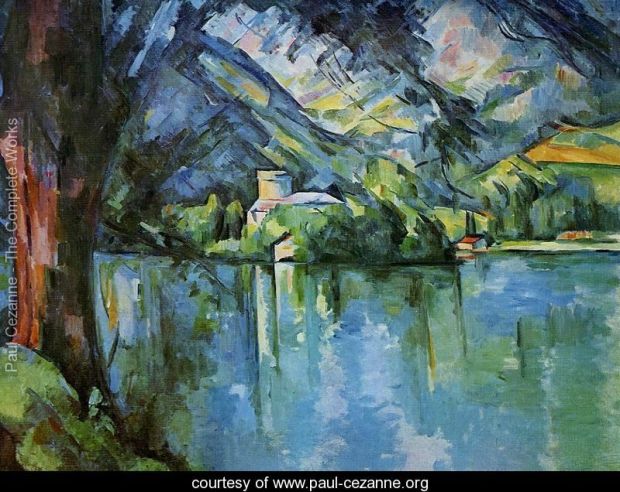
I continue to visit as many classes with different yoga teachers as possible. The diversity reminds me how wonderfully personal yoga practice is. I have started to see each teacher’s yoga style like an artist style. So far, I have met teachers who remind me of Seurat, John Singer Sargent, Renoir and Mary Cassatt. I also imagine my own style to mature into a Cezanne painting.

We learned about the chakras. I feel the same panic I feel looking up symptoms on webmd. It seems all my chakras are imbalanced!

Now that we are closer to the end of teacher training than the beginning, I suppose as a reminder our teachers asked us to reflect on our short term and long term goals regarding our yoga practice, about how we hope to evolve as a practitioner and teacher, about our thoughts on “finding your authentic voice.” All good questions. I wonder how you, my fellow yoga teacher in training would answer. Please feel free to share. How would you describe your style, your spirit artist?

Here is how I answered:

Short term Goals:

  1. To cultivate a steady and consistent practice
  2. To keep learning and becoming better acquainted and comfortable with various poses and styles
  3. To learn more about the internal “non” physical practices of yoga

Long term Goals:

  1. To develop a responsive personal practice that can help me get through the day with less anxiety and more ease
  2. To help others do the same

Ideas and thoughts in regards to “finding your authentic voice”

As a teacher, cook, writer, philosopher I strive to be authentic and mindful. I would like to bring that spirit to my yoga practice and teaching by cultivating:

  • a big picture, a thematic, a meditative attitude
  • awareness of how breath and alignment relate to the sense of yoga as connection
  • humor that admits the contradictions and difficulties in yoga on and off the mat

Who you are as a yoga teacher now

Like an elementary school kid: open, curious, aware but not very confident.

How you desire to evolve as a practitioner and teacher

I hope to be someone who can combine mental, physical and spiritual aspects of yoga seamlessly both on and off the mat. I want my teaching style to be like a Cezanne painting very much invested in the physical by honoring different perspectives on poses, breath, intentions and alignment. Be suggestive and tentative yet clear and purposeful. Like the lake painting where we can see him build an image with uneven and layered strokes into an atmosphere of calmness, (neither dreamy like a Monet or photographic like a Vermeer).


The-Lac-D-Annecy

Wobblyogi Wednesday -YTT Journal Week 7

This week we tried to twist, bind, open our hips and open our mind (by reading the first book of Patanjali). My brain is unlikely to recover. All my adult life I have worked to expand my mind, to use the art of reasoning, to imagine things…so much so that I studied architecture and philosophy as long as I could. Wrote a dissertation about dwelling in the world. And here I am trying to restrain my mind in order to dwell in the world! What! Mind blown……

The two sutras so far that have me twisted and bound are numbers 2 and 17. Yes…I was stuck at number two…after the very first sentence….”Now yoga instruction.”

2: “The restraint of the modifications of the mind-stuff is Yoga.”

17: “Samprajnata samadhi (distinguishing discerning) is accompanied by reasoning, reflecting, rejoicing and pure I-am-ness.

Instead of taking over the world we are trying to notice ourselves in the world. See ourselves as a perspective and not the perspective. Avoid the mouse brain delusion and disappointment.

pinky_and_the_brain_by_jrwcole-d4atvge-606.jpgBook Patanjali Book One tells us why we practice yoga….to restrain the brain. These sutras present yoga as a combination of mental restraint and mindful reasoning, reflecting, rejoicing and recognizing the “I” that appeals to the universal. The self is both restrained and empowered by encouraging selfless and limiting selfish acts. Thinking should help us be kind, not right or worse righteous. Non-judgmental thinking is an incredible challenge. It is so easy to put things in boxes of right,wrong, good or bad. I don’t know if we can  ever see our intentions clearly. Yoga, if anything is  a working evolving practice of seeing ourselves in the world.

We were also introduced to a kundalini practice and a short Ashtanga practice. The rhythm and use of breath were unique in each. All these diverse styles of yoga show how widely the connecting practice is interpreted. We started learning about all the considerations of balancing, building up, slowing down, safety, creativity, modifications and more in sequencing poses. Our homework involved observing a yoga class. While it was difficult for me to watch a class and not participate, the process was helpful in noticing a class from a teacher perspective. The small details of class managment…music, delivering a prop, responding the rising stress in the room etc. We have two more observations to complete. Next time I’d like to focus on how students receive the cues.

For next week, we (the 8 of us) are collectively teaching a class to ourselves and our homework is to individually design a whole session. I feel eager, ready and apprehensive. It seems like we’ve been learning to spell words are now expected to form sentences that make sense. I suppose stuttering is better than babbling.

At this two month mark, I feel more porous….like a sponge, stretched, twisted, squished, soaked and drained. I am quick to notice the few aches and pains that pop up. I find I notice and enjoy what I eat more. When I  feel stress rising in me, I try to remove myself sooner than I would have before. I notice when I feel a negative emotional charge or a hook, conversely, I also notice the positive charges. I still struggle in meditation, in quieting the mind, allowing my mind to roam as it pleases. For now.

I am so thankful for my gentle and patient guides, Jacqueline and Betsy and my seven curious and kind companions in this journey.

Wishing all of you easy breathing,

Wobblyogi


Image fromhttp://8tracks.com/spocktine/soundtrack-for-world-domination

Food Poem- There will be things you do by Kim Dower

you won’t know why.
Maybe waiting to tie
your shoelaces

until everything else
is in place.
Could be you’ll slide

your egg yolks aside
eat every bit of bacon,
toast, whites while the forsaken

yellow orbs stare at you
from the side pocket
of your empty plate.

People will ask
why do you save
your yolks for last

and you won’t know—
won’t recall
the cousin from the south

came to visit one summer
ate his eggs so odd
your family said

stuck with you
like the way
you love to be kissed

on the back of your neck
can vaguely recollect
your mother’s kisses

after your bath
too gentle for memory.
There will be things you do

you won’t know why
like the way you look
up at the sky

when anxious or blue
it’s what your father
used to do

every family trip
when nothing else
was right

except those clouds
moving north by northwest
through the night

he showed you
what pilots knew:
factors for safe flying

are visibility
and how low
and mean the clouds are.

“There Will Be Things You Do” by Kim Dower from Last Train to the Missing Planet. © Red Hen Press, 2016.

From the Writer’s Almanac: http://writersalmanac.org/page/5/

Wobblyogi Wednesday – YTT Journal Week 5


yoga-timeline-all1.pngI find myself surprised to be at week 6 reporting on week 5. Where did the time go? It feels long in terms of how much I’ve learned and short in terms of knowing that there is so much more to learn. This week was mostly devoted to discussing the history, the branches and styles of yoga. Mapping the stylistically wide and historically deep world of yoga has left me happily lost.  What combinations would my yoga practice include: Hatha, Vinyasa, Yin, Jnana, Karma, Kundalini? This was as much about my own history and what brought me to yoga as it was about discussing the hazy, dense lineage of yoga practice that feeds into yoga teacher training in small-town Indiana.

Much like the practice of breathing and asanas that honor my body, it seems I have to feel my way through yoga history and principles in a way that honors my mind and my own personal background. Our discussions didn’t shy away from concerns about religious incompatibility, cultural discomfort with chanting and Sanskrit terminology, or distractions of disengaged students. “What is yoga to me?” is the question that resonated like a meditative chime throughout the week. For me, for now,  yoga is an attentive practice uniting mind, body and breath.

For us in the West, more important than the 5000 year old birth of yoga in India is the 1893 arrival of yoga to Chicago with the words of Swami Vivekananda. As Jacqueline explained, each of Khrishnamacharya’s students approached yoga differently. B.K. S Iyengar, himself sickly as a child, saw yoga as a therapeutic strategy involving attention to alignment and the use of various props. T.K.V Desikachar, learning from his father, saw yoga as an individual practice with attention to breath as shared, Pattabi Jois, saw yoga as a way to direct restless and active children-youth and thus developed more physically demanding sequences.  Indra Devi, the first woman and Westerner to be trained opened the first yoga studio in the U.S. and introduced yoga in China and Argentina.

Yoga in the modern world risks commercial dilution of principles while at the same time is recognized as a therapeutic and preventative path towards holistic health. Understanding and assessing contemporary yoga practices around us today, require awareness of our own preferences and needs. What you look for in a yoga teacher or studio will be guided by whether you want a rigorous fitness based practice or a restorative preparation for meditation…and all combinations in-between. One day your body may crave energy and another day calmness. Finding our way to what we need at that particular moment is the benefit of exploring the historical and pedagogical map of yoga. I have to restrain my philosophical penchant for definitions and just enjoy the path of attentive living.

Walk on and keep breathing wherever the day may take you. This is what I learned this week at yoga teacher training.

May we all find the corners of the yoga world that nourish us.

Bowing to the happy places inside you,

The Wobblyogi

Image from: http://gisyogafall2015.blogspot.com/2015/09/complete-notes-yoga-history-singleton.html