Food Poem – Lobsters by Howard Nemerov

Here at the Super Duper, in a glass tank
Supplied by a rill of cold fresh water
Running down a glass washboard at one end
And siphoned off at the other, and so
Perpetually renewed, a herd of lobster
Is made available to the customer
Who may choose whichever one he wants
to carry home and drop into boiling water
And serve with a sauce of melted butter.

Meanwhile, the beauty of strangeness marks
These creatures, who move (when they do)
With a slow, vague wavering of claws,
The somnambulist’s effortless clambering
As he crawls over the shell of a dream
Resembling himself. Their velvet colors,
Mud red, bruise purple, cadaver green
Speckled with black, their camouflage at home,
Make them conspicuous here in the strong
Day-imitating light, the incommensurable
Philosophers and at the same time victims
Herded together in the marketplace, asleep
Except for certain tentative gestures
Of their antennae, or their imperial claws
Pegged shut with a whittled stick at the wrist.

We inlanders, buying our needful food,
Pause over these slow, gigantic spiders
That spin not. We pause and are bemused,
And sometimes it happens that a mind sinks down
to the blind abyss in a swirl of sand, goes cold
And archaic in a carapace of horn,
Thinking: There’s something underneath the world.

The flame beneath the pot that boils the water.

From http://writersalmanac.org/

Wobblyogi Wednesday – YTT Journal Week 4

My body and heart are beginning to feel the difference a month makes of regular yoga practice. I feel fantastic! Never better. Really. I can touch my toes in dandasana. I can reach a little further, breathe a little slower, quiet my mind faster and notice much more. I also am aware of all the I have yet to learn and be at ease with. While my legs feel stronger, my tummy feels pudgier. Despite myself, I accept I need to do more back strengthening-core activating poses (Betsy’s Hot Flow Classes…yikes) and maybe channel hungryphil away from delicious Baklava (recipe next post). This certainly will be a lifelong effort beyond the wonderful months of YTT.

Hot yoga is becoming less of a surprise. Less…gosh…its hot. Yin yoga was a new calming experience of effort and stillness.

We watched the first half of the documentary Yoga Unveiled. It offers a historical overview of the principles and systems of yoga practice. The historians and scholars in the documentary confronted the commodification and reduction of yoga to a physical exercise by offering cultural, historical and theoretical context to the practice. For example,  I was surprised to learn that among a host of other introductions, the Chicago World’s Fair also introduced yoga to the west through the September 11th, 1893 lecture of Swami Vivekananda. His message of universal spirituality and tolerance was very well received at the Parliament of Religions. My task and investment in yoga teacher training seems to be getting much deeper and broader than I thought it would.

During these weeks we have also shared a lot of ourselves with our fellow yogis by talking about animals we would wish to be and guests we would invite for an imaginary dinner. Last night we were asked to share our favorite childhood picture. Betsy led us through a meditation session that involved focusing on our inner child in celebration and apology. It was difficult for me. I was surprised by the wave of emotion I felt. I chose this picture with my siblings. They are the rocks of support, love and teasing behind me. My inner child certainly needs them around.

FullSizeRender.jpg

We are discussing chapters 3,4,5 of the Heart of Yoga soon.

These are my two favorite quotes this reading section because of the emphasis on breath as the intentional and internal connection between body and mind. More on the reading discussion next week.

The quality of breath is extremely important because it expresses our inner feelings. If we are in pain it shows in our breathing. If we are distracted we loose control of our breathing. The breath is the link between inner and outer body. It only by bringing body, breath, and mind into unison that we realize the true quality of an asana.

What is yoga after all? It is something that we experience inside, deep within our being. Yoga is not an external experience. In yoga we try in every action to be as attentive as possible to everything we do. Yoga is different than dance or theatre. In yoga we are not creating something for others to look at. As we perform the various asanas we observe what we are doing and how we are doing it. We do it only for ourselves. We are both observer and what is observed at the same time. If we do not pay attention to ourselves in our practice, then we cannot call it yoga.

Wow…that was a lot for a short week of YTT!

Much love,

Wobblyogi


Image below courtesy of Betsy Totti. Thank you Betsy!

IMG_2452


Food Poem – Men After Work by Dana Gioia

IMG_0969

Done with work, they are sitting by themselves
in coffeeshops or diners, taking up the booths,
filling every other seat along the counter,
waiting for the menu, for the water,
for the girl to come and take their order,
always on the edge of words, almost without appetite,
knowing there is nothing on the menu that they want,
waiting patiently to ask for one
more refill of their coffee, surprised
that even its bitterness will not wake them up.
Still they savor it, holding each sip
lukewarm in their mouths, this last taste of evening.

From the http://writersalmanac.org/page/3/

Wobblyogi Wednesday – YTT Journal Week 3

This week we were asked to team teach two fifteen minute sequences of standing and balancing poses. Both times, my partners and I tried to insert standing poses like the wide legged forward bend, trikonasona, extended side angle and the pyramid (or balancing poses like tree, dancer, half moon) smoothly into a sequence. Small  moves like turning the direction of our toes and gaze or stepping back or front became crucial components of a fluid transition. When leading the class, it felt like I was stuttering, as if the mind, body and breathing has yet to learn a new combined language.  I have a new appreciation for all those soothing and calmed voiced yoga instructors out there. Making anything seem effortless takes a whole lot of effort!

Betsy lead us through a Hot Progressive Yoga session. It was a combination of challenging poses and ease that builds in intensity through the session. Despite the intensity and sweat, the session did not conjure feelings of athletic breathless panting. I suppose this was my lesson for the week on and off the mat: to keep my breath steady regardless of ease and effort (and to focus on breathing and cue breathing when teaching).

At my third week of regular yoga practice, I do feel more grounded and grateful. I’m more aware of tight muscles and flexible muscles. I feel increased body awareness and am beginning to understand yoga instructions to “connect with your breath,” “ground through your feet,” “stack your hips” etc,. I’m discovering new questions like why is balancing with closed eyes harder? May that be a metaphor for something? I also continue to be amazed by my fellow yogis. What a combination of intelligence, kindness and grace! I am so lucky to breathe and flow with this inclusive and wonderful little community.

Oh….and we had our first test. It was a good reminder of all that we have learned already. And, of course of things we need to notice as important to remember.

It was a good week. We are no longer strangers. Wherever we started we have all started to deepen our practice.

This week’s yogi snack…dear readers I would love suggestions. What do you like to eat before or after practice? Vegan, vegetarian and/or gluten free options seem difficult to make portable and share-able. Thoughts? Any cook book recommendations out there?

Peanut Butter Cookies

1 cup creamy peanut butter
3/4 cup sugar
1 egg
Optional: 1 teaspoon vanilla, granola, jelly
1. Beat egg and sugar together.
2. Mix in peanut butter.
3. Drop tablespoons of dough. Flatten. Makes about 12-15 cookies.
4. Bake 15 minutes in a preheated 350 degree oven.
Cool completely before enjoying!

Recipe from Food Network, Damaris Phillips.

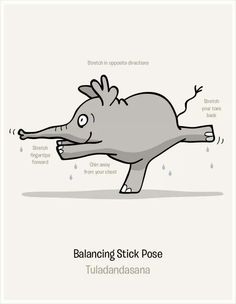
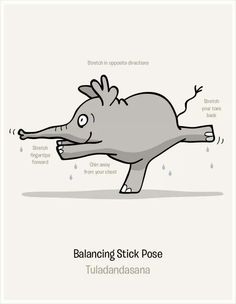
Yoga Elephant image from: https://www.pinterest.com/jenhaussmann/yoga/

Wobblyogi Wednesday: YTT Journal Week 2

This week we are learning to stand. It feels strange to “study” standing. We started with Tadasana (Mountain pose). Betsy, one of our guides, comically stood in the center of our circle, slightly hunched, head forward, arms on hips and said “now talk me into mountain pose.” After our initial giggles, we found ourselves a bit dumbstruck. How do we tell her how to stand? With her help, we eventually learned:

  1. Start with the feet. This is where you connect with the earth and ground yourself. Feet parallel. Either touching or as wide as feels comfortable (although no more than hip distance apart). Weight should be spread into all four corners of each foot.
  2. Moving up and aligning  the body from the ground… knees should be soft (not locked)
  3. Core pulled in. Pelvis neutral. Tail bone tucked in.
  4. Shoulders down and away from the ears. Long spine. Palms facing slightly forward or to the side.
  5. Gaze forward.

Even as I write this, I’m nervous that I got it wrong. For each of us this looks slightly different. The challenge was to notice and “feel” the alignment with the earth ascend through our bones and muscles. By the time we talked through urvdha hastasana (arms up), uttasana (forward fold), ardha uttasana (table pose), utkasana (chair pose), adho mukha svasana (downward dog) and Virbhadrasana (warrior 1), I forgot how to stand. Noticing all these connections within us that allow us to move to through the world is overwhelming. The next few sessions we continue with standing poses. More on that adventure next week.

Our homework for the week involved reading the first two chapters of The Heart of Yoga by T.K. V. Desikachar. The first chapter describes the concept and meanings of yoga, while the second chapter introduces the foundations of yoga practice. Both chapters are premised on the introduction interview of Desikachar where he stresses the importance for him (and his father Krishnamachayra who taught him yoga) of an individual approach to yoga.  As I read the chapters, I kept this emphasis in mind and asked, what can I learn from this?

The first quote that tickled my activist philosopher sensibilities to live an examined life:

The practice of yoga only requires us to act and to be attentive to our actions. Each of us is required to pay careful attention to the direction we are taking so that we know where we are going and how we are going to get there; this careful observation will enable us to discover something new. Whether this discovery leads to a better understanding of God, to greater contentment, or to a new goal is a completely personal matter.

Such focus on action and personal commitment makes yoga for me so therapeutic for mind and body.

The second quote that gave me pause considered the concept of avidya or clouded understanding by ego, attachment, rejection and fear and the role of yoga in clarifying our understanding by reducing the fog.

Altogether, these three ways of being — health, inquiry, and quality of action — cover the entire spectrum of human endeavor. If we are healthy, know more about ourselves, and improve the quality of our actions, it is likely that we will make fewer mistakes. It is recommended that we work in these three distinct areas to reduce avidya. Together they are known as kriya yoga, the yoga of action. Kriya comes from the kr, meaning “to do.” Yoga is not passive. We have to participate in life. To do this well we can work on ourselves.

How might learning to stand in mountain pose help me clarify my understanding? I don’t know yet, but I suspect by engaging in present, embodied, material thinking of how my bones, muscles and breath are behaving I am training myself to notice without ego (comparison to others), without attachment (to a particular pose), without rejection (of a particular pose), without fear (of standing wrong). I suppose yoga helps me find my own way to stand in the world.

Next week more standing poses.

Wishing you mindful moving,

Wobblyogi

elephant image from here

Food Poem -A Quiet Life by Baron Wormser

fc83kt071-02_xlg.jpgWhat a person desires in life
is a properly boiled egg.
This isn’t as easy as it seems.
There must be gas and a stove,
the gas requires pipelines, mastodon drills,
banks that dispense the lozenge of capital.
There must be a pot, the product of mines
and furnaces and factories,
of dim early mornings and night-owl shifts,
of women in kerchiefs and men with
sweat-soaked hair.
Then water, the stuff of clouds and skies
and God knows what causes it to happen.
There seems always too much or too little
of it and more pipelines, meters, pumping
stations, towers, tanks.
And salt-a miracle of the first order,
the ace in any argument for God.
Only God could have imagined from
nothingness the pang of salt.
Political peace too. It should be quiet
when one eats an egg. No political hoodlums
knocking down doors, no lieutenants who are
ticked off at their scheming girlfriends and
take it out on you, no dictators
posing as tribunes.
It should be quiet, so quiet you can hear
the chicken, a creature usually mocked as a type
of fool, a cluck chained to the chore of her body.
Listen, she is there, pecking at a bit of grain
that came from nowhere.

Poem from the http://writersalmanac.org/

Image from http://www.finecooking.com/articles/how-to/boil-eggs-perfectly.aspx

Wobblyogi Wednesday – YTT Journal Week 1

Sore but happy, I survived week one of yoga teacher training. I feel like bread dough that has been thoroughly kneaded and is waiting to rise in a warm spot. Stretched and pulled, pushed and rolled, I feel emotionally and physically energized and tired at the same time. The classes themselves swing between active working through poses and relaxed conversation circles. This week’s activities included a discussion about awkward scenarios encountered in yoga classes, a Sun Salutation workshop, a hot yoga and a prenatal yoga practice. This is what I learned:

  • Yoga teaching is like any teaching….students sometimes make inappropriate comments, wear inappropriate attire, fall asleep, don’t follow instructions, look at the time, disrupt the class, get sick and oh, yes…..fart. This in the crass side of yoga teaching that makes the zen side possible and so precious. Our duo of yoga teacher training teachers were keeping it real. Yoga is no place for cerebral idealization. The body in varied forms will and do demand attention.
  • Hot Yoga is very hot! All it missed was the humidity of India for a full experience. My hands were slipping, sweat was dripping onto my mat. It wasn’t pretty. It did make my throat and lungs, suffering from a bit of cough, feel much better. I also realized that I’m supposed to “salt” my yoga mat to break it in.
  • Doing Sun Salutations for three hours on a Sunday morning is demanding. The three versions can be easily confused. We were paired up and teaching each other. Breathing, talking and moving at the same time is MUCH more difficult than I ever imagined. It will take practice and homework. Here is a good website that explains the significance of doing 108 Sun Salutations.
  • I wish I did prenatal yoga when I had my babies. It was a nurturing and elegant way to learn about modified poses. We did a few poses against the wall.
  • There are a lot of yoga information (and misinformation) out there. We talked about a few websites and apps.

For my yoga buddies, here is the recipe for raisin and nut balls, as promised.

Adapted from the Yoga Cookbook, recipes from the Sivananda Yoga Vedanta Centers

IMG_2415

Raisin Nut Balls

  1. Blend or process 1/3 of cup unsalted nuts
  2. Blend or process 1/2 of cup of raisins
  3. Combine the sandy textured nuts and raisins
  4. Add 4 tbs melted butter. Form 12 small balls.
  5. Roll in unsweetened shredded coconut
  6. Eat warm or chilled

The book suggested swapping peanut butter or tahini for the butter, trying roasted coconut for coating and a few other variations. This would be an easy recipe to personalize. Make it yummy. I wonder if cranberries and pecans would work?

elephant image from here

Food Poem – On the Back Porch by Dorianne Laux

Notice how a bowl of soup in this poem evokes a sense of comfort and love. Makes me want to make a “simmering pot of soup.” Just wonderful. Enjoy.

The cat calls for her dinner.
On the porch I bend and pour
brown soy stars into her bowl,
stroke her dark fur.
It’s not quite night.
Pinpricks of light in the eastern sky.
Above my neighbor’s roof, a transparent
moon, a pink rag of cloud.
Inside my house are those who love me.
My daughter dusts biscuit dough.
And there’s a man who will lift my hair
in his hands, brush it
until it throws sparks.
Everything is just as I’ve left it.
Dinner simmers on the stove.
Glass bowls wait to be filled
with gold broth. Sprigs of parsley
on the cutting board.
I want to smell this rich soup, the air
around me going dark, as stars press
their simple shapes into the sky.
I want to stay on the back porch
while the world tilts
toward sleep, until what I love
misses me, and calls me in.

from http://writersalmanac.org/


Wobblyogi Wednesday- YTT200 Journal

06016d4b3780293a1662e1a25f03f256.jpg

As you know, I like to eat. A lot. Frequently. I am after all, hungryphil. I try to walk to burn off some calories and raise my heart rate. And, I practice yoga to calm my frenzy of eating. Admittedly, my practice of both has been sporadic. In an effort to live more mindfully and consistently, I just started a yoga teacher training program. For me, teaching seems to be the best way to learn. In order to share my experience with you, I offer:  Wobblyogi Wednesday.

I’m over forty, my knees creak and inversions make me dizzy. I am not aiming for perfection. There are eight of us in this session of yoga teacher training at the Community Yoga in West Lafayette Indiana. Most of my fellow yogis are shiny-smart and kind-eyed young women around my daughter’s age. As I munched on my mix of nuts and dates, I listened to their stories that brought them there. Each impressive and so amazingly diverse. After introducing ourselves we talked about our expectations, worries and mostly about what the role of a yoga teacher maybe. I imagine this question will be an ongoing thought throughout the coming months.

Here is how I responded to assignment number 1:

Please answer the following in a few paragraphs. We will be sharing our thoughts as a group as well.
From your perspective, what is the role of a yoga teacher? Take into consideration your own experience, your ideal, and your goals as it relates to teaching yoga.

It is rare for someone to engage in the practice of yoga because they are feeling fantastic body and mind. We all enter a yoga practice achy and unfocused. The first and most crucial role of a yoga teacher from my perspective is an empathetic acceptance of human imperfection and weakness. Honesty and humility allows us to accept the cranky knees, the tights shoulders, the sad heart or restless mind. As a teacher, by voicing these concerns I give my fellow yogis permission to accept their own limits without judgment. The most successful yoga teachers create a nourishing, safe and supportive atmosphere. They notice the telltale details of strained spirits, bodies and minds.

Rule #1: There is no room for judgment on the yoga mat. Only honesty sprinkled with humor.

Once the atmosphere is charged with trust and honesty, good yoga teachers, set the mood, tone and pace of the session. If new poses are attempted, they offer reassurance of what is about to happen. Break down difficult sequences. Build up to difficult poses. They do this while reminding each yogi that they are in control of their practice and can choose to follow a much or as little as they wish. The goal of good teachers, like good parents, is to make themselves unnecessary. The best yoga teachers train us not to need them for direction. They are constantly learning, growing and teaching, and show us how to do the same.

Rule #2: Each yogi is his/her own teacher. A good teacher shows us how to teach ourselves.

If we are all empowered by our own practice, then why come together as a community to practice? What is the difference between mountain pose and just standing? A mountain pose harnesses the shared intentionality of standing (through individual intentions) in respect, in prayer or in defiance. The best yoga teachers cultivate a supportive community of individuals. They remind us that we are not alone in our practice, even at 6am on a cold Indiana morning. They help us carry the mindfulness generated on the mat, off the mat and into our day. They help us commit to the search for intentions, even if each of us holds a different intent. A good teacher translates between traditions, movements and words that project the principle of peace: Salam, Namaste or Shalom.

Rule #3: My yoga demands a non-dogmatic search for mindfulness. There can be no inner peace without aspiring towards outer-peace.

No judgment, no authority, no dogma. This is where I want to start…..

Wishing you mindful moving,

The Wobblyogi


Yogi Elephant image from here


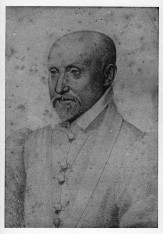
Radishes and Michel de Montaigne [1533-1592]

I am not excessively fond either of salads or fruits, except melons. My father hated all sorts of sauces; I love them all. Eating too much hurts me; but, as to the quality of what I eat, I do not yet certainly know that any sort of meat disagrees with me; neither have I observed that either full moon or decrease, autumn or spring, have any influence upon me. We have in us motions that are inconstant an unknown; for example, I found radishes first grateful to my stomach, since that nauseous, and now again grateful. In several other things, I find my stomach and appetite vary after the same manner; I have changed again and again from white wine to claret, from claret to white wine.

Few philosophers would write about the size of their gallstones, about love, sex and marriage or what they ate. The father of the essay form, Michel de Montaigne’s work is refreshingly anti-cerebral and anti-academic in a very thoughtful “academic” way.  The passage above describes the unexplainable variability of our appetites. Subjectivity and variability is precisely why historically philosophers avoid love, sex, laughter and food. Despite the hubris of academic thinkers, Montaigne reminds us that we cannot know and explain everything. Rather, everything is subject to custom (Circe’s drink). For him, an attentive description of an experience in all it’s complexity that actively engages others is far better than the passive repetition of learned theoretical abstraction. In the era of rational Renaissance, his insistence on everyday experiences as inherently meaningful, was bold and refreshing. Still is. I love his “down with dogma” attitude. Then again, as Montaigne would say, ‘Que sais-je?’: what do I know?

This passage about variable appetite reminds me of pregnancy cravings or appetites of 2-year old kids. I have to be in the mood for soda, candy or barbecue. Sometimes foods I generally enjoy don’t like me back, like pasta a few days ago. What foods do you enjoy in varying degrees?

Here’s a recipe in honor of radishes and Montaigne.

Bengali Shredded Salad with Radishes:

Combine equal amounts of shredded cucumber, tomatoes, carrots, onions, cilantro and radishes.
Add salt, sliced green chilies and vinegar.

Really good with a rice pilaf (pulao) and Bengali Chicken Roast (Chicken roasted with shallots, ginger and garam masala) or Beef Bhuna (a dry beef curry). This works even better with shredded beets. The whole salad turns red! 

Image from: http://plato.stanford.edu/entries/montaigne/