Wobblyogi Wednesday- YTT Journal Week 15

We are at 15 weeks! How fantastic that our yoga training keeps broadening into an endless horizon. I’m excited about exploring this sense of an internal landscape with high points and low, movement and stillness, sunshine and rain. For the first time in my life instead of looking outward for answers, in books, in art, in movies, in experts, in philosophy, I am looking inward. It is tremendously empowering to feel self-sufficient. I don’t feel this euphoria all the time but I do see glimpses more often than I used to. I know it is there and some days I can coax it out of hiding through asana practice, meditation, walking or just taking a few slow, intentional breaths.

We’ve been covering anatomy for a while. Today I am fascinated by our bony architecture. How strange that the weight of our hands, arms and shoulders are carried back through the scapula, clavicle then the sternum in front to release into the ribs and then down the spine. Our weight doesn’t just move directly downward but moves through us in circuitous ways. What amazing joints we have in our hips and shoulders that are able to rotate AND support. The universal elegant dance of “Sthira” and “Sukha” or stability and movement plays out within us, literally in our bones. The spine, itself, such a wonderful example of strength and flexibility, of softness and structure, of squishy and rigid. No wonder the spine is such a good indicator of emotional and physical well being. In the clip below Leslie Kaminoff talks about how we physically suppress emotions, how we “hold” anger, worry, resentment, and anxiety.

Sending uplifting thoughts that might lessen the burden on your bones,

Wobblyogi


Wobblyogi Wednesday – YTT Journal


What-Its-REALLY-Like-to-Teach-a-Yoga-Class-Illustrated-30.jpg

It has happened. I’ve taught my first 15 minutes of a real yoga class (outside the comfort zone of my fellow trainees) today. I mumbled, forgot to breathe, relied on notes too much, missed modification cues, was lost for a moment and probably missed other things I don’t even know. And…… it was wonderful! All my mistakes were loud and aggressive in my head but the experienced yogis in the studio graciously overlooked my inner panic. For a moment during a chaturanga, it occurred to me that I was sharing something I so enjoy with others. That moment made it all worth it. I could feel our energy collectively rise as we progressed through the sun salutations.

The conversion from practicing yoga to practicing yoga AND teaching yoga is challenging!

  1. During practice, I focus inward. It seems intrusive to be looking at others when teaching. I feel like a student spying on my fellow yogis.
  2. When to demo and move with the class and when to stop, observe, talk and notice the class? I have yet to find a good rhythm.
  3. The balance between cueing and silence is another skill I need to work on.
  4. Inflection of voice to convey calmness and energy when appropriate is yet another issue.

Despite this self-critique, I’ve grown and learned so much! So thankful that I’m not asking how do you get into a twisted extended side angle [parivttri parsvakonasana]? or what is a sun salutation?, or how do you breathe in a twist? why breathe with movement? Is chaturanga a movement or a pose? What does a neutral spine mean? Only a few weeks ago, I would’ve asked these questions and so many more.

After I deliver food to the table, I eagerly notice the reactions: who jumped to serve themselves, who had seconds, who moved the food around the plate, who picked ingredients out, who got more to drink, who was quiet in her enjoyment, who was adding condiments etc. It is time for me to focus on my fellow yogis to watch and notice as they move and breathe to my cues. Teaching yoga is a new relationship, like any other, full of happy anticipations and nervous anxieties.  I learned today that the beauty of people moving and breathing together is so00000 much better than my crazy inner monolog. I thought through teaching I would help others, turns out they are helping me just as much, if not more. Cue a humble warrior pose……..

Hosting and witnessing the magic of shared breath is the privilege of a yoga teacher.

Thank you, Debra, for sharing your class with me.

Image from: http://www.doyouyoga.com/what-its-really-like-to-teach-a-yoga-class-illustrated-40340/

Wobblyogi Wednesday Notes

Yoga-Fun-Humour-Laughter-Funny-Joke-Cartoon-6.jpg

The Yoga of Eating: Transcending Diets and Dogma to Nourish the Natural Self

1. Eat to nurture yourself not punish yourself.

“The yogic approach to eating and diet is to bring oneself into wholeness, to illuminate and repair the self-division, to stop fighting oneself. Yoga, after all means “union.”

2. You absorb the energy of what you eat and how it came to be.

“When you eat something, you eat everything that happened to make that food come into existence. You are affirming a certain version of the world.”

3. Just eat.

“If you read while you eat, you are eating the words. – If you eat when angry, you are eating the anger. – if you eat absorbed by the scenery, you are eating the scenery. If you talk a lot while you eating, you are eating your conversation.”

4. Chew each bite before taking another bite.

“Shoveling more food into an already full mouth corresponds to taking a new breath before the old one is fully exhaled. Swallowing before food is fully tasted and chewed corresponds to exhaling before inhlation is complete. “

5. Eat what nurtures you.

“The central thesis of the Yoga of Eating is….that each person is the ultimate authority on his or her bodily requirements, and that the body will reveal its requirements given sufficient attention and trust.”


Image from: http://www.relaxandrelease.co.uk/cathy-thorne-cartoons-yoga-humour-fun-laughter/


Wobblyogi Wednesday – YTT Journal Week 9

I’m starting to lose track of the weeks! 8, 9, 10 I don’t know.  I suppose it is a good thing that the learning process is becoming more routine. Still lots to learn. Working on sequencing, anatomy, voice, teaching 5-minute segments of a class and more. The poses are getting more familiar and breathing more aware. I have noticed I lose my rhythm when I have to adjust my pose, grab a block, shuffle my foot forward, set my knee down or lift it up. Off the mat, I’m noticing when I start feeling annoyed with someone or anxious about something. I can sense when my energy is strained or equilibrium disturbed. I am not yet good at recovering quickly. That ability may take a while to develop. With the basics addressed I can see how our development as teachers now rest on practice, practice, practice. I feel we’ve shifted from training to more emphasis on teaching. As dates for team teaching, partner teaching, and finally teaching “alone” are set, all this teacher training is getting very real! I’m anxious and excited.

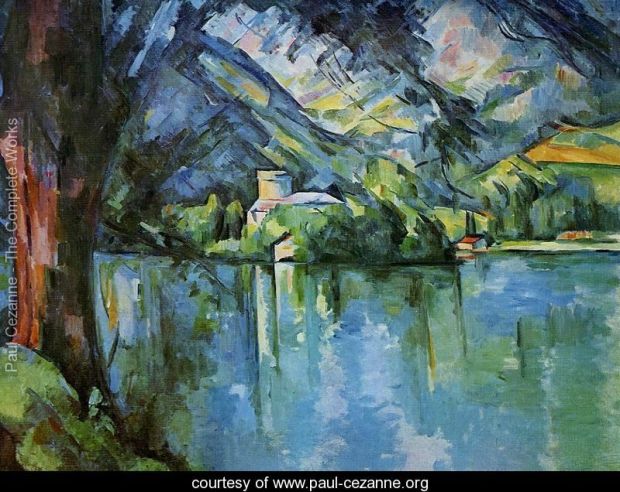
I continue to visit as many classes with different yoga teachers as possible. The diversity reminds me how wonderfully personal yoga practice is. I have started to see each teacher’s yoga style like an artist style. So far, I have met teachers who remind me of Seurat, John Singer Sargent, Renoir and Mary Cassatt. I also imagine my own style to mature into a Cezanne painting.

We learned about the chakras. I feel the same panic I feel looking up symptoms on webmd. It seems all my chakras are imbalanced!

Now that we are closer to the end of teacher training than the beginning, I suppose as a reminder our teachers asked us to reflect on our short term and long term goals regarding our yoga practice, about how we hope to evolve as a practitioner and teacher, about our thoughts on “finding your authentic voice.” All good questions. I wonder how you, my fellow yoga teacher in training would answer. Please feel free to share. How would you describe your style, your spirit artist?

Here is how I answered:

Short term Goals:

  1. To cultivate a steady and consistent practice
  2. To keep learning and becoming better acquainted and comfortable with various poses and styles
  3. To learn more about the internal “non” physical practices of yoga

Long term Goals:

  1. To develop a responsive personal practice that can help me get through the day with less anxiety and more ease
  2. To help others do the same

Ideas and thoughts in regards to “finding your authentic voice”

As a teacher, cook, writer, philosopher I strive to be authentic and mindful. I would like to bring that spirit to my yoga practice and teaching by cultivating:

  • a big picture, a thematic, a meditative attitude
  • awareness of how breath and alignment relate to the sense of yoga as connection
  • humor that admits the contradictions and difficulties in yoga on and off the mat

Who you are as a yoga teacher now

Like an elementary school kid: open, curious, aware but not very confident.

How you desire to evolve as a practitioner and teacher

I hope to be someone who can combine mental, physical and spiritual aspects of yoga seamlessly both on and off the mat. I want my teaching style to be like a Cezanne painting very much invested in the physical by honoring different perspectives on poses, breath, intentions and alignment. Be suggestive and tentative yet clear and purposeful. Like the lake painting where we can see him build an image with uneven and layered strokes into an atmosphere of calmness, (neither dreamy like a Monet or photographic like a Vermeer).


The-Lac-D-Annecy

Wobblyogi Wednesday -YTT Journal Week 7

This week we tried to twist, bind, open our hips and open our mind (by reading the first book of Patanjali). My brain is unlikely to recover. All my adult life I have worked to expand my mind, to use the art of reasoning, to imagine things…so much so that I studied architecture and philosophy as long as I could. Wrote a dissertation about dwelling in the world. And here I am trying to restrain my mind in order to dwell in the world! What! Mind blown……

The two sutras so far that have me twisted and bound are numbers 2 and 17. Yes…I was stuck at number two…after the very first sentence….”Now yoga instruction.”

2: “The restraint of the modifications of the mind-stuff is Yoga.”

17: “Samprajnata samadhi (distinguishing discerning) is accompanied by reasoning, reflecting, rejoicing and pure I-am-ness.

Instead of taking over the world we are trying to notice ourselves in the world. See ourselves as a perspective and not the perspective. Avoid the mouse brain delusion and disappointment.

pinky_and_the_brain_by_jrwcole-d4atvge-606.jpgBook Patanjali Book One tells us why we practice yoga….to restrain the brain. These sutras present yoga as a combination of mental restraint and mindful reasoning, reflecting, rejoicing and recognizing the “I” that appeals to the universal. The self is both restrained and empowered by encouraging selfless and limiting selfish acts. Thinking should help us be kind, not right or worse righteous. Non-judgmental thinking is an incredible challenge. It is so easy to put things in boxes of right,wrong, good or bad. I don’t know if we can  ever see our intentions clearly. Yoga, if anything is  a working evolving practice of seeing ourselves in the world.

We were also introduced to a kundalini practice and a short Ashtanga practice. The rhythm and use of breath were unique in each. All these diverse styles of yoga show how widely the connecting practice is interpreted. We started learning about all the considerations of balancing, building up, slowing down, safety, creativity, modifications and more in sequencing poses. Our homework involved observing a yoga class. While it was difficult for me to watch a class and not participate, the process was helpful in noticing a class from a teacher perspective. The small details of class managment…music, delivering a prop, responding the rising stress in the room etc. We have two more observations to complete. Next time I’d like to focus on how students receive the cues.

For next week, we (the 8 of us) are collectively teaching a class to ourselves and our homework is to individually design a whole session. I feel eager, ready and apprehensive. It seems like we’ve been learning to spell words are now expected to form sentences that make sense. I suppose stuttering is better than babbling.

At this two month mark, I feel more porous….like a sponge, stretched, twisted, squished, soaked and drained. I am quick to notice the few aches and pains that pop up. I find I notice and enjoy what I eat more. When I  feel stress rising in me, I try to remove myself sooner than I would have before. I notice when I feel a negative emotional charge or a hook, conversely, I also notice the positive charges. I still struggle in meditation, in quieting the mind, allowing my mind to roam as it pleases. For now.

I am so thankful for my gentle and patient guides, Jacqueline and Betsy and my seven curious and kind companions in this journey.

Wishing all of you easy breathing,

Wobblyogi


Image fromhttp://8tracks.com/spocktine/soundtrack-for-world-domination

Wobblyogi Wednesday – YTT Journal Week 5


yoga-timeline-all1.pngI find myself surprised to be at week 6 reporting on week 5. Where did the time go? It feels long in terms of how much I’ve learned and short in terms of knowing that there is so much more to learn. This week was mostly devoted to discussing the history, the branches and styles of yoga. Mapping the stylistically wide and historically deep world of yoga has left me happily lost.  What combinations would my yoga practice include: Hatha, Vinyasa, Yin, Jnana, Karma, Kundalini? This was as much about my own history and what brought me to yoga as it was about discussing the hazy, dense lineage of yoga practice that feeds into yoga teacher training in small-town Indiana.

Much like the practice of breathing and asanas that honor my body, it seems I have to feel my way through yoga history and principles in a way that honors my mind and my own personal background. Our discussions didn’t shy away from concerns about religious incompatibility, cultural discomfort with chanting and Sanskrit terminology, or distractions of disengaged students. “What is yoga to me?” is the question that resonated like a meditative chime throughout the week. For me, for now,  yoga is an attentive practice uniting mind, body and breath.

For us in the West, more important than the 5000 year old birth of yoga in India is the 1893 arrival of yoga to Chicago with the words of Swami Vivekananda. As Jacqueline explained, each of Khrishnamacharya’s students approached yoga differently. B.K. S Iyengar, himself sickly as a child, saw yoga as a therapeutic strategy involving attention to alignment and the use of various props. T.K.V Desikachar, learning from his father, saw yoga as an individual practice with attention to breath as shared, Pattabi Jois, saw yoga as a way to direct restless and active children-youth and thus developed more physically demanding sequences.  Indra Devi, the first woman and Westerner to be trained opened the first yoga studio in the U.S. and introduced yoga in China and Argentina.

Yoga in the modern world risks commercial dilution of principles while at the same time is recognized as a therapeutic and preventative path towards holistic health. Understanding and assessing contemporary yoga practices around us today, require awareness of our own preferences and needs. What you look for in a yoga teacher or studio will be guided by whether you want a rigorous fitness based practice or a restorative preparation for meditation…and all combinations in-between. One day your body may crave energy and another day calmness. Finding our way to what we need at that particular moment is the benefit of exploring the historical and pedagogical map of yoga. I have to restrain my philosophical penchant for definitions and just enjoy the path of attentive living.

Walk on and keep breathing wherever the day may take you. This is what I learned this week at yoga teacher training.

May we all find the corners of the yoga world that nourish us.

Bowing to the happy places inside you,

The Wobblyogi

Image from: http://gisyogafall2015.blogspot.com/2015/09/complete-notes-yoga-history-singleton.html

Wobblyogi Wednesday – YTT Journal Week 4

My body and heart are beginning to feel the difference a month makes of regular yoga practice. I feel fantastic! Never better. Really. I can touch my toes in dandasana. I can reach a little further, breathe a little slower, quiet my mind faster and notice much more. I also am aware of all the I have yet to learn and be at ease with. While my legs feel stronger, my tummy feels pudgier. Despite myself, I accept I need to do more back strengthening-core activating poses (Betsy’s Hot Flow Classes…yikes) and maybe channel hungryphil away from delicious Baklava (recipe next post). This certainly will be a lifelong effort beyond the wonderful months of YTT.

Hot yoga is becoming less of a surprise. Less…gosh…its hot. Yin yoga was a new calming experience of effort and stillness.

We watched the first half of the documentary Yoga Unveiled. It offers a historical overview of the principles and systems of yoga practice. The historians and scholars in the documentary confronted the commodification and reduction of yoga to a physical exercise by offering cultural, historical and theoretical context to the practice. For example,  I was surprised to learn that among a host of other introductions, the Chicago World’s Fair also introduced yoga to the west through the September 11th, 1893 lecture of Swami Vivekananda. His message of universal spirituality and tolerance was very well received at the Parliament of Religions. My task and investment in yoga teacher training seems to be getting much deeper and broader than I thought it would.

During these weeks we have also shared a lot of ourselves with our fellow yogis by talking about animals we would wish to be and guests we would invite for an imaginary dinner. Last night we were asked to share our favorite childhood picture. Betsy led us through a meditation session that involved focusing on our inner child in celebration and apology. It was difficult for me. I was surprised by the wave of emotion I felt. I chose this picture with my siblings. They are the rocks of support, love and teasing behind me. My inner child certainly needs them around.

FullSizeRender.jpg

We are discussing chapters 3,4,5 of the Heart of Yoga soon.

These are my two favorite quotes this reading section because of the emphasis on breath as the intentional and internal connection between body and mind. More on the reading discussion next week.

The quality of breath is extremely important because it expresses our inner feelings. If we are in pain it shows in our breathing. If we are distracted we loose control of our breathing. The breath is the link between inner and outer body. It only by bringing body, breath, and mind into unison that we realize the true quality of an asana.

What is yoga after all? It is something that we experience inside, deep within our being. Yoga is not an external experience. In yoga we try in every action to be as attentive as possible to everything we do. Yoga is different than dance or theatre. In yoga we are not creating something for others to look at. As we perform the various asanas we observe what we are doing and how we are doing it. We do it only for ourselves. We are both observer and what is observed at the same time. If we do not pay attention to ourselves in our practice, then we cannot call it yoga.

Wow…that was a lot for a short week of YTT!

Much love,

Wobblyogi


Image below courtesy of Betsy Totti. Thank you Betsy!

IMG_2452


Wobblyogi Wednesday – YTT Journal Week 3

This week we were asked to team teach two fifteen minute sequences of standing and balancing poses. Both times, my partners and I tried to insert standing poses like the wide legged forward bend, trikonasona, extended side angle and the pyramid (or balancing poses like tree, dancer, half moon) smoothly into a sequence. Small  moves like turning the direction of our toes and gaze or stepping back or front became crucial components of a fluid transition. When leading the class, it felt like I was stuttering, as if the mind, body and breathing has yet to learn a new combined language.  I have a new appreciation for all those soothing and calmed voiced yoga instructors out there. Making anything seem effortless takes a whole lot of effort!

Betsy lead us through a Hot Progressive Yoga session. It was a combination of challenging poses and ease that builds in intensity through the session. Despite the intensity and sweat, the session did not conjure feelings of athletic breathless panting. I suppose this was my lesson for the week on and off the mat: to keep my breath steady regardless of ease and effort (and to focus on breathing and cue breathing when teaching).

At my third week of regular yoga practice, I do feel more grounded and grateful. I’m more aware of tight muscles and flexible muscles. I feel increased body awareness and am beginning to understand yoga instructions to “connect with your breath,” “ground through your feet,” “stack your hips” etc,. I’m discovering new questions like why is balancing with closed eyes harder? May that be a metaphor for something? I also continue to be amazed by my fellow yogis. What a combination of intelligence, kindness and grace! I am so lucky to breathe and flow with this inclusive and wonderful little community.

Oh….and we had our first test. It was a good reminder of all that we have learned already. And, of course of things we need to notice as important to remember.

It was a good week. We are no longer strangers. Wherever we started we have all started to deepen our practice.

This week’s yogi snack…dear readers I would love suggestions. What do you like to eat before or after practice? Vegan, vegetarian and/or gluten free options seem difficult to make portable and share-able. Thoughts? Any cook book recommendations out there?

Peanut Butter Cookies

1 cup creamy peanut butter
3/4 cup sugar
1 egg
Optional: 1 teaspoon vanilla, granola, jelly
1. Beat egg and sugar together.
2. Mix in peanut butter.
3. Drop tablespoons of dough. Flatten. Makes about 12-15 cookies.
4. Bake 15 minutes in a preheated 350 degree oven.
Cool completely before enjoying!

Recipe from Food Network, Damaris Phillips.

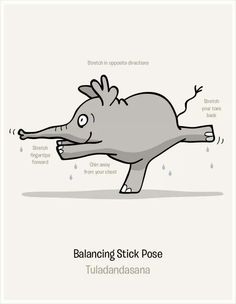
Yoga Elephant image from: https://www.pinterest.com/jenhaussmann/yoga/

Wobblyogi Wednesday: YTT Journal Week 2

This week we are learning to stand. It feels strange to “study” standing. We started with Tadasana (Mountain pose). Betsy, one of our guides, comically stood in the center of our circle, slightly hunched, head forward, arms on hips and said “now talk me into mountain pose.” After our initial giggles, we found ourselves a bit dumbstruck. How do we tell her how to stand? With her help, we eventually learned:

  1. Start with the feet. This is where you connect with the earth and ground yourself. Feet parallel. Either touching or as wide as feels comfortable (although no more than hip distance apart). Weight should be spread into all four corners of each foot.
  2. Moving up and aligning  the body from the ground… knees should be soft (not locked)
  3. Core pulled in. Pelvis neutral. Tail bone tucked in.
  4. Shoulders down and away from the ears. Long spine. Palms facing slightly forward or to the side.
  5. Gaze forward.

Even as I write this, I’m nervous that I got it wrong. For each of us this looks slightly different. The challenge was to notice and “feel” the alignment with the earth ascend through our bones and muscles. By the time we talked through urvdha hastasana (arms up), uttasana (forward fold), ardha uttasana (table pose), utkasana (chair pose), adho mukha svasana (downward dog) and Virbhadrasana (warrior 1), I forgot how to stand. Noticing all these connections within us that allow us to move to through the world is overwhelming. The next few sessions we continue with standing poses. More on that adventure next week.

Our homework for the week involved reading the first two chapters of The Heart of Yoga by T.K. V. Desikachar. The first chapter describes the concept and meanings of yoga, while the second chapter introduces the foundations of yoga practice. Both chapters are premised on the introduction interview of Desikachar where he stresses the importance for him (and his father Krishnamachayra who taught him yoga) of an individual approach to yoga.  As I read the chapters, I kept this emphasis in mind and asked, what can I learn from this?

The first quote that tickled my activist philosopher sensibilities to live an examined life:

The practice of yoga only requires us to act and to be attentive to our actions. Each of us is required to pay careful attention to the direction we are taking so that we know where we are going and how we are going to get there; this careful observation will enable us to discover something new. Whether this discovery leads to a better understanding of God, to greater contentment, or to a new goal is a completely personal matter.

Such focus on action and personal commitment makes yoga for me so therapeutic for mind and body.

The second quote that gave me pause considered the concept of avidya or clouded understanding by ego, attachment, rejection and fear and the role of yoga in clarifying our understanding by reducing the fog.

Altogether, these three ways of being — health, inquiry, and quality of action — cover the entire spectrum of human endeavor. If we are healthy, know more about ourselves, and improve the quality of our actions, it is likely that we will make fewer mistakes. It is recommended that we work in these three distinct areas to reduce avidya. Together they are known as kriya yoga, the yoga of action. Kriya comes from the kr, meaning “to do.” Yoga is not passive. We have to participate in life. To do this well we can work on ourselves.

How might learning to stand in mountain pose help me clarify my understanding? I don’t know yet, but I suspect by engaging in present, embodied, material thinking of how my bones, muscles and breath are behaving I am training myself to notice without ego (comparison to others), without attachment (to a particular pose), without rejection (of a particular pose), without fear (of standing wrong). I suppose yoga helps me find my own way to stand in the world.

Next week more standing poses.

Wishing you mindful moving,

Wobblyogi

elephant image from here

Wobblyogi Wednesday – YTT Journal Week 1

Sore but happy, I survived week one of yoga teacher training. I feel like bread dough that has been thoroughly kneaded and is waiting to rise in a warm spot. Stretched and pulled, pushed and rolled, I feel emotionally and physically energized and tired at the same time. The classes themselves swing between active working through poses and relaxed conversation circles. This week’s activities included a discussion about awkward scenarios encountered in yoga classes, a Sun Salutation workshop, a hot yoga and a prenatal yoga practice. This is what I learned:

  • Yoga teaching is like any teaching….students sometimes make inappropriate comments, wear inappropriate attire, fall asleep, don’t follow instructions, look at the time, disrupt the class, get sick and oh, yes…..fart. This in the crass side of yoga teaching that makes the zen side possible and so precious. Our duo of yoga teacher training teachers were keeping it real. Yoga is no place for cerebral idealization. The body in varied forms will and do demand attention.
  • Hot Yoga is very hot! All it missed was the humidity of India for a full experience. My hands were slipping, sweat was dripping onto my mat. It wasn’t pretty. It did make my throat and lungs, suffering from a bit of cough, feel much better. I also realized that I’m supposed to “salt” my yoga mat to break it in.
  • Doing Sun Salutations for three hours on a Sunday morning is demanding. The three versions can be easily confused. We were paired up and teaching each other. Breathing, talking and moving at the same time is MUCH more difficult than I ever imagined. It will take practice and homework. Here is a good website that explains the significance of doing 108 Sun Salutations.
  • I wish I did prenatal yoga when I had my babies. It was a nurturing and elegant way to learn about modified poses. We did a few poses against the wall.
  • There are a lot of yoga information (and misinformation) out there. We talked about a few websites and apps.

For my yoga buddies, here is the recipe for raisin and nut balls, as promised.

Adapted from the Yoga Cookbook, recipes from the Sivananda Yoga Vedanta Centers

IMG_2415

Raisin Nut Balls

  1. Blend or process 1/3 of cup unsalted nuts
  2. Blend or process 1/2 of cup of raisins
  3. Combine the sandy textured nuts and raisins
  4. Add 4 tbs melted butter. Form 12 small balls.
  5. Roll in unsweetened shredded coconut
  6. Eat warm or chilled

The book suggested swapping peanut butter or tahini for the butter, trying roasted coconut for coating and a few other variations. This would be an easy recipe to personalize. Make it yummy. I wonder if cranberries and pecans would work?

elephant image from here