Non-Judgemental Judgement?

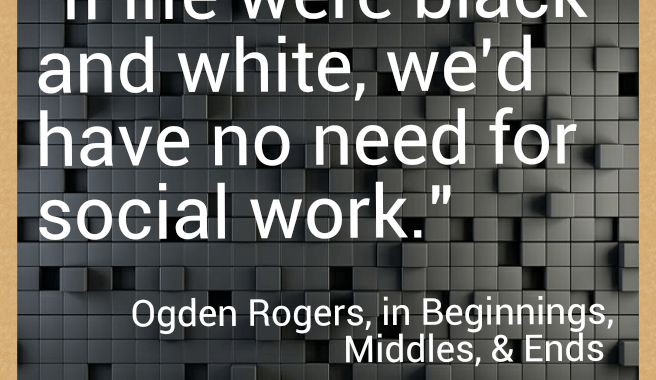
The practices of yoga and social work both encourage maintaining an attitude of non-judgemental judgment. This requirement feels like Kant’s demand for an “disinterested interest” in the judgments of beauty. Suffering, care, and beauty all depend on our ability to notice what is happening without forcing theoretical preconceptions. Practicing this attitude of noticing without prejudice (i.e. pre-judgment) about how a pose or human well-being or a painting ought to look, is difficult. One suggestion, according to Prof. Ogden Rogers, is to go with the defense, to run with a running a man instead of trying to stop him. To stay “with” before trying to change..in yoga terms…stay with your breath, notice what is happening for you, stay with the discomfort…………stay with…stay with….stay with…….

Going With the Defense

Whatever a client brings to you, accept it as a gift. There are thoughts, feelings, and behavior, seen and unseen, and whatever emerges is something to be tracked, followed, and used to help the relationship. Never stop a running man. Run with him and wave others off who might stop him. Slowly slow your pace, travel to a place where the running no longer serves a purpose, and perhaps sitting and talking will emerge. Some wise workers call this “exhausting the resistance” or “going with the defense.”6 I like to think of it as simply unwrapping a gift and using it.


Rogers, Ogden W.. Beginnings, Middles, & Ends: Sideways Stories on the Art & Soul of Social Work (p. 40). White Hat Communications. Kindle Edition.

In the Middle of a Middle

We need nonjudgmental judges. We need those who can enter respectfully into the middle of our private muddles and echo the outside of our public rule. We need those who can understand the craziness that keeps us sane, and yet interpret the taboos that glue us together. We need advocates of the infinite diversities individuality provokes…and speak it to the Leviathan, and make it understand.

Rogers, Ogden W.. Beginnings, Middles, & Ends: Sideways Stories on the Art & Soul of Social Work (p. 83). White Hat Communications. Kindle Edition.


Hunger, courage and a snack in Oslo

IMG_4435

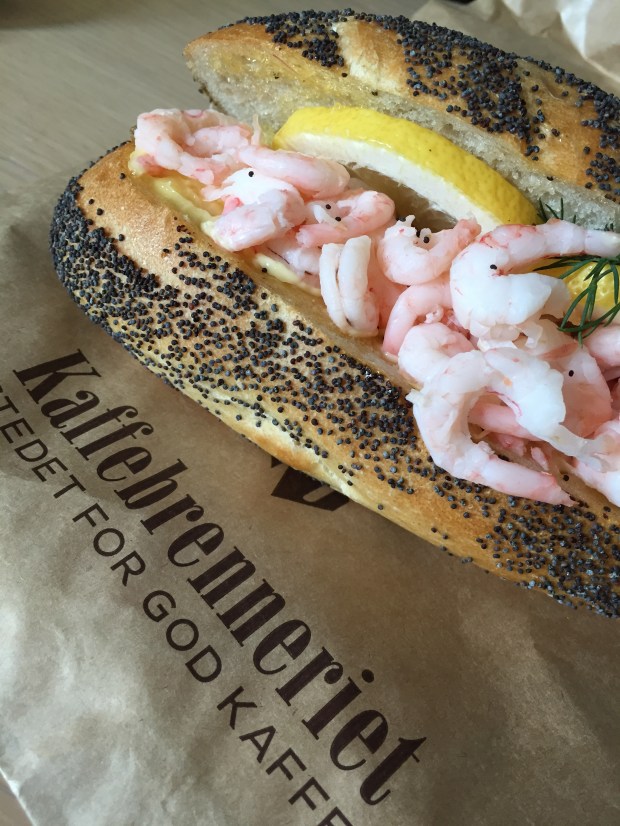
I found a bench for myself and began gnawing greedily at my snack. It did me a lot of good; it had been a long time since I’d had such an ample meal, and I gradually felt that same sense of satiated repose you experience after a good cry. My courage rose markedly; I was no long satisfied with writing an article about something so elementary and straightforward as the crimes of the future, which anybody could guess, or simply learn by reading history. I felt capable of a greater effort and, being in the mood to surmount difficulties, decided upon a three-part monograph about philosophical cognition. – from Hunger by Knut Hamsun (Noble Prize Winner, 1920)

As I read these words by controversial Nazi sympathizer and nobel laureate Knut Hamsun, the significance of my first bite in Oslo became clear.  It was a short walk from the National Theatret station to the Savoy Hotel, made slow and deliberate by the bumpy drag of my carry-on wheels and by the weight of my backpack pressing down each step. I happily welcomed this seemingly underwater rhythm of a traveler on foot after the cramped imprisonment of seatbelted air travel. My snack, this shrimp sandwich, hearty chewy bread, sweet shrimp, bright lemons, woke me up. I felt the sense of “satiated repose after a long cry” and also, the mood “to surmount difficulties.”

I hope you find good snacks that offer repose and courage during your summer travels.

For now, I’m back on my warm Indiana porch with birds chirping and gentle windchimes…….. reading and snacking.


Wobblyogi Wednesday: Book Club Workshop and Eats

Last weekend our yoga book club met to talk, practice, eat, watch a documentary and talk some more. The three hours flew by. Jacqueline lead us through a beautiful asana practice inspired by mantras from the book.  We talked about the difference between ambition and greed, between pain and suffering. We talked about what we liked about the book and what we didn’t like. We talked beyond the book about the challenges of a home practice, about how we came to join the book club.  We watched and talked about the documentary: Yoga Is. It was movie night, book club and tea time rolled into one. What a wonderful way to spend a Spring Sunday afternoon!

Usually after practice we rush back to our respective lives. What a welcomed treat to sit and laugh with my fellow yogis.

Our snack menu included items to balance Spring Kapha flavored with heat building spices of ginger and black pepper.

Corn Tacos with Tofu and Bitter Greens Scramble

Cucumber Slices with Hummus and Feta Crumbles

Dates stuffed with Crystallized Ginger and Almonds

Roasted Chickpeas

Spiced Ginger Tea

All of the snacks were easy to assemble. The most “cooking” I did was the tofu scramble. The “heat inviting” meal ironically required very little fire to prepare.

Here are a few directions.

For the Corn Tacos (less gluten and dairy helps balance Kapha): Break up a box of extra firm tofu. Add any spice mix of your choice to the broken up pieces. I used a spring spice mix with turmeric, fennel, cumin, ginger, black pepper and chili powder. Heat a tablespoon of oil in a wide pan or wok. Add tofu. Let it dry out and even brown on one side before you move the pieces around. You can take the tofu out of the pan or just have it waiting on one side of the pan, while you wilt some greens (spinach, arugula, chard). You can also add onions or garlic, if you like. I didn’t. Once wilted, toss greens with tofu and your filling is done!Warm some corn tortillas with ghee, butter or an oil of your choice. Add filling. Maybe top with shredded carrots or avocado slices. Enjoy.

The stuffed dates were simply crystallized ginger and almonds pulsed together into a grainy consistency. Stuff the mixture into de-seeded Medjool dates.

The cucumber slices were just that. Sliced cucumbers topped with hummus and sprinkled with feta.

The roasted chickpeas (deep frying is tastier but not very healthy) were drained canned chickpeas, tossed with vinegar, oil and a spice mix (I used the same spring spice mix as the tofu) and baked at 400 degrees until crispy. Between 30-40 minutes. During cooking you’ll need to moves the peas around to get an even bake. That’s it.

The spiced tea was regular tea with milk, a touch of sugar, spiced with ginger and black pepper.

If you couldn’t join us, I hope you can find the time to enjoy the book, the movie and the snacks with your friends. Next time, join us.

Looking forward to our next book club meeting in late summer,

The Wobblyogi


http://yogaismovie.com/

http://www.judithhansonlasater.com/lly2/

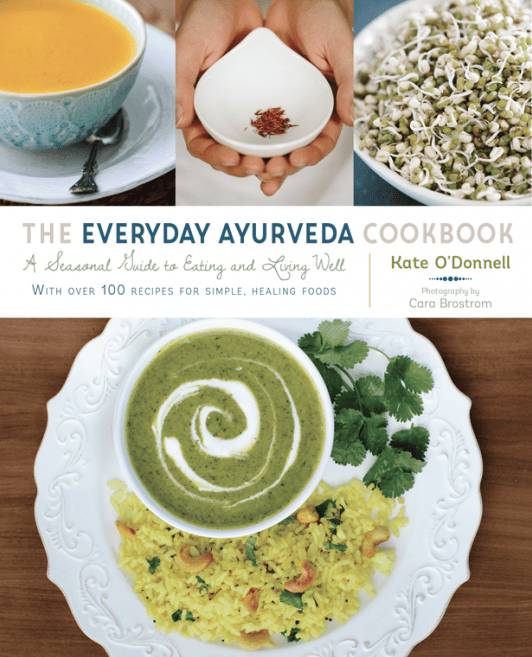
My favorite Ayurveda Cookbook is this one by Kate O’Donnell. I modified the taco recipe offered in this book. It has many other recipes that are easy to to prepare and have easy to find ingredients. O’Donnell reminds us that Ayurvedic cooking is not limited to Indian food!

Everyday-Ayurveda-Cookbook.png


Me, a hungry philosopher?

IMG_4202.jpg

I am a self-proclaimed food philosopher. Maybe I’ll be able to convince a few others of my suspicion after “How to Eat Bittermelons and Brownies: Recipes from a Philosopher Mom” is complete. Until then, I am an unverified food philosopher and an imperfect but verified mom.

I used to be a design historian and secretly a design philosopher. Design brought me to the dinner table, figuratively and literally. In Adolf Loos’ roast beef and Loewy’s burgers, I found insight into how creative people think about things. I became fascinated with how what we eat flavors how we see the world.

Whether I categorize myself as a food writer or a design historian, I always approach edible and inedible things through the lens of philosophy. Instead of looking at things through a historical analysis of context, change, and style, I like to ask: what makes this thing possible? Where does this thing begin?  How is this thing, an independent thing?

Regardless of whether I’m looking at a table, a dinner plate, a fork or a piece of fried chicken on a plate, or Hawaiian Kona coffee in a teal ceramic mug, my inner-questioning is the same: conditions, origins, and autonomy.

I experience the edible and inedible as events of self-examination.  My teal mug of Hawaiian Kona coffee sitting on my small square cafe table is more than mere caffeine to sustain my thoughts. It is rent. Bitter. Sweet. Milky. Warm. Traveled. Brewed. Stirred. Transported. Grown. Exchanged. Fragile. Heavy. Liquid. Deco. Diner style. Comforting. Inspiring. It is always more than my analysis can reveal, like myself. It is more than its history. Everything is a question, awaiting a response. But, never THE response.

I am a food philosopher not because I review restaurants, document my travel eats, collect food narratives, curate food poems, post pictures of food and write recipes. I am a philosopher who wonders about how my cup of coffee came to be. It is real, worldly, messy and mysterious. As I do so, I am not “ecstatic” in a Heideggerian sense, I am not “thrown in the world.” Rather I strain to stay “in” and among things, I strain to stay with my cup of coffee, even as I drain it and will soon abandon it in a bin of dirty dishes to washed up by a stranger later today.

I am a hungry philosopher because I feed on wonder. Like you.

As I work on my manuscript, I often lose my place and perspective. This was just a quick reminder that I write because you read. I read because you write. We are all questions and responses. Consuming and consumed.

I so appreciate you.

Yours,

Hungryphil


Having an Idea – Guy Claxton

The mother does not engineer her child’s intrauterine development, but she influences it enormously through her lifestyle and her sensitivity, her anxieties, appetites and attitudes, her history and her constitution. Who she is, and the physical and emotional environment that she herself inhabits, affects the nature and the quality of the sanctum that she provides for the growing form of life within her. And so it seems to be with intuition: there are conditions which render the mental womb more or less hospitable to the growth and birth of ideas; and differing ways in which, and extents to which, different people are able, wittingly and unwittingly, to provide thsoe conducive conditions. The more clearly we can identify what these conditiona are, the more able we shall be to see how they can be fostered.

From Hare Brain and Tortoise Mind: How Intelligence Increases When You Think Less

Meditation and mindfulness are ways to foster intuitive awareness and intelligence. It allows our brain to synthesize and absorb information and feelings.  The book defends intuitive and creative intelligence, pooh-bear thinking, through an analytical “d-mode” rabbit logic. It shows the value of thinking differently as the need arises, “abiding in uncertainty” for fuzzy problems and seeking clear solutions for defined problems.

Deciding whether a problem is fuzzy or defined may require both.

Related to the complexity about how to think about X, Claxton explains the fallacy of dream interpretation according to James Hillman.

It is the very nature of nature of dreams to hint and allude. ‘An image always seems more profound, more powerful and more beautiful than the comprehension of it.’ To ask of a dream “What does it mean?” is as misguided as to ask the same question of a painting or a poem – or a sunset, come to that. “To give a dream the meaning of a rational mind is … a kind of dreading up and hauling all the material from one side of the bridge to the other. It is an attitude of wanting from the uncounsious, using it to gain information, power, energy, exploiting it for the sake of the ego: make it mine, make it mine.’ The proper attitude towards a dream, according to analytical psychology, is to ‘befriend’ it: ‘to participate in it, to enter into its imagery and mood, to …play with, live with, carry and become familiar with – as one would do with a friend.’ So, ‘the first think in this non-interpretive approach to the dream is that we give time and patience to it, jumping to no conclusions, fixing it in no solutions … This kind of exploration meets the dream on its own imaginative ground and give it a chance to reaveal itself further.’

Thank you, Kathy, my friend, for recommending this book! Looking forward to reading, Intelligence in the Flesh: Why Your Mind Needs Your Body Much More Than It Thinks.

May we all foster  creative conditions, have good  idea babies and befriend our dreams,

Hungryphil

Happy President’s Day from Lincoln’s Kitchen

The first sentence in Rae Katherine Eighmey’s book, Abraham Lincoln in the Kitchen: A Culinary View of Lincoln’s Life and Times, begins–

“Abraham Lincoln cooked!” The words leapt off the pages of my sixty-nine-year-old copy of Rufus Wilson’s Lincoln Among His Friends. I could hardly believe what I was reading. Yet there it was. Phillip Wheelock Ayers, whose family at the corner of Eighth and Jackson, described how Abraham Lincoln walked the few blocks home from his Springfield law office, put on a blue apron, and helped Mary Lincoln make dinner for their boys.

The book, picked up at the Lincoln museum store this weekend,  proceeds to serve a multi-layered story of Lincoln’s life through tastes, celebrations, and trials. I just started reading the book and have made it only up to the first recipe for corn dodgers (a sturdy enough corn cake that kid Lincoln could carry in his pocket as a lunch and reading snack during the workday). Midwestern Corn-based breads seem the perfect place to start cooking with Lincoln. The culinary historical journey includes 55 updated recipes from the period. Maybe next President’s Day will include eating like a president.

For today, imagine Lincoln in a blue apron prepping dinner in his small kitchen pictured above.

Amplifying: Visual Strategies of the Women’s March

We must speak our minds openly, debate our disagreements honestly, but always pursue solidarity. —- President Donald Trump, Inauguration Speech, 1/20/2017

What do the posters tell us about the Women’s March?

As it evolved from post-election despair, I hoped that the Women’s March would become an affirmation of unity instead of a flat rejection of the ideological personality of Donald Trump. To me, the five images chosen by the Amplifier Foundation does just that by highlighting the struggle between the conceptual and the concrete, the abstract and the material, and the biological and the cultural.

wmw_hearourvoice_bleedlowres

The “Hear Our Voice” poster eloquently presents unity in diversity in form, color, and background. Notice the abstracted black fist with the red flame that supports the three distinct and individualized hands, one with a ring, one with bracelets and one with nail polish. Notice the visual movement from the bottom text to the collective birdsong. The bird, the shared voice is the only diagonal in the image that breaks the unity and symmetry of the image. Notice the starry blue background that references the United States of America. Notice the colors and the use of blood red. Notice the handcrafted quality of the image. This poster represents doing without the comfort of pristine ideology. For artists out there saying you can do better. Do it. There is room for more vision. This poster is only one of five on one website. “Hear our voice” is a call to act, to listen. It paints an alternative picture of collaboration and action, against masculine competition fueled by greed, violence and empty egotistical ideology.

If we read the Women’s March Principles (addressing issues of violence, reproduction, LGBQTIA, work, civil rights, disability, immigration and environment) with this visual in mind, we see the movement towards unity as THE struggle, irrespective of coming and going political establishments. Where human rights can be abstract and universal, Women’s rights depend on the immediacy of blood and local support. How can we take care of our sisters despite our disagreements? How can we have a working conversation about sensitive and intimate problems about our bodies, our work, and our loved ones? None of us have the answer to these questions on our own. That’s the point. That’s what the poster and the march are about.

Previously, I had considered the visual strategies of the Occupy Wall Street posters. The Women’s March offers an alternative and parallel world of action. It asks, what if we value collaborative action over power secured through profit?

For me, the Women’s March is about amplifying our common needs despite our biological, cultural, political and economic differences.

I join my daughter, you and yours at the Women’s March in Washington and beyond,

Walking with you always,

Mom, sister, friend, hungryphil, Lisa

For more posters go to http://march.domecollective.com/


Wobblyogi Wednesday – Book Club Notes 2

Hello, fellow yogis engaged in self-study!

This week my notes are about the first 4 chapters of Living Your Yoga by Judith Lasater.

Spiritual Seeking

Whether we seek something called spirituality, holiness, or enlightenment, the route to it is through our humanness, complete with our strengths and our weaknesses, our successes and our failures….

To practice yoga in the deepest sense is to commit to developing awareness by observing our lives: our thoughts, our words, and our actions.

In order to cultivate spirituality Lasater suggests the strategy of adopting an “abiding practice” in which we combine a pose (an action) with a mantra (a deliberate thought). For example, combine tadasana (mountain pose) and the mantra, “I commit to living my life fully at this moment.” If you have a particular spiritual direction, you can combine an action or asana with a short prayer. This way we bring in mindfulness to our actions. We abide and stay with the act instead of rushing to completion. I am particularly guilty of rushing through tasks I don’t enjoy like washing the dishes or folding laundry. Next time I’ll try to add a mantra and see if that helps me stay in the moment, maybe even appreciate the moment.

Discipline

Do what you can do fully.

Patanjali describes this as abhayasa, which comes from the Sanskrit roots of abhi and as, and means literally “to apply oneself.” From this viewpoint, all of life is practice. Practice is not about what you get, it is about what you give. Whether you are driven or resistant, the medicine is the same: do what is truly possible with unwavering commitment to giving your self to the moment. Without this intention, practice becomes another task to be completed and it loses its ability to transform. And transformation, or freedom, is the reason for all discipline.

Lasater’s strategy to cultivate discipline involves making a list of things you want to do, choosing one and devoting 15 minutes, every day to that task, whether it is writing a book, meditating, blogging, playing an instrument or sewing. Honor your choice. After you have done this for a month, review yourself. How are you doing? How do you feel?

I unknowingly followed this technique when I started blogging. Small consistent steps. It became a habit, like my childhood journaling. And has led me to be more comfortable with my voice. I also tell myself “I have all the time to do what I want.” This reassurance helps me feel less rushed and behind. Discipline is certainly an area I continue to work through. I find I can focus on one intention at a time. For now, for me, it is writing every day. I would like to add meditation and yoga every day. I save that struggle in discipline for another time, soon.

Letting Go

Letting go involves cultivating perspective, a release of control and expectations.

Patanjali’s “detachment” beckons you to cultivate the willingness to surrender as you go along, right here and now, but not because you despair or are uninterested. On the contrary, detachment requires total engagement. When you allow yourself to see things as they really are, then– and only then– can you love yourself and others without hidden expectations. Detachment is the greatest act of love.

This is a familiar concept in many religions that require a submission to the divine, the relinquishing of the perception of control. When you find yourself struggling, Lasater’s advice for letting go is to shine a spotlight of awareness on the attachment, instead of trying to detach. This attention allows us to loosen our grip and weaken its power over us. Staying in the moment, without control and expectation, is a difficult task. Often when in a group, I will deliberately relinquish control of the situation, whether it be choosing the restaurant or a movie, for me prioritizing being together over asserting my want or authority helps. I try to notice when I want to interrupt a conversation or offer uninvited “help.” Especially as a mom, I find the balance between letting go and active direction difficult.

Self-Judgment

The grip of self-judgment can be suffocating. Yet, we are all guilty of it. I liked how Lasater explains the compulsion to self-judge as a form of egoism.

….there was no way that I could be harsh towards myself and, at the same time, be compassionate to others. I realized also that the process of silently putting myself down was actually a form of egoism.

If you expect more from yourself than from others, you are saying that you are better than others and , therefore, must perform at a superior level. I do not mean that you should not set goals for yourself. Rather, the quesiton is, how do you react if you cannot meet these goals?

Lasater suggests that as we engage in a difficult task, we tell ourselves “I am attempting something difficult, and I appreciate myself for trying.” This way we release expectations and enjoy the process of learning or trying something new. She has other suggestions too, for example, taking a break from criticizing anyone, including ourselves for an hour a day.

During my day, I try to notice these topics and look for opportunities to use a few of these strategies. None of this is easy or automatic, I suppose that’s why yoga is a practice. A lot of practice.

How did you feel about the first four sections? What resonated with you? What practices do you find most difficult? Are there other strategies that work for you?

Excited to hear your thoughts,

the Wobblyogi

Wobblyogi Wednesday – Book Club Notes 1

Welcome to the yoga bookclub hosted by Community Yoga in Indiana!

Living Your Yoga – Finding the Spiritual in Everyday Life by Judith Lasater (Berkley, CA: Rodmell Press, 2000)

For more information on Judith Lasater herself and quick background, look up her website: http://www.judithhansonlasater.com/

[The notes relate to the first edition. I recently got the second edition and will note any significant changes. Her introduction to the second edition talks about the additions.]

If you have the book already in hand, let’s get started with the introduction where Lasater talks about how she came to yoga, how she understands yoga, how she “lives her yoga” and how she designed the book.

Here are a few passages and associated questions that resonated wih me and I can’t wait to hear which phrases, passages or ideas resonated with you.

Thought 1

Lasater talks about her experience in coping with childbirth, her background as a dancer and her “desire for a direct and personal relationship with divine,” as factors that led her to seek out and continue to practice yoga.

She writes, ” What I now know is that I had been seeking wholeness through integration of my body, my mind and my spirit.”

For us,we can ask,

What do I seek?

What brings me to yoga?

What makes me stay?

Thought 2

Laster’s yoga practice, she explains, responds to her search for wholeness.

…to practice is to pay attention to your whole life: your thoughts, your bodily sensations, and your speech and other actions. As you do, you will discover that nothing is separate from anything else. Thoughts are sensations of the mind just as sensations are the thoughts of the body. Each moment of your life is a moment of potential practice.

Practice, then, can be understood as a willingness to return to the reality of the very moment, that is, to observe with dispassion and clarity exactly what is — right now.

What is happening right NOW in my life? Why am I hosting a book club? Writing these words? What do I hope for my thoughts, feelings and sensations?

How do I connect to my own wholeness?

How do I connect to this very moment?

How do I connect with you my fellow readers?

Thought 3

After Lasater describes the structure of the book she concludes the introduction with a quote from Dag Hammarskjold, secretary general to the United Nations (1953-61):

In our era, the road to holiness necessarily passes through the world of action.

She then asks us to “use this book in whatever ways best serve your needs. Living Your Yoga is my gift to you.”

What might be my road, my world of action?

How might I best use Lasater’s gift of  Living Your Yoga?

Here are my quick thoughts. What are yours? How might we bring these thoughts to our practice?

Let’s talk!

Let the book club begin!!

Anyone reading can join the conversation on this blog, just add your comments below. There is also a protected discussion platform. For a password and more information about the bookclub and April 1st workshop, go to:  https://communityyogalafayette.com/book-club/

Much love,

The Wobblyogi

My plan for offering notes to help us stay with the book is as follows:

January 13: Chapters 1-4
February 1: Chapters 5-7  (and additional chapter on relaxation)
February 15: Chapters 8-11
March 1: Chapters 12-14
March 15: Chapters 15-18 (and additional second edition chapter on empathy)
March 29: Chapters 19-21 (and additional second edition chapter on worship)
April 1: Book Club Workshop


Wobblyogi Wednesday – Book Club!

CYLogoB-W.jpg

Living-Your-Yoga-book-cover-200x300.png


Dear Fellow Yogis Near and Far,

I invite you to join the book club hosted by Community Yoga in West Lafayette (and Lafayette) Indiana. I’ll be offering bi-weekly notes and discussion prompts starting January 4th leading up to an April 1st workshop at the studio complete with an asana practice inspired by the reading, as well as a book discussion. Read along, join the open online discussion, the protected group discussion (email for a password at communityyogalafayette@gmail.com) and attend the workshop. Do it all or in part as your schedule allows.

Living Your Yoga: Finding the Spiritual in Everyday Life is our first book. I  was inspired by the Patanjali 101 online course I just completed with Judith Lasater. I enjoyed her commitment to cultivating yoga principles both on and off the mat. As a mom, I related to a lot of her stories and struggles. The book is organized in short thematic chapters that are easy to read. I found it a gentle introduction to yoga philosophy that avoids pedantic technical theorizing and perfect for starting conversations.

The main question she prompts me to ask myself is:

If the road to holiness passes through the world of action, what is your road? 

I hope you join the conversation and help me with directions.

Wishing you goodness and ease,

The Wobblyogi

p.s. Look up https://communityyogalafayette.com/book-club/for more information and to sign up for the protected discussion group and/or the workshop.