
Reading YOGA RISING

Yoga Rising is a collection of yoga stories about authentic practice beyond superficial projections of perfect yoga poses and bodies in media. The stories are compiled by Sociologist and Women’s Studies Professor, Melanie Klein and return us to shared struggles toward authenticity and self-study (svadyaya).

I was particularly drawn to Indian-American yoga teacher Lakshmi Nair’s story, “Whose Yoga is it Anyway?: An Indian-American’s Adventures in YogaLand.”

I can easily relate to her concerns about romanticizing and reducing Indian culture and the origins of yoga….

While romanticization of our culture might seem preferable to outright bigotry and ignorance, I feel a lump in my throat chakra when I hear white folks singing the praises of Rama, a Hindu God who is said to be an avatar of Vishnu, one of the trinity of Hindu patriarchal deities and is the hero of the epic Ramayana. Do I bring up that Desi (South Asian) feminists revile Rama for his treatment of his wife Sita (though She Herself is an avatar of the Goddess Lakshmi) and risk getting flooded with those pitying looks that I get when I wear a bindi (the mark worn traditionally by Hindu women on the third eye chakra point) … hip on white women, but a marker of patriarchal oppression on me? Do I bring up the Dravidian nationalist theory that the Ramayana is a narrative of Aryan colonization of the Dravidian South in which the Dravidians are rendered as monkeys and demons?

Like her, I hope yoga in the U.S. and everywhere can be inclusive and open to a diversity of experience. For more about her Satya Yoga Collective: Yoga for people of color, look up: https://www.satyayogacollective.com

Like her, I believe in yoga as a form of social action:

We cannot strive to liberate ourselves alone. To truly free ourselves from suffering, we must work tirelessly to end the suffering of every being on the planet, because we are all One. That is our dharma. Yoga IS social justice.

Klein, Melanie C.. Yoga Rising: 30 Empowering Stories from Yoga Renegades for Every Body (p. 161). Llewellyn Worldwide, LTD. Kindle Edition.

Happy reading!

Wobblyogi

Socks and Defiant Fragility

I thought back to med school, when a patient had told me that she always wore her most expensive socks to the doctor’s office, so that when she was in a patient’s gown and shoeless, the doctor would see the socks and know she was a person of substance, to be treated with respect.

Kalanithi, Paul. When Breath Becomes Air (p. 187). Random House Publishing Group. Kindle Edition.

This story makes me think about the socks I will wear to my next checkup. It is an apt representation of the struggle to maintain our identity, respectability, and humanity when being medically or otherwise analyzed and assessed.  If I were to choose a pair of socks to carry the burden of expressing my personality, which would it be? My colorful Frida Kahlo socks, dignified black socks, sporty pink lined ankle socks, lace-rimmed boot socks? What makes me, me? and how can I protect and show that I am more than my faulty body, thoughts or feelings? I love this patient’s resistance to being reduced to a medical chart and her insistence on presenting herself as a “person of substance” despite being sick, weak or broken. To know that I am fragile and substantive, or rather because I am fragile, I have meaning. The patient seems to say, “I wear socks as an expression of my defiant fragility. I confront my own exposure to the threat of meaninglessness with the best socks I have.” I find myself inspired by this small act of resistance.

In my training as a hospice volunteer, protecting a sense of choice for patients is paramount. Choice gives them/us, humanity. Choice gives them/us, personality. Choice makes the difference between suffering or confronting death. Hospice gives them/us, socks.

A while back when I was having a difficult time, my good friend K. gave me these socks, with the note “walk in love.” I think this will be my socks when defiant fragility is called for. It is good to have good friends.

IMG_4115


Happiness as Defiance in Bangladesh

IMG_5258

According to the Happy Planet Index, Bangladesh ranks 8th among 140 countries. Just for comparison, the USA, where I live, ranks 108.  How is this possible that a place plagued by a high density of population, poverty, halting traffic, uncertainty and low life expectancy be so….happy? There seems to be no reason to be happy in the developing world. Afterall, most of my family chose to emigrate to the West. What did I miss?

Over my brief holiday stay in Dhaka, I caught glimpses from a fourth story veranda that might explain the high happiness factor.

Here’s my personal observation:

People seem to actively pursue small joys despite the inconvenience of crowds, traffic, workday, etc. No excuses. Morning walks by the lake, tea at the street corner with friends and strangers, wearing vibrant colors, music on the rooftops and streets and prayers on the street. Two things stand out:  socializing and eating. A lot. Everywhere. Based on the quantity and variety of food in the streets no one would believe hunger existed in Bangladesh.

New Year’s Eve there was a government ban on fireworks. Yet, I was woken up at midnight to the sound of fireworks shooting off the rooftops along with a steady stream of rising gentle glowing paper lanterns. Some caught on fire, some blew off to far away places to litter a different neighborhood the next day, there were explosive color and noise, alongside flickering floating lights, there was the sound of laughter, the smell of food cooking on the rooftops. People are willing to burn money for a good show of joy (fireworks are super expensive!) as a social service not mere personal luxury. It was the most private yet shared joy I experienced in any New Year’s Eve celebration ever,  as much a spectacle as a meditation. It was beautiful and unsafe. Whenever I need a moment of magic I’ll remember that dark night sky shot through with color, light, laughter and joyful defiance.  Thank you, Atiya for the photograph capturing the lanterns.

There is no reason to be happy. Like beauty, happiness is not efficient, clean, predictable, convenient or contained. In Bangladesh happiness doesn’t perch on your shoulder gently when you are not looking, as a side effect of ease. It is a  hard-fought battle against difficult circumstances and with considerable risk, along with others sharing tea and snacks.

Snack on and socialize everyone!

May you be happy,

Hungryphil


Right now, What is important to you?

My very wise for her years niece, Farah recommended I read this book by Paul Kalanithi, When Breath Becomes Air, an account of his last days as a neurosurgeon, cancer patient, husband, son, father, writer and more.  The urgent search for meaning is palpable in his words and reminds us that an awareness of death makes us also aware of life. And, more importantly, what makes life worth living for each of us. Right now, what is important to you? Getting your garage clean, cooking dinner for your family, finishing a book, knitting a sweater, holding your loved ones hands, hugging your kids, paying the bills? An awareness of inevitable and unpredictable death limits abstraction and makes our search for meaning concrete, real and EMBODIED. How can I make meaning with the body, the life, the heart beat, the energy I have today?

Here is how Paul explains the struggle of meaning constrained by time:

The tricky part of illness is that, as you go through it, your values are constantly changing. You try to figure out what matters to you, and then you keep figuring it out. It felt like someone had taken away my credit card and I was having to learn how to budget. You may decide you want to spend your time working as a neurosurgeon, but two months later, you may feel differently. Two months after that, you may want to learn to play the saxophone or devote yourself to the church. Death may be a one-time event, but living with terminal illness is a process.

Kalanithi, Paul. When Breath Becomes Air (pp. 160-161). Random House Publishing Group. Kindle Edition.

The terminally ill in body, intensely aware in mind show us the depth of human courage and reminds us what it means to be “fully alive.” Buddhist practices of death mediation or the yoga pose savasana (corpse pose) aim to invoke this mindful struggle for embodied, personal meaning that the terminally ill acutely suffer.

From the epilogue written by his wife, Lucy:

Relying on his own strength and the support of his family and community, Paul faced each stage of his illness with grace—not with bravado or a misguided faith that he would “overcome” or “beat” cancer but with an authenticity that allowed him to grieve the loss of the future he had planned and forge a new one. He cried on the day he was diagnosed. He cried while looking at a drawing we kept on the bathroom mirror that said, “I want to spend all the rest of my days here with you.” He cried on his last day in the operating room. He let himself be open and vulnerable, let himself be comforted. Even while terminally ill, Paul was fully alive; despite physical collapse, he remained vigorous, open, full of hope not for an unlikely cure but for days that were full of purpose and meaning.

Kalanithi, Paul. When Breath Becomes Air (pp. 219-220). Random House Publishing Group. Kindle Edition.

Thank you for the recommendation, Farah.

Wishing you days full of purpose and meaning,

Hungryphil

Eating at Home in Dhaka

This plate of food was one of the many delicious meals I enjoyed last week.  It has my favorites: tiny fish cooked with onions and peppers, daal/lentil, rice, shrimp with squash curry and mashed pumpkin (bharta). My plate is missing the small fried fish and the fried squash blossoms. None of this would be available at a restaurant. This is what Bengali food looks like. Vegetable and fish-focused light, flavorful curries, bhartas (mashed veggies with onions and chilies, like mashed potatoes in the West), daal and rice.

I love the idea of eating flowers. These fried blossoms were tender, crunchy and gently spiced.

DSC_0139

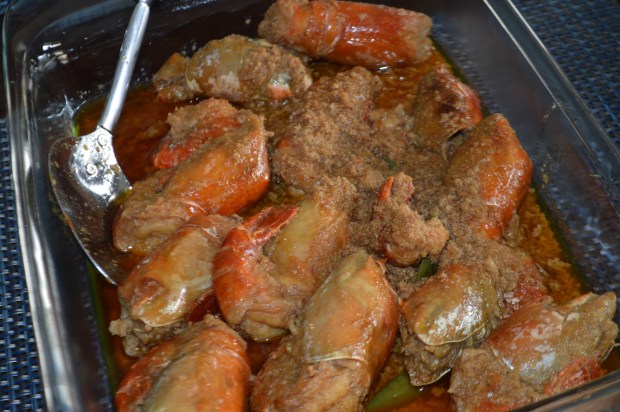
Prawns with Coconut milk. Classic. Yes the heads are still there. Heightens the shrimp flavor. Taught my girls the joy of sucking on sweet shrimp brains. One of the heavier and involved dishes we had along with the famed Biriyani (goat cooked in a sealed pot with rice, potatoes and spices) from Chef Fakruddin. Luxurious and definitely party food.

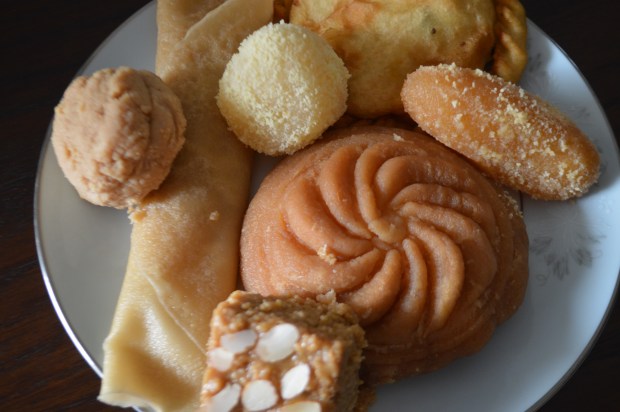
We can’t forget desserts. Rice flour and sugar based “Pithas” as well as milk and sugar syrup based “Mishti.” These beauties were not home-made but delicious just the same. Other store bought delights included mughlai paratha (flaky flat bread stuffed with spiced egg), samosas (triangular crispy pastries with beef fillings, not to be confused with potato filled samosas, which are called Shingaras in Bangladesh), Jelabis (funnel cake looking, orange-colored, crispy sweets), patties (chicken or beef filled puff pastry).

DSC_0124

It was a week of good eating four times a day, three meals and tea time. I was spoiled, full and happy. Thanks to my mom for planning all the yummy eats and her most talented cook Islam Bhai who fulfilled her plans expertly. He was working too fast and furious for my camera to capture.

The best part of the holidays is around the table eating with family and friends. I had a delicious winter holiday. Hope yours was too.

Wishing you Happy New Year,

Hungryphil


Small adventures in my kitchen

I have always loved the bright red look of Kashmiri curries and last grocery visit I picked up some mild but vibrant Kashmiri red chili. I looked up a few recipes for Rista, a lamb meatball curry online because I had ground turkey sitting in the fridge waiting for me. Didn’t follow the recipe completely. However, I did learn how to use the spice and  a new meatball cooking technique.

The meatball mixture included baking powder and cornflour/starch. The meatballs were then simmered in water.  This combination of no fillers like breadcrumbs or crackers and no binders like eggs, yielded a surprisingly soft and pillowy meatball. The curry itself was beautifully crimson, mild in spice, light in texture, and flavorful infused with meatball-simmered-water. I was surprised with the difference in taste. Aside from the use of this special chili powder and the cornstarch-baking powder, simmered meatball, the recipe was essentially the same as any Bengali curry.

Instead of struggling to follow a completely a unfamiliar recipe, this was a less intimidating way to try a different cuisine. Follow your own recipe and simply switch one spice for something different.

I added star anise to beef stew last week. That was wonderful too. Granted sometimes the experiments can be less than successful. But, I find that these small cultural modulations show me wide possibilities in my regular, every day and known recipes.

I am a fan of Kashmiri Mirch now. What other ways can I use it?

On the other hand, I followed Bobby Flay’s recipe for buttermilk pancakes with bourbon molassas butter last weekend. Familiar sweet pancakes all dressed up for a fancy weekend party.  Food experiments come in all degrees involving a recipe, spice swap, technique change, substitutions by necessity, varying measurements and more. Pick one and play to have a tasty adventure.

IMG_5188

Hope you are having as much fun in the kitchen as I am!

Wishing you happy adventures,

Hungryphil


Non-Judgemental Judgement?

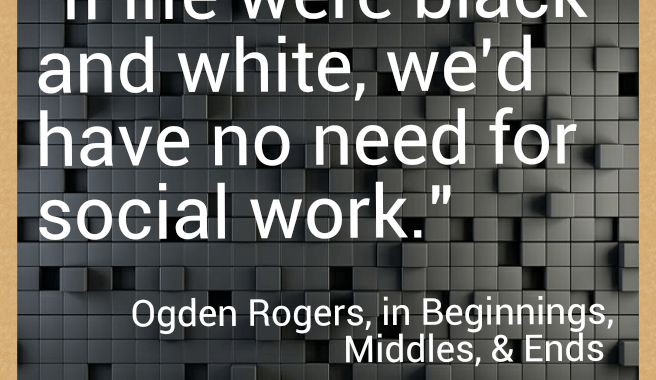
The practices of yoga and social work both encourage maintaining an attitude of non-judgemental judgment. This requirement feels like Kant’s demand for an “disinterested interest” in the judgments of beauty. Suffering, care, and beauty all depend on our ability to notice what is happening without forcing theoretical preconceptions. Practicing this attitude of noticing without prejudice (i.e. pre-judgment) about how a pose or human well-being or a painting ought to look, is difficult. One suggestion, according to Prof. Ogden Rogers, is to go with the defense, to run with a running a man instead of trying to stop him. To stay “with” before trying to change..in yoga terms…stay with your breath, notice what is happening for you, stay with the discomfort…………stay with…stay with….stay with…….

Going With the Defense

Whatever a client brings to you, accept it as a gift. There are thoughts, feelings, and behavior, seen and unseen, and whatever emerges is something to be tracked, followed, and used to help the relationship. Never stop a running man. Run with him and wave others off who might stop him. Slowly slow your pace, travel to a place where the running no longer serves a purpose, and perhaps sitting and talking will emerge. Some wise workers call this “exhausting the resistance” or “going with the defense.”6 I like to think of it as simply unwrapping a gift and using it.


Rogers, Ogden W.. Beginnings, Middles, & Ends: Sideways Stories on the Art & Soul of Social Work (p. 40). White Hat Communications. Kindle Edition.

In the Middle of a Middle

We need nonjudgmental judges. We need those who can enter respectfully into the middle of our private muddles and echo the outside of our public rule. We need those who can understand the craziness that keeps us sane, and yet interpret the taboos that glue us together. We need advocates of the infinite diversities individuality provokes…and speak it to the Leviathan, and make it understand.

Rogers, Ogden W.. Beginnings, Middles, & Ends: Sideways Stories on the Art & Soul of Social Work (p. 83). White Hat Communications. Kindle Edition.


Food Poem by Jim Daniels

This poem is not directly about food. The imagery of two siblings over a kitchen sink surrounded by leftovers makes me smile. Maybe you will too.

Brushing Teeth with My Sister after the Wake

at my kitchen sink, the bathroom upstairs
clogged with family from out of town

spending the night after the wake
and the after-wake—cold beverages

have been consumed and comfort food,
leftovers bulging both the fridge

and the minifridge. In our fifties, both
half-asleep half-awake, we face each

other. My sister’s smile foams white
down her chin at the end of a day

on which no one has smiled. We laugh.
We may never brush our teeth together again.

No mirror down here to see our haggard faces.
We rinse, we spit. As we were taught.

“Brushing Teeth with My Sister after the Wake” by Jim Daniels from The Middle Ages. © Red Mountain Press, 2018.

From the Writer’s Almanac


Cooking With Essential Oils and the Blondeyogi

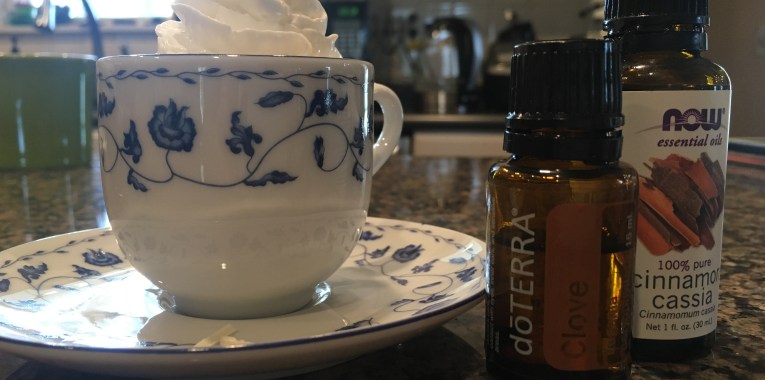
Thank you, blonde yogi, for cooking with me! We tried Beef Stew with Rose Mary Oil, DoTerra Winter White Chocolate with Cinnamon and Clove oil, and Toast with Wild Orange Butter.

Here is what I learned from the experience:

  1. Oils are easiest to incorporate in beverages, hot or cold. The Winter White Hot Chocolate was a delicious concoction of almond milk, spices, and white chocolate. So soothing. Here is the recipe.
  2. Oils are also perfect additions to flavored oils and butter. Our buttered toast with two drops of Wild Orange Oil and a touch of honey was my favorite.
  3. The taste of the stew with Rosemary oil was perhaps the most subtle. I like the idea of a collection of essential oils as both part of a medicine cabinet and a flavor pantry. Reach for whatever you have.

The experience was a change in perspective about how I use essential oils beyond the yoga mat and take the practice into the kitchen. I can see myself including bergamot, peppermint, ginger, lemon, cloves, cinnamon etc in my teas and adding oils like rosemary, thyme, oregano to olive oil or butter for dipping warm bread. Maybe I need to move my oils closer to the kitchen. Hmmmmm……

What are your favorite ways to use essential oils in your recipes?

More hungryphil-wobblyogi experiments to come! OnGuard Pancakes, next. Join me blondeyogi.

Wishing you good eating, moving, breathing and Happy Thanksgiving for readers in the U.S.,

Hungryphil

P.S. I was not the only one who liked the buttered toast the best! Thank you, Blonde Yogi Junior for taste testing with us!

IMG_5148

Meditative Monday: Lessons from a Labyrinth

IMG_5075

At first glance, this patch of grass looks like a creative mowing project. Like anything, how you approach it makes it either a frustrating walk in circles going nowhere or a transformative inner journey of self-awareness. For most of us, it may be both.

I crossed paths with this labyrinth courtesy of a recent Community Yoga Retreat. This was my first time. If you have never meditatively walked along a labyrinth let me try to describe my first experience.

We, about 16 of us, were asked to walk slowly in silent meditation through the labyrinth. As we walk in we were to consider all the things we are grateful for, after we reach the center indicated by a bowl of floating flowers and as we walk out of the labyrinth, we were to mindfully shed all the things we want to be free of.  This walk, warned the retreat center director could last 45 minutes.  Simple enough. Right?

I was the last to enter the labyrinth. I watched as everyone entered the labyrinth and walk slowly along the curves. My feet were bare. I could feel the cool grass below my feet. As I first entered the walk, I noticed my arms shivering and tingling. Maybe I was just cold, maybe I was feeling something. I don’t know. I felt calm and quiet. I also felt like I was walking with many others, in front and behind me (there was no one behind me). The labyrinth felt full. The first few moments of reverie soon dissolved into…why is it so hard to step slowly? is this ground uneven? Am I making the right turns? am I walking too closely behind? am I going to fast? oh, there’s a branch, gosh I’m cold….you get the point. It was a flood of how long is this going to take and am I lost? I can’t be if I can look up and step out at any time. My mind was playing weird games.

As I felt like I was spinning in circles becoming myself a labyrinth of confusion, I decided to enjoy the experience, to find a way to savor each step, each thought of gratitude, to send love to my friends walking with me. Magically, the craziness eased. I began to notice the journey, my unsteady steps, my worries, my fellow walkers, the sun, the warmth, the shadows, the trees. I began to move in and out of the labyrinth to find my horizon, feeling both lost and located at the same time. By the time I reached the bowl of floating flowers at the center, it felt like a long-delayed accomplishment. Joy and relief. Walking out of the circle as I allowed self-doubt drip down my fingertips I began to feel lighter. When I crossed paths with another, I felt a rise of self-judgment, am I going the right direction? Should we be crossing paths? Again, I reminded myself, it doesn’t matter, just walk, breathe and enjoy this morning.

Like life, there were rough patches, beautiful views, isolation, company, obstructive twigs, comforting sunshine, confusion, and clarity, ground and sky, turns and curves, crazy mind, calm mind, grateful heart, irritated heart. Maybe we are always in a labyrinth, either imprisoned and trapped or liberated and exploring.

There was a sense of relief after completing what felt like a long journey. As I stepped out, following a lady in front of me, also named Lisa, she said “Thanks for keeping me company.” I returned my gratitude for her company as well.

It was a trip, best, shared.

Last to exit, I joined the others, some resumed their conversations, some sat quietly, some shared their confusion about the labyrinth. We all survived and learned something about ourselves. I learned that I can make walking in circles bearable and even enjoyable, if I want. Maybe I can make anything bearable…….almost, with fellow walkers.

Happy Monday, everyone. Happy walking the week.

Wobblyogi