
Chopped and Blended: Cooking for my modern family

Image

This summer marks the third year of our blended family adventure. The family dinner has been the locus of both frustration and joy. In our case, we negotiate complex fluctuating schedules that involve cooking for three half the time during the school year, for five the other half and occasionally six (when my college kid visits). We have yet to cook for each other on the rare occasions when its just the two of us. That topic may be a future series entitled, “The Raw and Well Preserved.” Complicating the logistics of groceries and preparation, we also bring with us two very different cooking traditions. mine, South Asian (Bengali) and Jim’s, Southern. Which means, I crave spice and he craves sweet. This basic difference only begins to map the gastronomic battleground that is our dinner table that also includes four daughters with divergent taste profiles. What is a cook to do?

Here is my developing three-pronged strategy. I’d love to hear yours.

  • Do not take any food preferences as a judgment and respect each member’s flavor profile.
  • Deconstructed dinners are your friend. Fajitas, burgers, pasta…anything that can have multiple toppings. Similarly, condiments are required to personalize each dish.
  • Left-overs can make a wonderful buffet or the basis for a recreated and re-purposed dish.

Despite these efforts there are dinners that fail to satisfy everyone. I’ve accepted the inevitability and the evenings of resignation that involve the phrase “let’s just eat out.” My efforts have not been futile. There have been a few good meals that we all shared and enjoyed together. Most importantly, I learned a lot about each of my loved ones. Learning their flavor profiles help me anticipate their reactions and makes my cooking deliberate. Gastronomic profiling certainly has the potential of being abused. Like, telling my 19 year old…”but you loved chicken nuggets and baked potatoes when you were 4.” On the other hand, it can be a working guideline, just like recipes. When judging recipes, I look at which flavor profiles are met or not met and change the recipe accordingly. Cooking becomes a form of user centered design and object oriented attention to ingredients. Let me explain what I mean by flavor profiles and preferences. My family consists of the following profiles: milk, eggs, bread, meat, eggplant and calamari. (of course, there are lot of cross overs and blending of preferences)

Jim (aka MILK) enjoys anything with the smooth rounded umami feel of cream. His preferences lean towards the salty and sweet. Oreo shakes, steaks, mashed potatoes, fried chicken, lemon bars, barbeque sauce on anything. To “Jimmify” a recipe, I add cream. Cream for Jim has the power to transform a curry from a foreign adventure to familiar comfort. Thai curries with coconut milk, alfredo sauce (no pesto for Jim), chicken marsala with mashed potatotes, Indian butter chicken all these have the common denominator of a smooth silky taste.

I have always had a deep love of eggs, whether scrambled, fried, made into a custard, salty, spicy or sweet. After a hard day, I console myself with a fried egg on buttered toast with guava jelly. I enjoy bright lemony flavors. Vegetables. Broccoli is my friend. Spice and heat make me feel alive. Three days of bland food leaves me depressed. I have a love/hate relationship with desserts. I prefer the last bites of my meal to be spicy.

Calamari is one of the last things I ate with my eldest daughter home from college. She sets a very high bar. Every bite for her should aspire to contain a rainbow of flavors. She’s a fan of the refreshing and hearty combo. Burgers with layers of flavors. Tapas style dinners. Dinner plates that offer a range of taste from salty, crunchy, acidic, creamy etc. Aiming for diversity and choice, she is my most adventurous eater. When she visits, I try to have a mix of new and familiar dishes, a mix of cultures, a mix of flavors. Fried Calamari with a dipping sauce, has the elements of chewy, savory, crunchy, creamy, lemony that befits her.

Eggplant represents my second daughter who is the only kid I know who really and honestly enjoys vegetables. Eggplant, broccoli and green beans are her favorite. I’m so in awe of her. She will eat eggplant cooked any style, Indian, Italian, Greek, Thai….Her flavor profile includes clean bright flavors of vegetables, sushi, lentils, as well as savory lamb, goat, eggs, shrimp, lobster, all Asian flavors, Indian food. She will try anything as long as I describe it to her first. Like me, she tires of bland food and left overs.

Meat represents my daughter from another mother. She is my simple eater. Chicken, steak, shrimp, pasta, rice with no spice, no sauce or gravy. Her major food groups are burgers, bacon, cinnamon rolls, Bertolli’s Chicken Florentine and peanut butter sandwiches. She likes her meals to be predictable and consistent. For her, I deconstruct meals by leaving off the sauces and gravies. She’s our minimalist.

Bread represents my youngest daughter from another mother. She will eat or at least try anything if accompanied by bread (and butter). She happily tried beef curry and butter chicken dipped in porota (Indian flat bread). In the past three years she has absorbed the most of our culinary blending.

Everyone LOVES desserts. Brownies, cookies, cakes, lemon bars, magic bars, pecan pie, coconut pie……..anything.

As long as I have something new, something familiar, something starchy, something meaty, something creamy, something spicy and something sweet on our chopped and blended dinner table……….. all is well. It doesn’t happen everyday but on the few occasions when it does….the silence around the table is magic.

This Chopped and Blended Series will be devoted to recipes for deconstructed meals. Look for the first installment soon.

“Something I cooked up”

…..seems a strange phrase to imply improvisation. The metaphor captures the fabricated, responsive, performance of cooking. Despite recipes, despite directions. There is an element of surprise to cooking that is both challenging yet satisfying. For example, yesterday I cooked two batches of brownies (Betty Crocker Mix….I’ll address the use and abuse of prepared mixes in another post). At the appointed time, one batch was almost overcooked while the other was still runny. Same oven, same temperature. Hhmmmm. Assuming I measured and followed directions (which is a huge assumption) I can only guess that the top shelf got too little heat, while the bottom shelf got too much. Now….. know I would’ve needed to exchange the pans half way. Maybe. Maybe the brownies would be runny, or burnt anyway. Cooking is an activity where concept and execution, ideality and reality, recipe and dish are in constant negotiation.  I have often cried, “but I followed the recipe.” As if the failure was the recipe’s fault and not my own. Granted there does exist the occasional bad recipe. Ironically, the only way to test a recipe is to use it, to confront the directions however faulty, to challenge and change the recipe.  Cooking is fundamentally, non-fundamental.  That’s why its so much fun. While my brownies did not fulfill the image on the box, to my surprise, my moment of improvisational rice side dish worked!

I cooked finely chopped onions, carrots, red bell pepper and celery (about 3/4 cup total)  in butter until roasted and glowingly golden. Added sliced mushrooms (a small carton).  Added a cup of left over jasmine rice. Heated all through. Added a half a cup of shredded cheese and about 1/2 of cream. Tossed in a 1/2 cup of peas at the end. Once warmed through the made up rice dish was wonderful with pan roasted lamb chops. Fake risotto. I savored that improvisation. It worked.  I have doubts that I can make it again. In most home cooking, the recipe is an afterthought. Success and failure in the end depends on taste and not a meticulously followed theory. Something we cook up.

What have you cooked up lately? Did it work? What did you do when it didn’t?

Emerson Eats an Apple

Ralph_Waldo_Emerson_ca1857_retouched

“In late October, while working on his Essays, Emerson had another prophetic vision, which he recorded in his journal. “I dreamed that I floated at will in the great Ether, and I saw this world also not far off, but diminished to the size of an apple. Then an angel took it in his hand & brought it to me and said “This must thou eat.’ And I ate the world.”

From Examined Lives by James Miller

What do you dream of eating?

Seneca’s diet saves life….not really

According to Tacitus, Nero had first tried to poison Seneca, but the plot was foiled when Seneca refused a drink offered by a visitor in order to adhere to his modest diet of wild fruit and spring water.

The agency of food is nowhere more acute than in instances of poison. In such cases, the source of nourishment and life, itself  is perverted into a medium of death. Nero’s murder plot assumed the philosopher’s reception of an offering of drink as consistent with social etiquette. It should of been easy to kill Seneca hidden behind the cloak of food and table manners. But…….Seneca, at the time deeply disappointed in his student turned tyrant Nero, was practicing a form of self-restraint characterized by simple eating. Seneca was also subverting the standard social mode of eating and drinking that would accept a visitor’s gesture of sharing. Nero and Seneca were both using the power of food, even if towards different ends. In this scenario is the drink the only victim? Instrumentalized as an agent of death by Nero and an agent of a golden cage lifestyle for Seneca?

Of course, in the end Seneca does drink poison.  Is the agency of food, the thing-power of the non-human exercised when it subverts or when it assumes its relation to humans? Is the existence of poison fulfilled in the death Seneca or merely reduced to its human relation and instrumentalized again? I’m so confused…….can any object oriented ontologists or vital materialist out there help?

This quote comes from Examined Lives by James Miller about the complex lives of 12 philosophers.

“Food is often …

“Food is often the way to “knock” and engage a community. We all bring wine or a dish to thank friends or family for hosting. We eat with new friends to ritualize and legitimize our engagement, even if we don’t really like the particular dishes.”

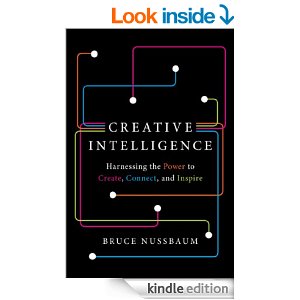
This quote comes from Bruce Nussbaum’s book “Creative Intelligence” in reference to culturally responsive design strategies. After describing his first necessary taste of Monkey Brains…..yes, monkey brains in the Philippines, as a Peace Corps volunteer, he talks about how Lenovo reached a rural audience and marketed their computers better than HP and Dell. Here’s how Nussbaum explains the strategy of “knocking,”

“According to Fast Company, in rural China, people frequently buy PCs as wedding gifts. A computer purchase is not merely a market transaction, based on price; it’s a gift that provides the foundation for a lifetime of social interactions between two families. So the box, the packaging, the entire presentation, is crucial. By making the box representative of the gift it contained, Lenovo was able to capture more of the rural market than HP — a knock worth hundreds of millions of dollars in profits.”

Food as social and commercial strategy emphasizes and validates culturally shared experiences, even if different from our own cultures. The theatrical performance of the Lenovo box as a component of a wedding ritual conveys cultural respect, just as eating monkey brains. It may or may not influence our own tastes or meaning. I don’t think Nussbauam eats monkey brains habitually now. The gesture is enough. One does not need to like monkey brains in order to connect with those who do. But…….one has to at least try it, once. In the case of Lenovo….it wasn’t even the meal but the platter that made all the difference. So much of what designers do involves the aesthetic (articulate and material) presentation of constructed meaning. Food helps us practice the skill of human generosity. Makes me want to host a party! Would paper plates imply disrespect? Maybe not the well designed ones…….41MVIMU75IL._BO2,204,203,200_PIsitb-sticker-v3-big,TopRight,0,-55_SX278_SY278_PIkin4,BottomRight,1,22_AA300_SH20_OU01_