Exploded view of my now

Living forces honesty. Answers are seasonal, losing their sense precisely as they become scripture. You will die: this is the first meaning. The world around you seems to bear helpless witness to your wandering. Other people suffer in the same way, and yet this seems to increase loneliness. But you can welcome despair like gravity, for at some point the sheer pressure, tectonic in the soma, compels a violent break in pattern: running through the woods, making love with an utter loss of self. The reality of your condition offers a stark gift you accept through sudden discharges of rage and rage’s joyful shadow: this is the only life you know, and it fills you to overflowing. You live your life, yoga happens to you.

You thought you were alone. You tried to be independent. Then, standing in the market with your hand on an orange, children underfoot, traffic humming, conversations blendingwith the radio by the cash register, shoes you did not make on your feet and clothes you did not sew on your back, sun slanting through rips in the tin awning, you’re almost late for meeting someone, always almost too late. You know this orange will give you life, and that you did not grow it. Someone else gave it to you, it will become your flesh. Its colour adds immeasurably to your language and dreams while its name rhymes with nothing, and you did not conceive of it. The old grocer’s hands have become gnarled through a lifetime of handling boxes of oranges for you to eat. Someone else gives you your flesh. They could not give what they do not have. Someone else holds their flesh forth until it becomes your flesh.

A child triggers an internal laugh. A dog slaps her thick tail against your shin. Every single object that gives you life surrounds you. If you really were alone you would not exist. You did not make the air you breathe. You can’t say where the inside of your flesh begins. You are naturally reaching out as something reaches into you. No one and everyone taught you this. You surrender to the always-already-there, and yoga happens around you, through you.

– Matthew Remski, Threads of Yoga

Beautiful example of philosophical object orientation and mindful awareness, Ian Bogost style, maps, meanwhiles, lists and ontographs, Timothy Morton style thoughts of gravity, weird reality, shredded wheat magical simplicity.

Yoga invites us to the stillness of an exploded view of our present moment. Notice yourself, your body supported by the ground, your arms reaching to the sky, your breath, feelings, thoughts, sensations. All material, all fleeting. In stillness watch yourself move in thought and breath. Yoga offers such quiet power ❤️

Wishing you a weekend of mindful nows,

Hungryphil

Eating Object-Oriented Thinking

Last week at the Purdue Aesthetics Conference I spoke of four object-oriented thinkers who employ food references to demonstrate their defense of object wonder, vitality, complexity and gravity.

  1. Ian Bogost’s pound cake shows us complex “alien” encounters that yield a pound cake. He compares Alton Brown and Duff Goldman’s approach to cake baking.
  2. Jane Bennett’s berries and beef show us by comparison Nietzsche and Thoreau’s food preference as indicative of their philosophies.
  3. Timothy Morton borrows from the Shredded Wheat commercial slogan of “nothing added nothing taken away” to celebrate things as they openly announce their duplicity.
  4. Levi Bryant’s brazil nuts exemplify bright objects capable of exerting existential gravity on things around them.

My study of OOO was meant to help me develop a food-oriented strategy towards writing a cookbook. It is not about simply writing recipes for my daughters to follow but rather offer guidelines that might help them question all recipes (normative prescriptions) and find their own relationship with each dish (embodied and existential situation amidst other organic and inorganic things) in order to avoid living a correlationist life searching for correspondence to an abstract external “truth.”( I have to find a subtle way to insert the philosophy between the lines. Is there one?)

OOO offers strategies and orientations to think things, to speculate and imagine object lives and demands. I eat it…… is only one-half the story in any inter-object relationship. How it eats me…is the other half of the story…the more, imaginative, interesting, consuming part of any object story. And so, the task of Bittermelon and Brownies: Proclamations of a Philosopher-Mom is to show how we are ourselves ingredients in each recipe.

Now that I’ve announced the project I really have to do it! Yikes!

I’ve just started to work on the cookbook. Wish me patient consistent writing! I’m open to your advice and suggestions dear bloggers, hungry philosophers, food writers, chefs, and cookbook authors.

Here is a satirical example of a philosopher writing a cookbook that I find instructive and funny!

October 10

I find myself trying ever more radical interpretations of traditional dishes, in an effort to somehow express the void I feel so acutely. Today I tried this recipe:

Tuna Casserole

Ingredients: 1 large casserole dish

Place the casserole dish in a cold oven. Place a chair facing the oven and sit in it forever. Think about how hungry you are. When night falls, do not turn on the light.

While a void is expressed in this recipe, I am struck by its inapplicability to the bourgeois lifestyle. How can the eater recognize that the food denied him is a tuna casserole and not some other dish? I am becoming more and more frustrated.

From, The Jean-Paul Sartre Cookbook by Marty Smith, from the Free Agent, 1987

Confections of capitalism, fantasy, materiality, ideology, atmosphere and more

51QFWHG66TL

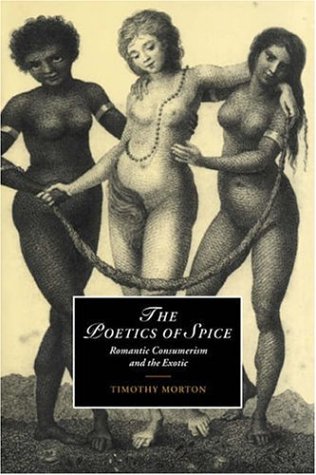
Among the most fascinating attributes of spice is its status as a cultural marker, and a strange one at that, halfway between object and sign, goods and money. Spice can become a sign of signs, and in poetry it serves as a figure for poetic language itself, a special kind of figure that Harold Bloom has called ‘transumptive’. In this role it approximates one of the economic values of spice in  the early modern period, its capacity to be used as a sign of other goods, as a form of money. Moreover, spice in its consumption becomes an index of social value. It is a highly self-reflexive kind of substance-sign: ‘about’-ness is what it is ‘about’. However much spice is brought into the realm of intellectus, it also still remains within the realm of the res as a hard kernel of the Real, a flow of desire. The poetics of space is not only about materiality, however — it is also about poetics. Thus there are two aspects to the poetics of spice, which are in a rather asymmetrical relationship: materiality and transumption.

Timothy Morton from the Poetics of Spice

I will be thinking about this for a long time. I feel the urge to cook with saffron, rose water and pistachios.