Wobblyogi Wednesday – Summer Book Club!

May I Be Happy: A Memoir of Love, Yoga and Changing my Mind

by Cyndi Lee

e2363034c16cdbea6fb845c1df63e8e3.jpg

Take this book to the beach with you as you relax in the sun and bask in your own happiness. Read a few pages, pause, close your eyes and reflect.  Cyndi Lee talks about body image issues, mom issues, spouse issues, teaching issues and almost everything in between. Some I related to and other I did not. Eitherway the book offers a good focus for conversation about how we each invite yoga principles into our lives.

Here is my favorite passage:

I’ve learned to listen to feelings in my body, as another form of meditation practice. Often when I’m walking home form the studio, I’ll realize that I have a butterfly in my stomuch or I’m gripping the strap of my yoga bag too hard. I practice being curious about it. It’s fun. I investigate by asking myself, “Okay, what’s bothering me?” The answer is usually right there on the surface and then I can puzzle it through, either coming to a resolution or at least gaining enough awareness of the issue to be able to table it for now and bookmark it for later. The body knows, the mind clarifies, and when I can get them to hold hands with my breath, things usually work out all right.

I wonder what questions the book sparks for you. Share your comments here or come join us (whether you read the book or not) for discussion, an asana practice, snacks and more August 12th 2:00 pm-5:00 pm at Community Yoga, West Lafayette, Indiana

Sign up online at https://communityyogalafayette.com/workshopsevents/

May you be safe, may you be healthy, may you be happy,

the Wobblyogi


Wobblyogi Wednesday – Yoga Poem- The Necessary Brevity of Pleasures by Samuel Hazo

Enjoy this yoga AND a food poem celebrating moderation. May we all have the wisdom to “savor every bite of grub with equal gratitude.”

Prolonged, they slacken into pain
or sadness in accordance with the law
of apples.
One apple satisfies.
Two apples cloy.
Three apples
glut.
Call it a tug-of-war between enough and more
than enough, between sufficiency
and greed, between the stay-at-homers
and globe-trotting see-the-worlders.
Like lovers seeking heaven in excess,
the hopelessly insatiable forget
how passion sharpens appetites
that gross indulgence numbs.
Result?
The haves have not
what all the have-nots have
since much of having is the need
to have.
Even my dog
knows that—and more than that.
He slumbers in a moon of sunlight,
scratches his twitches and itches
in measure, savors every bite
of grub with equal gratitude
and stays determinedly in place
unless what’s suddenly exciting
happens.
Viewing mere change
as threatening, he relishes a few
undoubtable and proven pleasures
to enjoy each day in sequence
and with canine moderation.
They’re there for him in waiting,
and he never wears them out.

“The Necessary Brevity of Pleasures” by Samuel Hazo from A Flight to Elsewhere. © Autumn House Press, 2005.

From the Writers Almanac on April 25, 2017.


Wobblyogi Wednesday – Learning to Breathe

images

I am fighting a battle; I fear I am losing. It started as a cute blossom filled spring-time allergy that morphed into an angry full-blown, noisy nose blowing, scratchy throat coughing, body aching, ugly cold. I continue to fight with a steady stream of tea, oregano drops, and uplifting mantras like “I am healthy and happy…I am healthy and happy….I breathe freely and efficiently”…. to no avail.

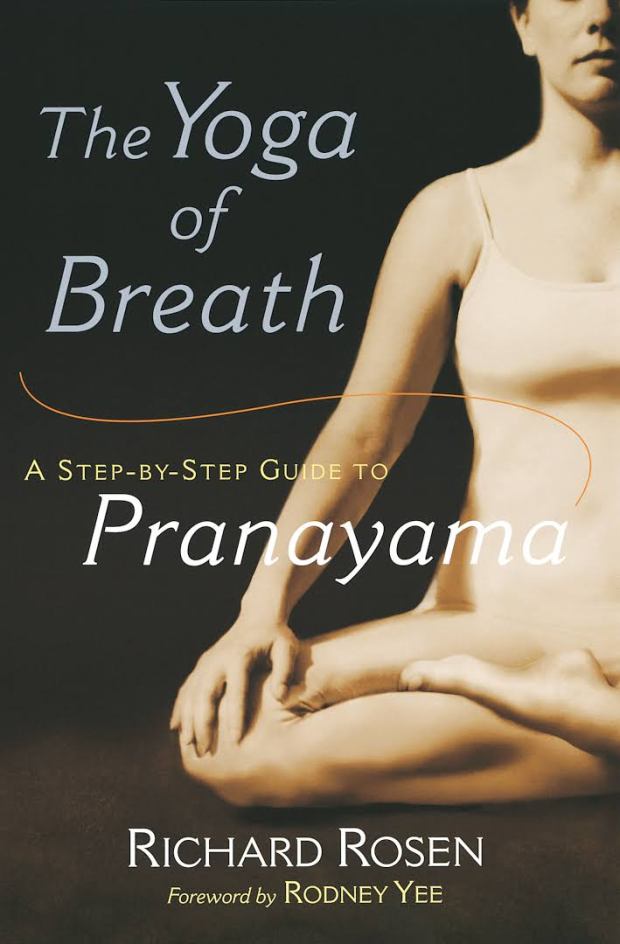
This situation comes at a most inconvenient time while I’m trying to learn how to breathe. You heard me….I’m trying to learn how to breathe. Sure, I know how to automatically breathe, but not as efficiently, smoothly and mindfully as I’d like. I’m reading The Yoga of Breath by Richard Rosen. I have yet to work on the suggested practices because….you know…my current battle with snot.

Why do I need to learn how to breathe better? Rosen writes,

She [The efficient breather] breathes slowly, which streamlines the breath, with the free and easy movement of diaphragm, engaging the entire torso (in fact the entire body). She mostly breathes through the nose, which filters, warms or cools as needed, and humidifies the breath. Nose breathing naturally slows the exhale, because the nostrils offer more resistance o the breath than the mouth, and gives the lungs enough time to extract the maximum amount of oxygen and energy from each breath. With the correct proportion of oxygen and carbon dioxide in the body, which dilate the blood vessels, blood and oxygen circulate smoothly and easily through the efficient breather’s body and brain. The full excursion of the diaphragm and the well-toned abdominals massage internal organs, like the heart and intestines, and so improve digestion and elimination. Efficient breathing activates the parasympathetic branch of the autonomic nervous system and the relaxation response. In all, the efficient breather is much calmer, more clearheaded, and probably healthier and happier, than her inefficient friend.

At the moment, I am clearly not an efficient breather. I can feel the shallowness of my breath that makes me feel anxious and annoyed with myself. Perhaps, my current battle makes me appreciate the need for slow, sustained breathing more than I would otherwise.

Maybe I have better motivation to breathe my best when I can.

I learned about Richard Rosen on the Yoga Land Podcast. Thank you, Andrea Ferretti!! Check it out at https://www.acast.com/yogaland/richardrosenonlookingbacktogoforward

Wishing all of you smooth breathing,

Wobblyogi

Having an Idea – Guy Claxton

The mother does not engineer her child’s intrauterine development, but she influences it enormously through her lifestyle and her sensitivity, her anxieties, appetites and attitudes, her history and her constitution. Who she is, and the physical and emotional environment that she herself inhabits, affects the nature and the quality of the sanctum that she provides for the growing form of life within her. And so it seems to be with intuition: there are conditions which render the mental womb more or less hospitable to the growth and birth of ideas; and differing ways in which, and extents to which, different people are able, wittingly and unwittingly, to provide thsoe conducive conditions. The more clearly we can identify what these conditiona are, the more able we shall be to see how they can be fostered.

From Hare Brain and Tortoise Mind: How Intelligence Increases When You Think Less

Meditation and mindfulness are ways to foster intuitive awareness and intelligence. It allows our brain to synthesize and absorb information and feelings.  The book defends intuitive and creative intelligence, pooh-bear thinking, through an analytical “d-mode” rabbit logic. It shows the value of thinking differently as the need arises, “abiding in uncertainty” for fuzzy problems and seeking clear solutions for defined problems.

Deciding whether a problem is fuzzy or defined may require both.

Related to the complexity about how to think about X, Claxton explains the fallacy of dream interpretation according to James Hillman.

It is the very nature of nature of dreams to hint and allude. ‘An image always seems more profound, more powerful and more beautiful than the comprehension of it.’ To ask of a dream “What does it mean?” is as misguided as to ask the same question of a painting or a poem – or a sunset, come to that. “To give a dream the meaning of a rational mind is … a kind of dreading up and hauling all the material from one side of the bridge to the other. It is an attitude of wanting from the uncounsious, using it to gain information, power, energy, exploiting it for the sake of the ego: make it mine, make it mine.’ The proper attitude towards a dream, according to analytical psychology, is to ‘befriend’ it: ‘to participate in it, to enter into its imagery and mood, to …play with, live with, carry and become familiar with – as one would do with a friend.’ So, ‘the first think in this non-interpretive approach to the dream is that we give time and patience to it, jumping to no conclusions, fixing it in no solutions … This kind of exploration meets the dream on its own imaginative ground and give it a chance to reaveal itself further.’

Thank you, Kathy, my friend, for recommending this book! Looking forward to reading, Intelligence in the Flesh: Why Your Mind Needs Your Body Much More Than It Thinks.

May we all foster  creative conditions, have good  idea babies and befriend our dreams,

Hungryphil

Yoga Poem- Lucky Star by Kirsten Dierking

All this time,
the life you were
supposed to live
has been rising around you
like the walls of a house
designed with warm
harmonious lines.

As if you had actually
planned it that way.

As if you had
stacked up bricks
at random,
and built by mistake
a lucky star.

“Lucky” by Kirsten Dierking from Northern Oracle. © Spout Press, 2007.

From the Writers Almanac February 23, 2017

The image is from NASA and captures the death of a star.

Wobblyogi Wednesday -Book Club Notes 3

So….how’s the reading going? Do you find yourself noting moments of mindfulness during your day? Do you hear Judith Laster’s gentle advice to heed the feelings of impatience and fear? Somedays I am more self-aware than others. This week’s notes cover topics about our relationship with ourselves:  faith, perspective, courage and relaxation.

“….I came to understand that belief is a preconception about the way reality should be; faith is the willingness to experience reality as it is, including the acceptance of the unknown.”

Spirituality in all forms begins with the premise that we can’t know how everything connects, a faith in something greater than our limited existence. I liked one of mantras for daily living that Lasater offers in the chapter: ” Faith is the quiet cousin of courage.” It prompted me to ask myself what do I have faith in? How does that faith guide my actions and days? Does faith help me to stay in the reality as it is or is it a belief in how reality should be?

“With our willingness to have perspective, not only do we increase our ability to disinguish the important from the unimportant, we also increase our capacity for compassion toward ourselves and others.”

To take life’s challenges big or small as an invitation to shift our perspective and our expectations is so difficult. What do I consider demanding or challenging? Why? How could that challenging person or event help me see differently? How do I let go of my stubborn perspective and let myself see from another person’s perspective? In the current political climate, I’ve been feeling particularly challenged to see from different perspectives who see immigrants and Muslims as potential threats, who see me as a potential threat to national security. Can I feel compassion for that fear? In an effort to see from a different perspective I’ve widened my collection of daily newspapers and reading [highly recommend: Strangers in their own Land by Hochschild and Between the World and Me by Ta-Nehisi Coates], refrained from deleting people from my media stream,  I’ve appealed to my faith in the innate goodness  of people and mostly I’ve cultivated my gratitude . Yes, perspective has lately required much effort. Lasater’s mantra, “The worse could happen; the best could happen. Life is usually somewhere in between.” helps.

The next topic that flows from perspective is courage; to act out of compassion instead of fear.

….those times when I have been most afraid were when I felt disconnected from God, from Sprit, from the Universe, from family and friends, and, most importantly, from my own heart. Courage cannot exist in isolation.

To have courage in the face of the unknown and of shifting perspectives is to rely on a deep commitment to the connections that sustain us. What is worthy of my courage, my action? What is worthy of struggle?

As if sensing our strain, from the demands of faith, perspective and courage, Lasater concludes the section about yoga within yourself with…..relaxation.

This is a key to living yoga. Watching thoughts of anger, greed, boredom, impatience, I was no longer at the mercy of them. I had some space to choose what I would say and do in a way I never had before. I began to recognize patterns; I began to take it all more lightly. By learning to relax, I experienced less physical tension, which allowed me to see my monkey mind, which allowed me to let go of it a bit, which allowed me to feel more connected to the present moment, which is another word for the Infinite.

Oddly, relaxation takes practice. To develop the skill of relaxation, I allow myself to be a spectator instead of an actor. As I witness my thoughts, actions, emotions, I begin to realize that I am more than all those aspects of myself. And, more importantly, the person next to me is also more than her actions, thoughts, and emotions. That “something more” is what we all share. It is not by accident that Shavasana or corpse pose is a reference to our shared mortality with all living things.

The progression of these chapters asking us to notice our faith, perspective, courage, and relaxation was difficult. How can we be both courageous and relaxed at the same time? How can we witness and act at the same time? How can we honor ourselves and other perspectives too?

Part two, about our connection with others, begins to address my concerns. Not surprisingly the first topic in the next section is compassion.

Tell me about your thoughts about reading. How do you feel about the topics? Are they challenging for you? How do you resolve the seeming contradictions that I see?

Wishing you happy reading and ease,

the Wobblyogi



Wobblyogi Wednesday – Self-Study (svadhyaya)

The kriya yoga component of svadhayaya or self-study naturally resonates with the philosophical imperative to pursue an examined life. In the triad of tapas-svadhayaisvarapranidhana-kriya-yoga (Pada 2, 1st sutra), self-study connects, the seemingly opposing directions of actively approaching the difficult and again actively surrendering. Self-reflection, in the yogic context,  is the necessary intermediate key between engagement and repose, desire and release, friction and ease, heat and light, existential conflict and transcendental subsumption. Self-study, reflection, examination, all actions and events that return us to ourselves are moments when we decide to accept or endure.

In the Patanjali 101 course, Judith Lasater spoke of doing one thing a day that is difficult for us as an exercise of tapas or self-castigation, self-discipline, burning-desire (a jumping off the cliff moment). She also wisely warns that not everything difficult is helpful. The value of tapas “roughness” she explains is that it invites awareness (like an aching tooth and an inquisitive tongue). We decide to make our response to an experience helpful or hurtful. I like to think that awareness leads us back to ourselves to notice and decide whether that experienced difficulty is a practice of self-discipline (tapas) or self-surrender (isvara pranidhana). We’ve all experienced these moments. Many of us appeal to faith and submit to divine will, having done everything we could. Many of us push forward as an exercise of self-discipline and perseverance. In any given situation when and how we decide the tone of our energy is uniquely our own, the balance of discipline and surrender is uniquely our own. Learning when to engage and when to let go, finding our personal edge is a constant inner-dialogue, on and off the mat….. and uniquely our own.

Judith Lasater asks us to consider each pose as a question to ourselves. How does it feel to be in a forward fold, can I release even further? Instead of telling my body where to go and what to do, can I ask my body and notice the response? Can I be disciplined enough to practice a pose difficult for me and surrender to the attempt?  How does the dance between self-discipline and self-surrender work for me?

An unexamined life may not be worth living, but yogic practice demands more…. the ability to let go.  So difficult.  Letting go requires discipline. Self-study holds us in that uncomfortable and unresolved human tension.

Wonderful second week of the course! Also very much enjoyed the conversation about cultivating contentment, another exercise of discipline (of not engaging in the negative) and surrender (letting go to what we cannot change).

I’m inspired by the importance of personal practice precisely to allow myself time and space for my own questions (poses) and aware responses. As Lizzie said, in order to find my “personalized dosage” of awareness, of svadyaya, self-study.

Honored to be “self-studying” with all of you,

the wobblyogi


Wobblyogi Wednesday – ‘Nirodhah’ Finding Resolution

“In yoga, philosophy, and practice are married,” says, Judith Hanson Lasater in the first Q&A section of her (and her daughter’s) course, Patanjali 101.

Further on, she explains that to understand Patanjali intuitively we have to feel moments of self-doubt, to feel how our memory pulls us away from the mat, to feel how our to-do races us forward, to pause when we feel a pose, to let go when we have difficulty in a pose, it is not only doing the pose but also “thinking” the pose. How do I feel, respond, and think as I’m moving on the mat and then maybe begin to think about how we move in the world.

During my graduate studies in philosophy, I was never asked how I “feel” about a particular philosophy. The prejudice against feelings in philosophy stems from a fear that feelings  are subjective, volatile and obstructs clear, rational thinking and most importantly dialogue. We cannot connect and converse with others through emotions. To someone who says ” I just love Plato,” I cannot respond or negate her/his emotions. I can’t say, “No you don’t.” I can only respond and argue with reasons. The philosophical primacy centers on sustaining dialogue.

The nature of dialogue in yoga is different. Instead of philosophical intersubjective, the yogic dialogue  happens within the self as an appeal to the inner divine. What some yoga practitioners share are the Patanjali’s practices, most share the asanas. As a philosopher, yoga helps me feel what I understand of the world, but most importantly how I feel about my own responses. For me, the co-action of breath, movement and thought is what attracts me most to the material spirituality of yoga.

I look forward to learning more during the next 5 weeks.

The first week of the course centered on the first three sutras of the Patanjali and the mountain pose.

Yogah Chitta Vritti Nirodhah.

In choosing a Patanjali translation, Ms. Lasater recommends noting the translation of the word, nirodahah. She likes the word “resolved”, and explains, “I no longer use my mind to get stirred up. I can stand back and feel resolved, feel free. From that space the freedom to choose my actions.”

Here are seven other translations of the sutra:

  1. Yoga is the stilling of the changing states of mind. – Edwin F. Bryant
  2. Yoga is the restraining of the mindstuff. – Swami Vivkeananda
  3. Yoga is experienced in that mind which has ceased it identify itself with its vacillating waves of perception. – Mukunda Stiles
  4. Yoga is to still the patterning of consciousness. – Chip Hartranft
  5. Yoga is the uniting of consciousness in the heart. – Nischala Joy Devi
  6. Union, spiritual consciousness, is gained through the control of the versatile psychic nature. – Kindle edition of Patanjali
  7. The restraint of the modifications of the mindstuff is Yoga- Sri Swami Satchidananda.

Here is a pdf that compares four translations of the sutras side by side in a chart for my fellow yoga-nerds.

May we all find our own translation through practice,

Wobblyogi

Wobblyogi Wednesday: Reading Autobiography of a Yogi

Last week I watched the documentary and read, the Autobiography of a Yogi by Paramahansa  Yoganada (1945). A book so life changing that it was handed out to each guest at Steve Jobs’ funeral. Widely read across the world and translated, it had a deep impact on Hollywood celebrities and everyday people alike. Among yoga reading lists, it tops the list.

This was the first yoga book I that disappointed me.

I wanted to like it. How often do we get a first person account of yoga mastery? The authenticity and sincerity of his voice are undeniable. And, yet, the too numerous to count accounts of yogis who can’t be photographed, who don’t sleep, who don’t eat, who have premonitions, who heal, who appear elsewhere, who can foretell the future, who tame lions and in general exhibit superhuman powers seem unhelpful to me, a suburban dance mom just trying to survive dinner and correct carpooling. I particularly disliked his use of yogic powers to help his sister gain weight so she might be attractive to her husband.

Maybe I don’t have the faith needed to believe in such extraordinary feats, maybe I just don’t see the value of these yogic powers for me and my family. Maybe I’m too much of an American yogi, corrupted by everyday banality, science, and technology. I just want to sit and breathe without feeling rushed or pulled apart. Perhaps, I aim too low.

I did enjoy learning about Yogananda’s struggles to establish his yoga centers, his travels and search to learn and share. I wish he wrote more about navigating his disappointments about schooling, organizational and management issues, money issues, travel constraints and living in America.

As you can imagine my favorite quote involves Yogananda describing the daily routine of his self-supporting guru, Sri Yukteswar,

Daily life at the ashram flowed smoothly, infrequently varied. My guru awoke before dawn. Lying down, or sometimes sitting on his bed, he entered a state of samadhi. It was simplicity itself to discover when Master had awakened: abrupt halt of stupendous snores. A sigh or two; perhaps a bodily movement. Then a soundless state of breathlessness: he was in deep yogic joy.

Breakfast did not follow; first came a long walk by the Ganges……..A bath, then the midday meal. Its preparation, according to Master’s daily directions, had been the careful task of young disciples. My guru was vegetarian. Before embracing monkhood, however, he had eaten eggs and fish. His advice to students was to follow any simple diet which proved suited to one’s constitution.

Master ate little; often rice, colored with turmeric or juice of beets or spinach and lightly sprinkled with buffalo ghee or melted butter. Another day he might have lentil-dal or channa curry with vegetables. For dessert, mangoes or oranges with rice pudding, or jackfruit juice.

Visitors appeared in the afternoon.

Even yogis with super powers had to eat (except for the lady yogi who went without eating).

Like yoga itself, we all have to find books that speak to us and resonate with our own experiences. I often find that I learn about myself from books I struggle with the most.  This was the case for Autobiography of a Yogi. Read it for yourself to decide if it works for you. There are no reviewed shortcuts to mindful awareness.

Wishing you happy reading,

The wobblyogi


Wobblyogi Wednesday – No Front Door to Yoga

This week I’ve been reading Yoga as Medicine: The Yogic Prescription for Health and Healing by Timothy McCall.

It makes a very useful reference book because each chapter about a given condition, briefly explains the condition,  offers a particular yoga practitioner’s approach to the condition, scientific evidence, strategies that practitioner uses and finally other approaches.

For example, chapter 8 about anxiety and panic attacks talks about, Rolf Sovik’s ( a yogi with a doctorate in clinical psychology researching breathing and anxiety treatment) approach in treating a patient at the Himalayan institute whose panic attacks resembled a heart attack.

The chapter offers an overview and range of panic attacks and then shows how yoga fits in, first in general, followed by scientific evidence and cases, then in terms of 12 particular poses like meditation, sandbag breathing, crocodile breathing and tree pose. The chapter ends with bullet points about other holistic approaches to asthma and panic attacks like psychotherapy, increasing omega-3 fatty acids in the diet, using aromatherapy, like lavender and German chamomile, regular aerobic exercise etc.

The combination of big picture explanation, case studies of treatment, scientific studies and specific strategies makes the book worthwhile. In terms of anxiety treatment and maybe yoga in general, I found it interesting that everyone needs to find their own “door” into treatment, through the mind or body,

“It’s worth noting that another study by Jon Kabat-Zinn found that patients whose anxiety manifested mainly in mental symptoms like constant worrying tended to find hatha yoga preferable to mindfulness meditation, whereas those whose symptoms of anxiety tended to manifest mainly in the body preferred the less body-oriented meditation. As Jon says, “people need different doors to come into the room, so to speak, of self-awareness and self knowing. Some people just can’t go through the mind door. They get the body door instantly.”

There is no front door to yoga. We all have to find our own entry. The house of yoga is a like a semi-open structure with a wrap around veranda and french doors all around, layers of openings that work differently for every practice.

May we each find our door today.

Thanking you for reading this,

the wobblyogi