Bittermelons and Brownies – A recipe for growing Atiya

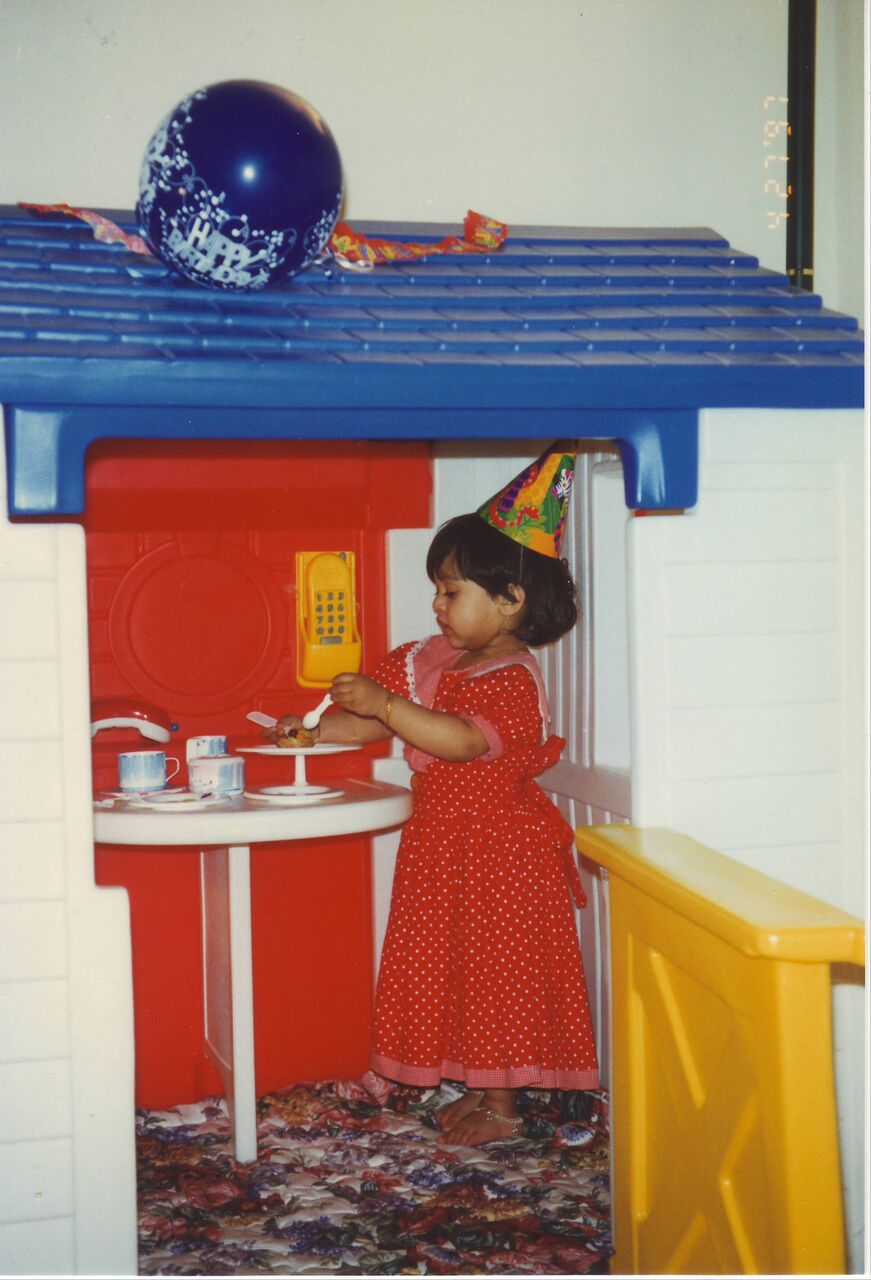
To my younger daughter Atiya, adjusting to a new chopped and blended family; I suggested four specific strategies beyond the injunction to be a strong independent woman. While Amani was born as I completed my degree in architecture where strength and uniqueness were primary virtues, Atiya was born during my graduate work in philosophy. In utero, she quietly listened to lectures on Hegel’s Phenomenology of Spirit, Aristotle’s Physics and Kant’s Third Critique. Her childhood rules reflect an awareness of time, a categorical responsibility and a sense of everything having a place. Six-year-old Atiya followed these four rules:

  1. Show up on time
  2. Finish what you start
  3. Clean up after yourself
  4. Keep your hair out of your face

It was a way to help her understand the importance of presence, engagement and responsibility. These were general rules applicable to many situations that helped her understand my expectations and helped me nag less.  The fourth rule “keep hair out of your face” was a later amendment, as her hair grew longer than her patience to care for it. Atiya is one of the most punctual, hard working, responsible and bright-faced women I know.

Amani and Atiya, you are both far better versions of me. Please don’t let my recipes limit you. I write these stories and recipes to help you write your own, not to follow mine. The recipe for growing girls has served you well but now is inadequate. You have both grown beyond simple slogans or prescriptions.

Bittermelons and Brownies: A recipe to grow myself

Everyday I find myself astonished and humbled by the infinite recipes for eating and living. My experience in architecture, philosophy, yoga and food has blended into a strange kaleidoscopic lens adjusting awareness, responsibility and joy in every interaction. I see cooking as transformative, as an event that helps me to take the other in, to consume, to enjoy and to cherish. My revised recipe for living now involves three considerations borrowing from yoga mindfulness and object oriented philosophy.

 (X)  Everything is a location in existence.

You, as a thing, are a dynamic location. You are a unique point in the stippled picture of the universe, never isolated, always responding. As is, everything else.

I borrow this from the practice of yoga that warns us against the misguided and egocentric belief that we are proudly autonomous or sadly disconnected.

X+  Everything is more than it appears.

You, as a thing, are more than your actions, emotions, body, race, religion, thought, features, likes, dislikes, you and everything you think you know is more than your assessment. You are hidden. As is, everything else.

Object oriented thinking and Graham Harman taught me to celebrate the darkness and depth of things. There is a philosophical generosity in accepting the unknown and resisting the drive for full disclosure.

 X + ( –X)  Everything is conditioned on what it is not.

Food is the visceral example of this. What is not you, sustains you. You are weird. As is, everything else.

Timothy Morton, the author of the Poetics of Spice (2006), Dark Ecology  (2016) and much more in between, talks about the “weird,” turning, twisting, looping non-linear causality and coexistence of things.

You, as a thing, are as a location in existence, more than what you seem and are conditioned by everything that is not you, and everything you encounter does the same.

Everything is a Point. Hidden. Weird.  Including, you. And, me.

Thing: {(X), X+, [X+(-X)]}

Keep reading. This is the master recipe I’ll be using in all food stories to come and to help me care about things I don’t understand. Let me tell you how to eat bittermelons and brownies, and a few things in between.

Bittermelons and Brownies: Introduction

Introduction: There are no recipes for Living

I begin with a disclaimer. I don’t follow recipes and nor do I expect you to. It is ironic of me to write a “cookbook.” I prefer expressed irony to hidden hypocrisy.  Irony is funny, inquisitive and open to other perspectives. Hypocrisy is not. These loose “recipes” are simply ways to remember that everyday we can be mindful and creative just by thoughtfully eating something.

I’m old enough to have experienced tectonic shifts in my own perspective. For me, in my 20s, self-sufficiency had been the mark of an adult.  In my 30s, as a mom and academic, productivity and efficiency had become my mantra. Now well into my 40s, I am the happiest I’ve ever been having shed my attachment to productive autonomy. Surely my thoughts at the moment are marked by where I am, a proud mom watching her baby fly. So take my words with a healthy dose of questioning and adjust to taste. Like people, recipes evolve.

Recipe for Growing Amani

When Amani was little she often heard me say “be a strong independent woman.” I may have been channeling my grandmother. Named after the Mughal emperor Akbar, Akbarunessa had a hard coating of authority about her, having lost her father and then her husband young. My grandmother cooked for herself, in a makeshift kitchen built into a corner of a long and wide veranda. In her little pot, the growing Dhaka city converged. She had two small gas burners and a sink not much larger than a loaf of bread. The old ice-crusted refrigerator stood awkwardly out of place in an adjoining bedroom. Her veranda kitchen hovered over a bed flowers and faced a garden complete with mango trees and flowering pulmeria.

The long winding and wrap-around veranda also held an easy chair, where she would recline and read with a cup of tea perched on the armrest. She spent her mornings hovered over her paring knife and vegetables. In the afternoon she would have lunch and then rest while listening to the radio. At four o’clock, she would make herself tea and wait for my aunts and mom to visit. At dusk she would water her garden with her metal watering can. Dinner at eight would be leftovers from lunch, carefully reheated over the stove in her tiny garden kitchen to the soundtrack of crickets. Her day ended by turning off the television and covering it with a large lace doily.

My seven-year old-self found this semi-solitary day lived by the beat of cooking and eating, strange and magical. She did all this in her corner of a large shared house surrounded by an even larger garden complete with mango, guava, papaya, eucalyptus, limes, roses, gardenia, jasmine and more. My uncle, her youngest and his family lived on the same floor as she did and we along with my mom, her eldest, lived on the second floor. It was a full house with at least two more large kitchens. But, my grandmother for whatever reason chose to cook and feed herself. I don’t know the history of the tiny makeshift veranda kitchen. I felt lucky on the occasions she invited me to eat lunch with her. For a no-nonsense stoic family figurehead, she was a surprisingly delicate cook. She cooked with calm, deliberate motions. Dare I say, she found cooking pleasurable. The only thing I didn’t like when I ate with her was the necessary Bengali first course:  bitter-melon bhaji and rice. It was the angry gatekeeper to a delicious fish or chicken curry to come. I still don’t like bitter melon but I have the fondest of memories around it.

Bad experiences don’t necessarily evolve into bad memories.

Thinking back, her odd self-feeding ritual despite being surrounded by family reads like a radical feminist effort to be self-sufficient. Maybe, for her, cooking was a statement of independence. Maybe it was a way to remain active and creative? I will never know.

I imagine for a little girl, “be a strong independent woman” seemed a harsh dictate. Amani, my first-born, is one of the most independent thinking, resilient and driven women I know.

How to Eat Bittermelons and Brownies – Recipes from a Philosopher Mom (Preface)

I wrote the first few chapters of “How to Eat Bittermelons and Brownies – Recipes from Philosopher Mom,” in anticipation of my first-born, Amani’s college graduation. As I prepare for my last-born, Atiya’s high school graduation this school year, I thought it would be therapeutic for me to add to the previous cookbook. In a way this is an ongoing story of grown and change. I imagine adding more, as more degrees, moves, homes, partners, life events and unfortunate losses are added to our collective lives. More than anything in the world, I enjoy mothering these two strong, smart, kind women. This is my way of loving them as they grow beyond the reaches of my wings.

I’ll share my journey here with you. Here is the preface from a few years ago:

Preface

“Amani cries everyday during lunch,” said the preschool teacher. Strange for a kid who loves to eat, I thought. Sensing my disbelief, Mrs. Mala asked that I visit during lunchtime to help solve the mystery. The next day I hid behind a curtain while the four-year olds were served lunch, as if waiting for frogs to sing or something magical to happen. It didn’t. Amani didn’t cry.

Later when asked, little Amani explained that Mrs. Mala wanted her to finish her lunch everyday. The thought of having to finish food she didn’t enjoy made her cry and she was scared of Mrs. Mala’s disapproval.

Later the “scary” teacher gave her two bracelets and all was forgiven.

We have all been at a table feeling forced to finish something we don’t enjoy. Whether the force comes from a looming authority, a sense of guilt or a sense of civility. Maybe with self-awareness that feeling of force, inevitably experienced, can diminish into either willful acceptance or rejection, instead of anxiety. Food as a way to digest and share our days becomes an emotional, physical and social barometer of our lives.

As my little Amani graduates college and enters adulthood, sometimes life will serve her dishes she doesn’t like or want to finish, literally and metaphorically. I won’t be there hiding behind the curtain to support her choice. Instead, I send her into the world with recipes about eating life with awareness, responsibility and joy.

Amani, my baby, may you always eat well.

Amani “Cooking”

Being Extra: the sauce of life

I am an extra.

I am a non-speaking character in a coffee shop background sipping coffee and staring at my laptop. There are raindrops on the windows, a blade of grass moving in the wind outside, cars moving past on the road, murmuring conversations, a large orange sculpture, a concrete floor, a sneeze, a ding, words, a child’s cry, salt and pepper shakers, iphones, mugs, music wafting above the hum of mid-morning conversations, a green shirt, smell of eggs and coffee, fingers on the keyboard, people behind the counter waiting, people behind the counter making lunch, yellow road signs, an itch on the neck, words on the wall, wood tables, metal chairs, stripes and me.

I don’t despair being an extra. Extras in books, movies or television are never credited with names, just actions, like, “shop keeper” or “crying child.” I am a silent actor in your story, a voiced actor in mine. You can only see my actions, my role as an extra. You don’t see my inner monologue, my struggles, my joys, my worries or my guilt. Recognizing that I am an extra in the world, a silent actor is surprisingly empowering. As you walk by my table where I type, I can trip you or smile, I may not change your story but I color it with my actions. I don’t have to be the main protagonist. The main character depends on the extra. That is the secret: we are all extras. Being extra. I came to see myself as an extra and found an extraordinary life. I stopped trying to be named, stopped trying to be the main character, a proper noun.

Philosophy, art, religions all try to address our longing to connect to something larger, more meaningful than us. This is another attempt. An extra attempt.

We all share the small things, like coffee cups, salt, phones, chairs and walls and the big, like cities, roads, landscapes, clouds, and water. How we focus shape how our individual perspectives live and interact. You are an extra in the stories of almost everyone you meet today. You can probably count the people in your life who are essential on your fingers.

You are an extra.

Moving beyond identity politics, religion, gender, into object-hood into being extra. Being both more and less. Being Extra.

Depending on your outlook you could interpret the title “Being Extra” as either as being more, extraordinary or being waste, extraneous. We are always both: extraordinary and extraneous. It depends on your taste.

I arrived at this question when reading Adolf Loos’ modernist manifesto Ornament and Crime. All sauces he said was ornamental. The modern man eats roast beef. From my South Asian perspective, beef was ornamental, mostly used as a flavoring for curries and only the main component twice a year, weddings and celebrations when a sacrifice was offered. Always ritualized and associated with a momentous occasion.

Adolf Loos’ food example to explain modern architecture and design stuck in my thoughts.

What are your favorite sauces? Your favorite extras? Do you add spicy hot sauce to your dishes, maybe sweet-salty honey mustard, or maybe tart-sweet bbq sauce? How do you flavor your life?

Dessert is always extra, more than, beyond functional, ornamental and as a habit, dangerously unhealthy. Maybe that’s why we crave it. A British Toffee Pudding Cake draped in sweet toffee sauce is definitely extra. Here is a recipe.

Wishing you extra,

Hungryphil



I don’t follow recipes: I love Cookbooks

I don’t follow recipes. Why then you might ask, “Do you have so many cookbooks?” Fair question.

Cookbooks are for me narratives, sometimes exotic, sometimes familiar, always poetic.

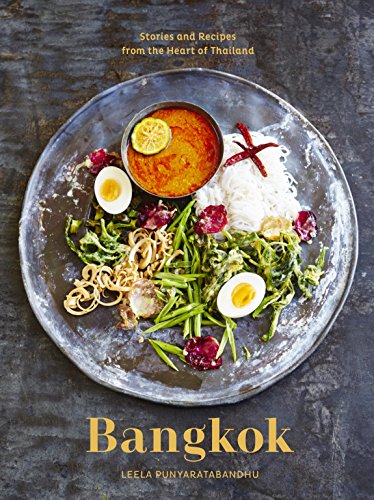
Here is a fantastic example, from Bangkok: Recipes and stories from the Heart of Thailand by Leela Punyaratabandhu:

My great-grand parents always greeted guests with a silver bowl of cold water – not from the fridge but from a terra-cotta jar that was used to store filtered rainwater. Just one sip of that water would leave guests wondering how my great-grandmother had fit their whole garden of tropical blossoms into a single bowl.

How beautiful and elegant an offering! A whole garden in a sip. This description introduces a recipe for Flower-scented water.

Granted not all books are so lush in exotic imagery soaked in rain and flower-scented. However, even the most down to earth, undesigned community or family cookbooks that list ingredients and command us to, mix, retain a hidden narrative of efficiency, a love language of service.

I may never gently float fragrant freshly blooming flowers like jasmines, roses, ylang-ylang in 12 cups of boiled tap water. But isn’t the idea that is so real and possible, beautiful?

Definitely Thai for dinner tonight served with dreams of flower-scented water.

What dreams will you serve with your dinner tonight?

Hungryphil

61N70fOTZ6L.jpg

Summer 2018 Food Highlights

The kids are heading back to school in West Lafayette, Indiana. And, just like that without fanfare, summer is over. Sigh.

I hope you had some tasty things with your favorite people. Here are a few of my nostalgic and grateful summer food moments.

1. Eating anywhere unfamiliar makes familiar foods, fascinating.

2. Eating treats in the warm sun makes food comforting outside in.

3. Eating homemade experiments on the porch is relaxing.

My summer was fascinating, comforting and relaxing. At least my food was so.

How was your summer? What did you eat?

Wishing you happy last tastes of summer,

Hungryphil

Sway, Sweat and Sip in Costa Rica

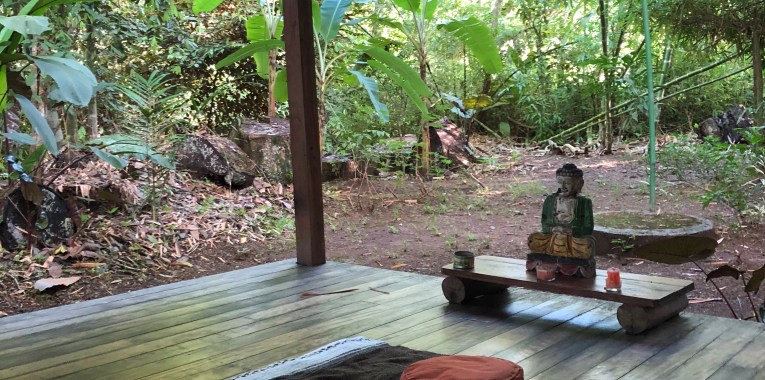
Think back to memories where you were so immersed in the experience that either you couldn’t or wouldn’t stop to take a picture. For this reason, cherished memories of my recent trip to Costa Rica doesn’t make for a good social media post.

For my own sake, I’ll try my best to share and reflect on a few moments. Prepare to use your imagination…

Gentle swinging in a hammock: It was warm and quiet except for the chirping birds of all colors and sounds. The hammock was soft and enveloping, enclosing me like a cocoon. (It wasn’t on of those horrid ones that flip over as you try to find your balance. So awkward.) Above through lacy vibrant green leaves, the sky was cloudy blue. Rain was approaching. There were a few moments when I did feel a few raindrops but by then I was too relaxed to be bothered. Of my two session hammock afternoon, the first involved quiet rocking with friends reading books in other hanging hammocks, while the second session, after my tea break, I was joined by my beloved, who swayed across from me as we talked about our time in Costa Rica. I have never enjoyed a hammock supported afternoon so much.

Temezcal Sweat Lodge: Darkness, stones, heat, ancestors, sweat, doors, herbs, sweat, intentions, chanting, sweat, wash off, cool pool, return, darkness, hot stones, steam, sweat, confusion, darkness, screaming, fetal position, sweat, cool, heat, forgiveness, love, sweat, cleansing, heat, steam, sweat, friends, ease, OM.

Sacred Cacao Ceremony with Tibetan Healing Bowls: Mindful sipping for unsweet hot-chocolate-like liquid in a circle with friends, rest, sound resonating through us. Sipping, rest, heart pulsated with stronger beats, melted emotions for some, reassurance for some, just relaxing for some, talking stick, offerings, invoking ancestors, parents. Who knows whether the ceremony was authentic or not? What ceremony is? As a tourist, authenticity of experience is always suspect. Does it matter, if it leaves you feeling good and joyous?

I learned to mindfully sway, sweat and sip during my trip to Costa Rica.

Thank you, Community Yoga for organizing the retreat, Thank you Vida Asana for being a welcoming place and host.

Here are some moments with pictures of beautiful things, places, and people.


Happiness as Defiance in Bangladesh

IMG_5258

According to the Happy Planet Index, Bangladesh ranks 8th among 140 countries. Just for comparison, the USA, where I live, ranks 108.  How is this possible that a place plagued by a high density of population, poverty, halting traffic, uncertainty and low life expectancy be so….happy? There seems to be no reason to be happy in the developing world. Afterall, most of my family chose to emigrate to the West. What did I miss?

Over my brief holiday stay in Dhaka, I caught glimpses from a fourth story veranda that might explain the high happiness factor.

Here’s my personal observation:

People seem to actively pursue small joys despite the inconvenience of crowds, traffic, workday, etc. No excuses. Morning walks by the lake, tea at the street corner with friends and strangers, wearing vibrant colors, music on the rooftops and streets and prayers on the street. Two things stand out:  socializing and eating. A lot. Everywhere. Based on the quantity and variety of food in the streets no one would believe hunger existed in Bangladesh.

New Year’s Eve there was a government ban on fireworks. Yet, I was woken up at midnight to the sound of fireworks shooting off the rooftops along with a steady stream of rising gentle glowing paper lanterns. Some caught on fire, some blew off to far away places to litter a different neighborhood the next day, there were explosive color and noise, alongside flickering floating lights, there was the sound of laughter, the smell of food cooking on the rooftops. People are willing to burn money for a good show of joy (fireworks are super expensive!) as a social service not mere personal luxury. It was the most private yet shared joy I experienced in any New Year’s Eve celebration ever,  as much a spectacle as a meditation. It was beautiful and unsafe. Whenever I need a moment of magic I’ll remember that dark night sky shot through with color, light, laughter and joyful defiance.  Thank you, Atiya for the photograph capturing the lanterns.

There is no reason to be happy. Like beauty, happiness is not efficient, clean, predictable, convenient or contained. In Bangladesh happiness doesn’t perch on your shoulder gently when you are not looking, as a side effect of ease. It is a  hard-fought battle against difficult circumstances and with considerable risk, along with others sharing tea and snacks.

Snack on and socialize everyone!

May you be happy,

Hungryphil


Eating at Home in Dhaka

This plate of food was one of the many delicious meals I enjoyed last week.  It has my favorites: tiny fish cooked with onions and peppers, daal/lentil, rice, shrimp with squash curry and mashed pumpkin (bharta). My plate is missing the small fried fish and the fried squash blossoms. None of this would be available at a restaurant. This is what Bengali food looks like. Vegetable and fish-focused light, flavorful curries, bhartas (mashed veggies with onions and chilies, like mashed potatoes in the West), daal and rice.

I love the idea of eating flowers. These fried blossoms were tender, crunchy and gently spiced.

DSC_0139

Prawns with Coconut milk. Classic. Yes the heads are still there. Heightens the shrimp flavor. Taught my girls the joy of sucking on sweet shrimp brains. One of the heavier and involved dishes we had along with the famed Biriyani (goat cooked in a sealed pot with rice, potatoes and spices) from Chef Fakruddin. Luxurious and definitely party food.

We can’t forget desserts. Rice flour and sugar based “Pithas” as well as milk and sugar syrup based “Mishti.” These beauties were not home-made but delicious just the same. Other store bought delights included mughlai paratha (flaky flat bread stuffed with spiced egg), samosas (triangular crispy pastries with beef fillings, not to be confused with potato filled samosas, which are called Shingaras in Bangladesh), Jelabis (funnel cake looking, orange-colored, crispy sweets), patties (chicken or beef filled puff pastry).

DSC_0124

It was a week of good eating four times a day, three meals and tea time. I was spoiled, full and happy. Thanks to my mom for planning all the yummy eats and her most talented cook Islam Bhai who fulfilled her plans expertly. He was working too fast and furious for my camera to capture.

The best part of the holidays is around the table eating with family and friends. I had a delicious winter holiday. Hope yours was too.

Wishing you Happy New Year,

Hungryphil