BakingPhil Project 2: Morning Glory Muffins

IMG_1434

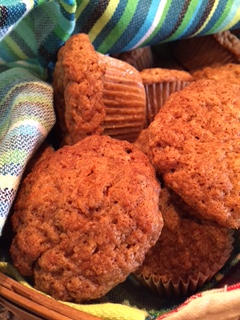
I am not a morning person. The idea of morning glory seems to me ironic. I love irony. So, for the second bakingphil project I chose Morning Glory Muffins (Recipe 6.8) that employs the “muffin” method of mixing. Never made this before. What could be bad about a muffin that boasts nuts, fruits and spices? Nothing. Unless, I over mix and create a “condition known as tunneling.” These elongated holes in muffins occur when we mix until smooth, warns the textbook. There seems to be a theme here with quick breads. Don’t over mix.

The muffin method requires the fat to be liquid (opposed to the biscuit method) when combined with the flour and other dry ingredients. Instead of aggregate biscuit dough that is rolled out, muffin batter is supposed to be lumpy. The incomplete incorporation of ingredients is the key to protecting the space for the bread to rise to soft and sweet tastiness.

One important point I forgot to mention last time is about the proportions. As I said before baking is all about a heated modulating and measuring of flour (structure, presence) with air (space, absence). These proportions determine the difference between pound cake and sponge cake (for more information see Rulman’s book Ratio). Its important to remember all measure is determined from the amount of flour. So, for example in this recipe, flour is 100%, sugar 112%, eggs 62% and on and on. Baking if anything is the art of proportion like light and airy Greek architecture that parted the walls invented the column. Greek architecture is like a sponge cake, while Etruscan a pound cake and Minoan architecture muffins. That may require another post to explain. For now, back to Morning Glory Muffins and the liquid medium of relationships.

What I learned:

  1. What does it mean to “mix just until combined”? I mixed until there was still just a bit of flour visible.
  2. Just like all baking, the temperature and time needs adjusting.
  3. How much to fill a muffin cup takes experience that would allow me to leave enough room for the expected rise. Standards only arise out of repetition. I am woefully without standards.

Dear expert bakers, now its time for the “diagnose my muffin” portion of the blog.

Look at the muffins at the top of the picture below. Notice the craters or dents in the middle. Is it because I didn’t bake them long enough?

IMG_1433

Also, notice my first batch towards the bottom is smaller, while the second batch at the top are bigger. Is there an optimal muffin size?

IMG_1431

Thanks for your help.

Credits

Coconut, apple, carrot, pecan, grapes (and the sun that makes them raisins) growers, pickers, shredders, packers, distributors, grocery stores, warm and cold climates, muffin pans, metal, ovens, heat, fire, eggs and chickens that produced them, oil (how does one make vegetable oil anyway?), sugar, mixing bowls, dishwashers that wash them, my whisk, measuring cups and spoons, oven mittens, kitchen, sink, water etc. etc.
BakingPhil Project 1: Cream Scones

IMG_1429

It may seem ironic that I’m embarking on this baking fest. After all, I started 2015 limiting wheat, milk, sugar, caffeine and red meat. On the opposite end of the spectrum, last night I enjoyed an unhealthy amount of delicious processed food in the forms of nachos, wings, tiny hot dogs, cookies, banana pudding and cake pops. The truth of my appetite is somewhere in between. Maybe because I’m trying to limit all the yummy, supposedly bad for me stuff, I feel the need to make the carbs, sugar and red meat I do have….an event. No plain white bread, frozen beef-patti burgers or cheap milk chocolate for me. No thank you. If I’m going to poison my body, I want to at least enjoy a few moments of deliberate and designed gastronomic delight.

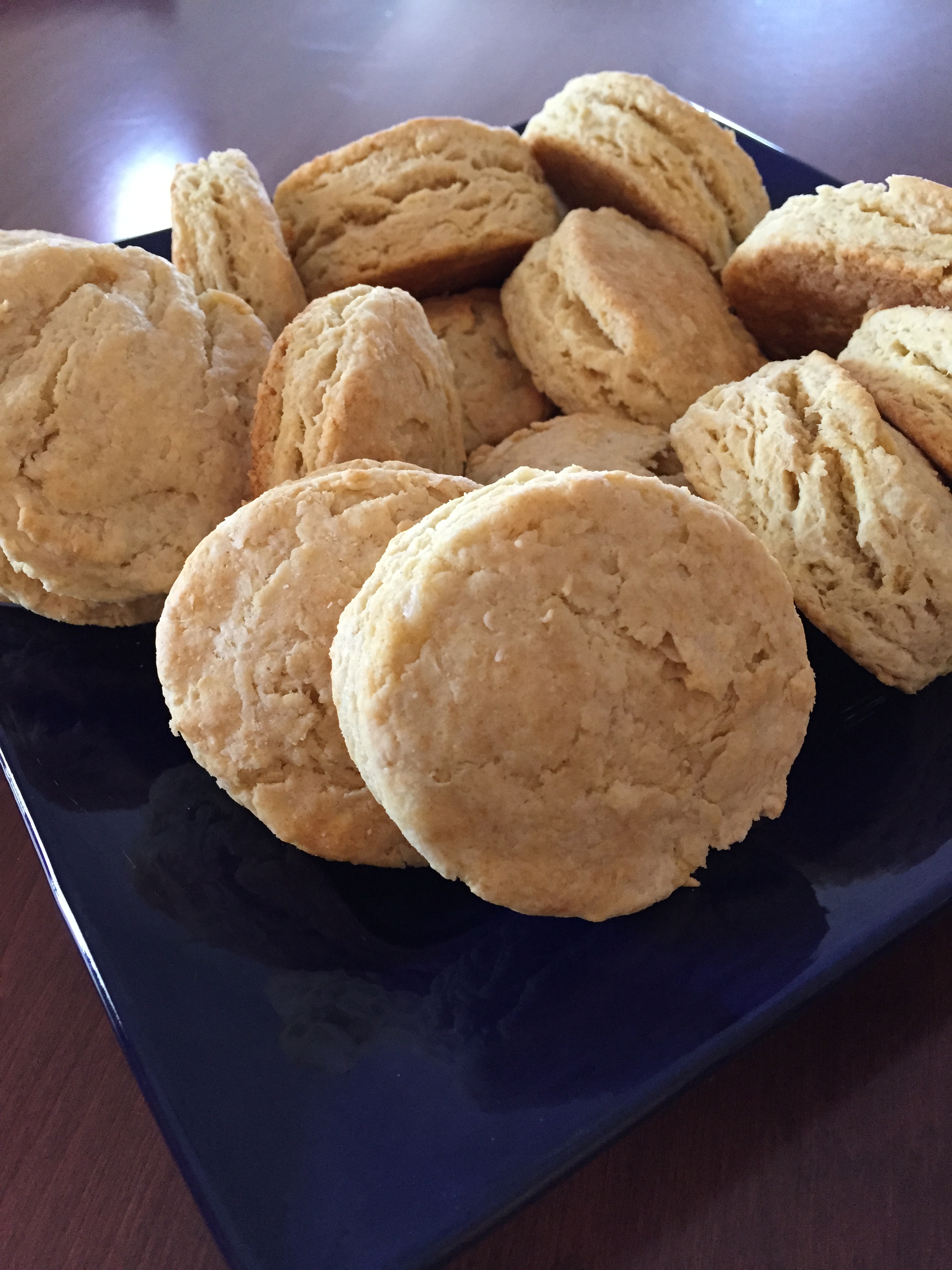
So, here I am at the first entry. I’ve chosen Cream Scones first, because I’ve made biscuits before and wanted to try something different. Second, Jim always orders scones, I’d like to be able to make him some and lastly, as previously confessed, my sister’s taunting.

Cream Scones (Recipe 6.5 in the textbook OnBaking)

This recipe requires that we apply the biscuit method of mixing. If you want the actual recipe, let me know. There are so many recipes online and I’m not really adding anything. The point here is not offer a how to guide ( I cannot claim expertise) or a recipe for scones but rather expose how everything you do, even as seemingly simple as baking bread, can be meaningful and philosophical. We are all hungry philosophers. We all make meaning everyday, even in baking scones. The interesting features of this particular method are:

  1. The fat that gives it flavor and adds air in the form of flakiness is solid. So, if we speak in architectural terms, the butter acts as scaffolding that helps the structure rise, but also forms the spaces. Its poetic to think of the disappearing butter as the secret to a biscuit or scones particular flavor.
  2. In this method, over-mixing is a sin. Don’t do it. The key is to keep the ingredients in a loose aggregate that allows space for the butter to form pockets of air. Aggressive mixing literally squashes the possibility of flakiness, of air/flavor pockets…..and then you get the hard as a rock hockey puck that I myself am guilty of making. I’d like to think I’m a gentler person who believes in supporting the benevolent actions all diverse components, now. The biscuit method demands gentility. As Hannah Arendt wrote, one of the techniques of totalitarianism is in blocking free movement:

“By pressing men against each other, total terror destroys the space between them; compared to the condition within its iron band, even the desert of tyranny, insofar as it is still some kind of space, appears like a guarantee of freedom. Totalitarian government does not just curtail liberties or abolish essential freedoms; nor does it, at least to our limited knowledge, succeed in eradicating love for freedom from the hearts of man. It destroys the one essential prerequisite of all freedom which is simply the capacity of motion which cannot exist without space.” (Origins of Totalitarianism, 466)

Don’t be a totalitarian with your scones, says the recipe.

What I Learned:

  1. Don’t let the fear of over-mixing scare you. In my nervousness I added the liquid BEFORE I cut in the butter. Yikes. Not a good start to this whole project. I grated the solid butter and then added it to the flour under the liquid as best I could.
  2. I didn’t have half and half as the recipe required. So I mixed whole milk and whipping cream. May have been too heavy for the recipe.
  3. The 10-minute baking time needed adjusting. I let it bake for a few more minutes. But I think I could have left in a bit longer to get more color.

Baking may be a science but accidents happen, substitutions and adjustments are often needed. I have a feeling this may be a dominant theme in future posts.

It tastes moist, slightly sweet, flakes as I bite into it. Soft, not hard. The dough was flaky even I was rolling it. Next time, I’d like to try adding more flavorings like orange zest or strawberries. I’d probably give myself a ‘B’ on account of the sequence fiasco and it could’ve risen more and had more color. I’ll perfect it before I send my sister a box.

Credits

Thank you to the book Onbaking and the systems of publishing, my mixing bowls, rolling pin, flour, butter, sugar, baking powder, soda, eggs, milk and the systems that produced, distributed, packaged, branded and sold the ingredients like, chickens, cows, wheat plants, wood, truck drivers, grocery shelf stockers, my oven, my warm house, my kitchen island, my roof, the gas company, the gas, the pipes that brought it to my oven, the timer, the internet, this blog, my camera, my tasters……etc. etc. for making this taste experience of production and consumption possible.

Baking Philosopher Project

51YXERWMKRL._SY344_BO1,204,203,200_

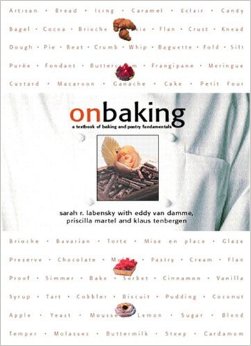
As long as I can remember, I loved to cook. Baking, however, intimidated me with its strange bipolar rhythm between energetic beating, whisking, rolling, folding and patient waiting to heat, cook and cool. But mostly, what scared me is its insistence on measurement. Recently, I’ve come to rethink baking as architecture. Baking is a measured combination of flour and air, just like architecture is a measured experience between structure and space. The quality our experiences related to both is enhanced by color/flavorings, comfort/fat and texture/grains. The comparison is not mine alone. In reading the textbook Onbaking: a textbook of baking and pastry fundamentals (Sarah R. Labensky, Eddy van Damme, Priscilla Martel and Klaus Tenbergen), I found this quote by Marie-Antoine Careme (1783-1833)

THE FINE ARTS ARE FIVE IN NUMBER, NAMELY: PAINTING, SCULPTURE, POETRY, MUSIC AND ARCHITECTURE, THE PRINCIPAL BRANCH OF THE LATTER BEING PASTRY.

Maybe I can learn to love baking too. So the next few months, I’ll be working on philosophically developing practical appreciation. As you can tell, I got the book. Not much research in that, just ordered a used textbook (new textbooks are very expensive!). I’ll be following onbaking for this project. The first five chapters cover history, equipment, principles, ingredients and such. I’ll start posting at chapter 6 Quick Breads.  Here’s my five reasons for doing this:

  1. Given all the information and support available online I should be able to teach “myself” to bake. It’s a DIY exercise of teaching and learning. There is nothing like having an experienced baker’s tastebuds and skills…which brings me to my second reason.
  2. I don’t have money to spend on baking school. If I win the lottery, it’ll be top on my list.
  3. I want to treat this as a radical philosophy project. In What It’s Like to Be a Thing, philosopher Ian Bogost calls us all to be hybrid philosophers. This is my attempt to be a philosopher-baker, by which I bring thoughtful attention to the practice and all its magic. What would it mean to live philosophically, to bake and cook philosophically?
  4. On a mommy level, I want to be able to send my baby in college yummy treats. Baked goods are tasty pieces of love that travel well, unlike my cooking.
  5. Now that I’ve publicly announced this project, I’ll have to be accountable for myself. Nothing like, guilt and shame to sustain a project. Okay…fine….for you positive people out there…yes, I’m talking to you Jim…..Support. Hopefully, I’ll have your support to continue on this tasty adventure. If you want to join me online in this baking project, please do. Go through any baking book you have on hand. If you live near me, you know who you are…come over.

Let the BAKINGPHIL PROJECT, Begin! First, the three mixing methods: biscuit, muffin and creaming. Next time: The muffin method of mixing used in cream scones. I start here because my sister teases me mercilessly about the “hockey-puck” scones I made loooooong ago (literally 25 years ago). She hasn’t forgotten. I shall have my vindication! Didn’t I say, baked goods ship well. Hmmmm.

Apple Crisp and Ice cream Happiness

exps6080_DM1002C21

Happiness

Why, Dot asks, stuck in the back
seat of her sister’s two-door, her freckled hand
feeling the roof for the right spot
to pull her wide self up onto her left,
the unarthritic, ankle—why
does her sister, coaching outside on her cane,
have to make her laugh so, she flops
back just as she was, though now
looking wistfully out through the restaurant
reflected in her back window, she seems bigger,
and couldn’t possibly mean we should go
ahead in without her, she’ll be all right, and so
when you finally place the pillow behind her back
and lift her right out into the sunshine,
all four of us are happy, none more
than she, who straightens the blossoms
on her blouse, says how nice it is to get out
once in a while, and then goes in to eat
with the greatest delicacy ( oh
I could never finish all that) and aplomb
the complete roast beef dinner with apple crisp
and ice cream, just a small scoop.

“Happiness” by Wesley McNair from The Town of No and My Brother Running. © David R. Godine, 1998. Reprinted with permission.   (buy now)

from the writersalmanac.org

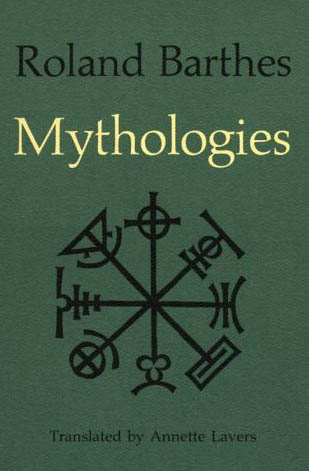
The Mythology of Steak Tartare

Mythologies_trans_Annette_Laverssteaktartare1

Roland Barthes’ collection of essays, Mythologies was written one a month during the years of 1954-1956 in order to infuse contemporary events and objects with a sense of history and time, with an aura of mythology. In order to live thoughtfully in our constructed world, Barthes’ suggested we all become mythologists, someone who can see the fluidity of value and meaning constructing and reconstructing itself continually, like someone riding in a car.

Myth is a value, truth is no guarantee for it; nothing prevents it from being a perpetual alibi: it is enough that its signifier has two sides for it always to have an ‘elsewhere’ at its disposal. The meaning is always there to present the form; the form is always there to outdistance the meaning. And there never is any contradiction, conflict, or split between meaning and the form: they are never at the same place. In the same way, if I am in a car and I look at the scenery through the window, I can at will focus on the scenery or the window-pane. At one moment I grasp the presence of the glass and the distance of the landscape; at another, on the contrary, the transparence of the glass and the depth of the landscape; but the result of this alternation is constant; the glass is at once present and empty to me, and the landscape unreal and full. The same thing occurs in the mythical signifier: its form is empty but present, its meaning absent but full. To wonder at the contradiction I must voluntarily interrupt this turnstile of form and meaning, I must focus on each separately, and apply to myth a static method of deciphering, in short, I must go against its own dynamics: to sum up, I must pass from the state of the reader to that of a mythologist.

For us, hungry philosophers, his chapters on “Wine and Milk” and “Steak and Chips” is particularly fascinating in how he looks at steak as a celebration of ‘full-bloodedness,’ an expression of sanguine mythology, like wine, in France.

To eat steak rare therefore represents both a nature and a morality. It is supposed to benefit all the temperaments, the sanguine because it is identical, the nervous and lymphatic because it is complementary to them. And just as wine becomes for a good number of intellectuals a mediumistic substance which leads them towards the original strength of nature, steak is for them a redeeming food, thanks to which they bring their intellectualism to the level of prose and exorcize, through the blood and soft pulp, the sterile dryness of which they are constantly accused. The craze for steak tartare, for instance, is a magic spell against the romantic association between sensitiveness and sickliness; there are to be found, in this preparation, all the germinating states of matter: the blood mash and the glair of eggs, a whole harmony of soft and life-giving substances, a sort of meaningful compendium of the images of pre-parturition.

Wow…..the myth of steak tartar takes us way back to uterine blood. This insight certainly interrupts the turnstile of form and meaning in order to look at the dish in its components, blood, pulp and egg, carefully prepared and its meaning reinforced (instead of a savage un-thought state of eating raw meat and eggs). The preparation, the design, the enjoyment constructs the mythology. Can we use Barthes’ method in uncovering the mythology of our things and foods, now in 2015? Maybe I can try in a future entry. The KFC double down, the Kuerig Machine, the Vitamix….come to mind.

Disclaimer: I have subjected myself to a New Year’s detox period without “toxins” i.e. wheat, dairy, sugar, red meat and CAFFEINE. Therefore, I may write A LOT about beef, bread and coffee, all things of related deliciousness. Dear readers, I beg your patience.

Chicken Salsa Verde Enchiladas for Amani

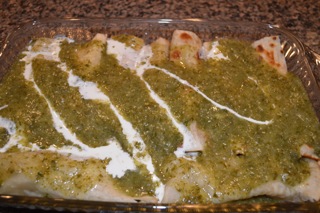
DSC_0091

Dear Amani,

Here is what you need. Next time you’re home we can make it together.

1. Shredded Chicken: Do the Ina Garten method of roasting 2 or 3 chicken breasts (bone in, skin on) sprinkled with salt, pepper and oil at 350 for 35 minutes or until the skin gets crispy and juices run clear. Make more. You can always use the extra shredded chicken in curries, soup or sandwiches.OR….just buy a roasted chicken from the grocery store.

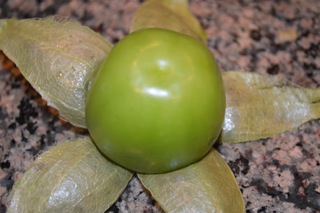
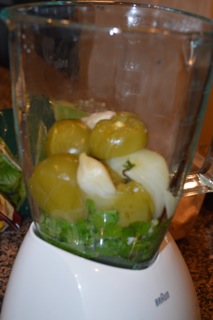
2. For the Sauce: Tomatillos (7-8), half onion, one bunch of cilantro, 2 garlic cloves, cumin, coriander. Or just buy a canned version.

3. Two avocados and two tomatoes, other half of onion, cilantro, one lime.

4. Tortillas: I prefer corn but some (most) people in our house like flour.

5. Cheese: Queso fresco is best, but any cheese would do. For a low cal version, leave cheese and cream out. And, instead of frying the tortillas in oil to make them soft, dip in the warm sauce and then roll. The fast flauta trick doesn’t work with the low cal version.

Once you have all the ingredients, here is what you do:

DSC_0075

DSC_0076

1. Peel and wash tomatillos.

DSC_0077

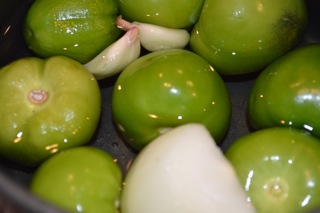
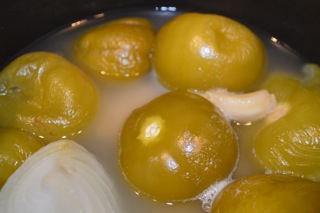
2. Simmer (with water that comes half way up the tomatillos) with two garlic cloves and half onion about 20 minutes until soft.

DSC_0080

3. While tomatillos are simmering, chop the pico de gallo.

DSC_0081DSC_0082

4. Shallow fry tortillas in vegetable oil making them soft, pliable and yummy.

DSC_0083DSC_0084

5. Stir fry chicken with cumin, coriander, salt and pepper. Add left over salsa if you have any. Add a can of  black beans if you’d like. Add half of the chopped pico (before the addition of avocados) to the mix.

DSC_0085DSC_0086DSC_0087

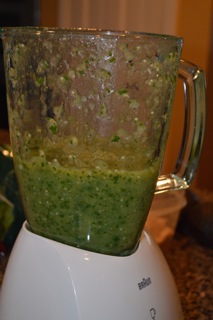
6. Blend the tomatillos, water and all. Add a fresh jalepeno or green chilies, cilantro, salt, pepper.

DSC_0088

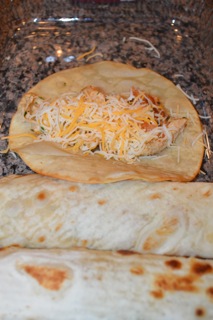
7. Roll each tortilla with the shredded chicken mixture and cheese.

DSC_0089

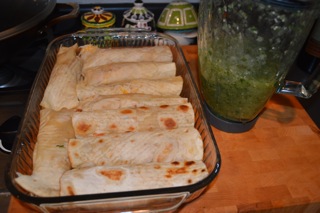
8. Fill up your pan. Bake just like this as flautas for those who prefer no heat and no sauce. This is the batch I make for Lucy and Ava.

DSC_0090

9. Pour salsa over the rolls and bake until bubbly at 350 for about 30 minutes. I add a hint of cream or mexican crema for Jim.

10. Serve with avocado salad or guacamole and sour cream on the side.

Enjoy! Hope this works for you!

BookBites: Simple Thai Food

61xULMXL-cL._SX258_BO1,204,203,200_

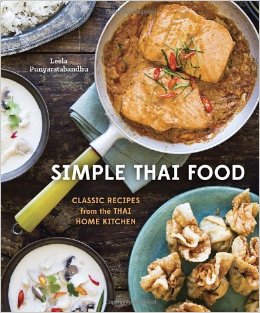
I recently tried two recipes from Simple Thai Food: Classic Recipes from the Thai Home Kitchen by Leela Punyaratabandhu. Both dishes were so flavorful that I’m eager to try as many recipes as I can and in the meantime share the cookbook with you. I cooked Red Curry Salmon (It’s on the cover) and Basil Chicken over rice. Very different flavors, both easy to make yet taste of complex sweet and spicy flavors. Sorry, no images. Next time, I’ll document the process. I really don’t mind making the dishes again. Here are the three reasons I love this book.

3. I like pictures. Especially when I don’t know how a dish is supposed to look. This book is a beautiful read. After all, I made the salmon because it looked good. The finished dish looked very much like the image. There is a sense of accomplishment in this weird matching game.

2. The personal narrative gives the recipes authenticity and personality. It also offers cultural background that helps us appreciate the cuisine outside standard restaurant items.

1. The author generously gives us both “from scratch” or from prepared curry paste options.  There is no judgment in the tone. She makes the book’s exotic recipes approachable and easy. I used a curry paste the first time but the book inspires me to invest in trying the long version. She also explains the process and techniques, for example, like frying the coconut cream and spice mixture until the oil separates. These visual process clues like the finished dish images help me a lot.

Try the cookbook. See if you like it and write back.

Poetics of Buttered Toast

Not Yet

by Jane Hirshfield

Morning of buttered toast;
of coffee, sweetened, with milk.

Out the window,
snow-spruces step from their cobwebs.
Flurry of chickadees, feeding then gone.
A single cardinal stipples an empty branch—
one maple leaf lifted back.

I turn my blessings like photographs into the light;
over my shoulder the god of Not-Yet looks on:

Not-yet-dead, not-yet-lost, not-yet-taken.
Not-yet-shattered, not-yet-sectioned,
not-yet-strewn.

Ample litany, sparing nothing I hate or love,
not-yet-silenced, not-yet-fractured; not-yet-

Not-yet-not.

I move my ear a little closer to that humming figure,
I ask him only to stay.

“Not Yet” by Jane Hirshfield from The Lives of the Heart. © Harper Collins, 1997. Reprinted with permission. (buy now)

From the Writer’s Almanac

Faddists and Face stuffers not welcome

9780520269347

The rudeness of the glutton and the face stuffer is obvious. Equally ill-mannered- though it is politically incorrect to say so — is the food faddist, who makes a point of announcing, wherever he goes, that just this or this can pass his lips, and all other things mush be rejected, even when offered as a gift. …..Both the faddist and the glutton have lost sight of the ceremonial character of eating, the essence of which is hospitality and gift. For each of them, I and my body occupy center stage, and the meal loses its meaning as human dialogue. Though the health-food addict is in one sense the opposite of the burger stuffer and the chocaholic, he too is a product of fridge culture, for whom eating is feeding, and feeding a solipsistic episode, in which others are disregarded. The finicky beak of the health freak and the stretched maw of the junk-food addict are alike signs of deep self-centeredness. It is probably better that such people eat on their own, since even in company they are really locked in solitude.

This quote from the chapter entitled “Real Men Have Manners” by Roger Scruton published in the Philosophy of Food eloquently and vividly explains why we find sharing a table with picky eaters so unpleasant. You know this person. Maybe this year, when someone at the table begins to complain about the amount of butter in the thanksgiving meal you’ll know exactly why you’re irritated by their self-centeredness disguised as discriminating taste.

#grapegate and onions

 -1

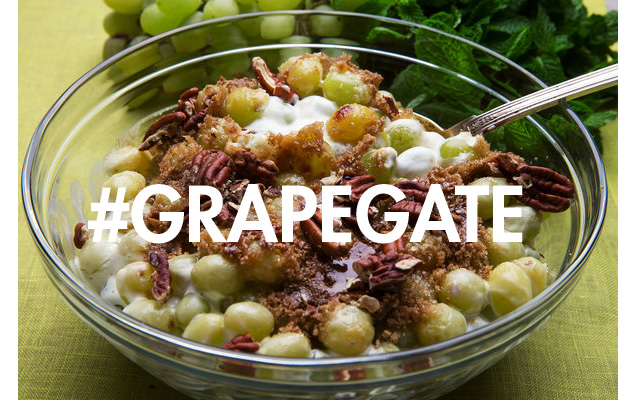
Usually we associate food with harmonious, benevolent, generous sharing. But….the angry response dubbed #grapegate to The New York Times article “The United States of Thanksgiving” (http://nyti.ms/1t9Ebcp) reminds us that food is deeply connected to how we identify ourselves. In this case the article offended the state of Minnesota with its attribution of grape salad as a gastronomic emblem. Alabama is not too happy either. Disagreement certainly fuels reviews, recipes, blogs, food writing, competitions and more. As Minnesota arrives at wild rice consensus we witness a region reclaiming it’s identity. Thanksgiving is not only a time of sharing but more importantly a time to confront tradition, nationally, regionally and personally. Whose recipes make it to the table? How are the recipes personalized? Imagine an Immigrant’s Thanksgiving Table…now there’s a great cookbook idea! As a cook in a chopped and blended family, I have to say, the dinner table is an exhausting culinary and cultural challenge with occasional exhilarating moments of delicious resolution (for us, usually in burgers and brownies).

(Dear Bobby Flay, yesterday I made your pumpkin bread recipe from the Epicurious recipe app. It was fantastic, moist, light, flavorful. I confess, I added dried cranberries making it even better. I feel you would approve. Recipes like rules are meant to be broken, sometimes with thought.)

May we all eat well and grow this Thanksgiving as we confront who we are and want to be together.

http://www.npr.org/blogs/monkeysee/2014/11/19/365194058/grape-salad-is-not-minnesotan-and-other-lessons-in-cultural-mapmaking


Here is a poem from today’s Writer’s Almanac that speaks to the intensity and intimacy of everyday culinary disagreements.

Recollection of Tranquility

The first time we ever quarreled
you were cutting an onion
in the kitchen of our rented cottage.
I remember vividly. We were making creole
for a late night supper with champagne,
and you were taking it seemed forever
to cut the onion.
Each time your dull paring knife
chopped on the counter, I shifted my feet,
and I saw once in a glimpse over my shoulder
a white wedge of onion wobbling loose.
I sighed inaudibly. The butter I stirred
had already bubbled and browned.
I was starting over with a new yellow lump
that was slipping on the silver aluminum
when you brought, cupped in your hands,
the broken pieces, the edges all ragged,
the layers separated, bruised and oozing
cloudy white onion juice.
I complained:
the family recipe stated specifically,
the onion must be “finely chopped,”
for what I explained were very good reasons.
Otherwise, the pungent flavors would be trapped
irrevocably in the collapsed cellular structure
of the delicate root.

You sighed, I guess, inaudibly
and adjusted your glasses carefully
with two fingers (a fidget
I have since come to know
as a sign of mild perturbation)
and explained:
the pungence of onions too finely chopped
would be simmered away. The original sharp
burning crispness could be retained
only in fairly large, bite-sized chunks.
But you wouldn’t fight tradition.
I mopped onion on the counter
with the dull knife, while you set the table
and figured the best way of popping the cork.

“Recollection of Tranquility” by Idris Anderson, from Mrs. Ramsay’s Knee. © Utah State University Press, 2008.

http://writersalmanac.org/