How to Eat Like a Yogi

A long time ago there was a yogini, Giri Bala who lived without food – Yogananda tells us in the in the Autobiography of a Yogi. At age 12 responding to her mothers-in-law taunts that she eats too much, Giri Bala with the help of her Guru stopped eating in order to prove that humans are sustained by spirit not matter.

To me, Ayurveda, as a holistic medicine practice, is related to yoga as another practice of cultivating connection with the universe, others and within. I am drawn to the view of eating as a cosmic event where elements collide.

There are too many conflicting accounts of yoga principles to account for here. The details are less important or interesting. The idea that I am a location where streams of cosmic energies like earth, water, fire and air whip up into a special climate is fascinating. My encounters with others shape my physical, emotional and spiritual environment, my personal reformed and reflected universe.  For example, spicy food can fuel my anger, yet energize another.

This is certainly not a medical prescription, for weight loss, Ayurveda is a way to use food as a spiritual practice.

Here are the principles worth considering:

  1. The principle of Power: Everything has qualities and powers.
  2. The principle of Balance: Like qualities increases like qualities and balancing requires inviting the opposite quality.
  3. The principle of Doshas: Eat things with qualities and powers that balance your constitution (inside)
  4. The principle of Seasons: Eat things according to the season (outside)

When we pay attention, we know when we’ve eaten too much or too little, we recognize that something is fighting us in our stomachs resulting in gas or heartburn, we know when something smells or feels wrong in our mouth. If we mindfully eat and digest, we feel when we need something heavy and grounding and when we need something light and soothing. Usually, we don’t eat mindfully or pay attention to our bodies, we eat with our eyes, our memories, our expectations and worse, our stress.

Your stomach is your internal universe that transforms matter into energy. What is it craving now?
Being Extra: the sauce of life

I am an extra.

I am a non-speaking character in a coffee shop background sipping coffee and staring at my laptop. There are raindrops on the windows, a blade of grass moving in the wind outside, cars moving past on the road, murmuring conversations, a large orange sculpture, a concrete floor, a sneeze, a ding, words, a child’s cry, salt and pepper shakers, iphones, mugs, music wafting above the hum of mid-morning conversations, a green shirt, smell of eggs and coffee, fingers on the keyboard, people behind the counter waiting, people behind the counter making lunch, yellow road signs, an itch on the neck, words on the wall, wood tables, metal chairs, stripes and me.

I don’t despair being an extra. Extras in books, movies or television are never credited with names, just actions, like, “shop keeper” or “crying child.” I am a silent actor in your story, a voiced actor in mine. You can only see my actions, my role as an extra. You don’t see my inner monologue, my struggles, my joys, my worries or my guilt. Recognizing that I am an extra in the world, a silent actor is surprisingly empowering. As you walk by my table where I type, I can trip you or smile, I may not change your story but I color it with my actions. I don’t have to be the main protagonist. The main character depends on the extra. That is the secret: we are all extras. Being extra. I came to see myself as an extra and found an extraordinary life. I stopped trying to be named, stopped trying to be the main character, a proper noun.

Philosophy, art, religions all try to address our longing to connect to something larger, more meaningful than us. This is another attempt. An extra attempt.

We all share the small things, like coffee cups, salt, phones, chairs and walls and the big, like cities, roads, landscapes, clouds, and water. How we focus shape how our individual perspectives live and interact. You are an extra in the stories of almost everyone you meet today. You can probably count the people in your life who are essential on your fingers.

You are an extra.

Moving beyond identity politics, religion, gender, into object-hood into being extra. Being both more and less. Being Extra.

Depending on your outlook you could interpret the title “Being Extra” as either as being more, extraordinary or being waste, extraneous. We are always both: extraordinary and extraneous. It depends on your taste.

I arrived at this question when reading Adolf Loos’ modernist manifesto Ornament and Crime. All sauces he said was ornamental. The modern man eats roast beef. From my South Asian perspective, beef was ornamental, mostly used as a flavoring for curries and only the main component twice a year, weddings and celebrations when a sacrifice was offered. Always ritualized and associated with a momentous occasion.

Adolf Loos’ food example to explain modern architecture and design stuck in my thoughts.

What are your favorite sauces? Your favorite extras? Do you add spicy hot sauce to your dishes, maybe sweet-salty honey mustard, or maybe tart-sweet bbq sauce? How do you flavor your life?

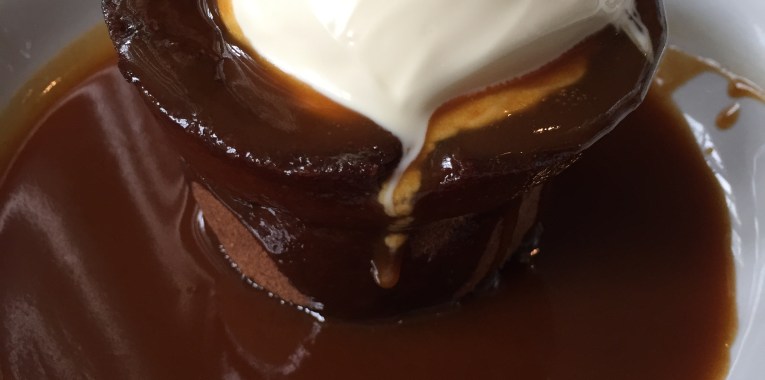
Dessert is always extra, more than, beyond functional, ornamental and as a habit, dangerously unhealthy. Maybe that’s why we crave it. A British Toffee Pudding Cake draped in sweet toffee sauce is definitely extra. Here is a recipe.

Wishing you extra,

Hungryphil


I don’t follow recipes: I love Cookbooks

I don’t follow recipes. Why then you might ask, “Do you have so many cookbooks?” Fair question.

Cookbooks are for me narratives, sometimes exotic, sometimes familiar, always poetic.

Here is a fantastic example, from Bangkok: Recipes and stories from the Heart of Thailand by Leela Punyaratabandhu:

My great-grand parents always greeted guests with a silver bowl of cold water – not from the fridge but from a terra-cotta jar that was used to store filtered rainwater. Just one sip of that water would leave guests wondering how my great-grandmother had fit their whole garden of tropical blossoms into a single bowl.

How beautiful and elegant an offering! A whole garden in a sip. This description introduces a recipe for Flower-scented water.

Granted not all books are so lush in exotic imagery soaked in rain and flower-scented. However, even the most down to earth, undesigned community or family cookbooks that list ingredients and command us to, mix, retain a hidden narrative of efficiency, a love language of service.

I may never gently float fragrant freshly blooming flowers like jasmines, roses, ylang-ylang in 12 cups of boiled tap water. But isn’t the idea that is so real and possible, beautiful?

Definitely Thai for dinner tonight served with dreams of flower-scented water.

What dreams will you serve with your dinner tonight?

Hungryphil

61N70fOTZ6L.jpg

How to make a proper cup of tea

“Hold the sadness and pain of samsara in your heart and at the same time the power and vision of the Great Eastern Sun. Then the warrior can make a proper cup of tea.”

– Chogyam Trungpa Rinpoche

In her book The Wisdom of No Escape, American Tibetan Buddhist, Pema Chodron discusses the above quote as follows,

The quotation really made an impression on me. It was completely true: if you can live with the sadness of human life (what Rinpoche often called the tender heart of genuine heart of sadness), if you can be willing to feel fully and acknowledge continually your own sadness and the sadness of life, but at the same time not be drowned in it, because you also remember the vision and power of the Great Eastern Sun, you experience balance and completeness, joining heaven and earth, joining vision and practicality. …..One can hold them both in one’s heart, which is actually the purpose of practice. As a result, one can make a proper cup of tea. …..

Making a proper cup of tea means that you thoroughly and completely make that tea because you appreciate the tea and the boiling water and the fact that together they make something that’s nourishing and delicious, that lift’s one’s spirits.

When I feel in small daily chores, like washing dishes, folding laundry or making tea, a sense of ritual, a sense of awareness, a sense of sadness and light, the chore becomes a moment of presence. This is so difficult to remember when we are rushing and impatiently waiting for water to boil.

Every morning I make myself tea. I use a red kettle that whistles instead of an electric water kettle or the microwave.  This process takes a few extra minutes. The clicking turn of the gas stove, the small explosion of blue and orange light,  the cool feel of metal as I release the water waiting at the faucet, the weight of the kettle as I lift it and place it over the colorful circular flame, the blossoming heat that grabs the kettle, the hissing steam and eventually screaming whistle, all together compose a strangely active yet calming morning ritual.  How can I expand this sense of ritual, as awareness and presence, to the rest of my day? This is the challenge of the proper cup of tea, especially on days I find myself waiting for water to boil.


Summer 2018 Food Highlights

The kids are heading back to school in West Lafayette, Indiana. And, just like that without fanfare, summer is over. Sigh.

I hope you had some tasty things with your favorite people. Here are a few of my nostalgic and grateful summer food moments.

1. Eating anywhere unfamiliar makes familiar foods, fascinating.

2. Eating treats in the warm sun makes food comforting outside in.

3. Eating homemade experiments on the porch is relaxing.

My summer was fascinating, comforting and relaxing. At least my food was so.

How was your summer? What did you eat?

Wishing you happy last tastes of summer,

Hungryphil

Gift of Eggs and Kimchi Fried Rice

My friend, Linda gave me a dozen fresh eggs this morning. My obessive love of eggs is no secret. What a happy gift!

At the end of the morning yoga session while everyone was enjoying a peaceful savasana, I was planning lunch. My leftover rice from last night already had quiet ambitions of becoming a kimchi fried rice topped with a fried egg. Now, I had fresh eggs to make that dish sing.

I first learned about Kimchi (a Korean cabbage pickle) with rice watching Food Network. Thank you, Ina Garten and guest.

https://www.foodnetwork.com/recipes/kimchi-fried-rice-with-fried-egg-recipe-2131583

My version is simply leftover rice, mixed with kimchi, heated and then topped with an egg. The pickle is spicy-tart and makes the rice moist, crispy and flavorful. The deep orange yolk of the fresh egg works as a sweet-salty sauce.

So simple, so good.

Thanks to Linda, lunch was fantastic.

Wishing you a happy lunch,

Hungryphil


Happiness as Defiance in Bangladesh

IMG_5258

According to the Happy Planet Index, Bangladesh ranks 8th among 140 countries. Just for comparison, the USA, where I live, ranks 108.  How is this possible that a place plagued by a high density of population, poverty, halting traffic, uncertainty and low life expectancy be so….happy? There seems to be no reason to be happy in the developing world. Afterall, most of my family chose to emigrate to the West. What did I miss?

Over my brief holiday stay in Dhaka, I caught glimpses from a fourth story veranda that might explain the high happiness factor.

Here’s my personal observation:

People seem to actively pursue small joys despite the inconvenience of crowds, traffic, workday, etc. No excuses. Morning walks by the lake, tea at the street corner with friends and strangers, wearing vibrant colors, music on the rooftops and streets and prayers on the street. Two things stand out:  socializing and eating. A lot. Everywhere. Based on the quantity and variety of food in the streets no one would believe hunger existed in Bangladesh.

New Year’s Eve there was a government ban on fireworks. Yet, I was woken up at midnight to the sound of fireworks shooting off the rooftops along with a steady stream of rising gentle glowing paper lanterns. Some caught on fire, some blew off to far away places to litter a different neighborhood the next day, there were explosive color and noise, alongside flickering floating lights, there was the sound of laughter, the smell of food cooking on the rooftops. People are willing to burn money for a good show of joy (fireworks are super expensive!) as a social service not mere personal luxury. It was the most private yet shared joy I experienced in any New Year’s Eve celebration ever,  as much a spectacle as a meditation. It was beautiful and unsafe. Whenever I need a moment of magic I’ll remember that dark night sky shot through with color, light, laughter and joyful defiance.  Thank you, Atiya for the photograph capturing the lanterns.

There is no reason to be happy. Like beauty, happiness is not efficient, clean, predictable, convenient or contained. In Bangladesh happiness doesn’t perch on your shoulder gently when you are not looking, as a side effect of ease. It is a  hard-fought battle against difficult circumstances and with considerable risk, along with others sharing tea and snacks.

Snack on and socialize everyone!

May you be happy,

Hungryphil


Eating at Home in Dhaka

This plate of food was one of the many delicious meals I enjoyed last week.  It has my favorites: tiny fish cooked with onions and peppers, daal/lentil, rice, shrimp with squash curry and mashed pumpkin (bharta). My plate is missing the small fried fish and the fried squash blossoms. None of this would be available at a restaurant. This is what Bengali food looks like. Vegetable and fish-focused light, flavorful curries, bhartas (mashed veggies with onions and chilies, like mashed potatoes in the West), daal and rice.

I love the idea of eating flowers. These fried blossoms were tender, crunchy and gently spiced.

DSC_0139

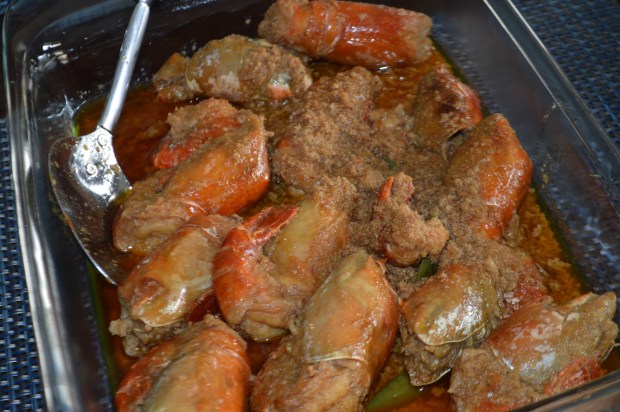
Prawns with Coconut milk. Classic. Yes the heads are still there. Heightens the shrimp flavor. Taught my girls the joy of sucking on sweet shrimp brains. One of the heavier and involved dishes we had along with the famed Biriyani (goat cooked in a sealed pot with rice, potatoes and spices) from Chef Fakruddin. Luxurious and definitely party food.

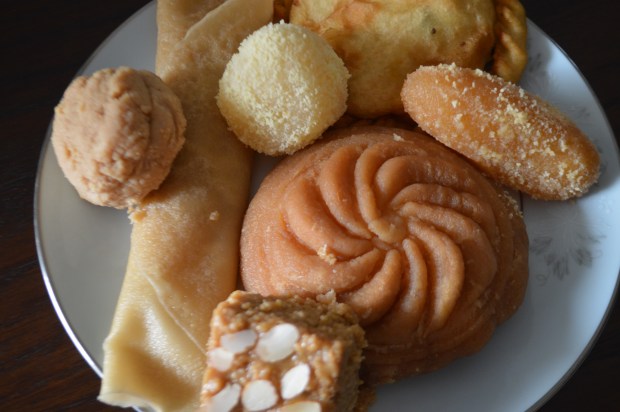
We can’t forget desserts. Rice flour and sugar based “Pithas” as well as milk and sugar syrup based “Mishti.” These beauties were not home-made but delicious just the same. Other store bought delights included mughlai paratha (flaky flat bread stuffed with spiced egg), samosas (triangular crispy pastries with beef fillings, not to be confused with potato filled samosas, which are called Shingaras in Bangladesh), Jelabis (funnel cake looking, orange-colored, crispy sweets), patties (chicken or beef filled puff pastry).

DSC_0124

It was a week of good eating four times a day, three meals and tea time. I was spoiled, full and happy. Thanks to my mom for planning all the yummy eats and her most talented cook Islam Bhai who fulfilled her plans expertly. He was working too fast and furious for my camera to capture.

The best part of the holidays is around the table eating with family and friends. I had a delicious winter holiday. Hope yours was too.

Wishing you Happy New Year,

Hungryphil


Food Poem by Jim Daniels

This poem is not directly about food. The imagery of two siblings over a kitchen sink surrounded by leftovers makes me smile. Maybe you will too.

Brushing Teeth with My Sister after the Wake

at my kitchen sink, the bathroom upstairs
clogged with family from out of town

spending the night after the wake
and the after-wake—cold beverages

have been consumed and comfort food,
leftovers bulging both the fridge

and the minifridge. In our fifties, both
half-asleep half-awake, we face each

other. My sister’s smile foams white
down her chin at the end of a day

on which no one has smiled. We laugh.
We may never brush our teeth together again.

No mirror down here to see our haggard faces.
We rinse, we spit. As we were taught.

“Brushing Teeth with My Sister after the Wake” by Jim Daniels from The Middle Ages. © Red Mountain Press, 2018.

From the Writer’s Almanac


Khichuri for Atiya

IMG_5024

Comfort food is not always easy on the eyes. Khichuri does not “look” delicious but it is soft, warm, roasty, soupy, buttery and all things comforting. Often served for a big crowd since the rice and lentil stew expands, offers protein and warm stick-to-your-ribs comfort. It can be easily modified to the season and personal taste. It tastes like a South Asian version of Italian Risotto or Asian Congee. This week, this dish was Atiya, my baby’s request.  Perfect for the changing of the seasons. You will certainly find this in any Ayurvedic/ Yoga recipe book.

Usually, I make this with a sunny side up egg curry in a light tomato sauce. Today I was out of tomato sauce. So, instead, I made a spicy omelet with fried onions, cilantro, and chili peppers.

Basically, the dish requires rice, lentils, and water, cooked together to make a thick soup. That’s it. Everything else is up to family/ personal preference. Throw in whatever spices and vegetables you like.

Here is how I made mine today (tomorrow and next month might be different)

Wednesday Night Khichuri

  • 1/2 cup of lentils (red and yellow mung dal mixed)

  • 1 cup Jasmine rice (makes it extra mushy, Basmati is the traditional choice)

  • 2 cups of water

  • 2 cups of chicken broth (or vegetable broth, or just more water)

  • 1 Bay leaf

  • 1 Cinnamon Stick

  • 3 Cloves

  • 1/2 teaspoon Ginger Paste

  • 1 teaspoon salt

  • 1 teaspoon turmeric

Cook over medium heat in a big pot until the rice and lentils break down and become a super soft mush (about 40 minutes). Fry an onion sliced, 1/2 teaspoon cumin seeds, 1 garlic clove sliced in 3 tablespoons of ghee or butter. Add the golden onion mixture to the rice. Stir in. Today I also added a chopped tomato for a bit of brightness. Other days I add carrots or peas or other veggies.  You may need to add more liquid to make it as soupy as you like. As it sits the Khichuri tends to absorb all the liquid and set up. You can always add more broth when you heat it back up.

Serve with store-bought fried onions, ghee, and a lime wedge.

You can add a sunny side up fried egg, an omelet or an egg curry. You can also serve with fried eggplant or a spicy beef curry.  Really, anything goes well with Khichuri.

If you make this in a pressure cooker, it takes about minutes for the rice to breakdown. After you carefully open the lid, add the fried onions. All done in 15 minutes. Today I had time and had my pot simmering for an hour while I watched Chopped on Food Network (Love that show!).

Try this or something that brings you comfort.

Wishing you a happy fall season,

Hungryphil