Whose fault is loneliness?

How often do we feel in ourselves or notice in others the pangs of isolation and loneliness? We feel misunderstood, judged, rejected and diminished by others, and so we begin to self-isolate. In reading Irvin Yalom’s Existential Psychotherapy I came across a shift in perspective. What if I am responsible for my loneliness? What if, I am the one misunderstanding, judging, rejecting and diminishing others and myself? Do I have proof of perceived judgement or am I simply assuming it and using the assumption to push people away? In isolating myself and blaming others, am I fulfilling my own prophesy of the being too special or too unique?

What does loneliness feel like for you? Consider this quote from Existential Psychotherapist, Irvin Yalom:

Love problems are not situation-specific. Love is not a specific encounter but an attitude. A problem of not-being-loved is more often than not a problem of not loving.

May you send and receive love in equal measure,

Hungryphil

Photography by Nate Dale – New Adventure Production

(Travel)-Guide Post

My dear fellow readers, writers, yogis, therapists, eaters and travelers,

I want to share this first with you. I’m nervous and you have already patiently and generously read about my loves and losses. Thank you for being my sounding board and inspiration.

Suspecting that I’m not alone in my travel anxieties and discomforts, I wrote a journal while traveling last winter. It took me this summer to edit and format it. I’m still finding edits to make! It is imperfect and well-meaning, like me. Maybe you’ll find it entertaining, maybe helpful? Please share your travel stories in the comments below if you’d like. How do you endure a long flight? Maybe we can write the next edition together?

Inflight Therapy: In support of those traveling far and within.

Find it at: https://www.amazon.com/Inflight-Therapy-support-traveling-Philosopher-ebook/dp/B07WG98T5G/ref=sr_1_1?keywords=banu&qid=1565714004&s=digital-text&sr=1-1

With rooted and blossoming gratitude,

Hungryphil

Photography by Nate Dale – New Adventure Productions

Cherophobia – Am I afraid of happiness?

The symptoms of cherophobia or fear of happiness can often be confused with depression. While depression is a persistent feeling of anhedonia (inability to feel pleasure), cherophobia is an active avoidance of things that might bring joy.

Cherophobia can be culturally prescribed. For example, I remember growing up with the Bengali (or was it a family saying?) proverb “Joto Hashi, toto kanna”… roughly translated, however much you laugh, you will cry. I was in my mid-thirties before I recognized this attitude to be a life sentence of suffering fueled by judgement and anger.

According to this article, here are the symptoms of Cherophobia:

  • Anxiety when you’re invited to a social gathering.
  • Passing on opportunities that could lead to positive life changes due to the fear something bad will happen.
  • Refusing to participate in “fun” activities.
  • Thinking being happy will mean something bad will happen.
  • Thinking happiness makes you a bad or worse person.
  • Believing that showing happiness is bad for you or your friends or family.
  • Thinking that trying to be happy is a waste of time and effort.

I’m still a bit averse to what others might consider fun but I don’t actively avoid or judge joy anymore. Allowing myself to feel joy without guilt, whether sleeping in, laughing uncontrollably, dancing or dressing up has ushered in a sense of deep gratitude, instead of a sense of false superiority based on sadness. I can enjoy a dazzling sunset knowing that night will follow.

It is a misconception to think sad events that happen to us give our lives meaning and depth. Rather, it is what we do and how we overcome sadness that gives our lives meaning. Meaning is always an active construction, never simply given.

You may be asking, how can I be happy if my loved one is suffering. Out of empathy and respect, shouldn’t I also be unhappy and suffering? In a healthy and loving relationship, one would never expect another to suffer on their behalf. If I were suffering, I would want my children, husband, friends to keep finding joy instead of reflect my pain. Would’nt you?

You may be saying, happiness is stupid. Refer to the symptoms.

You may be saying, why am I always sad? Maybe you are surrounded by sad people and out of emotional loyalty decided to be sad too .

You may be saying, I don’t believe in happiness. I believe in contentment. Maybe you are allowing yourself culturally permissible doses of happiness.

If you are sad and depressed, ask yourself:

Do I want to feel happy but don’t know how, or do I want to feel sad and holier-than-thou?

Either answer can be right. For you.

Self-awareness and self-acceptance can be so liberating and yes, even joyful. The choice to look inward and ask these difficult questions is yours alone.

Wishing you joy, happiness, peace, contentment, rejoicing “chero”

Hungryphil

Cookie Monster and Oscar’s Guide to Life

As long as I can look back and say “There’s no way I could have been grouchier,” it was good day.

Oscar the Grouch, The Pursuit of Grouchiness

I aspire to Oscar’s about the author page… “Oscar the the Grouch doesn’t need to explain himself to you. He lives in a trash can on Sesame Street.”

My hero.

Early bird gets worm. But cookie tastes better than worm. So me sleep in.

Cookie Monster, The Joy of Cookies

Life, for me is a balance between the unapologetic self-acceptance of Oscar the Grouch and the laser focused cookie pursuit of the Cookie Monster.

These wise monsters demonstrate Dialectical Behavior Therapy Skills of Radical-Self-acceptance and Meaning-making.

If there is a why, then a person can figure out the how.

Victor Frankl

Oscar the Grouch and the Cookie Monster know their “whys.”

I’m still working on mine. How about you?

Wishing you enough cookies to share and a smelly trash can to rest in,

Hungryphil

Cooking is my coping skill

Like you, Hungyphil has many dimensions and manifestations: Wobblyogi and now Angstytherapist. This blog started as a way to retain and share food experiences, it grew to add yoga and mindfulness, and now counseling and therapy. Like the Very Hungry Caterpillar, Hungry Philosopher is munching away at life one leaf at a time. Not sure if a butterfly will ever emerge through these efforts but it sure is fun to try.

the-very-hungry-caterpillar-1-728.jpg

So, how am I going to combine food, mindfulness, AND therapy? Here is my first attempt.

The last four months I did my internship at a partial hospitalization program (PHP) and an intensive outpatient program (IOP) for kids between the ages of 8-18. I’ll be sharing more from that experience in the coming weeks. All sorts of sad and hurt ranging from homicidal thoughts, incest, suicidal thoughts, self-harm, anxiety,  depression and trauma brought these kids to the programs. One of the main tasks of the programs were helping them develop distress tolerance and coping skills that could would work for them individually.

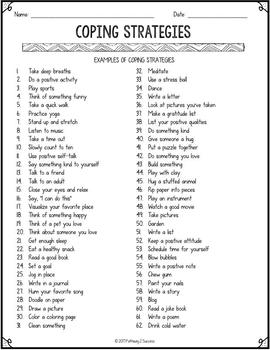
Here is a sample list of coping skills from https://www.teacherspayteachers.com/Product/100-Free-Coping-Strategies-2955800:

original-2955800-3.jpg

Number 59 is Blog. I also use eating, cooking, reading, writing, yoga, meditation and drawing. Coping skills sounds very much like general and generic things I just like to do.

They are.

So how can things I just like to do help me ease anxiety and depression?

Its a simple principle.

When life tastes bitter, add activities, tastes, sights and smells that you love. Change the recipe.

Easier said than done. Let’s talk more about it. For now,

What are your coping skills?

Wishing you self-aware ease,

Angstytherapist-wobblyogi-hungryphil

Being Extra: the sauce of life

I am an extra.

I am a non-speaking character in a coffee shop background sipping coffee and staring at my laptop. There are raindrops on the windows, a blade of grass moving in the wind outside, cars moving past on the road, murmuring conversations, a large orange sculpture, a concrete floor, a sneeze, a ding, words, a child’s cry, salt and pepper shakers, iphones, mugs, music wafting above the hum of mid-morning conversations, a green shirt, smell of eggs and coffee, fingers on the keyboard, people behind the counter waiting, people behind the counter making lunch, yellow road signs, an itch on the neck, words on the wall, wood tables, metal chairs, stripes and me.

I don’t despair being an extra. Extras in books, movies or television are never credited with names, just actions, like, “shop keeper” or “crying child.” I am a silent actor in your story, a voiced actor in mine. You can only see my actions, my role as an extra. You don’t see my inner monologue, my struggles, my joys, my worries or my guilt. Recognizing that I am an extra in the world, a silent actor is surprisingly empowering. As you walk by my table where I type, I can trip you or smile, I may not change your story but I color it with my actions. I don’t have to be the main protagonist. The main character depends on the extra. That is the secret: we are all extras. Being extra. I came to see myself as an extra and found an extraordinary life. I stopped trying to be named, stopped trying to be the main character, a proper noun.

Philosophy, art, religions all try to address our longing to connect to something larger, more meaningful than us. This is another attempt. An extra attempt.

We all share the small things, like coffee cups, salt, phones, chairs and walls and the big, like cities, roads, landscapes, clouds, and water. How we focus shape how our individual perspectives live and interact. You are an extra in the stories of almost everyone you meet today. You can probably count the people in your life who are essential on your fingers.

You are an extra.

Moving beyond identity politics, religion, gender, into object-hood into being extra. Being both more and less. Being Extra.

Depending on your outlook you could interpret the title “Being Extra” as either as being more, extraordinary or being waste, extraneous. We are always both: extraordinary and extraneous. It depends on your taste.

I arrived at this question when reading Adolf Loos’ modernist manifesto Ornament and Crime. All sauces he said was ornamental. The modern man eats roast beef. From my South Asian perspective, beef was ornamental, mostly used as a flavoring for curries and only the main component twice a year, weddings and celebrations when a sacrifice was offered. Always ritualized and associated with a momentous occasion.

Adolf Loos’ food example to explain modern architecture and design stuck in my thoughts.

What are your favorite sauces? Your favorite extras? Do you add spicy hot sauce to your dishes, maybe sweet-salty honey mustard, or maybe tart-sweet bbq sauce? How do you flavor your life?

Dessert is always extra, more than, beyond functional, ornamental and as a habit, dangerously unhealthy. Maybe that’s why we crave it. A British Toffee Pudding Cake draped in sweet toffee sauce is definitely extra. Here is a recipe.

Wishing you extra,

Hungryphil


Advice from a Recovering Academic

It was Valentine’s Day, 2013. I had waited all day in fear, as fellow tenure-bound colleagues celebrated with online posts conveying relief and joy. When I finally got the evening call from the dean of liberal arts, “I’m sorry, there just wasn’t enough,” he said. That was it, a quick and sudden death of my academic career. And, then came the tsunami of self-judgment that ripped through my soul. “I was not enough,” it viciously screamed.

During the previous fall semester, the school of visual and performing arts and the college of liberal arts had approved my petition for tenure. I had lulled myself into false confidence. And, so the university committee’s decision was a shocking end to my academic aspirations. Throughout the difficult year of 2014, I had applied for jobs, interviewed and been rejected. Multiple times. I was still not enough.

The following year, I was in a fog debating my commitment to academia. If only I published a book, I would be enough. But it didn’t feel right. I would present at conferences as an independent scholar. I felt like a player without a team, without a home-base. These foggy days were also full of possibility. I started a blog to help me find my non-academic voice. I volunteered widely. I explored whether I’d like to go to culinary school or high school teaching, all the while wondering whether I could ever find my way back to an academic post. Thanks to my husband, I wasn’t starving during this period of anxious self-exploration, a luxury I’m lucky to enjoy.

At one point, my goal was to become a food writer. So I blogged more regularly, wrote short pieces for a magazine and as an afterthought to soothe my wrung out academic heart I worked through a yoga teacher certification program.

I stopped asking what could I have done more. Instead, I relaxed into the thought that I had done the best I could. I had done enough. But there was still anger and hurt.

It was a month into teaching yoga that my heart’s grip on that lead-heavy pebble of hurt began to loosen. I was thinking and reading about the power of narrative, of being able to notice without attachment or judgment, of being able to cultivate a witness consciousness. I wasn’t trying to apply these thoughts to my tenure hurt that in my mind I had already addressed and contained. But somehow, as I slept, these perspectives traveled through my mind and heart to find and envelope that hard pebble of hurt. I woke up with a new thought. A thought I can’t believe I hadn’t seen before.

There were clues all along. I had been hired to the new position of Design Historian. I was not trained in design history. I came to the post with a Ph.D. in philosophy and an undergraduate in architecture. I taught and developed my curriculum from the perspective of material philosophy. I was an outsider in every way.

Clue #1: The US government, in my application for a work visa, asked for clarification regarding my academic background as it related to design history. To this request, my Ph.D. advisors replied with a defense of philosophical analysis in creative pursuits and my new supervisors reassured them of my ability to teach the classes. Here was my first missed clue from the universe. I was to first defend philosophy, not expand the critical parameters of design history. I had dismissed my commitment to philosophy all too quickly to find a home in design history and in the U.S.

Clue #2: Quite a few years into the position, my department head warned, that I was investing too much time in curriculum development. Focus on research and publishing he encouraged. How was I to split my energy in two different directions? Here was my second missed clue: my teaching and research agendas were already fueling each other if only I had noticed my internal narrative instead of trying to adjust to a misperceived outside agenda.

Clue#3: An editor was interested in my book project comparing the philosophies of two early twentieth-century immigrant designers. It was about difference at the heart of American design. Because much had already been written about one of the two, the editor asked that I focus the book on the one, less discussed designer. Again, instead of listening to my inner narrative, I complied. Ironically, once I had done so, the book was categorized under a different editor, who no longer found the book publishable. My third clue offered by the publishing world exposed the commercial limits of my philosophical pursuits.

There were many other moments, besides political citizenship, academic bureaucracy and commercial demands, when the universe was nudging me to notice my internal narrative. Finally, the unexpected shove, that spun me out of my orbit. As I floated unanchored, searching for a spot to land, I began to notice my own emotional, intellectual and physical landscape. I had told an imaginary other’s story, instead of my own. This change in perspective was the beginning of healing. I was beginning to recover my own narrative beyond the dreaded tenure document.

Here is my advice as a recovering academic, find ways to ruthlessly and courageously defend your inner narrative. Yoga, prayer, meditation, walking, whatever helps you hear the inner voice that leads you to question everything. Do it. Listen to the clues, sit with the anxieties, be slow to react, watch your own responses, notice, notice and notice. Academic, research thyself.

I am still stung by the question, “What do you do?”

“I’m a recovering academic,” I mumble under my breath, as I say, “aspiring social worker with a side of yoga.”

It is enough.

I am Dr. Enuf 🙂 and so are you.

Hungryphil

An Architect, a Philosopher, and a Social Worker walk into…

An OSCE (Objective structured clinical exam). For, “social work?” you might be asking. Indiana University uses the OSCE exam to assess student’s clinical assessment ability. It is a way to document and measure how responsive, intentional, empathetic and helpful, I can be as a social worker.  Of my first four classes in the MSWD program, this was my most challenging. And, in beautiful irony, one where I learned the most.

Throughout the semester we were given scenarios to practice and play out with our peers. The contexts (after all social work is all about context) varied, for example ranged from client escaping domestic violence arrives at a homeless shelter, to diabetic client admitted into the ER or woman gives birth to a baby with marijuana in her system. The final exam involved serving a homeless veteran suffering from PTSD.

In learning how to listen to others, I learned so much about my own strengths and resistances. I learned how I think and how I might think differently. Here is an example:

In responding to the interviewed veterans statement “I feel overwhelmed and unable to do anything…..” I had three minds working at the same time………

My architect, beautiful problem solver mind wanted to fix it as soon as possible, as uniquely as possible for the client. Where and when do you feel overwhlemed? What do you need to not feel overwhelmed? What makes you feel better? What does being overwhelmed look like?

My philosopher, existential examiner mind, wanted to understand the condition as shared human struggles of alienation and dread. Why do you feel overwhelmed? What kind of overwhelming sensation is it? Why are you unable to do anything? What stops you?

My budding social worker, empowering listener mind, needed to wait for the specific, unique and individual experience of ‘being overwhelmed’ without assuming that the experience needed to be fixed, or that it was universally shared. In either case, I am reducing the person to a problem needing to be solved or a diminished example of a larger event. I needed to hear the expression ‘ being overwhelmed’ as if for the first time, with the curiosity to ask, how do YOU feel overwhelmed? How does it feel for you to be unable to do anything? Tell me more. It required the humility to drop all assumptions about the word “overwhelmed” and its meaning. This is hard for a recovering academic. I want the security of knowing things!

Certainly, these three disciplinary perspectives can overlap and reinforce each other. In best circumstances it should, I should work to find the client a home, I should work to connect the client with help related to PTSD but first and foremost I should be the client’s advocate, holistically, contextually. As a social worker, I am tasked to understand and intervene in a particular context in which this human being, here and now in front of me, is not fully self-realized.  I sigh as I type this. This seems an impossible task. Who among us can claim such completion. As long as we feel we are moving, even if slowly, in the positive direction, all is well. Case-work is not to just designing the shoes or giving directions but walking a few steps with. As an architect and philosopher, I designed and analyzed. I haven’t been trained to be with others.

This practice-based education pushes me in ways I hadn’t imagined. In a way teaching yoga better prepared me. In learning how to teach yoga, I learned to move with others, to sequence sensations and feelings, to encourage each person to find their own pose, to notice what their body needs regardless of what I am proposing.

So I suppose the title of this blog post should be: an architect, a philosopher, a yogi and a social worker walk into an interview……. to support human dignity and individuality.

Hmmmm….how does the hungry philosopher, eating and cooking fit into this? I’m quite sure it does, just haven’t thought about it yet 🙂

I learned a lot. I’m both afraid of and looking forward to semester 2. Sometimes this disciplinary dependence on others feels overwhelming and confusing to me. Muddy.

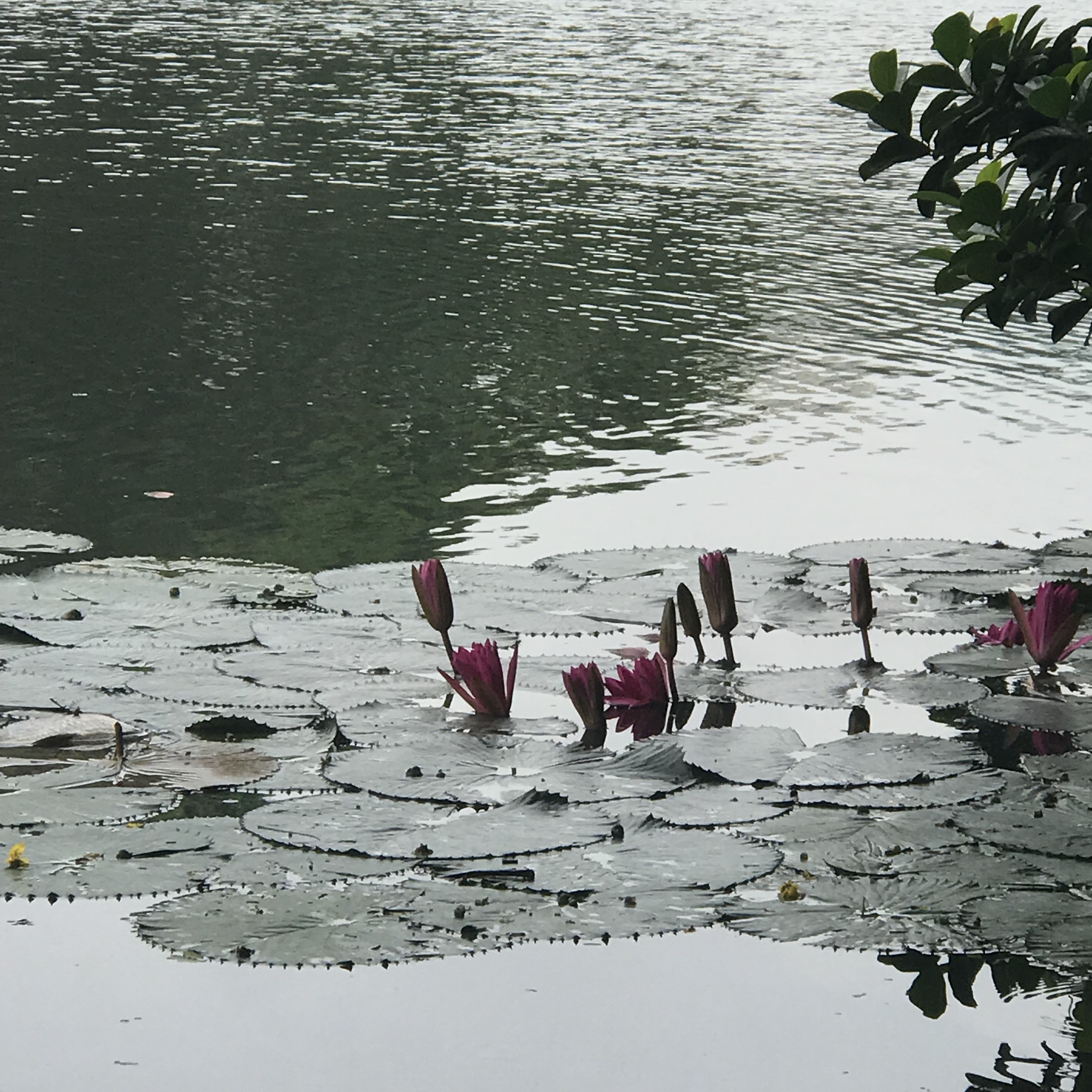
I’ll take yoga teacher Susan Lasater’s words to heart……………… may I be like “the lotus at home in muddy waters.”

May you be too!

Hungryphil

IMG_5986

Attending, listening Yoga-style

“The art of listening is the marriage of ear and space.” – Remski interpretation of Patanjali’s sutra 3.41

In my Theory and Practice Course for Social Work, we are learning the art of interviewing. Step one involves achieving a compassionate and empowering balance between attending and reflecting. Here is an ancient yogic way to develop the super power of deep listening by being mindful of our tendency towards “automatic self-referral” as explained by Matthew Remski,

Internal space is also utilized to broaden the gap between “your story” and “my story”. This space is most commonly disrupted by communication habits that fail to nurture the gap of otherness. For instance, if one friend begins to tell another friend of her marriage problems, the second friend can begin to “hold space” for the first by simply reflecting the feelings she hears. This allows the first objective of communication — being heard — to be fulfilled. But if the second friend begins to “false-empathize” with the first by immediately saying, “Oh I know what you mean: let me tell you what my partner did”, she has blocked the space of otherness through a pattern that Miles Sherts (2009) calls “automatic self-referral”. The first friend will not feel heard, and her feelings will become more isolated and compressed, a combination that invites suppression.

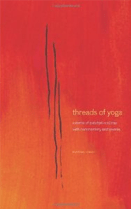
Remski, Matthew. Threads of Yoga: A Remix of Patanjali-s Sutra-s, with Commentary and Reverie (p. 180). BookBaby. Kindle Edition.

I’m still working on this super power. Maybe you are too.

Happy listening to “the gap of otherness,”

Hungryphil


Self-Examination, Yoga style

Yoga helps,

  • “the seeker excavate the tensions of inner life in a self-directed manner”

(Look inside)

  •  us be responsible for our own spiritual health

(Be responsible for your own peace)

  • “relocate the unseen within us, invites us to introvert, to open our eyes to why we are who and how we are.”

(See your hidden motivations)

  • “elevates the capacity for internal observation to the level of a virtue previously occupied by notions of “godliness”.”

(Accept Self-examination as cosmic responsibility)

In doing so, yoga exposes the power of internal authority through self-awareness.

In my opinion, and setting aside the accidents of its publishing fame, the yoga sūtra-s deserves our continued attention as a wildly exciting text for four interweaving reasons.

Firstly, it breaks with most previous paths of spiritual growth in its attempt to help the seeker excavate the tensions of inner life in a self-directed manner, without reliance on gurus or corporate bodies of authority. It is openly ambivalent to religious attitudes, going so far as to equate breath-awareness (1.34) with religious devotion (1.23) as a technique of evolution. From the outset, it contains no self-validating list of lineages, no creation story or deference to divine power: the text is a non-denominational and impersonal list of quiet discoveries.

Secondly, the sūtra-s generally (if we remix pāda three) move away from the magical thinking directed at cutting deals with unreachable gods and invisible spirits for a better life — an approach that continues to pervade our current spiritual milieu, from the remote prayer experiments of evangelical Christians to the “think methods” popular in this new age of The Secret.

Thirdly, Patañjali offers a substantive and startlingly modern map of psychomentality, dividing out conscious faculties for our observation, and alluding to how the unconscious shadows that seem to motivate our actions might be illuminated. I render saṃskāra and vāsanā as “trace” and “pattern”, following Feuerstein, who describes saṃskāra as a “sublimilinal activator”, and vāsanā as a “chain of similar karmic activators” (1998, 241). Bursting forth from the Vedic tradition, which sought to pacify the external forces of adṛṣṭa (“unseen” gods and energies), Patañjali relocates the unseen within us, invites us to introvert, to open our eyes to why we are who and how we are. This puts the notion of “trapped memory” front and centre, allowing a clear reckoning of karma: our traces, habits, and grooves. Patañjali suggests that we can slowly free ourselves of the unseen. This relentless excavation of hidden thought as the source of our pain, this dive towards whatever is unconscious, represents a clear displacement of his ancestors’ obsession with the whims of external gods.

This leads to the fourth gesture: the opening chapter of the yoga sūtra-s elevates the capacity for internal observation to the level of a virtue previously occupied by notions of “godliness”. The sincere human no longer needs to adhere to a perfect ideal, whether social or philosophical, to attain wisdom. She simply needs to watch her experience unfold, and to enrich her action with tender watching.

These four gestures amount to a broad gift: the text places implicit value on the power of internal authority.

Remski, Matthew. Threads of Yoga: A Remix of Patanjali-s Sutra-s, with Commentary and Reverie (pp. 42-43). BookBaby. Kindle Edition.

Book Image from http://matthewremski.com/wordpress/books/threads-of-yoga/