Wobblyogi Wednesday – Lunch Time Vinyasa!

My dear West Lafayette friends for whom my 6 am Wednesday Sunrise Yoga session is too early,

Welcome to my Tuesday and Thursday 12:15 – 1:00 p.m. yoga sessions starting next week, September 6th. Here are three reasons to join me,

Reason number 3: Short and gentle session open to all levels of yogis.

The shortened session is intended to be an afternoon break from the desk.  We’ll do a few standing poses to help recover our strength and ground, balance poses to help us focus on our remaining work and hip openers to help us sit through the rest of the workday.

Reason number 2: Wear comfortable work clothes.

No need to change into gym clothes. If you can take a wide stand, fold forward and take your legs up to the sky (comfortably and without flashing anyone),  any stretchy pants and shirt combination will work.  I don’t plan on getting us hot and sweaty. Despite the commercialization, there is no need for specialized yoga clothes! There I said it.

[If you feel the need to change, our bathroom is always available.]

Reason number 1: Grown-up rest time – Savasana.

Doesn’t a mid-day short break sound wonderful? Take yourself back to pre-school nap time (without the drool, waiting for your parents to pick you up, eyes half open, imprints of the mat on your face etc.). Nurture yourself, move your achy joints and muscles, stop the noise and hear yourself breathe for a few moments before you go back to your busy day.

A single session is $15. Try it. If you like it, treat yourself to one of the many packages. Sign up is easy on the Community Yoga Website: https://communityyogalafayette.com

Come move, breathe and rest with me!

Hope to see you next week,

The Wobblyogi

Image from a yoga studio in Bristol England: https://flowyogabristol.co.uk/. I would go there if I lived there. But, I don’t. Sigh. The lady looks so blissful.


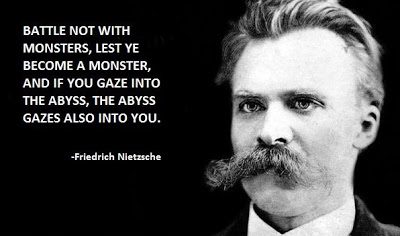
Nietzsche’s Mom Sends Sausages

I find something so appealing and humanizing about a philosopher reporting what he eats to his mother.

Michel Onfray’s Appetites for Thought: Philosophers and Food, explores such gastronomic moments where provocative Nietzsche is hanging up sausages, rational Kant is stumbling home drunk, radical Diogenes is chewing on raw octopus, Rousseau, the philosopher of the French revolution, is drinking and eating milk in all forms.  All ideologies need to be fed.

Here is a short excerpt about Nietzsche’s lifelong love of charcuterie:

“In fact the whole of his correspondence with his mother testifies to the primitive character of his mode of nutrition, and this throughout his life. At no time did Nietzsche seem to want to break from charcuterie and fatty foods.

In 1877 his dietary programme was the following:

Midday: Soup, of a quarter of a teaspoon of Liebig extract, before the meal. Two ham sandwiches and an egg. Six to eight nuts with bread. Two apples. Two pieces of ginger. Two biscuits. Evening: an egg with bread. Five nuts. Sweetened milk with a crispbread or three biscuits.

… However, charcuterie was still his favourite topic in his correspondence– ham ala Dr Wiel, ham sausage — as well as honey, chopped rhubarb and sponge cake. During his last years of lucidity – 1888- he denied himself wine, beer, spirits and coffee. He drank only water and confessed to ‘an extreme regularity in [his] mode of living and eating.’ But he still maintained the combinations of steak/omelette, ham/egg yolks/ bread. That summer he was sent 6 kilos of Lachsschinken (a mild ham) to last four months. When he received his package from his mother Nietzsche hung the sausages — delicate to touch – on a string suspended from his walls: imagine the philosopher drafting The Anti-Christ beneath a string of sausages… “

If no meal is innocent or thoughtless, I wonder what to make of my coffee and cereal for breakfast this morning.

Happy Monday my fellow hungryphilosophers,

Hungryphil


Image from funnyand.com

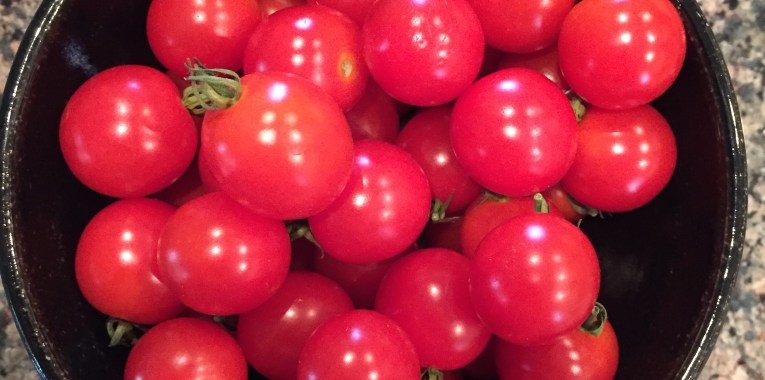
Food Poem – Canning by Joyce Sutphen

The last string of words, “packing a glass suitcase for the winter,” make me smile. Enjoy.

It’s what she does and what her mother did.
It’s what I’d do if I were anything
like her mother’s mother—or if the times
demanded that I work in my garden,
planting rows of beans and carrots, weeding
the pickles and potatoes, picking worms
off the cabbages.
Today she’s canning
tomatoes, which means there are baskets
of red Jubilees waiting on the porch
and she’s been in the cellar looking for jars.
There’s a box of lids and a heap of gold
rings on the counter. She gets the spices
out; she revs the engine of the old stove.

Now I declare her Master of Preserves!
I say that if there were degrees in canning
she would be summa cum laude—God knows
she’s spent as many hours at the sink peeling
the skins off hot tomatoes as I have
bent over a difficult text. I see
her at the window, filling up the jar,
packing a glass suitcase for the winter.

“Canning” by Joyce Sutphen from First Words. © Red Dragonfly Press, 2010.

From the Writer’s Almanac

Wobblyogi Wednesday: Yoga body containing and transcending ego?

I was asked recently to identify what type of yoga I teach. She asked, “Hatha?”

In typical philosopher style, I wanted to answer, “Yes and no.”

Yes, the focus of the session will be the unity of body, mind, and breath by flowing through movements.  Yes, I hope the session carries both your mind and body to more ease. And yes, Hatha, as the practice of Sthira-Sukha, stillness and ease, I hope the yoga session helps us find balance.

On the other hand,

I wanted to answer, “No, not just Hatha yoga, as the yoga tradition most devoted to cultivating the body. No, I’m not interested in pushing  you to your physical limit. No, I do not expect you to master difficult poses, head stands or binds. No, I am not invested in your physical wellbeing drained of emotional strength.”

The dilemma about Hatha yoga is common, as we try to balance fitness with mindfulness,  assuming a mind-body duality. There is a long history to this question of the mind as it relates to our understanding of our embodied selves and our material world.

Here is one yoga scholar’s description about the dangers of holding the body as the locus of ego-centric practice:

“…the disciplines of Hatha-Yoga are designed to help manifest the ultimate Reality in the finite human body-mind. In this, Hatha-Yoga expresses the ideal of Tantra, which is to live in the world out of the fullness of Self-realization rather than withdraw from life in order to gain enlightenment.

…The Hatha- Yoga practitioner wants to construct a “divine body” or  “adamantine body” for himself or herself, which would guarantee immortality in the manifest realms. He or she is not interested in attaining enlightenment on the basis of prolonged neglect of the physical body. He or she wants it all: Self-realization and a transmutated body in which to enjoy the manifest universe in its diverse dimensions. Who would not sympathize with this desire? Yet, as can be imagined, the practitioners of Hatha-Yoga have sometimes sacrificed their highest spiritual aspirations and settled for lesser, perhaps magical, goals in service of the ego-personality. Magic, like exo-technology, is a way of manipulating the forces of Nature, whereas spirituality is about the transcendence of the manipulative ego-personality. Narcissism, or body-oriented egocentrism, is as great a danger among hatha-yogins as it is among bodybuilders.”

from George Fuerstein’s The Yoga Tradition

After alerting us about the potential dangers of egocentric self-absorption, Dr. Fuerstein suggests coupling Hatha-yoga with Raja yoga. Perhaps, that ego-countering coupling can include many other forms of yoga: Mantra (chanting), Bhakti (faith), Karma (action) and my favorite, Jnana (wisdom).

This is why as we move through the poses attentive to our breath, we look towards our inner landscape to find moments of pranayama (breath control), pratyahara (withdrawal from outside stimuli) and even dharana (concentration on something specific, like breath or tense tissue). I like to think of asana as the pivotal yoga-limb grounded in the yamas (how we behave with others) and niyamas (how we cultivate ourselves) while reaching and touching pranayama (aware breathing), pratyahara (focusing inward) and dharana (focusing on a single thing). It may or may not help us with dhyana (meditation) that may or may not lead to samadhi (transcendence). Asana can help us walk through 6 of the 8 limbs of the yoga-path. Or, we can metaphorically and literally be stuck in a peacock pose.

When we share our yoga practice with others, we become a community of individuals each striving towards the same thing through different breathing patterns, body types, and levels of awareness. Our bodies are not the same, how can our minds be? We may not be saying the same prayer or holding the same intentions but we are all praying and intending. Unity in diversity, not uniformity.

For me, asana practice, celebrates the diversity of bodies, of being, of lives, of minds that all strives towards the same human need for ease, goodness, and stillness.

But, I simply answered the lady’s question, “Hatha?” with a, “Yes.”

Hope I see her in class soon.

Happyoga,

The Wobblyogi


Being Extra and Adolf Loos’ Roast Beef

I am an extra.

I am a non-speaking character in a coffee shop background sipping coffee and staring at my laptop. There are raindrops on the windows, a blade of grass moving in the wind outside, cars moving past on the road, murmuring conversations, a large orange sculpture, a concrete floor, a sneeze, a ding, words, a child’s cry, salt and pepper shakers, mugs, music wafting above the hum of mid-morning conversations, a green shirt, smell of eggs and coffee, fingers on the keyboard, people behind the counter waiting, people cooking lunch, yellow road signs, an itch on the neck, words on the wall, wood tables, metal chairs, stripes and me.

I don’t despair being an extra. Extras in books, movies or television are never credited with names, just actions, like, “shopkeeper” or “crying child.” I am a silent actor in your story, a voiced actor in mine. You can only see my actions, my role as an extra. You don’t see my inner monolog, my struggles, my joys, my worries or my guilt. Recognizing that I am an extra in the world, a silent actor is surprisingly empowering. As you walk by my table where I type, I can trip you or smile, I may not change your story but I can color it with my actions. I don’t have to be the main protagonist. The main character depends on the extra. That is the secret: we are all extras. I came to see myself as an extra and found an extraordinary life. I stopped trying to be named, stopped trying to be the main character, a proper noun.

Philosophy, art, religions all try to address our longing to connect to something larger, more meaningful than us, as disparate individuals. This is an extra attempt, an exercise in noticing the small so that the big comes into focus. We all share the small things, like coffee cups, salt, phones, chairs and walls and the big, like cities, roads, landscapes, clouds, and water. How we focus on either shapes how our individual perspectives live and interact. You are an extra in the stories of almost everyone you meet today. You are also your own, more than. Depending on your outlook you could interpret “being extra” as either, being more, extraordinary or being waste, extraneous. I suspect that each of us, are always both.

I first arrived at this question when reading architect Adolf Loos’ 1908 modernist manifesto Ornament and Crime. All sauces he said were ornamental. He announced, ” I eat roast beef.” From my South Asian perspective beef was ornamental, mostly used as flavoring for curries and only rarely the main component during weddings and celebrations when a sacrifice was offered. Always ritualized and associated with a momentous occasion. Eating beef was considered an extra, a luxury. Never taking up the center of a plate like a steak. By Loos’ definition, I could never be modern. The vivid image of Loos eating a dinner of roast beef to explain the socio-economic value modern architecture stuck in my thoughts and made me wonder how my style of eating might inform my style of living, my philosophy.

How would you complete his sentence: I eat ________________________.

Beef French Dip Sandwich Recipe

Place a slab of beef in a slow cooker. Add water and soy sauce ( a least 1/2 cup) to cover the meat. (Hint: the soy sauce and slow cooking enhance the meat flavor).  Cook for 3-4 hours. Shred meat. Fill crusty rolls with shredded meat. Dip the sandwiches in meat juices. Add sliced onions, pickles, horseradish or whatever sauce or extras you like.

What would Loos make of this recipe? Is the sauce extra or is the meat extra? Doesn’t matter, as long as you are satisfied. Enjoy in moderation. The recipe can easily feed a crowd. Good for buffets and potlucks. If you want to avoid meat and the design debate altogether, just eat a cheese sandwich.

Here is a recipe with exact directions and measurements.

Wobblyogi Wednesday – Jar of Pickles

A jar of pickles….is not a standard yoga practice theme. Since I started teaching Sunrise Morning Yoga classes, I’ve been thinking about opening, waking up and ways to unfold. The first week I looked at poses that reminded me of opening a book like dancing warrior. The second week I looked at poses that made me think of flowers blooming or birds taking flight, like locust, ustrasana or brikasana. This week I looked to gentle twists, like opening a jar, like a revolved side angle or twisted chair. Exploring how we wake up and open to the world through yogic poses and movement has been fun. We started seated one day, in a child pose another and today from a reclined position. Each start progressed through the standard sequencing practices of centering, sun salutations and warmup, standing poses, balance poses, seated poses and back to floor. At this point, I’m getting better at time awareness and “feeling” where I should be in the sequence. I still have to figure out my unique concluding phrase that each yoga instructor seems to have. Do I even need one? I don’t know yet.

Today I’ve been thinking about Aristotle’s De Anima (On the Soul) and how the soul (and nature) is understood as movement, as animation. Can there be philosophy-themed yoga sequences? Nietzsche would definitely require a headstand. Hegel, a lot of opposing movements and then centering. Aristotle would definitely be an Iyengar practitioner, attentive to alignment between movements. Hmmm…I like thinking about this strange yoga thematic turn in practicing philosophies of embodiment. My mind is certainly wobblying now!

Maybe I need to compose Philosophers do Yoga like Monty Python’s Philosopher’s World Cup. Makes me laugh every time. Enjoy!

Wishing you ease and laughter,

The Wobblyogi

Image from: https://daphilosophers.wordpress.com/2011/02/06/yoga/

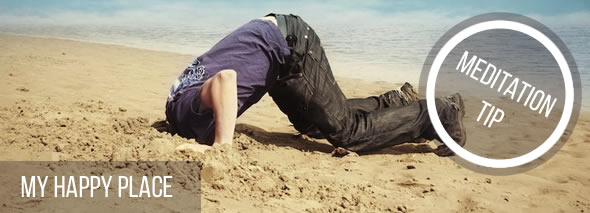
Wobblyogi Wednesday: Happy Place Escape

16-03-happy-place

Has yoga helped me find my “happy place”? Will it help you find yours? Confessedly, my definition of happiness has shifted from being associated with joy, laughter, passion to being associated with ease being in my own skin and ease being with others in this often unkind and unpredictable world. Today I ended our morning yoga practice with the words of my grandmothers. I’m sure some of my readers have heard the phrases: Shuke Thako, Bhalo Thako. Stay in ease (or happiness, here is the confusion again), Stay in goodness.  I feel bad now for taking those words so flippantly or sometimes even mockingly.  The simple advice to “stay” is basic yoga. Afterall, we are all trying to stay in our bodies, in our minds, in our hearts, in our world, through moving, breathing, focusing and meditating.

Most of all, I’ve learned that yoga is not about escaping to a “happy place” but about being able to just stay in unhappy, uneasy places without becoming unhappy or uneasy. There is unhappiness and there is happiness but I am not happy or unhappy. I am more than my feelings at a given moment, more than a sum of my feelings, more than my existential condition that gives rise to those emotional responses. Meditation does not help me escape my feelings but rather helps me sit with them without being constrained, defined or imprisoned by them. I watch my feelings and say, there is sadness, there is worry, there is joy, there is love, there is anger and so on and so on. Congratulations, I’m human. I’m alive and aware. By tagging and releasing the feelings I emerge lighter. The nagging emotions that refuse to fly away and keep returning to take up space in my mind and heart need more attention, more meditation and sometimes more action. The amount of emotional energy I release always amazes me. So few things are worth lingering over. If I can’t change it, devoting my mind to it won’t help. If I can change or affect it then my concern shifts to practical struggles of how:  from awareness to thinking.

I’m working through Jon Kabat Zinn’s book, Where you go, there you are: Mindfulness Meditation in Everyday Life. I found the chapter titled, “Meditation: Not to be confused with positive thinking” particularly helpful in relation to the notion of  a personal “happy place.” First, a food reference:

“Not only is it [our fundamental nature] not limited by the potpourri of our thinking mind, awareness is the pot which cradles all the fragments, just as the soup pot holds all the chopped up carrots, peas, onions, and the like and allows them to cook into one whole, the soup itself. But it is a magical pot, much like a sorcerer’s pot, because it cooks things without having to do anything, even put a fire underneath it. Awareness itself does the cooking, as long as it is sustained.You just let the fragments stir while you hold them in awareness. Whatever comes up in mind and body goes into the pot, becomes part of the soup.”

Kabat-Zinn concludes the section with these words about the limits of positive thinking,

“If we decide to think positively, that may be useful, but it is not meditation. It is just more thinking. We can easily  become a prisoner of so-called positive thinking as of negative thinking. It too can be confining, fragmented, inaccurate, illusory, self-serving, and wrong. Another element altogether is required to induce transformation in our lives and take us beyond the limits of thought.”

Don’t get me wrong. I often retreat to my happy place (usually when threatened by loud places filled with restless children and rushed adults like, amusement parks). But, that is not meditation. That is escape. I want to be able to escape from my life less and less. So I try to meditate more and more. Become more aware of my pot of soup instead of the peas and carrots.

I want to tweak the  Socratic dictate to,  the unaware life is not worth living.  The difference between the examined life and aware life is worth exploring in another post.

For now, I wish you easy awareness of your own unique pot of experiences,

The Wobblyogi

For a look at the Image and a good article about escapism and meditation visit: http://melbournemeditationcentre.com.au/articles/is-your-happy-place-really-a-happy-place/

Futurist Summer Recipe – Thomas Marinetti

Summer luncheon for painters and sculptors

After a long period of rest, a painter or sculptor who wants to take up his creative activities again at three o’clock on a summer afternoon may vainly try to excite his artistic inspiration with a succulent — traditional meal.

Weighed down, he would then have to walk to digest it and beset by cerebral anxieties and pessimism would end up wasting the whole day loitering artistically without creating any art.

Instead a meal may be served to him made up of pure gastronomic elements: a bowl of good tomato soup, a big yellow polenta, a heap of green salad, not dressed and not on a plate, a bowl full of olive oil, a bowl full of strong vinegar, a bowl full of honey, a big bunch of red radishes, a mass of white roses complete with thorny stems.

As the spirit moves him, without plates or cutlery, and continually refusing to follow the usual nervous habits which crop up, he assuages his hunger while looking at Umberto Boccioni’s picture of ‘The Football Player’.

Formula by the Futurist Aeropoet Marinetti

Dedicated to my exceptionally talented artist friends. I would make you a “meal of pure gastronomic elements” any day.

Wishing you happy summer,

Hungryphil


Wobblyogi Wednesday – Teaching Fears

My adventures in yoga teaching has officially begun! I am horrified and thrilled. Horrified, that, I, anxious and awkward, dare to invite people to move meditatively. Thrilled, that I get to share my efforts to calm my frenetic mind and heart with others.

I suppose it is the same combination of joy and fear I felt when holding my baby girls, getting married, writing my dissertation, teaching my first philosophy class or eating something unknown. I am mindful of the novelty, the moment of joy and fear and the awareness of a new path. I don’t know where it will take me and for how long but it feels good to look ahead.

Despite my fears, forgetting a pose in a sequence, wrong breath cues, limited alignment direction and the infinite little things that I could’ve done better, it was a wonderful experience. I know this because I want to do better. As soon as I got home, I found myself looking through music, researching sequences, considering different themes and advise on alignment cues. I found myself thumbing through my yoga teacher training notebooks and other books for direction.

I assume that anything or anybody that makes me want to be better is,  despite fear,  good for me. My kids make me want to be a better mom, my beloved makes me want to be a better partner, my philosophy students make me want to be a better teacher, my blog readers make me want to be a better blogger and so now my fellow yogis make me want to be a better yogi. Sharing, amplifies both good and bad, like cooking for others. It is a risk.

Yes, it was a good morning. A good beginning. I am so thankful for the graciousness of my sunrise vinyasa yogis. They have certainly helped me connect to my gratitude.

I was looking online for an appropriate quote that summarizes the crazy complexity of “first” experiences. Didn’t find one yet. I did find two about fear on goodreads that spoke to me. The first, short and sweet, is attributed to artist Salvador Dali.

“Have no fear of perfection – you’ll never reach it.”

There is something comforting in accepting imperfection as  evidence of continuous growth and striving, instead of failure and inadequacy.

The second quote is much longer from Herman Hesse about his admiration of trees.

“For me, trees have always been the most penetrating preachers. I revere them when they live in tribes and families, in forests and groves. And even more I revere them when they stand alone. They are like lonely persons. Not like hermits who have stolen away out of some weakness, but like great, solitary men, like Beethoven and Nietzsche. In their highest boughs the world rustles, their roots rest in infinity; but they do not lose themselves there, they struggle with all the force of their lives for one thing only: to fulfil themselves according to their own laws, to build up their own form, to represent themselves. Nothing is holier, nothing is more exemplary than a beautiful, strong tree. When a tree is cut down and reveals its naked death-wound to the sun, one can read its whole history in the luminous, inscribed disk of its trunk: in the rings of its years, its scars, all the struggle, all the suffering, all the sickness, all the happiness and prosperity stand truly written, the narrow years and the luxurious years, the attacks withstood, the storms endured. And every young farmboy knows that the hardest and noblest wood has the narrowest rings, that high on the mountains and in continuing danger the most indestructible, the strongest, the ideal trees grow.

Trees are sanctuaries. Whoever knows how to speak to them, whoever knows how to listen to them, can learn the truth. They do not preach learning and precepts, they preach, undeterred by particulars, the ancient law of life.

A tree says: A kernel is hidden in me, a spark, a thought, I am life from eternal life. The attempt and the risk that the eternal mother took with me is unique, unique the form and veins of my skin, unique the smallest play of leaves in my branches and the smallest scar on my bark. I was made to form and reveal the eternal in my smallest special detail.

A tree says: My strength is trust. I know nothing about my fathers, I know nothing about the thousand children that every year spring out of me. I live out the secret of my seed to the very end, and I care for nothing else. I trust that God is in me. I trust that my labor is holy. Out of this trust I live.

When we are stricken and cannot bear our lives any longer, then a tree has something to say to us: Be still! Be still! Look at me! Life is not easy, life is not difficult. Those are childish thoughts. Let God speak within you, and your thoughts will grow silent. You are anxious because your path leads away from mother and home. But every step and every day lead you back again to the mother. Home is neither here nor there. Home is within you, or home is nowhere at all.

A longing to wander tears my heart when I hear trees rustling in the wind at evening. If one listens to them silently for a long time, this longing reveals its kernel, its meaning. It is not so much a matter of escaping from one’s suffering, though it may seem to be so. It is a longing for home, for a memory of the mother, for new metaphors for life. It leads home. Every path leads homeward, every step is birth, every step is death, every grave is mother.

So the tree rustles in the evening, when we stand uneasy before our own childish thoughts: Trees have long thoughts, long-breathing and restful, just as they have longer lives than ours. They are wiser than we are, as long as we do not listen to them. But when we have learned how to listen to trees, then the brevity and the quickness and the childlike hastiness of our thoughts achieve an incomparable joy. Whoever has learned how to listen to trees no longer wants to be a tree. He wants to be nothing except what he is. That is home. That is happiness.”

All this, blogging and yoga, helps me share, helps me survive in suburbia, through the pick up and drop offs, the left behind water bottles, the grocery, summertime lunch, dinner planning for 10 hungry dance team girls, an article to write about Indiana woodware, another on an artist, a tagine and coffee pot to wash, a dog to let out, weeds to address and so on and so on.  I can embrace and enjoy it all because I took a full breath with others this morning. Gratitude, indeed.
Wishing all of you many new “firsts” ahead,
Wobblyogi

Wobblyogi Wednesday: Jon Kabat-Zinn

Here is a food poem from third century China referenced in Jon Kabat-Zin’s book, Wherever you go, there you are: Mindfulness Meditation in Everyday Life:

Prince Wen Hui’s cook

Was cutting up an ox.

Out went a hand,

Down went a shoulder,

He planted a foot,

He pressed with a knee,

The ox fell apart

With a whisper,

The bright cleaver murmured

like a gentle wind.

Rhythm! Timing!

Like a sacred dance,

Like “The Mulberry Grove,”

Like ancient harmonies!

“Good work!” the Prince exclaimed,

“Your method is faultless!”

“Method?” said the cook

Laying aside his cleaver,

“What I follow is Tao

Beyond all methods!

“When I first began

to cut up oxen

I would see before me

The whole ox

All in one mass.

After three years

I no longer saw this mass.

I saw the distinctions.

“But now I see nothing

With the eye. My whole being

Apprehends.

My senses are idle. The spirit

Free to work without plan

Follows its own instinct

Guided by natural line,

By the secret opening, the hidden space,

My cleaver finds its own way.

I cut through no joint, chop no bone.

“There are spaces in the joints;

The blade is thin and keen:

When this thinness

Finds the space

There is room for all you need!

It goes like a breeze!

Hence I have this cleaver nineteen years

As if newly sharpened!

“True, there are sometimes

Tough joints. I feel them coming,

I slow down, I watch closely,

Hold back, barely move the blade,

And whump! the part falls away

Landing like a clod of earth.

“Then I withdraw the blade,

I stand still

And let the joy of the work

Sink in.

I clean the blade

And put it away.”

Prince Wen Hui said,

“This is it! My cook has shown me

How I ought to live

My own life!”

CHUANG TZU

Kabat-Zinn continues to explain that,

“Meditation is synonymous with the practice of non-doing. We aren’t practicing to make things perfect or to do thing perfectly. Rather, we practice to grasp and realize (make real for ourselves) the fact that things already are perfect, perfectly what they are. This has everything to do with holding the present moment in its fullness without imposing anything extra on it, perceiving its purity and the freshness of its potential to give rise to the next moment.”

He calls this awareness, being able to detect the “bloom of the present moment in every moment, the ordinary ones, the in-between ones, even the hard ones.”

I like the ideas of welcoming “The bloom of the moment” and “letting the joy of the work, sink in.”

Right now, I’m reading, writing and sharing a moment of discovery. As are you.

I’ll stop writing now and just let this moment sink in.

Wishing you many moments of bloom!

Hungryphil