Food Poem-Everybody Made Soups by Lisa Coffman

After it all, the events of the holidays,

the dinner tables passing like great ships,
everybody made soups for a while.
Cooked and cooked until the broth kept
the story of the onion, the weeping meat.
It was over, the year was spent, the new one
had yet to make its demands on us,
each day lay in the dark like a folded letter.
Then out of it all we made one final thing
out of the bounty that had not always filled us,
out of the ruined cathedral carcass of the turkey,
the limp celery chopped back into plenty,
the fish head, the spine. Out of the rejected,
the passed over, never the object of love.
It was as if all the pageantry had been for this:
the quiet after, the simmered light,
the soothing shapes our mouths made as we tasted.

“Everybody Made Soups” by Lisa Coffman from Less Obvious Gods. © Iris Press, 2013.

From the Writer’s Almanac

Rooted Cosmopolitanism of Nested Travelers

Last post I had causally asked if there was a way out of the seeming dichotomy between local farm to table eating and cosmopolitan global eating. Food philosopher, Lisa Heldke, asked the same question in an insightful essay entitled,”Down-Home Global Cooking: A Third Option between Cosmopolitanism and Localism.”Relying on Kwame Anthony Appiah’s idea of “rooted cosmopolitanism,” she asks the same questions far more eloquently than I had and even offers a possible option in the “nested traveler” and writes:

“What kind of philosophy can underpin and advance the development of food practices that value both local food and ethnic cuisine swapping? That can acknowledge the legitimate rights of communities to cultivate deep and long connections to the soil, while also recognizing and valuing the insights that come from newcomers? “

According to Heldke, the third option must achieve the following aims,

“First, it will manifest literal “groundedness,” a nonarbitrary, nonoptional, earthy contextuality.

Second, this alternate option will recognize that no place is too small, local, and homogeneous to escape us/them thinking, nor is any connection between two people too tenuous to preclude the possibility that they will share a sense of being from the same tribe. That is connections and disconnections are never simple matters of location or dislocation.

A third option will also exhibit greater concern with the cultural than displayed by many agrarian forms of localism, and more concern with the agricultural than most versions of cosmopolitanism manifest.

A fourth aim of this third option is that it ought to help us think about how food practices could enable us both to conceptualize and to enact justice and sustainability — two sociopolitical aims toward which many eaters are attempting to aim our forks. Note that cosmopolitan options tend to emphasize that they alone are capable of safeguarding global justice, while localist options tend to suggest that they alone are concerned about environmental (and other forms of) sustainability.”


Magical New Year of Eating

Happy to be back here, sitting on my red chair looking out from our end of the cul-de-sac through the picture window,  writing to you and with you. I’m excited to report that I ate so well and so intently that I have MUCH to share with you the coming weeks. By virtue of this blog I will savor the two weeks of vacation for another four weeks. Gosh, I so enjoy eating, cooking, reading and writing that have the ability to make time go fast and slow. Magic.

The first discovered taste I’d like to share is this:

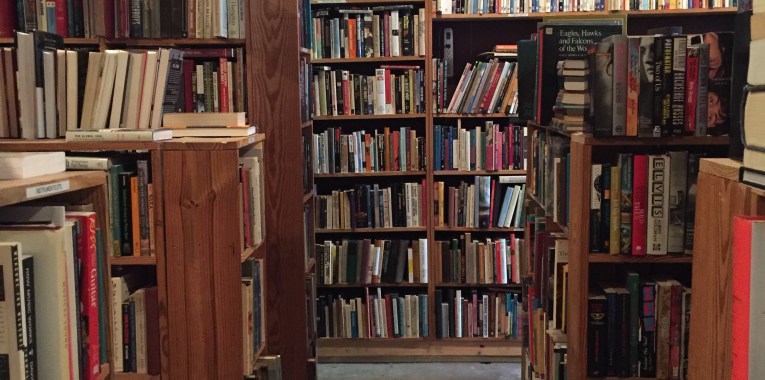
Kaboom Books in Houston, where I found this:

IMG_2371.JPG

What! It was such a magical discovery for THE HUNGRY PHILOSOPHER …..that I started talking about myself in third person!!!

A fun and thoughtful read that proclaims the spirituality of food. Here are a few excerpts:

“The umbilical cord between yourself and the world is the cooking pot. We pass reality through it, and it is indicative of the sort of world we live in. It is a crucible, an alembic in which we are linked with the world, magically if you like.”

“Herbs and spices do for your dishes what grace does for your actions — they give them zest and an inner meaning. The graceless life is the life which has lost it savour.”

“Salvation is to love something real rather than merely having an idea of right or of money or of liberty or whatever. Cooking is a great opportunity for love and therefore salvation. Love the leisure of the simmering pot and the long drawn out thought of the people you wish to please. For God’s sake don’t throw a commonwealth of meat and vegetables into the pot and clamp the lid on in order to have time to look over the agenda for the next meeting. It is the love of ideas which makes us cruel and not the love this bit of meat, these potatoes, this child or wife or husband.”

Hope all of you hungry-philosophers out there had a wonderful winter holiday surrounded by love and good food.

I wish you the magic of eating that makes your world a graceful and kinder place.

More later.

Hungryphil

Italian Food – Food Poem by Shel Silverstein

I’m inspired to compose a dinner menu that rhymes! Any suggestions?

Oh, how I love Italian food.
I eat it all the time,
Not just ’cause how good it tastes
But ’cause how good it rhymes.
Minestrone, cannelloni,
Macaroni, rigatoni,
Spaghettini, scallopini,
Escarole, braciole,
Insalata, cremolata, manicotti,
Marinara, carbonara,
Shrimp francese, Bolognese,
Ravioli, mostaccioli,
Mozzarella, tagliatelle,
Fried zucchini, rollatini,
Fettuccine, green linguine,
Tortellini, Tetrazzini,
Oops—I think I split my jeani.

Poem From: http://www.huffingtonpost.com/2011/09/20/shel-silverstein_n_972217.html?1362426228

Here are more good food poem links:

http://www.saveur.com/article/blog/A-Feast-for-Bards-13-Favorite-Food-Poems

http://www.huffingtonpost.com/2013/03/05/food-poems-the-best-poetry_n_2806968.html

http://www.npr.org/sections/thesalt/2012/11/22/165489750/a-readable-feast-poems-to-feed-the-hungry-ear

How hunger shrinks the world – White Noise

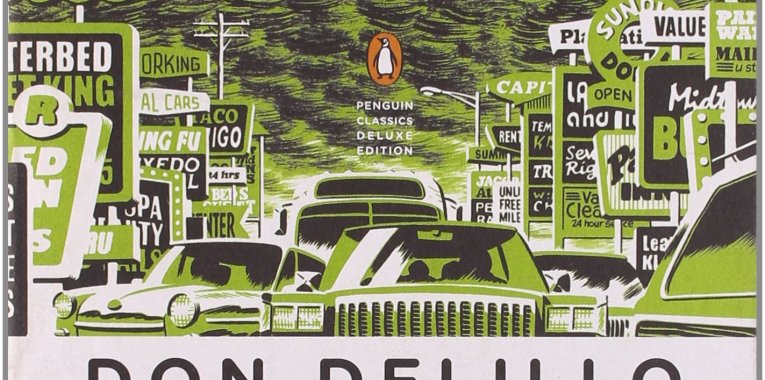
The last post about American Appetites and  Glynnis’ sadness about dessert marking the end of a meal reminded me of another 1980s literary classic, White Noise by Don Delillo and the scene of the family eating fried chicken in the car:

No one wanted to cook that night. We all got in the car and went out to the commercial strip in the no man’s land beyond the town boundary. The never-ending neon. I pulled in at a place that specialized in chicken parts and brownies. We decided to eat in the car. The car was sufficient for our needs. We wanted to eat, not look around at other people. We wanted to fill our stomachs and get it over with. We didn’t need light and space, We certainly didn’t need to face each other across a table as we ate, building a subtle and complex cross-network of signals and codes. We were content to eat facing in the same direction, looking only inches past our hands. There was a kind of rigor in this. Denise brought the food out to the car and distributed paper napkins. We settled in to eat. We ate fully dressed, in hats and heavy coats, without speaking, ripping into chicken parts with our hands and teeth. There was a mood of intense concentration, minds converging on a single compelling idea. I was surprised to find I was enormously hungry. I chewed and ate, looking only inches past my hands. This is how hunger shrinks the world. This is the edge of the observable universe of food. Steffie tore off the crisp skin of a breast and gave it to Heinrich. She never ate the skin. Babette sucked a bone. Heinrich traded wings with Denise, a large for a small. He thought small wings were tastier. People gave Babette their bones to clean and suck. I fought off an image of Mr. Gray lazing naked on a motel bed, an unresolved picture collapsing at the edges. We sent Denise to get more food, waiting for her in silence. Then we started in again, half stunned by the dimensions of our pleasure. (220-221)

For Glynnis, the elaborate birthday dinner carefully planned and sequenced was a performance and celebration of her skill. Food conveyed her economic privilege and social status. In contrast, the family consumes the delivered fried chicken intensely individually as a primal pack. The shared theme of death and consumption in both books rely on food to highlight the death of one in the case of Glynnis and death of all in the case of Jack and Babette’s family. Hunger and death may make us human but how we live seems to be determined by how we eat, whether our appetites are insatiable, mindless or sadly both.

Wishing you mindful and satisfying eating,

Hungryphil


The Sadness of Dessert

“In addition to the chocolate cake there is a crepe dessert prepared by Glynnis at the table, a light, delicious, orange and raspberry- flavored crepe, new to most the company, made with Chartreuse. How lovely, Glynnis thinks as the crepes flame up: that low bluish purple flame, a sort of child’s magic, and the aroma of alcohol and sugar; how lovely, how sad, things coming to an end.”

This is what Glynnis, cook book author and socialite, and soon to be deceased wife laments as the birthday dinner for her husband that she planned and labored over so meticulously comes to an end. Joyce Carol Oats’ 1989 novel American Appetite is the story of an unraveling American dream that takes place in a glittering glass house where elegant dinners  are hosted by power couple, Ian and Glynnis McCullough. The quote above prophetically announcing her own demise comes from one of the early chapters entitled “Celebration” that sets the complex stage by juxtaposing an elaborately descriptive analysis of the dinner courses served against fragmented confessions of infidelity.

While the dinner courses set a mood of abundance, skill and luxury, the dessert marks the violent bittersweet end. Food in this novel takes on a significant role in characterizing both Glynnis and the lifestyle of the McCulloughs. I havent’ finished reading the book yet. At the moment Ian is charged with murdering his wife by pushing her through one of their glass walls. I wonder if the book ends with a very different kind of meal?

How would I describe myself or my life through dinners I serve (hopefully that do not involve me being murdered…yikes!)?

A snack on the kitchen counter? A bowl of meatballs on a big round wood table for five? A pot of curry and rice for three? Or paper plates piled with pizza and wings in front of the television? Or a cup of tea in a low red chair that looks out towards the stop sign at the end of the cul-de-sac? All of the above?

How does food color and stage your life?

Wishing you happy desserts in appreciation of a good meal (instead of Glynnis’ sad desserts and insatiable appetite),

Hungryphil

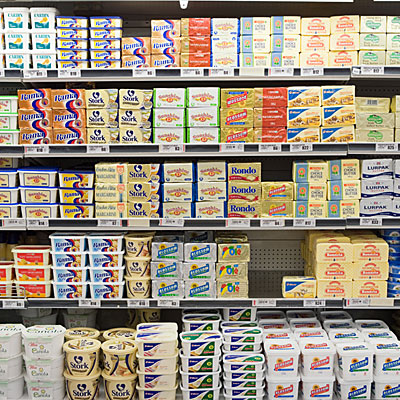
Food Poem – Butter by Elizabeth Alexander

butter-store-400x400
My mother loves butter more than I do,
more than anyone. She pulls chunks off
the stick and eats it plain, explaining
cream spun around into butter! Growing up
we ate turkey cutlets sauteed in lemon
and butter, butter and cheese on green noodles,
butter melting in small pools in the hearts
of Yorkshire puddings, butter better
than gravy staining white rice yellow,
butter glazing corn in slipping squares,
butter the lava in white volcanoes
of hominy grits, butter softening
in a white bowl to be creamed with white
sugar, butter disappearing into
whipped sweet potatoes, with pineapple,
butter melted and curdy to pour
over pancakes, butter licked off the plate
with warm Alaga syrup. When I picture
the good old days I am grinning greasy
with my brother, having watched the tiger
chase his tail and turn to butter. We are
Mumbo and Jumbo’s children despite
historical revision, despite
our parent’s efforts, glowing from the inside
out, one hundred megawatts of butter.
I’ll admit it.
I used 3 or 4 pounds (who knows … I lost count) of butter the last week. I’m glowing from the inside.
Maybe you are too.

“Butter” by Elizabeth Alexander. From Body of Life, published by Tia Chucha Press.

From http://www.poetryfoundation.org/poem/185537

Image from: http://www.health.com/health/gallery/0,,20509217,00.html


Pop-Tart Makeover

51LtV-nCyeL._SY498_BO1,204,203,200_.jpg

This recipe dedicated to my best friend and partner in food adventures and binges, Jim, is from Emilie Baltz’s fun and fantastic book: Junk Foodie: 51 Delicious Recipes for the Lowbrow gourmand.

We rarely buy Pop-Tarts, Jim’s childhood breakfast of choice. Photographer, designer, foodie, Emilie Baltz includes the Pop-Tart in the Junk Foodie Pantry along with Twinkies, Little Debbie treats, Animal crackers and more. She describes the confection as follows:

Introduced in 1964, The Pop-Tart name was inspired by the king of retro art movements, “Pop Art.” These toaster-ready breakfast treats were not only hip, but advanced. The packaging was adapted from a process normally used for dog food packing. Delicious.

Here is the recipe for Pop-Tart Brunch Strudel

1 Apple Pie Filling

1 Handi-Snacks Cheese Dip

1 Brown Sugar Cinnamon Pop- Tart Crust

Cut top off Apple Pie. Scoop out filling and place to side. Smear Hand-Snacks Cheese Dip on one side of reserved Brown Sugar Cinnamon Pop Tart crust. Top with apple pie filling. Cover with other half of Pop-Tart crust. Cut edges off to form a net rectangle shape. Serve.

Look up the website and book for 50 other recipes. The vivid and amazing images are very convincing and I almost want to try a few of the recipes. I am curious. The book is a beautiful exercise in re-imagining ingredients for someone raised without junk food (and a French mother).

Here is an image and review of pumpkin pie Pop-Tarts, from http://www.cookiemadness.net/2010/09/frosted-pumpkin-pie-pop-tarts/

pumpkinpiecrosssection.jpg

For those of you horrified by the above inventive, artificial, and industrial product  recipe, here are a few recipes for home-made pop-tarts

http://sallysbakingaddiction.com/2014/09/03/homemade-frosted-brown-sugar-cinnamon-pop-tarts/

http://smittenkitchen.com/blog/2010/04/homemade-pop-tarts/

http://www.cookingclassy.com/2014/05/homemade-pop-tarts/

Wishing you a wonderful Thanksgiving ahead whether your taste is lowbrow, highbrow or high-low home-made,

Hungryphil

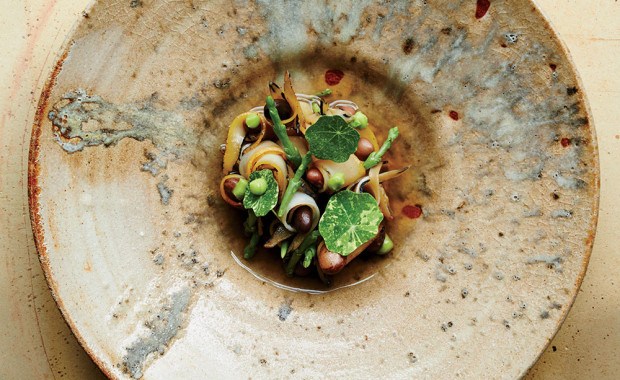
The Abalone Bowl (Kostow-Mahon)

ceramics-christopher-kostow-bowl-620x699.jpg
The Abalone Bowl

I love the story of this bowl created in collaboration between Chef Christopher Kostow and artist Lynn Mahon. Here is the Bon Appetit article about the design of this dish that aims to look “like the bottom of the sea.”

Why veer away from the pristine  clarity of white porcelain that highlights the textures and colors of the crafted culinary delight? These collaborations between container and contained marks an investment in the emotive and atmospheric mood of eating. This design philosophy does not limit food to taste alone, like functional design. Instead it aspires to invoke a particular feeling, like art. In the case of the Abalone bowl, a sense of textured and fluid oceanic discovery.  It doesn’t flatly present the “geoduck course” (what is geoduck?) but becomes a participant, as the bowl’s clay has melted geoduck shells. For a better explanation, read the very short article by Belle Cushing.

It certainly makes me rethink the slow, artisanal, atmospheric, emotive and narrative role of updated “arts and crafts” tableware that invites collaboration between diner, ceramicist and chef.


http://www.saveur.com/article/Kitchen/10-Tabletop-Goods

http://www.bonappetit.com/entertaining-style/article/the-new-go-to-ceramic-tableware

Image from the Bon Appetit article: http://www.bonappetit.com/entertaining-style/trends-news/article/new-ceramics


Corn Picking 1956 — Afternoon Break [Food Poem by Tom Hennen]

I needed a heavy canvas jacket riding the cold red tractor, air
an ice cube on bare skin. Blue sky over the aspen grove I drove
through on the way back to the field, throttle wide open, the
empty wagon I pulled hitting all the bumps on the dirt road. In
the high branches of the aspens little explosions now and then
sent leaves tumbling and spinning like coins tossed into the air.
The two-row, tractor-mounted corn-picker was waiting at the
end of the corn rows, the wagon behind it heaped so high with
ears of corn their yellow could be seen a mile away. My father,
who ran the picker, was already sitting on the ground, leaning
back against the big rear wheel of the tractor. In that spot out
of the wind we ate ham sandwiches and doughnuts, and drank
hot coffee from a clear Mason jar wrapped in newspaper to
keep it warm. The autumn day had spilled the color gold every-
where: aspen, cornstalks, ears of corn piled high, coffee mixed
with fresh cream, the fur of my dog, Boots, who was sharing
our food. And when my father and I spoke, joking with the
happy dog, we did not know it then, but even the words that
we carelessly dropped were left to shine forever on the bottom
of the clear, cold afternoon.

From the Writer’s Almanac