The Egg and GINA, A Tale of Two Cars

IMG_1714

My love of all things “egglike” is well documented. By me.  So, it was no surprise that at the end of the Indianapolis Museum of Art, Dream Cars exhibition, my “what dream car are you” personality quiz result was Paul Arzens’ 1942 L’Oeuf Électrique

img_321198_23471194_2

Image from: http://www.okoloweb.cz/projects/work-of-paul-arzens

Paul Arzen

Image from: http://www.fakeavatar.com/misc/dream-cars/

Designed during the German occupation of France when oil was in very short supply this short, pudgy, aluminum electric car perhaps does fit my personal obsession with food and design. Also like me it is not very safe or very fast. It’ll get you where you need to go in an odd, unconventional way. Maybe this dream car personality test is on to something.

Just to give you perspective, Jim, my geeky yet suave beloved’s dream car personality is the very cool BMW stretched fabric car GINA (2001).

bmw-gina

Image from: http://www.geek.com/news/this-cars-skin-is-four-times-lighter-than-paper-1611722/

Yep. We are both unique in our own way. Enough said…….

bmw-mainimages

Image from: http://www.materialconnexion.com/BMW/tabid/877/Default.aspx

http://www.atlantamagazine.com/news-culture-articles/high-museum-brings-antique-conceptual-cars-to-atlanta/

I hope you get to see these amazing concept cars if you haven’t already. And, take the personality quiz while you’re there!

Enjoy,

Hungryphil

Too Pretty to Eat?

You know that moment of pause in front of a beautiful plate of food when we think……wow! This is too pretty to eat.

What is that pause about? It doesn’t stop me from consuming and dismantling a beautiful banana split. Is that pause a moment of appreciation and recognition? Is attractive plating in fancy restaurants about extending the pause when our brain is confused by the paradox of “gosh, this is beautiful” and “I need to eat, enjoy and destroy it?” Maybe. Beauty has the power to direct us towards an ethical moment, a pause before destruction. Timothy Morton talks about beauty as recognized fragility. Recently, in a blog post, Levi Bryant asks a similar question, when he suggests,

I do think, however, that beauty might play a key role with respect to environmental issues and how we relate to other living organisms, but I’ll save that for another day.  I just wonder why it is that I find something beautiful or what is reflected back to us about ourselves in those things we find beautiful.

Beauty may be a way to interrupt our destructive relationship with the world and things with an ethical pause. How do artists, designers, chefs create things of beauty to be appreciated yet consumed? They may not answer, Levi Bryant’s question, “What is the ground of the ability to have, as Kant put it, “disinterested pleasure” or the ability to find things beautiful?”

But, makers of “(interest) dependent beauty” may offer some strategies capable of extending the ethical pause that makes us lament……this is too pretty to eat.

I need to eat something pretty now and think about this consumption-coexistence paradox provoked by beauty. Hmmmmm…

This question is in part a response to a blog post titled “Beauty” on the blog: Larval Subjects.

Beauty

Booth or Table?

For the most part, this is an easy question for me to answer. Almost automatic. Booth, of course! Booths are soft , comfortable and feel more intimate. The only draw back for me is that being…. ahem…. “vertically challenged,” sometimes I need to prop myself up so I don’t feel like a kid in an adult chair. Also, having to ask the other diners to slide out of the booth in order to go to the rest room is not always comfortable. Again, when with family these issues matter less.

So, for me the decision depends on the intimacy level of a family dinner out or a conversation with a friend. For others, it may depend on the number of diners, work or family dining and comfort. There is quite an extensive discussion on the topic online. Here are just a few conversations:

http://chowhound.chow.com/topics/883922

http://articles.orlandosentinel.com/1987-05-31/entertainment/0130250186_1_tables-booths-restaurateurs

http://www.yelp.com/topic/portland-at-the-restaurant-booth-or-table-or-does-it-matter

https://answers.yahoo.com/question/index?qid=20110222102323AA8VpPO

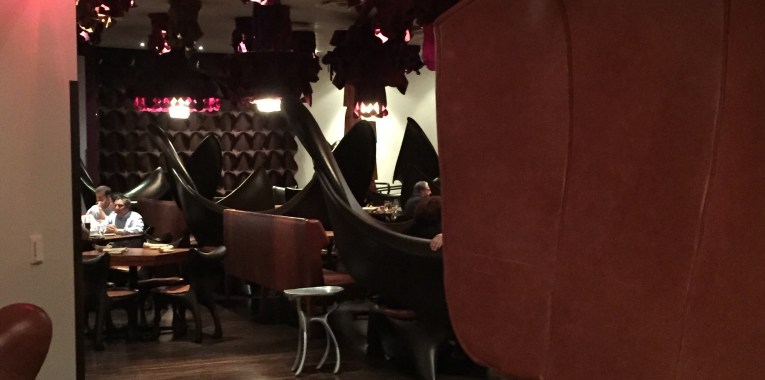
High back dining chairs (think turn of the 20th century Frank Lloyd Wright or C.R. Mackintosh) aim to foster an intimate dining experience at home. Breakfast nooks, picnic tables conjure the same atmosphere. In contrast, formal classical/neo-classical chairs (imagine a Downton Abbey dinner scene) were about pomp, glory and performance. Some restaurants combine the two in order to accommodate the divergent preferences. For example, I recently enjoyed lunch at Americas in Houston (River Oaks) with it’s impressive “maximalist” blossoming interior with giant leather petal chairs that make for a sequence of sculptural booths. Restaurant designers invest a considerable amount of energy in answering this question for us.

IMG_1569

When I think about it, the preference for booth or table becomes more involved. For a work lunch, I would prefer a table. Sometimes, a dinner with my husband where I don’t sink, is nice. The difference may not be as simple as formal-informal, intimate or open. Of course, the seating alone cannot create a desired dining atmosphere.  There are infinite other details like lighting, texture, number of guests, reason for dining out, weight, height and more. Now, all considered, what do you generally prefer: Booth or Table?

Maybe a quick poll would be fun?

Food as Gift, Interview with Thai Essence Chef Ake Waratap, West Lafayette, Part 3 of 3


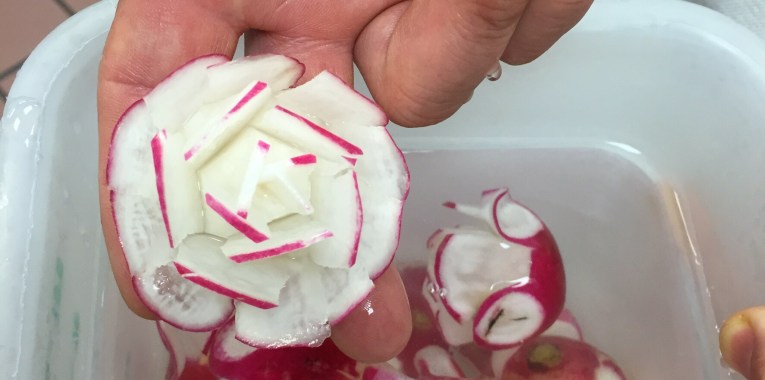
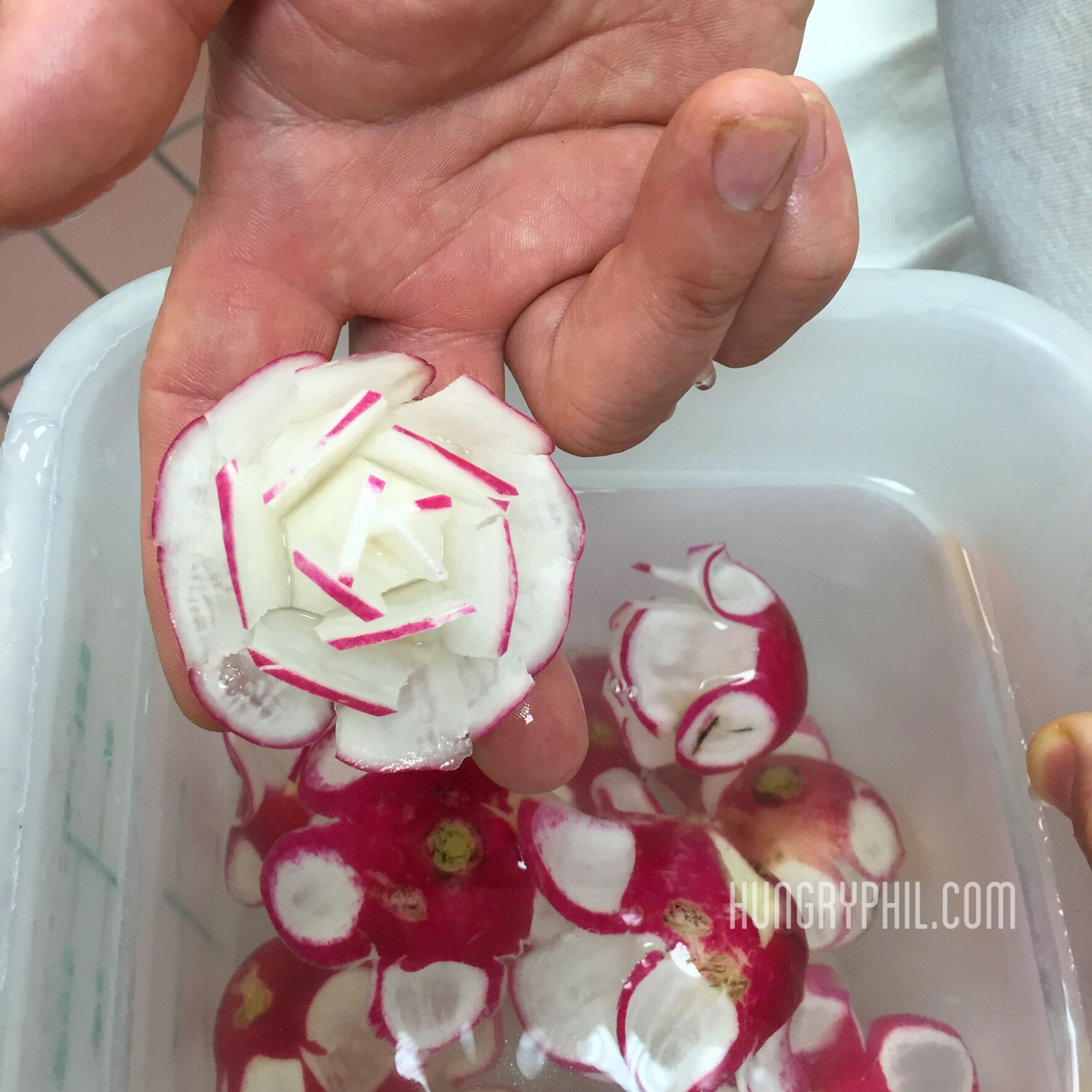
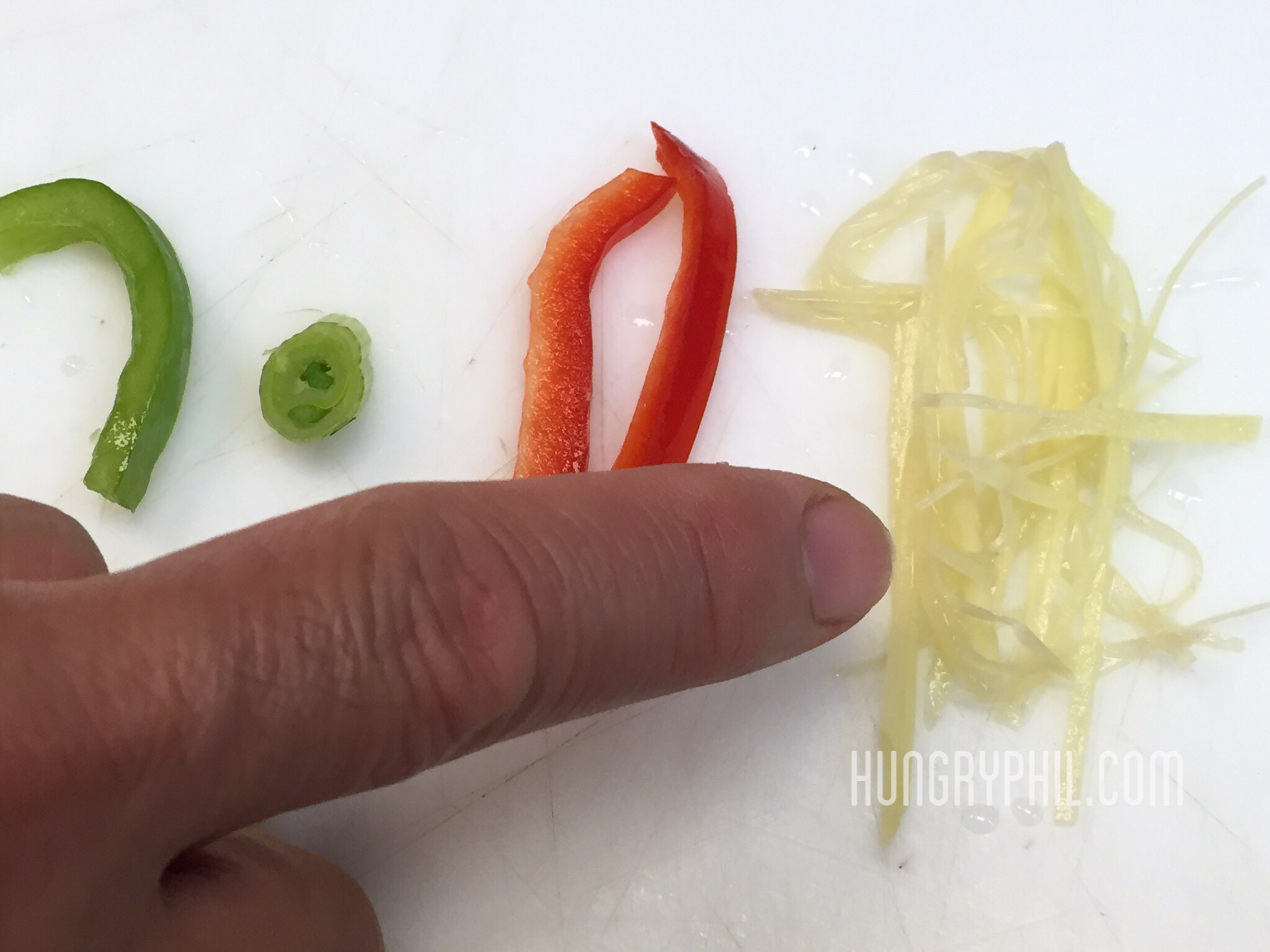
 (con’t) Thai Essence, Chef Ake’s insistence on intention, quality, energy and heart is palpable. When asked what would he considers his ‘signature’ dish, he refused to answer with a single dish. Every dish, he said, is made with care. In order to “show” me his philosophy, he pulled out some julienned ginger, thin slices of red and green pepper. “You have to feel it, like cutting through your own skin, smooth slices, no chopping,” he beams. Cooking is not about speed that bruises ingredients, or sloppy wasteful whimsy. It is intentful, considered and respectful. He shows me a beautifully carved radish flower (I am shocked to hear that he learned how to do all his vegetable and fruit carving on his own over YouTube!) and says that he was asked, “Why do we take the time to do this when most customers don’t even notice?” In response, he had answered that the flower is a symbol of care and even if only a few customers notice, it is still worth the effort. So instead of a signature dish to show us his philosophy, chef Ake offers us intricately carved flowers, precisely sliced vegetables, carefully concocted sauces and only by default deliciously executed dishes. As I suspected, he is an exemplar of an object-oriented practice invested in the recognition and respect of each thing as a gift.

True to material thinkers, Chef Ake continues to be fascinated by things and processes that fuel or challenge his commitment to gastronomic appreciation. For example, he is deeply concerned by buffet formats of serving that threaten attention to quality, care and detail. Similarly, he is excited by current farm to table philosophies that respect local ingredients and their producers. He recently returned from an exploration of ramen making in Japan. Curiosity and generosity seem to be driving principles in his food thinking and travels. The major drawback of his attention to detail and personal care is that he has little time to pursue and cultivate his wide range of interests. Creative people suffer this dilemma that leads to frustration or burnout all too frequently. Graphic designer Stefan Sagmeister famously takes a “sagmeister” by closing down his office for a year, every seven years. The famed chef of El Bulli, Ferran Adria closed his celebrated Michelin-starred restaurant and instead launched a “food think tank.” I sincerely hope Chef Ake finds a way to sustain his spirit of learning and experimentation. In the meantime, for those of you in the area, I encourage you to meet Chef Ake and visit his restaurant for a regular meal and then a special event (when he experiments with techniques and menu items). Traditional eastern cuisines in the West are both difficult and easy to innovate depending on the gastronomic experience level of the guests. This challenge makes the experimental special events at Thai Essence so fascinating to me. Thank you for sharing your philosophy of food as gift with us, Chef Ake.

Looking forward to many delicious experiments ahead,

Hungryphil

Dear Fellow Food Philosophers,

I am collecting food philosophies through three guiding and loose questions:

  1. Consumption: What are your memories of food?
  2. Production: What are your guiding principles for making food?
  3. Demonstration: What would show your philosophy of food?

Please contact me, if you (or anyone you know…..anyone who is involved in making food…not just chefs) would like to share your philosophy with me. Thank you!
http://www.thaiessence.net/

http://www.ted.com/talks/stefan_sagmeister_the_power_of_time_off?language=en

http://www.nytimes.com/2015/01/04/business/ferran-adria-the-former-el-bulli-chef-is-now-serving-up-creative-inquiry.html?_r=0

Food as Gift – Interview with Chef Ake, Thai Essence, West Lafayette, Indiana : part 2 of 3


(con’t) Chef Ake’s early culinary career as a cook, as a caterer and private chef was fueled with the deep belief in food as a precious gift to be shared. He spent his time generously, he cooked extra portions and a variety of foods, all in an effort to make people feel nurtured. He wanted everyone to feel that they had more than enough to eat (the opposite of his childhood limitations). This spirit of generosity served him well by attracting the goodwill of his customers who happily received his culinary gifts. He managed to translate his childhood moments of “slow” consumption, of making enjoyment last, into making food worthy of slow considered eating. Attentive consumers, one could argue, make attentive makers. Chef Ake’s story reminds me of how designer Raymond Loewy speaks of Biberin, a French drink powder, in his autobiography as his first awareness of passion. After all, how can one reproduce a feeling for others without having experienced it oneself?

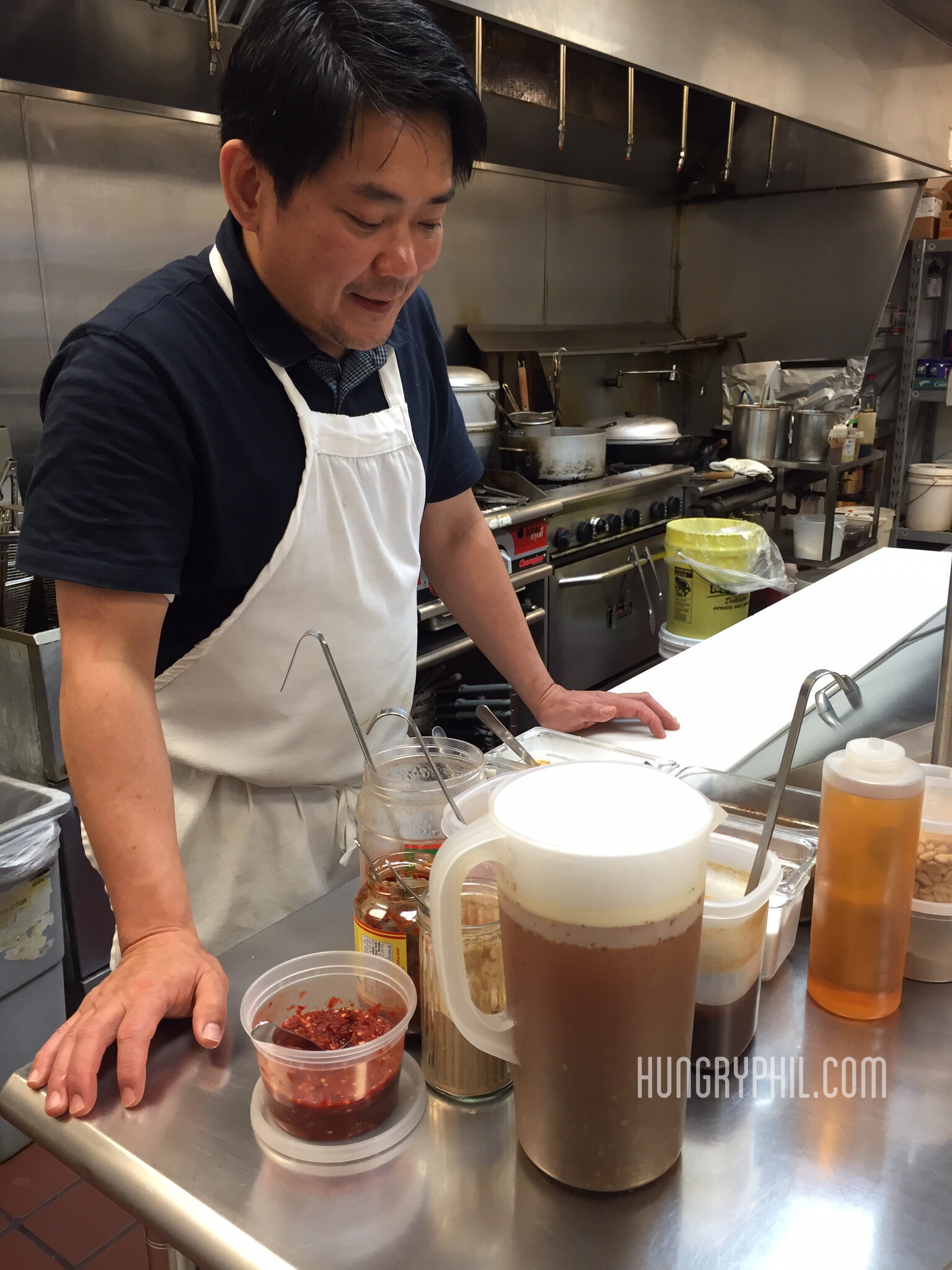
The lack of Thai food restaurants drew him and Nan to West Lafayette. If “food as gift” sums up his lessons as a consumer, then “we care” is his primary restaurant philosophy. With no formal culinary schooling, his insistence on detail, caring and learning is evident in every aspect of the restaurant. As we walked through the kitchen, he proudly showed me every spotless detail of the kitchen he and Nan designed. His equipment now five years old looks sparkling new. The screws in the mis-en-place tables are cleaned with pins! All sauces are made in house, what is purchased is of high quality. He only serves what he would eat himself. And, from what I saw, his standards are quite high.

Next time, he shows us his philosophy of “intentful” cooking.

http://www.thaiessence.net/

Dear Fellow Food Philosophers,

I am collecting food philosophies through three guiding and loose questions:

  1. Consumption: What are your memories of food?
  2. Production: What are your guiding principles for making food?
  3. Demonstration: What would show your philosophy of food?

Please contact me, if you (or anyone you know…..anyone who is involved in making food…not just chefs) would like to share your philosophy with me. Thank you!

Food as Gift – Interview with Chef Ake, Thai Essence, West Lafayette, Indiana : part 1 of 3


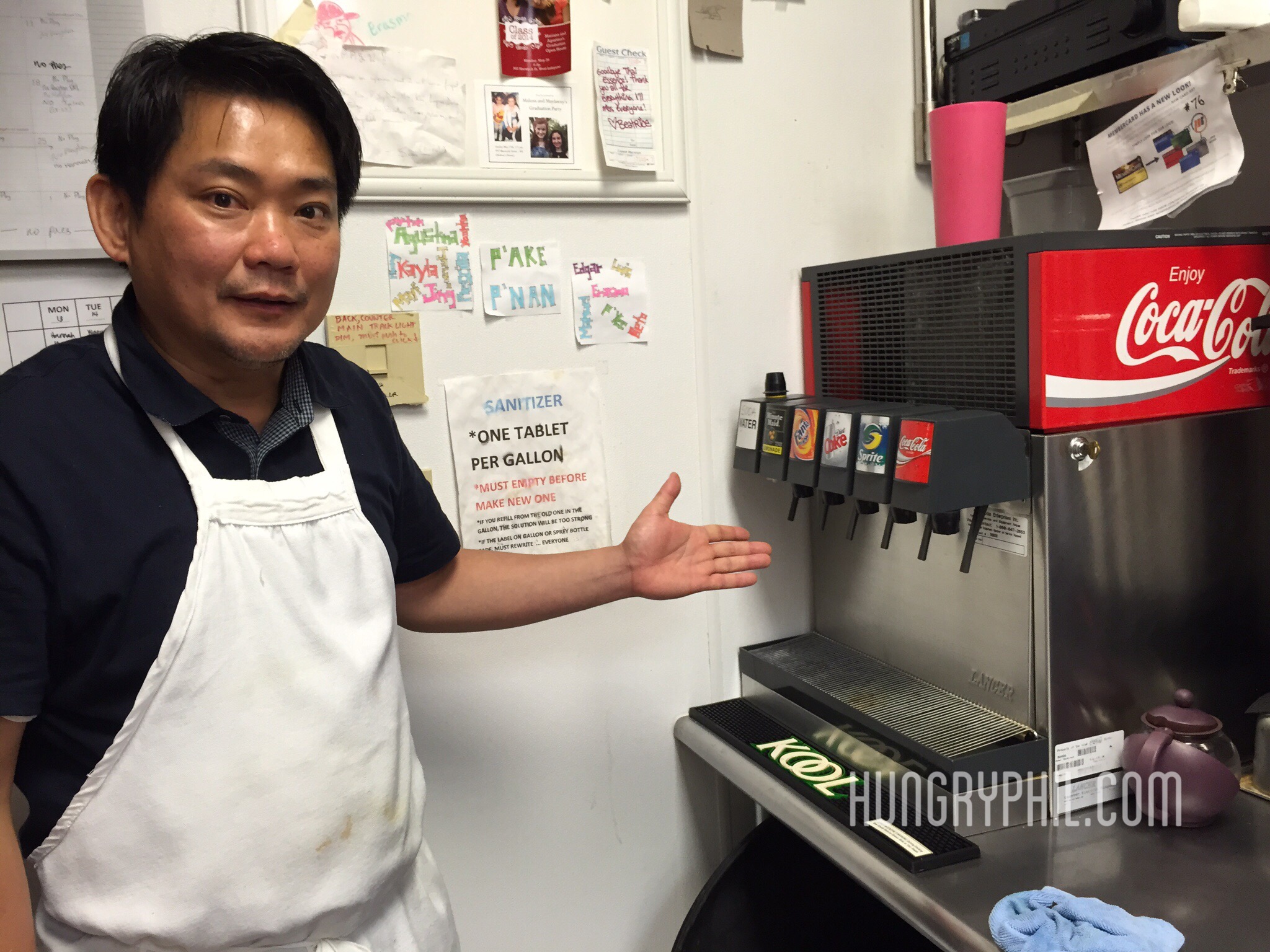
Few food memories begin with abandoned corpses in Buddhist temples, as Chef Ake’s does. Raised in a struggling family in Thailand, young Ake would catch and sell catfish gathered after the rains under the platform of abandoned dead bodies. Lowering his gaze he says that he can still smell the stench. Despite his mother’s warnings, he did this to buy a bottle of Coca-Cola worth less than 5 cents. By chewing and constricting the straw and taking the smallest of sips, he learned to extend his enjoyment of that hard-earned bottle. Opening his second restaurant in West Lafayette, Indiana, he installed a coke machine, but now, ironically he no longer craves the taste. The poverty, he says, pushed him to dream of ice-cream, coke, beautiful houses, of televisions in every room and of playing the piano. His family of five shared every meager meal as a gift. “Food is a gift,” says Chef Ake repeatedly.

The days between growing up in Thailand and opening his first restaurant in West Lafayette, Indiana is a classic immigrant story of persistence, resourcefulness, hard work and struggle that includes, working every possible restaurant position (front and back of house), multiple jobs, janitorial jobs, catering and being a private chef at a sorority. In addition, he astonishingly managed to keep his dream of being a filmmaker alive by earning a M.F. A from the San Francisco Art Institute (in Thailand he worked in the film industry on television shows and advertising): amazing and humbling to hear him recollect those years. He poetically talks about seeing only two sunsets his first year in the U.S. (Christmas and on 4th of July). He also talks about meeting his wife Nan who like him had hotel and restaurant experience and an M.F.A (in theater). On their first date they watched a movie, separately, unable to decide on the same movie. Their second date at 2 a.m. in the morning was spent in a cemetery (Presidio of San Francisco) after a late night work shift. These two unique individuals had found their match. Their shared love for film, theater, books, museums and galleries, of learning brought them here to West Lafayette, Indiana, the home of Purdue University.

How does a childhood consumer of coca-cola become a chef who champions attention to detail in a small Mid-western college town? Tune in next time as slow coke drinker Ake evolves into Chef Ake of Thai Essence, West Layette, Indiana.

http://www.thaiessence.net/

Dear Fellow Food Philosophers,

I am collecting food philosophies through three guiding and loose questions:

  1. Consumption: What are your memories of food?
  2. Production: What are your guiding principles for making food?
  3. Demonstration: What would show your philosophy of food?

Please contact me, if you (or anyone you know…..anyone who is involved in making food…not just chefs) would like to share your philosophy with me. Thank you!

Patron Philosopher of the Stomach

182003-o

Epicurus, the Foodies’ Philosopher by Michael Symons*

“Epicurus is often viewed as responding to Plato virtually point for point. He reinverted Plato’s world (as Marx would do with Hegel’s), making the opposite case at every level, physically, ethically, and epistemologically. The secret is that, for Epicurus, the belly ruled the mind, rather than vice versa. Head and stomach should perhaps work together, although materialism is hard to avoid if we believe, along with Epicurus, that philosophy has ultimately to serve practical needs. So, rather than pursue knowledge of its own sake, Epicurus wanted useful knowledge, which helped remove unnecessary personal burdens……..Of immediate interest to gourmets, Epicurus up-ended Plato by distinguishing the finite hunger of the stomach from endless desires, including for new taste experiences, which he blamed on the “ungrateful greed of the soul.” That is, an epicurean was to obey the stomach, rather than the soul’s hunger for novelty, which would never be satisfied.”

While I want to qualify Symons’ account of Plato and extol the virtues of an unsatisfied soul, the essay helps begin to  explain the philosophical attraction/repulsion of food (a question I sort of asked in the previous post about the proliferation of food festivals). According to Symons’ account of Epicurus:

  1. Food insists on the importance of the everyday, the mundane and the terrestrial, the transient need for animal survival.

“His [Epicurus’] moral system took off from his hedonism – so that right and wrong did not come from on high, but proved themselves by the everyday contentment they produced.”…………… i.e. nothing makes a bad day go away better than a good meal in good company.

  1. Eating well exercises living well or rather living a “good” balanced life.

“The beginning and root of all good is the pleasure of the stomach; even wisdom and culture must be referred to this” quotes Symons of Epicurus.

  1. Who you eat with is more important that what you eat.

“You must reflect carefully beforehand with whom you are to eat and drink, rather than what you are to eat and drink. For a dinner of meats without the company of a friend is like a life of a lion or wolf.”

If eating well everyday in good company defines a good life guided by the principle of conviviality then I have a pretty good life. I feel reassured. Good essay!

Food Poem – What We Might Be, What We Are by X. J. Kennedy

If you were a scoop of vanilla
And I were the cone where you sat,
If you were a slowly pitched baseball
And I were the swing of a bat,

If you were a shiny new fishhook
And I were a bucket of worms,
If we were a pin and a pincushion,
We might be on intimate terms.

If you were a plate of spaghetti
And I were your piping-hot sauce,
We’d not even need to write letters
To put our affection across,

But you’re just a piece of red ribbon
In the beard of a Balinese goat
And I’m a New Jersey mosquito.
I guess we’ll stay slightly remote.

“What We Might Be, What We Are” by X.J. Kennedy from Exploding Gravity. © Little Brown, 1992.

From the Writer’s Almanac, June 28, 2015

http://writersalmanac.org/page/3/

Food Poem – Linguini by Diane Lockward

It was always linguini between us.
Linguini with white sauce, or
red sauce, sauce with basil snatched from
the garden, oregano rubbed between
our palms, a single bay leaf adrift amidst
plum tomatoes. Linguini with meatballs,
sausage, a side of brascioli. Like lovers
trying positions, we enjoyed it every way
we could-artichokes, mushrooms, little
neck clams, mussels, and calamari-linguini
twining and braiding us each to each.
Linguini knew of the kisses, the smooches,
the molti baci. It was never spaghetti
between us, not cappellini, nor farfalle,
vermicelli, pappardelle, fettucini, perciatelli,
or even tagliarini. Linguini we stabbed, pitched,
and twirled on forks, spun round and round
on silver spoons. Long, smooth, and always
al dente. In dark trattorias, we broke crusty panera,
toasted each other—La dolce vita!—and sipped
Amarone, wrapped ourselves in linguini,
briskly boiled, lightly oiled, salted, and lavished
with sauce. Bellissimo, paradisio, belle gente!
Linguini witnessed our slurping, pulling, and
sucking, our unraveling and raveling, chins
glistening, napkins tucked like bibs in collars,
linguini stuck to lips, hips, and bellies, cheeks
flecked with formaggio—parmesan, romano,
and shaved pecorino—strands of linguini flung
around our necks like two fine silk scarves.

“Linguini” by Diane Lockward from What Feeds Us. © Wind Publications, 2006. Reprinted with permission.

http://writersalmanac.org/page/2/

From the Writer’s Almanac June 22nd, 2015

Food Poem- Grandma Shorba’s Ragamuffin Stew by Freya Manfred

During World War II, Grandma Shorba
handed plates of bread and meat to strangers
who asked for work in exchange for food.
After chopping wood and mending fences,
the lean, stoop-shouldered men went on their way.
“May God watch over them,” Grandma said.

I was glad I didn’t have to follow them
down the long train tracks silvering west.
I didn’t want to sleep beside a strange campfire
around the bend, in the next world.
But I worried how they’d survive, and asked
my parents if they could live with us.

My begging only made everyone nervous.
Maybe Grandma’s stories of The Good Samaritan
and the Loaves and Fishes weren’t true?
If I’d been in charge, I’d have asked those men to stay—
but Gramma, who trusted God,
fed them, then sent them on their way.

“Grandma Shorba’s Ragamuffin Stew” by Freya Manfred from Speak, Mother. © Red Dragonfly Press, 2015.

From the Writer’s Almanac, June 10, 2015

http://writersalmanac.org/