Wobblyogi Wednesday – Witness Consciousness

“To me, witness consciousness represents the human capacity to experience a way of knowing that goes beyond the limitations of language. It’s the felt experience of holistically apprehending our being. For most of us, this sense of realization comes and goes in special, fleeting moments. But when we’re in touch with it, it liberates us from the boundaries that ordinarily keep us feeling divided within ourselves, form each other, and against the world. Witness consciousness is, I believe, a capacity of mind that we all have but normally don’t develop. Practices like yoga, meditation, and centering prayer work to strengthen our capacity to access it. If these are done consistently, our ability to tap into it grows over time. This is why experienced practitioners often refer to yoga as spiritual “practice.”

The quotes above and below are from Yoga PhD: Integrating the Life of the Mind with the Wisdom of the Body by ex poli-sci professor, activist yogi, Carol A. Horton.

By noticing our breath, our tense muscles, our moments of ease and stress we cultivate this sense of witness consciousness through our own bodies and experiences. Each pose becomes an invitation to really see ourselves moving and breathing as we struggle to stay in the present and to stay in our bodies.  Sometimes, I find myself, unknowingly, using this holistic witness consciousness to find ease when I’m tired or struggling.

Recently, I was at a football game volunteering. The noise, the crowd, the heat, the carnivalesque atmosphere was overwhelming. I found myself transfixed by the fluttering orange gosamer wings of a butterfly as it floated towards the cloudless, cereulean blue serene sky. Suddenly, the whole stadium dissappered and instead there was blue, orange, lightness, ease, air and space. I survived the rest of the day by taking my gaze up whenever I needed. Just by focusing on a larger picture that included the stadium but was not limited to the stadium, I found my witness consciousness experiencing a joyous crazy football game under a calm and resplendent fall sky. Yoga or connections off the mat can be so magical.

Speaking of magic …Dr. Horton talks about the benefits of contemporary yoga (a mix of physical and mental practice) as an “intuitive opening to the hidden magic of everyday life.”

In the end, what I love most about contemporary yoga is its ability to synthesize the everyday with the extraordinary, the practical with the visionary, the mundane with the sacred. I love that yoga can work to release my tense muscles, negative emotions, and pyschic detritus at the same time. That it can connect me to my body in ways that create new neural pathways in my brain. That it offers a practical tool for coping with everyday stress, as well as an intuitive opening to the hidden magic of everyday life.

Don’t we all need to find the hidden magic of everyday life, at the grocery store, pumping gas, hunched over our computers, loading the dishwasher, tossing a salad and wiping the counter? From this perspective of witness consciousness my suburban, cul-de-sac ordinary, existence becomes a gateway to a magical reality where I can see the lone fluttering butterfly floating above a college football stadium.

Wishing you all happy butterfly chasing,

Wobblyogi

Yoga Poem – The Shining Moment in the Now by David Budbill

When I work outdoors all day, every day, as I do now, in the fall,
getting ready for winter, tearing up the garden, digging potatoes,
gathering the squash, cutting firewood, making kindling, repairing
bridges over the brook, clearing trails in the woods, doing the last of
the fall mowing, pruning apple trees, taking down the screens,
putting up the storm windows, banking the house—all these things,
as preparation for the coming cold…

when I am every day all day all body and no mind, when I am
physically, wholly and completely, in this world with the birds,
the deer, the sky, the wind, the trees…

when day after day I think of nothing but what the next chore is,
when I go from clearing woods roads, to sharpening a chain saw,
to changing the oil in a mower, to stacking wood, when I am
all body and no mind…

when I am only here and now and nowhere else—then, and only
then, do I see the crippling power of mind, the curse of thought,
and I pause and wonder why I so seldom find
this shining moment in the now.

“This Shining Moment in the Now” by David Budbill from While We’ve Still Got Feet. © Copper Canyon Press, 2012.

From the Writers Almanac

Wobblyogi Wednesday – Lunch Time Vinyasa!

My dear West Lafayette friends for whom my 6 am Wednesday Sunrise Yoga session is too early,

Welcome to my Tuesday and Thursday 12:15 – 1:00 p.m. yoga sessions starting next week, September 6th. Here are three reasons to join me,

Reason number 3: Short and gentle session open to all levels of yogis.

The shortened session is intended to be an afternoon break from the desk.  We’ll do a few standing poses to help recover our strength and ground, balance poses to help us focus on our remaining work and hip openers to help us sit through the rest of the workday.

Reason number 2: Wear comfortable work clothes.

No need to change into gym clothes. If you can take a wide stand, fold forward and take your legs up to the sky (comfortably and without flashing anyone),  any stretchy pants and shirt combination will work.  I don’t plan on getting us hot and sweaty. Despite the commercialization, there is no need for specialized yoga clothes! There I said it.

[If you feel the need to change, our bathroom is always available.]

Reason number 1: Grown-up rest time – Savasana.

Doesn’t a mid-day short break sound wonderful? Take yourself back to pre-school nap time (without the drool, waiting for your parents to pick you up, eyes half open, imprints of the mat on your face etc.). Nurture yourself, move your achy joints and muscles, stop the noise and hear yourself breathe for a few moments before you go back to your busy day.

A single session is $15. Try it. If you like it, treat yourself to one of the many packages. Sign up is easy on the Community Yoga Website: https://communityyogalafayette.com

Come move, breathe and rest with me!

Hope to see you next week,

The Wobblyogi

Image from a yoga studio in Bristol England: https://flowyogabristol.co.uk/. I would go there if I lived there. But, I don’t. Sigh. The lady looks so blissful.


Wobblyogi Wednesday: Yoga body containing and transcending ego?

I was asked recently to identify what type of yoga I teach. She asked, “Hatha?”

In typical philosopher style, I wanted to answer, “Yes and no.”

Yes, the focus of the session will be the unity of body, mind, and breath by flowing through movements.  Yes, I hope the session carries both your mind and body to more ease. And yes, Hatha, as the practice of Sthira-Sukha, stillness and ease, I hope the yoga session helps us find balance.

On the other hand,

I wanted to answer, “No, not just Hatha yoga, as the yoga tradition most devoted to cultivating the body. No, I’m not interested in pushing  you to your physical limit. No, I do not expect you to master difficult poses, head stands or binds. No, I am not invested in your physical wellbeing drained of emotional strength.”

The dilemma about Hatha yoga is common, as we try to balance fitness with mindfulness,  assuming a mind-body duality. There is a long history to this question of the mind as it relates to our understanding of our embodied selves and our material world.

Here is one yoga scholar’s description about the dangers of holding the body as the locus of ego-centric practice:

“…the disciplines of Hatha-Yoga are designed to help manifest the ultimate Reality in the finite human body-mind. In this, Hatha-Yoga expresses the ideal of Tantra, which is to live in the world out of the fullness of Self-realization rather than withdraw from life in order to gain enlightenment.

…The Hatha- Yoga practitioner wants to construct a “divine body” or  “adamantine body” for himself or herself, which would guarantee immortality in the manifest realms. He or she is not interested in attaining enlightenment on the basis of prolonged neglect of the physical body. He or she wants it all: Self-realization and a transmutated body in which to enjoy the manifest universe in its diverse dimensions. Who would not sympathize with this desire? Yet, as can be imagined, the practitioners of Hatha-Yoga have sometimes sacrificed their highest spiritual aspirations and settled for lesser, perhaps magical, goals in service of the ego-personality. Magic, like exo-technology, is a way of manipulating the forces of Nature, whereas spirituality is about the transcendence of the manipulative ego-personality. Narcissism, or body-oriented egocentrism, is as great a danger among hatha-yogins as it is among bodybuilders.”

from George Fuerstein’s The Yoga Tradition

After alerting us about the potential dangers of egocentric self-absorption, Dr. Fuerstein suggests coupling Hatha-yoga with Raja yoga. Perhaps, that ego-countering coupling can include many other forms of yoga: Mantra (chanting), Bhakti (faith), Karma (action) and my favorite, Jnana (wisdom).

This is why as we move through the poses attentive to our breath, we look towards our inner landscape to find moments of pranayama (breath control), pratyahara (withdrawal from outside stimuli) and even dharana (concentration on something specific, like breath or tense tissue). I like to think of asana as the pivotal yoga-limb grounded in the yamas (how we behave with others) and niyamas (how we cultivate ourselves) while reaching and touching pranayama (aware breathing), pratyahara (focusing inward) and dharana (focusing on a single thing). It may or may not help us with dhyana (meditation) that may or may not lead to samadhi (transcendence). Asana can help us walk through 6 of the 8 limbs of the yoga-path. Or, we can metaphorically and literally be stuck in a peacock pose.

When we share our yoga practice with others, we become a community of individuals each striving towards the same thing through different breathing patterns, body types, and levels of awareness. Our bodies are not the same, how can our minds be? We may not be saying the same prayer or holding the same intentions but we are all praying and intending. Unity in diversity, not uniformity.

For me, asana practice, celebrates the diversity of bodies, of being, of lives, of minds that all strives towards the same human need for ease, goodness, and stillness.

But, I simply answered the lady’s question, “Hatha?” with a, “Yes.”

Hope I see her in class soon.

Happyoga,

The Wobblyogi


Wobblyogi Wednesday – Jar of Pickles

A jar of pickles….is not a standard yoga practice theme. Since I started teaching Sunrise Morning Yoga classes, I’ve been thinking about opening, waking up and ways to unfold. The first week I looked at poses that reminded me of opening a book like dancing warrior. The second week I looked at poses that made me think of flowers blooming or birds taking flight, like locust, ustrasana or brikasana. This week I looked to gentle twists, like opening a jar, like a revolved side angle or twisted chair. Exploring how we wake up and open to the world through yogic poses and movement has been fun. We started seated one day, in a child pose another and today from a reclined position. Each start progressed through the standard sequencing practices of centering, sun salutations and warmup, standing poses, balance poses, seated poses and back to floor. At this point, I’m getting better at time awareness and “feeling” where I should be in the sequence. I still have to figure out my unique concluding phrase that each yoga instructor seems to have. Do I even need one? I don’t know yet.

Today I’ve been thinking about Aristotle’s De Anima (On the Soul) and how the soul (and nature) is understood as movement, as animation. Can there be philosophy-themed yoga sequences? Nietzsche would definitely require a headstand. Hegel, a lot of opposing movements and then centering. Aristotle would definitely be an Iyengar practitioner, attentive to alignment between movements. Hmmm…I like thinking about this strange yoga thematic turn in practicing philosophies of embodiment. My mind is certainly wobblying now!

Maybe I need to compose Philosophers do Yoga like Monty Python’s Philosopher’s World Cup. Makes me laugh every time. Enjoy!

Wishing you ease and laughter,

The Wobblyogi

Image from: https://daphilosophers.wordpress.com/2011/02/06/yoga/

Wobblyogi Wednesday: Happy Place Escape

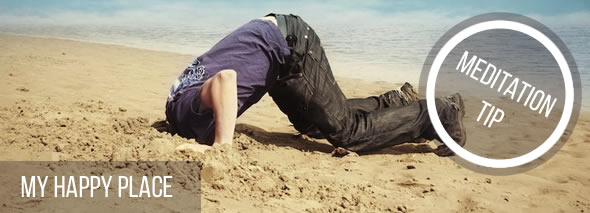
16-03-happy-place

Has yoga helped me find my “happy place”? Will it help you find yours? Confessedly, my definition of happiness has shifted from being associated with joy, laughter, passion to being associated with ease being in my own skin and ease being with others in this often unkind and unpredictable world. Today I ended our morning yoga practice with the words of my grandmothers. I’m sure some of my readers have heard the phrases: Shuke Thako, Bhalo Thako. Stay in ease (or happiness, here is the confusion again), Stay in goodness.  I feel bad now for taking those words so flippantly or sometimes even mockingly.  The simple advice to “stay” is basic yoga. Afterall, we are all trying to stay in our bodies, in our minds, in our hearts, in our world, through moving, breathing, focusing and meditating.

Most of all, I’ve learned that yoga is not about escaping to a “happy place” but about being able to just stay in unhappy, uneasy places without becoming unhappy or uneasy. There is unhappiness and there is happiness but I am not happy or unhappy. I am more than my feelings at a given moment, more than a sum of my feelings, more than my existential condition that gives rise to those emotional responses. Meditation does not help me escape my feelings but rather helps me sit with them without being constrained, defined or imprisoned by them. I watch my feelings and say, there is sadness, there is worry, there is joy, there is love, there is anger and so on and so on. Congratulations, I’m human. I’m alive and aware. By tagging and releasing the feelings I emerge lighter. The nagging emotions that refuse to fly away and keep returning to take up space in my mind and heart need more attention, more meditation and sometimes more action. The amount of emotional energy I release always amazes me. So few things are worth lingering over. If I can’t change it, devoting my mind to it won’t help. If I can change or affect it then my concern shifts to practical struggles of how:  from awareness to thinking.

I’m working through Jon Kabat Zinn’s book, Where you go, there you are: Mindfulness Meditation in Everyday Life. I found the chapter titled, “Meditation: Not to be confused with positive thinking” particularly helpful in relation to the notion of  a personal “happy place.” First, a food reference:

“Not only is it [our fundamental nature] not limited by the potpourri of our thinking mind, awareness is the pot which cradles all the fragments, just as the soup pot holds all the chopped up carrots, peas, onions, and the like and allows them to cook into one whole, the soup itself. But it is a magical pot, much like a sorcerer’s pot, because it cooks things without having to do anything, even put a fire underneath it. Awareness itself does the cooking, as long as it is sustained.You just let the fragments stir while you hold them in awareness. Whatever comes up in mind and body goes into the pot, becomes part of the soup.”

Kabat-Zinn concludes the section with these words about the limits of positive thinking,

“If we decide to think positively, that may be useful, but it is not meditation. It is just more thinking. We can easily  become a prisoner of so-called positive thinking as of negative thinking. It too can be confining, fragmented, inaccurate, illusory, self-serving, and wrong. Another element altogether is required to induce transformation in our lives and take us beyond the limits of thought.”

Don’t get me wrong. I often retreat to my happy place (usually when threatened by loud places filled with restless children and rushed adults like, amusement parks). But, that is not meditation. That is escape. I want to be able to escape from my life less and less. So I try to meditate more and more. Become more aware of my pot of soup instead of the peas and carrots.

I want to tweak the  Socratic dictate to,  the unaware life is not worth living.  The difference between the examined life and aware life is worth exploring in another post.

For now, I wish you easy awareness of your own unique pot of experiences,

The Wobblyogi

For a look at the Image and a good article about escapism and meditation visit: http://melbournemeditationcentre.com.au/articles/is-your-happy-place-really-a-happy-place/

Wobblyogi Wednesday – Teaching Fears

My adventures in yoga teaching has officially begun! I am horrified and thrilled. Horrified, that, I, anxious and awkward, dare to invite people to move meditatively. Thrilled, that I get to share my efforts to calm my frenetic mind and heart with others.

I suppose it is the same combination of joy and fear I felt when holding my baby girls, getting married, writing my dissertation, teaching my first philosophy class or eating something unknown. I am mindful of the novelty, the moment of joy and fear and the awareness of a new path. I don’t know where it will take me and for how long but it feels good to look ahead.

Despite my fears, forgetting a pose in a sequence, wrong breath cues, limited alignment direction and the infinite little things that I could’ve done better, it was a wonderful experience. I know this because I want to do better. As soon as I got home, I found myself looking through music, researching sequences, considering different themes and advise on alignment cues. I found myself thumbing through my yoga teacher training notebooks and other books for direction.

I assume that anything or anybody that makes me want to be better is,  despite fear,  good for me. My kids make me want to be a better mom, my beloved makes me want to be a better partner, my philosophy students make me want to be a better teacher, my blog readers make me want to be a better blogger and so now my fellow yogis make me want to be a better yogi. Sharing, amplifies both good and bad, like cooking for others. It is a risk.

Yes, it was a good morning. A good beginning. I am so thankful for the graciousness of my sunrise vinyasa yogis. They have certainly helped me connect to my gratitude.

I was looking online for an appropriate quote that summarizes the crazy complexity of “first” experiences. Didn’t find one yet. I did find two about fear on goodreads that spoke to me. The first, short and sweet, is attributed to artist Salvador Dali.

“Have no fear of perfection – you’ll never reach it.”

There is something comforting in accepting imperfection as  evidence of continuous growth and striving, instead of failure and inadequacy.

The second quote is much longer from Herman Hesse about his admiration of trees.

“For me, trees have always been the most penetrating preachers. I revere them when they live in tribes and families, in forests and groves. And even more I revere them when they stand alone. They are like lonely persons. Not like hermits who have stolen away out of some weakness, but like great, solitary men, like Beethoven and Nietzsche. In their highest boughs the world rustles, their roots rest in infinity; but they do not lose themselves there, they struggle with all the force of their lives for one thing only: to fulfil themselves according to their own laws, to build up their own form, to represent themselves. Nothing is holier, nothing is more exemplary than a beautiful, strong tree. When a tree is cut down and reveals its naked death-wound to the sun, one can read its whole history in the luminous, inscribed disk of its trunk: in the rings of its years, its scars, all the struggle, all the suffering, all the sickness, all the happiness and prosperity stand truly written, the narrow years and the luxurious years, the attacks withstood, the storms endured. And every young farmboy knows that the hardest and noblest wood has the narrowest rings, that high on the mountains and in continuing danger the most indestructible, the strongest, the ideal trees grow.

Trees are sanctuaries. Whoever knows how to speak to them, whoever knows how to listen to them, can learn the truth. They do not preach learning and precepts, they preach, undeterred by particulars, the ancient law of life.

A tree says: A kernel is hidden in me, a spark, a thought, I am life from eternal life. The attempt and the risk that the eternal mother took with me is unique, unique the form and veins of my skin, unique the smallest play of leaves in my branches and the smallest scar on my bark. I was made to form and reveal the eternal in my smallest special detail.

A tree says: My strength is trust. I know nothing about my fathers, I know nothing about the thousand children that every year spring out of me. I live out the secret of my seed to the very end, and I care for nothing else. I trust that God is in me. I trust that my labor is holy. Out of this trust I live.

When we are stricken and cannot bear our lives any longer, then a tree has something to say to us: Be still! Be still! Look at me! Life is not easy, life is not difficult. Those are childish thoughts. Let God speak within you, and your thoughts will grow silent. You are anxious because your path leads away from mother and home. But every step and every day lead you back again to the mother. Home is neither here nor there. Home is within you, or home is nowhere at all.

A longing to wander tears my heart when I hear trees rustling in the wind at evening. If one listens to them silently for a long time, this longing reveals its kernel, its meaning. It is not so much a matter of escaping from one’s suffering, though it may seem to be so. It is a longing for home, for a memory of the mother, for new metaphors for life. It leads home. Every path leads homeward, every step is birth, every step is death, every grave is mother.

So the tree rustles in the evening, when we stand uneasy before our own childish thoughts: Trees have long thoughts, long-breathing and restful, just as they have longer lives than ours. They are wiser than we are, as long as we do not listen to them. But when we have learned how to listen to trees, then the brevity and the quickness and the childlike hastiness of our thoughts achieve an incomparable joy. Whoever has learned how to listen to trees no longer wants to be a tree. He wants to be nothing except what he is. That is home. That is happiness.”

All this, blogging and yoga, helps me share, helps me survive in suburbia, through the pick up and drop offs, the left behind water bottles, the grocery, summertime lunch, dinner planning for 10 hungry dance team girls, an article to write about Indiana woodware, another on an artist, a tagine and coffee pot to wash, a dog to let out, weeds to address and so on and so on.  I can embrace and enjoy it all because I took a full breath with others this morning. Gratitude, indeed.
Wishing all of you many new “firsts” ahead,
Wobblyogi

Wobblyogi Wednesday: Jon Kabat-Zinn

Here is a food poem from third century China referenced in Jon Kabat-Zin’s book, Wherever you go, there you are: Mindfulness Meditation in Everyday Life:

Prince Wen Hui’s cook

Was cutting up an ox.

Out went a hand,

Down went a shoulder,

He planted a foot,

He pressed with a knee,

The ox fell apart

With a whisper,

The bright cleaver murmured

like a gentle wind.

Rhythm! Timing!

Like a sacred dance,

Like “The Mulberry Grove,”

Like ancient harmonies!

“Good work!” the Prince exclaimed,

“Your method is faultless!”

“Method?” said the cook

Laying aside his cleaver,

“What I follow is Tao

Beyond all methods!

“When I first began

to cut up oxen

I would see before me

The whole ox

All in one mass.

After three years

I no longer saw this mass.

I saw the distinctions.

“But now I see nothing

With the eye. My whole being

Apprehends.

My senses are idle. The spirit

Free to work without plan

Follows its own instinct

Guided by natural line,

By the secret opening, the hidden space,

My cleaver finds its own way.

I cut through no joint, chop no bone.

“There are spaces in the joints;

The blade is thin and keen:

When this thinness

Finds the space

There is room for all you need!

It goes like a breeze!

Hence I have this cleaver nineteen years

As if newly sharpened!

“True, there are sometimes

Tough joints. I feel them coming,

I slow down, I watch closely,

Hold back, barely move the blade,

And whump! the part falls away

Landing like a clod of earth.

“Then I withdraw the blade,

I stand still

And let the joy of the work

Sink in.

I clean the blade

And put it away.”

Prince Wen Hui said,

“This is it! My cook has shown me

How I ought to live

My own life!”

CHUANG TZU

Kabat-Zinn continues to explain that,

“Meditation is synonymous with the practice of non-doing. We aren’t practicing to make things perfect or to do thing perfectly. Rather, we practice to grasp and realize (make real for ourselves) the fact that things already are perfect, perfectly what they are. This has everything to do with holding the present moment in its fullness without imposing anything extra on it, perceiving its purity and the freshness of its potential to give rise to the next moment.”

He calls this awareness, being able to detect the “bloom of the present moment in every moment, the ordinary ones, the in-between ones, even the hard ones.”

I like the ideas of welcoming “The bloom of the moment” and “letting the joy of the work, sink in.”

Right now, I’m reading, writing and sharing a moment of discovery. As are you.

I’ll stop writing now and just let this moment sink in.

Wishing you many moments of bloom!

Hungryphil

Wobblyogi Wednesday- YTT Journal Week 20

Graduation!

Where did the time go???? We officially graduated from our 200 hour yoga teacher training yesterday. I was just getting started. Yoga is so much bigger and so much more generous than I ever imagined. There is a path for everyone and the fun part is discovering your own. I came to yoga to calm my frenetic hungry philosopher mind. In the vast yoga terrain I like to roam Hatha yoga, Vinyasa and Yin. As Jacqueline would say “let your thoughts rest on your breath.” I have found my place of rest on the yoga mat in movement inside and out. Relief.

I was honored to have my fellow yogis at my home for a celebratory dinner. What a wonderful group of people! Our menu included

  • Chicken Kabobs [chicken pieces marinated in yogurt, almonds, saffron, ginger, cinnamon and cardamom]
  • Aloo Gobi [Potatoes and Cauliflower cooked in a raisin, onion, ginger, tumeric, coriander and cumin sauce]
  • Eggplant and pumpkin [cooked with indian panchforan/five spice, red peppers, tumeric and onions]
  • Three lentil Dal [ a combination of red/masor, yellow/mong, and yellow split peas cooked with tumeric and ghee fried onions]
  • White Basmati rice and store bought naan

We also had a delicious (surprisingly gluten free) brownies, a cake with nutella, a cheese platter, chips and dip, mango and malai ice cream and tiny samosas (the baked frozen packaged kind).

Most importantly, there was laughter. It was a great night celebrating our time together, full of gratitude, good food and friends. Makes any journey worth it.

More wobblyogi adventures to come!

IMG_3015


Yoga image from nobleworks greeting card


Wobblyogi Wednesday – YTT Journal Week 16

I am a wobbyogi and I am scared of head stands. There…..I confessed. I don’t enjoy being upside down, never have, even as a kid. Struggled through gym class unable to do a forward roll or a cartwheel. Last time I tried hanging upside down in an aerial yoga class I felt nauseous and dizzy. My dislike and distrust of almost all inversions run deep.

This is exactly why, maybe I should practice towards a head stand. I may never get there. I am no spring chicken. But, the process of building up my arm and core strength is worth the effort. At the beginning of this training, even a chaturanga had been difficult. I still can’t roll my toes but I feel stronger and able to lower down into the pose slower. A crow and a head stand are the two poses I want to work towards. Having tangible goals might give my practice the consistency and direction it needs. The deeper yoga trick is to not let these soft goals feed ego-centric victory or self-defeating doubt. Finding that balance between ease and effort, like any asana practice or meditation takes practice. It is all about….practicing an intent-full instead of a task oriented life.

As a part of the teacher training four of us students offered a karma yoga class last night. We lead a yin yoga class to benefit our local food bank, Food Finders. We looked into books and websites by Paul Grilley, Bernie Clark and Sarah Powers. Debra Steinhauer, who teaches Yin at Community Yoga offered much needed advice. We considered issues like talking and silence, timer chimes and music, props and modifications, lighting and more. This is really a beautiful time in our yoga teaching journey where we are getting comfortable yet still remain very much aware of all the details. When we started we didn’t even know the details or the questions to address. Next step would be to drop the nervousness that goes along with awareness of all that could go wrong. From my other teaching experience I know that teaching can easily become mechanical like a reflex. In such cases, challenging oneself to present material in new ways becomes the challenge. For now, how nice to be able to thoughtfully plan and semi-comfortably lead a session together. It was most satisfying to hear that our yogis felt relaxed and didn’t pick up on our inner anxieties. Next step, for each of us, is to lead an hour long session on our own in the coming and last few weeks of yoga teacher training. What a trip!

I didn’t begin this journey with the expectation of teaching but it soon became apparent that my own path depended on sharing the road with others.

Here’s one way to get into a head stand and a crow pose. Wish me luck!

Much love,

The wobblyogi

headstand_c_162368.jpg

Image from: http://www.memecenter.com/tag/headstand