Catching up with kale


This post is dedicated to my friend Meg who showed up at my door last week with a bag of kale and a head of cabbage. How lucky am I to have friends who grow things and better yet share! I missed the superfood kale craze and the subsequent celebration of gluten substitute cauliflower. I suppose better late then never. Here is my belated homage to kale, thanks to Meg.

This salad recipe is a lesser version of a recipe posted on https://tastespace.wordpress.com/2012/01/02/raw-asian-kale-and-edamame-salad/

Didn’t feel like chopping garlic, so didn’t add any ( sorry if I’ve offended garlic lovers out there), next time I’ll add it, promise. Added a few red chili flakes. Had about 2 1/2 cups of shredded kale, instead of five that the recipe asks for. Despite my inauthentic recipe, I have to say, the salad is refreshing, bright and tasty. This is probably one of the few salads (that does not include jello) that tastes better as it sits and marinates. This was my first time making kale, in any way, ever. Kale, with its aggressive curls and fringes, does not like to be sliced or shredded. I had to fight it’s strong resistance to lie down flat. Respect. I had to take out the angry middle vein of each leaf. Also, it needed an extra loving wash able to flush all the curls. The recipe will tell you to “massage” the leaves for three minutes. For a superfood, it sure needs a lot of attention and pampering! I hope to absorb it’s unwieldy fringy flair (I already have the need for pampering massages).

Otherwise, easy and worth the three minute massage. I’ll have to try a cooked kale recipe but I suspect I’ll like this salad version the best. Happy to hear your favorite kale recipes and suggestions.

Wishing you all generous gardener friends like Meg,

Hungryphil

Cook is a Four-Letter Word?

a66bf0af3856b001f521992fa94b8dbf

This post is dedicated to my sister, Cycee (pronounced Psyche) and all of you who declare cooking is a four-letter word. First of all, negation is also a relation (in fact, a very strong relationship as Theodor Adorno suggested). So, I want to argue that my sister has a secret love-hate relationship with food. Oh sure…she complains and wails about how cooking is the most horrible torture, usually while she is cooking big pots of chicken curries. But, she sure does like eating (chocolate chip cookies, to be precise). It is not cooking she despises, she despises the compulsion to feed the family, the obligation to have an answer to “what’s for dinner?” It is a classic case of transference. Who doesn’t hate compulsory, guilt laden, obligatory…..anything. Cooking has been falsely accused, I say.

Let’s say that she does in fact “hate” cooking. She is in good company, there are many people who don’t enjoy the process of heat, chopping and stirring. Which is why this blog is about food not cooking. My point is, how you eat is just as meaningful. How and what you order at a restaurant, how you assemble meals from store bought rotisserie chicken, beef brisket or taco meat to make salads, sandwiches…whatever, is effort, is a creative act. I compare her disdain for cooking with my love gardens and my disdain for gardening. Self-righteously judging the preferences of others is not a foodie creed. The point of a foodie community is to share in the enjoyment of food (We can argue about what constitutes food, a la,  Michael Pollen’s Food Rules, but that’s another post).

I could offer “home- assembly” recipes but we all know the difference between a Hungry Jack pancake mix and flour-egg-baking power-sugar- water is not time or effort but comfort and easier clean up. My sister the corporate attorney does not have the mind-space or energy to devote to dinner as event.  She’d rather read a trashy romance novel or watch the Agents of Shield. To her, I say, grab that bag of salad, throw in some store-bought grilled chicken and enjoy. I also want to note that picky eating is different than picky cooking. Picky eating is a judgment against what is offered, while picky cooking is a judgment against oneself. She is never a picky eater and has always been my best taste-tester. She may not like cooking but she’s a wonderful unwilling cook. One of my first fond memories of food is when she made me a breakfast of a fried egg with buttered toast with sugar (cut into little sparkling squares). I blame my love of food, partly on her. Maybe cook is a four letter word like, wait for it…….. Love. I can see her rolling her eyes.

To limit one’s thought about food is a choice. As long as it is deliberate, it is self-aware and philosophical. To her cooking may well be a four-letter word. So be it. Let’s go out for dinner, together. Or, better yet come over and share in my joy of cooking.

Haters and non-haters of cooking alike might enjoy these links:

http://blog.ruhlman.com/2014/10/what-if-you-hate-cooking-dinner/

http://www.delish.com/cooking/g577/recipes-with-rotisserie-chicken/

http://www.foodnetwork.com/shows/semi-homemade-cooking-with-sandra-lee.html

http://www.southernliving.com/food/whats-for-supper/quick-and-easy-rotisserie-chicken-recipes

97716462f74a565653e34bf2565e9035

Life is like a bowl of blueberries

IMG_1166 2IMG_0111

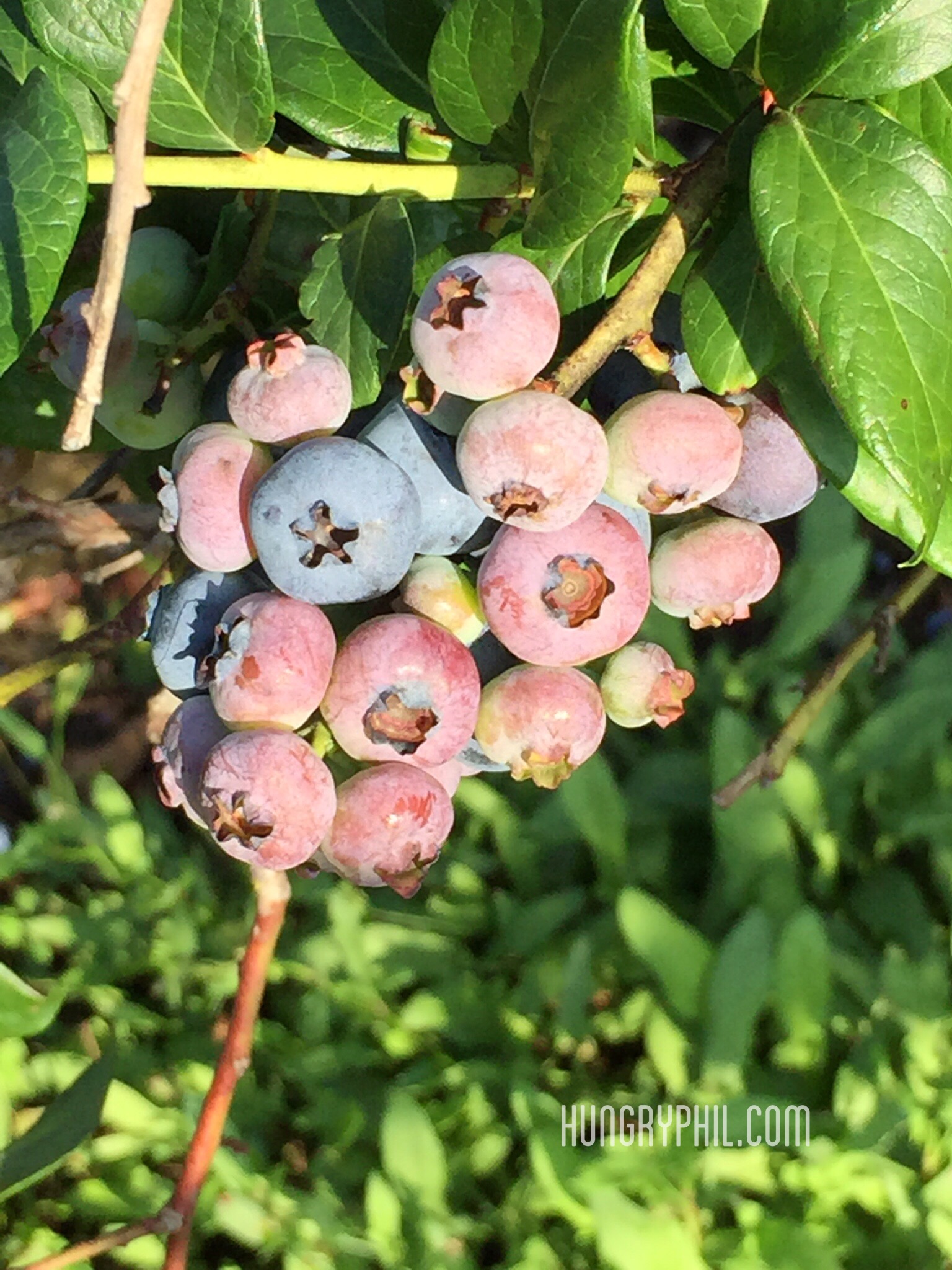
Our local Prelock Blueberry Farm includes us in the growth of the blueberries by keeping us posted through facebook and other media outlets.  After much anticipation, this year the farm officially opened it’s gate July 6th. http://www.prelockblueberryfarm.com/

This is quite a cause for celebration. Nothing comes close to the taste of fresh off the vine fruit warmed by the sun accompanied by girly giggles. This is also as close as I come to actually participating in a “farm to table” experience. The pie we baked yesterday evening was made of blueberries alive just two hours prior to being enjoyed in the basement against the blaring sounds of tornado sirens, thunder and lightning. In the context of American supermarkets and international produce, this seems almost magical. It is not without irony that the store bought pie crust just crumbled to pieces and gently forced me to make a homemade pie crust. I know, I know…..pie crust is very easy…what am I doing buying processed pie crust anyway….bad hungry philosopher. Point taken. Ava and Lucy picked the blueberries, Jim carefully inspected the 10 pounds of blueberries for stems and bugs, I made the pie and some blueberry sauce. It was a shared process of production and consumption. A rare event in our household. Even Lucy our picky eater announced that the pie was “pretty good.” Yes….it was a magical event indeed.

Now I’m going to ruin this heartwarming story with a bit of philosophical analysis. What made the destruction and consumption of these tiny blue globes, delicious to human, bears and birds alike, so enjoyable? What is the difference between a carton of blueberries picked at our local Payless and a bucket of blueberries picked at our local Prelock Blueberry farm? The answer is worth a long discussion that ranges from skill, atmosphere, process, beauty, labor, taste etc. All gardeners and farmers answer this easily…..the love, understanding and effort, makes it different of course. Somehow, in knowing more we enjoy it more ( as all efforts to “cultivate taste” argue). Investment and knowledge increases appreciation and by extension pleasure. Considered consumption. Slow design proponent Alistair Fuad-luke calls this “reflective consumption.” We killed the blueberries but also gave them a glorious funeral. Hmmmm….that’s a bit of a downer. The point maybe that being invested in the process makes us “care” more. Slow food and farm to table efforts try to capture this pleasure of caring to various degrees of success. Makes me think of how philosopher Hannah Arendt defended the pleasure of the mind or Aristotle defended the pleasure of the good. My explanation of last evening’s blueberry pie may require a dissertation.  So I’ll stop now and ask you……… Why do you go to pick-your-own farms, be it apples, strawberries or blueberries?

Blueberry pie recipe from TidyMom:

http://tidymom.net/2012/rustic-blueberry-pie/

Hungryphil’s Favorites from the Taste of Indy

IMG_0873 IMG_0872

Home

Last weekend we ate through the Taste of Indy for the first time.  A good variety and large number of food venders and trucks were just waiting to tickle our taste buds. It was a wonderful excuse to walk around, eat and drink on a summer day. The music and entertainment certainly added to the happy atmosphere. Would definitely do it again and drag others too. My favorites were:

Soulrito’s Chicken Korean Inspired Tacos were the most inventive.

http://www.indystar.com/story/entertainment/2015/04/29/seoulrito-food-truck/26541895/

Da Blue Lagoon’s Jamaican Food Truck’s Coconut Chicken Curry.

https://www.facebook.com/dabluelagoonfoodtruck

I also very much enjoyed Crab Cake Sandwiches and desserts from both Gigi’s Cupcakes and Sweeties. http://www.sweetiesgt.com/

If any of you went, would love to hear about your experience! Also, let me know if you know of anyone writing about the proliferation of food trucks, food festivals and tourism. What do you think drives food centric entertainment today? Didn’t we always like to eat?

Experiment: Raw Spice Bar

IMG_1504

Hungryphil here….. reporting on the first installment of our new Raw Spice Bar subscription!

This spice of the month club packages small batches of spices for an exotic meal to share. The associated website offers alternative (gluten free, vegetarian etc.) recipes and most importantly enticing  images of the dishes.  A monthly gastronomic tour without collecting a drawer full of half used spice packets! I’ve been waiting for this. So how did it go….you might ask.

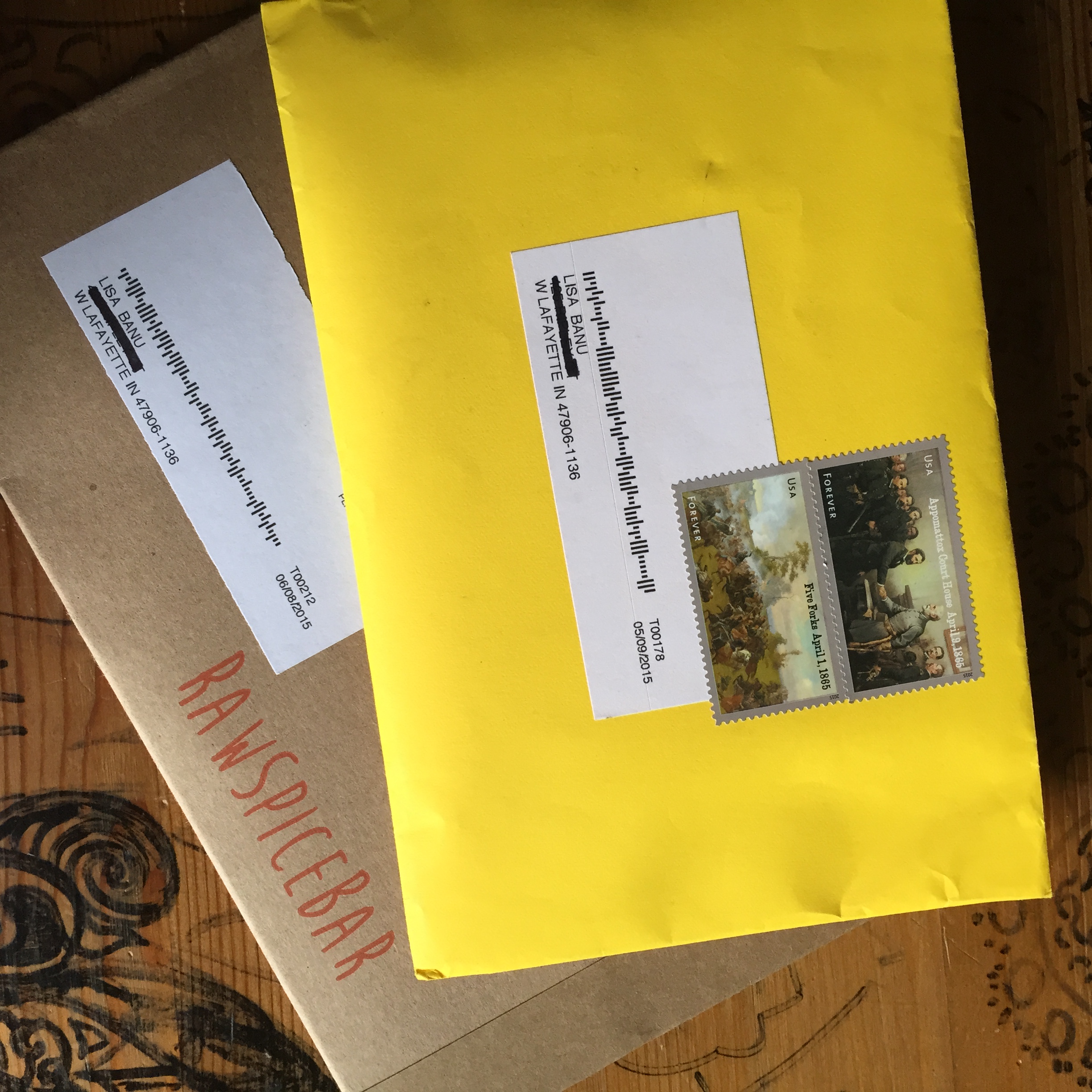
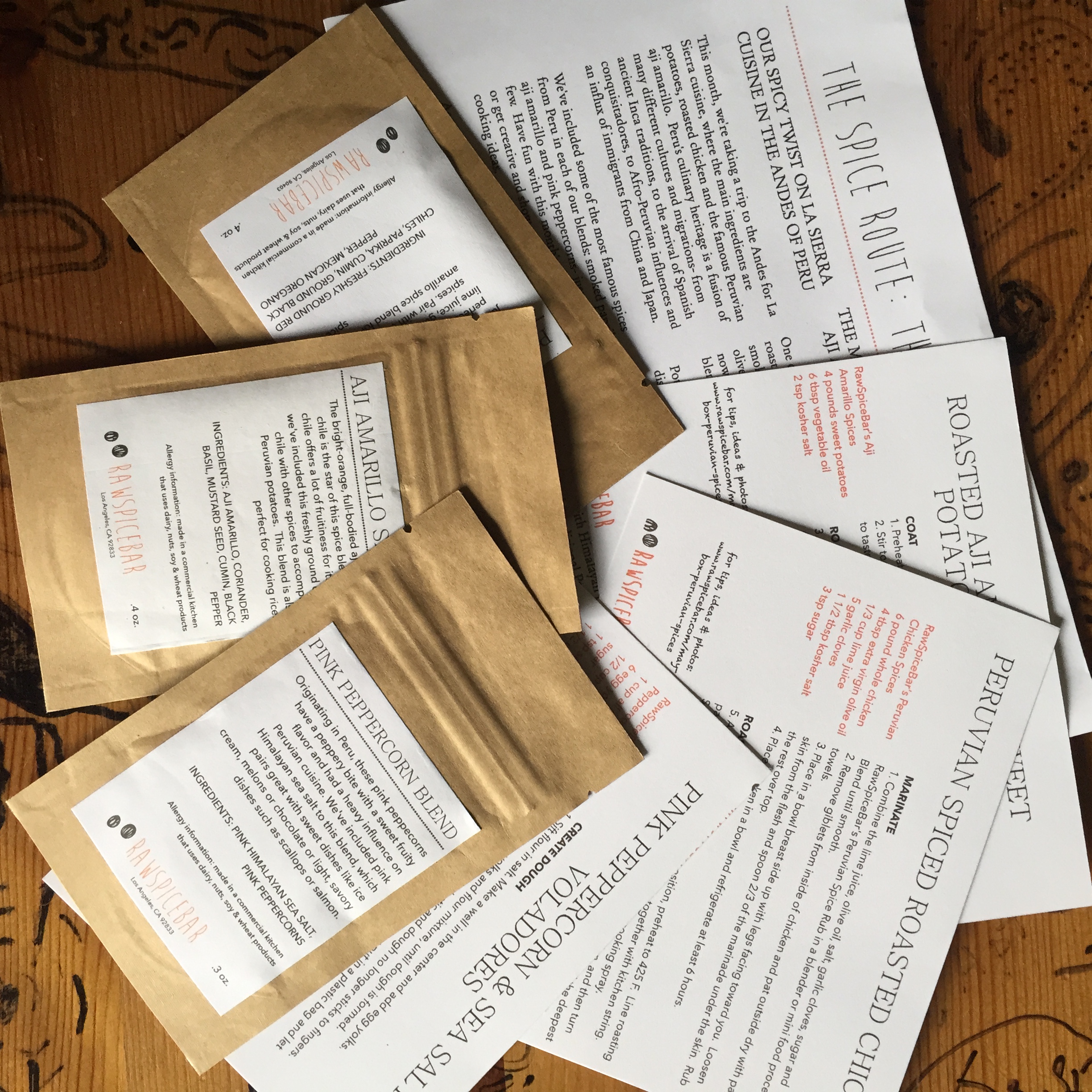
The May and June packages arrived in these brown craft paper envelopes. I loved the bright yellow celebratory feel of the May package. The stamps reminded me of collecting stamps as a kid and the promise of far away places. In contrast, the June brown craft paper envelope promises a fun craft project. Inside, like seeds in a pod the spice packets spilled out along with instruction cards.

IMG_1505

The May Peruvian Menu included:

Smoked Paprika & Ancho Peruvian Rotisserie Chicken

Aji Amarillo Sweet Potato Wedges

Pink Peppercorn Voladores

I made one conscious substitution, 4 chicken thighs and legs quarters instead of the whole chicken for the roast.

and

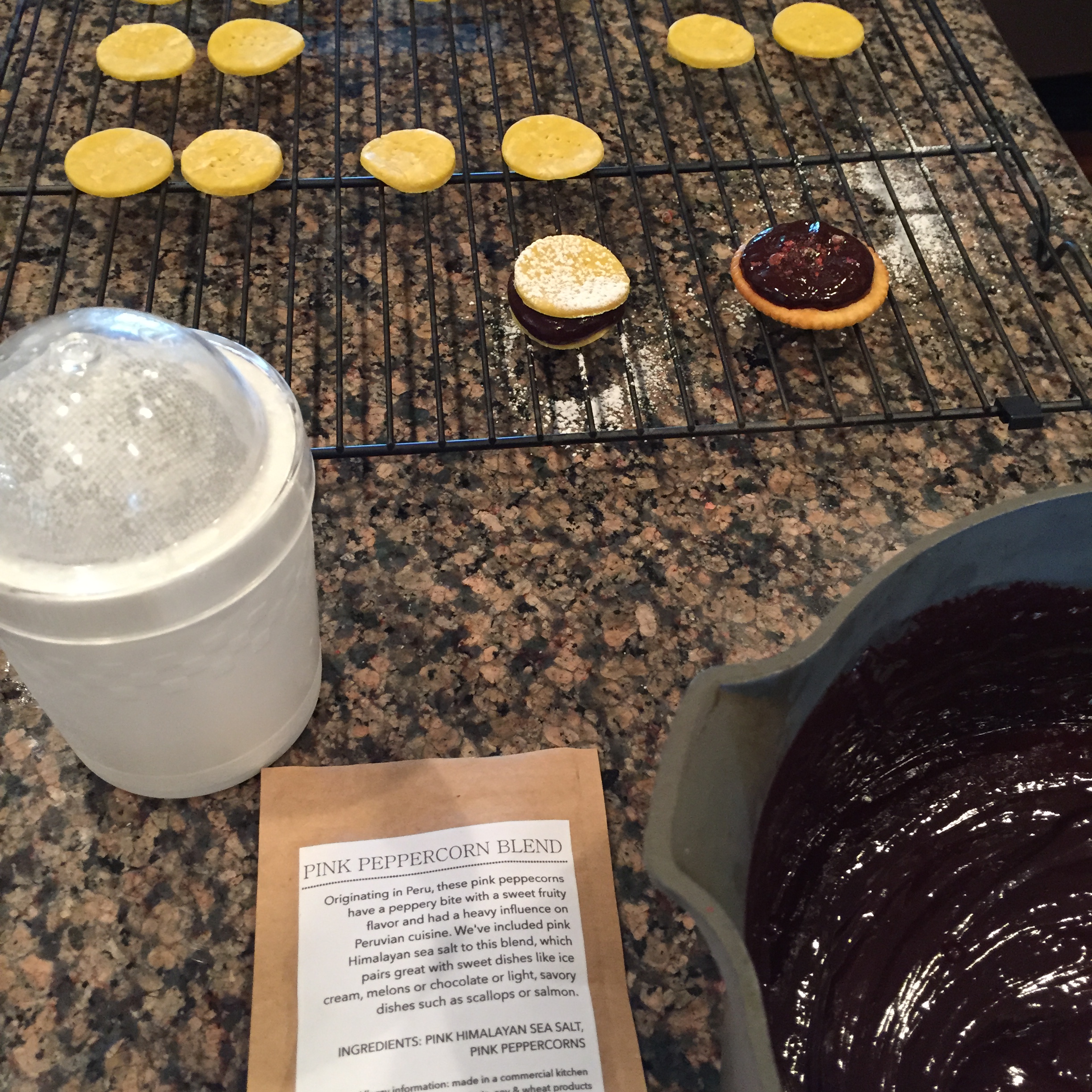
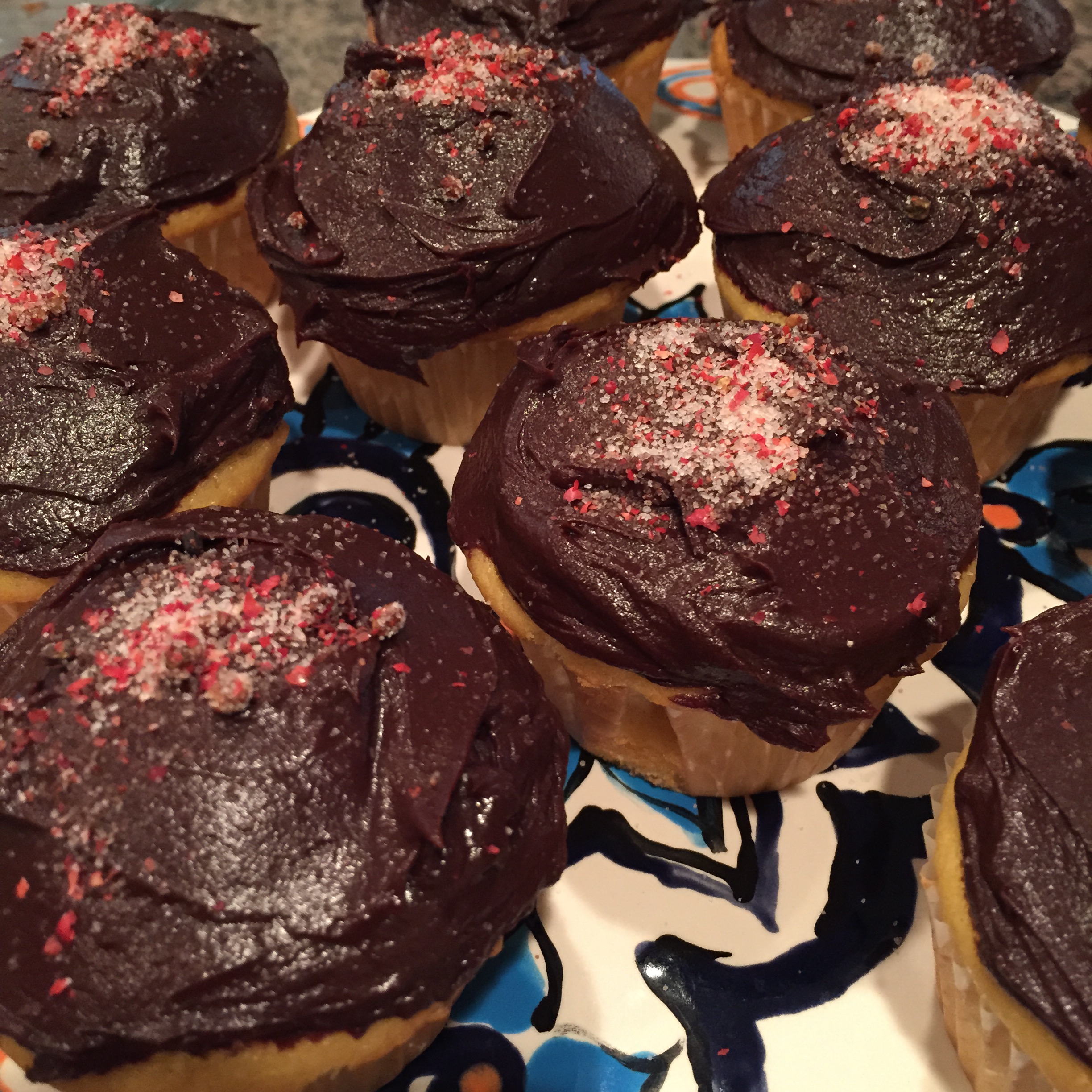
one unintended recovery substitution. I suspect that I didn’t make the cookies thin enough or maybe didn’t bake them long enough. The wafers tasted bland and doughy. A substitution had to be made. The chocolate sauce was superb with the peppercorn salt. The Pink Peppercorn Voladores became Peruvian inspired Chocolate Pink Peppercorn cupcakes. No complaints. Delicious.

IMG_1510

IMG_1511

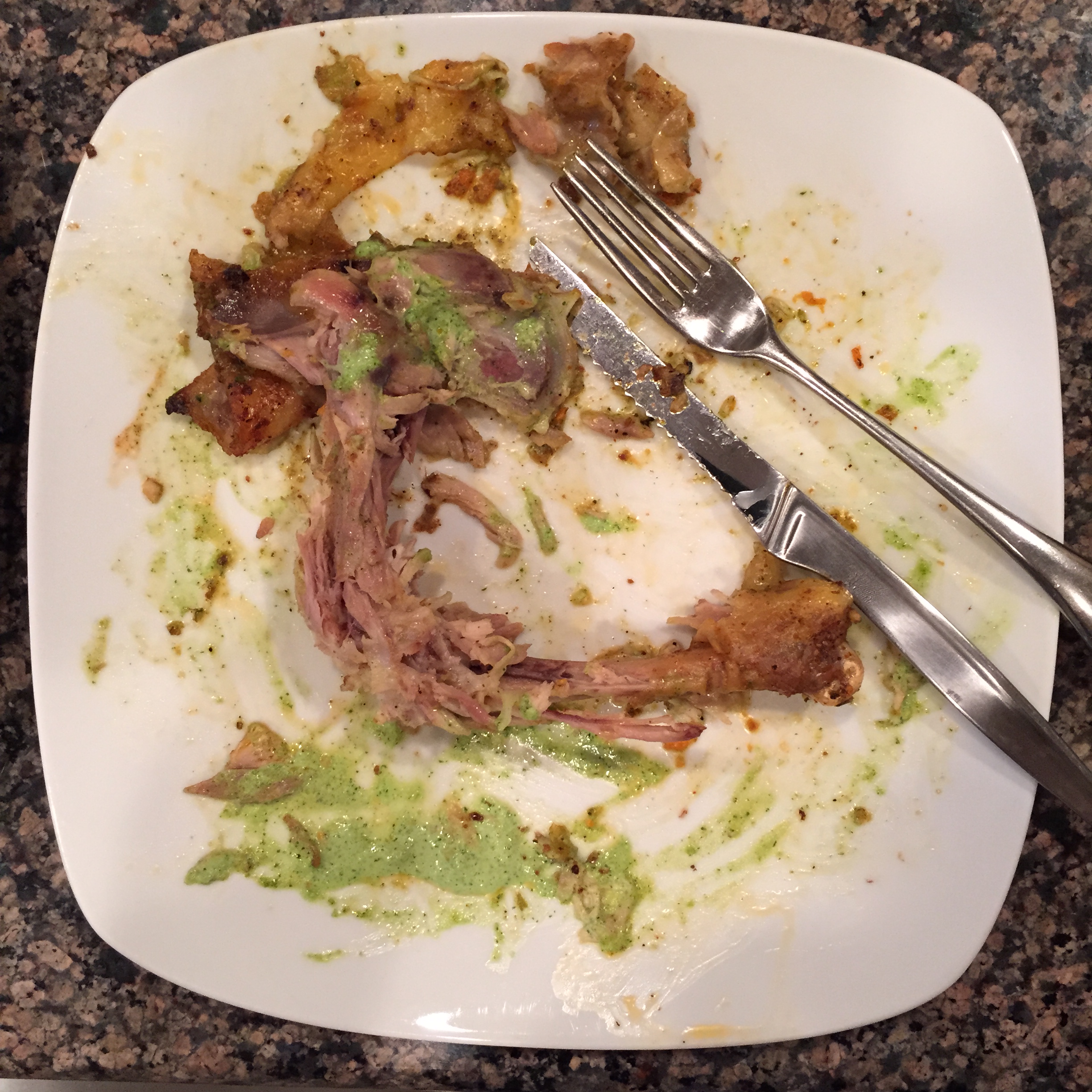
The roasted chicken was flavorful and moist while the sweet potatoes were soft and caramelized. The spices created a deep robust flavor and crust on both the chicken and potatoes. A surprisingly easy meal to prepare (just baked in the oven) for such smoky, developed and exotic flavors. The peppers ….Ancho, aji and peppercorns gave the meal its distinct Peruvian flair. It really did feel like a fun trip and a new cultural discovery. I’ve never had Peruvian food before so I didn’t have a reference to gauge the meal against. It didn’t matter. The meal was delicious. So good….that we were done with the meal before I realized I forgot to take pictures. Sorry dear readers. Make the meal….you’ll see why and certainly forgive me. I’m looking forward to our culinary trip to Jamaica soon!

IMG_1512

https://rawspicebar.com/

p.s. I also made a green sauce to accompany the chicken. Fantastic! Here is a version of the recipe I used:

http://www.food.com/recipe/aji-verde-peruvian-green-chili-sauce-363714

Thank you Rawspicebar. Thank you Jim for the gift. Thank you Jennifer and Dave for being our willing gastronomic travelers. Thank you postal service. Thank you Peru for your delicious cuisine and peppers. Thank you Americas for the gift of potatoes.

My Right Hand Cuisine and the Fork

IMG_1748 IMG_1749

I have a theory. Maybe even a problem. Eating curries and rice with a fork is immensely unsatisfying. Here’s why:

  1. Curry is meant to be eaten with rice (or bread), never alone! Rice is the main dish….everything else garnishes, which is why we ask “did you eat rice?”….not did you eat lunch or dinner. We should serve and eat rice like pasta dressed in sauce, lightly coated with flavor. The rice, whatever it is, jasmine, basmati or brown, is the final component that softens, absorbs and most importantly FLAVORS curries.  Hey…is this why Biriyani was invented? Hence, first problem is substantive, we should be eating rice flavored with curries, not curries with a side of rice in restaurants.
  2. The mixing of curry to rice with a fork is always incomplete. It is difficult to break down the rice enough for the curry to be absorbed. Eating with my hand I can press the rice together with the curry just enough to adhere on its journey to my mouth. That moment of adherence, when the rice forms a compressed bite, is the perfect amount of curry to rice ratio. Such a bite, in Bengali, is called a lokma. I would form and arrange these little bites on a plate for my girls when the were little. As you know, there are rules: right hand, finger tips, no food should touch the palm. Second problem is formal, we are missing the optimal flavor when eating with a fork.

We also miss the textural component, the feel of our food, the dexterity of picking out bones and whole spices. BUT, I have to admit, eating with my hand can be messy even when allowed and not frowned upon. And worse, despite all the washing in the world some pungent curries can refuse to leave.  I want to eat my curry not smell like it.

This is quite a problem. How can I get the taste of a well hand-mixed bite of Deshi food with a fork? Can I design a fork/spoon that can form little rice bites? Disappointment, not necessity must be the mother of invention.

Take for example my dinner tonight: Chicken and potato curry, basmati rice and roasted vegetables. I mixed and mashed it as best I could with a fork and made bites with a cookie scoop. The bites did not form as well as hand mixing would allow. What to do? Oh….the problems I have….sheesh.

But, it does give me an idea of building a 7 course meal with these premixed rice bites….Rice with Bittermelon (bitter), Rice with Dal (salty), Rice with Vegetables, Rice with fish (Garlic), Rice with Chicken (Ginger), Rice with Beef (spicy), Rice pudding (sweet).

Lokma: A bittersweet journey in 7 bites. This will have to be my next experiment.

Looking for Differences by Tom Hennen

I am struck by the otherness of things rather than their same-
ness. The way a tiny pile of snow perches in the crook of a
branch in the tall pine, away by itself, high enough not to be
noticed by people, out of reach of stray dogs. It leans against
the scaly pine bark, busy at some existence that does not
need me.

It is the differences of objects that I love, that lift me toward
the rest of the universe, that amaze me. That each thing on
earth has its own soul, its own life, that each tree, each clod is
filled with the mud of its own star. I watch where I step and see
that the fallen leaf, old broken grass, an icy stone are placed in
exactly the right spot on the earth, carefully, royalty in their
own country.

“Looking for the Differences” by Tom Hennen from Darkness Sticks to Everything. © Copper Canyon Press, 2013. Reprinted with permission.

From the Writers Almanac on April 17th, 2015, http://writersalmanac.org/

This poem, a wonderful example of object oriented thinking, does not directly address food. But it does remind me of the respected “royalty” of each ingredient.

Cooking with Molten Lava

http://www.npr.org/blogs/thesalt/2014/08/04/337171867/chef-grills-steak-volcano-style-with-molten-lava

Mapping Roasted Chicken, Big Mac and Rice Relations

51Muy3NeWxL._SY344_BO1,204,203,200_-1

Philosopher Levi Bryant’s Onto-Cartography: An Ontology of Machines and Media presents us with multiple examples of how things (machines) exercise power over us and the world. Here are three food examples from the book:

We go to the grocer and buy a roasted chicken, believing that there is nothing social about this relation insofar as it is simply a relation between us and the chicken. Yet the commodity embodies an entire set of social relations that are the medium of the chicken, insofar as it was produced by people under certain conditions, within a particular legal system, within a particular network of distribution, and so on. As Deleuze and Guattari remark, “….we cannot tell from the mere taste of wheat who grew it; the product gives us no hint as to the system and the relations of production. The “mediasphere” of the chicken and wheat is veiled in the thing withdrawn from view.

What would a map of all the hidden relations in my grocery cart look like? I imagine quite a complex web. Here’s another familiar  and branded example,

When for example, I eat a Big Mac, I think I am involved in a purely cultural affair that has nothing to do with nature. In analyzing the Big Mac, the cultural theorist might discuss how what I’m really eating is “signifiers,” examining how this sandwich is a marker of national identity, class, symbolic position, and so on. What is not examined is how the Big Mac is related to the clearing of Amazonian rain forests for bovine grazing, and all of the material outputs produced in transporting the meat, processing it cooking it and consuming it. The Big Mac is thought of as something unrelated to these issues of relevance to climate change and ecology.

Like my grocery cart, what if I were to map my dinner plate. Where my ingredients came from, supermarket it came from, how much energy to took to cook, how long of my time and much of my space, how the ingredients affect my health, how much I waste, the role of my garbage man in carrying the waste away, the plumbing system that allowed me to wash my ingredients, the factories that produced the knives, pots and pans, how I found my recipes online, the network of foodies, cooks, eaters online, the taste, ……what a complex map my dinner is unfolding into. The next example, demonstrates how rice is an example of a bright object that has the directive power to organize and influence us and our world.

Rice is yet another example of a bright object. The rate at which it develops, how it is planted, how it is harvested, the number of times it can be harvested a year, all contribute strongly to the organization of people’s lives that rely on rice. These properties of rice influence the sort of labor people engage in, the tools that they fabricate, their bodily postures, how their bodies develop as a function of rice heavy diets, the sorts of social relations that develop between people, and feast and famine as a result of weather vents that affect harvests or diseases that befall plants. Once the technology or practices are developed allowing  rice to be planted in water, new problems emerge. Harvest sizes are increased through these new planting methods, but the water in which the rice is planted also becomes a nest for diseases. Now these diseases must be dealt with. Rice organizes the space-time of these people’s lives, especially before the advent of robust international trade and things like supermarkets. It organizes the rhythm of days, when things are done, how long they’re done, cooking methods, and variety of other things besides.

The book is a fantastic example of an object oriented approach to thinking about our world. I look forward to re-reading, highlighting, noting, pondering over these and other moments. Hope you do too.