Election Cake – #makeamericacakeagain

IMG_3866.JPG

Baking as a stress relief. A dry cake to be washed down with drinks, sustain voters and celebrate democracy.

This story about the cake is from the Washington Post by Daron Taylor:

After making it through one of the most bitter and divisive campaign seasons in generations, maybe we could all use a slice of delicious cake. That’s exactly how America used to celebrate democracy in action when our country began: With ‘election cakes.’ Enormous in size, these sweet, spiced and fruit-filled cakes were designed to sustain voters at the polls.

The oldest known recipe for election cake is found in one of the first cookbooks ever published in America: the second edition of American Cookery by Amelia Simmons, published in 1796. The election of 1796 was certainly one worth celebrating. It was the election held after George Washington refused a third term as president, and it was a test of the peaceful transfer of power in our new democracy.

Women were not allowed to vote when the first recipes for election cakes were written, and baking cakes was encouraged as a way to participate in the electoral process if only from the sidelines. By the time the 19th amendment was ratified in 1920, election cakes had fallen out of favor.

More than 90 years later, a new generation of bakers is reviving these old recipes for the 2016 election using the hashtag #makeamericacakeagain. Baking, and women’s historical role in domestic and public life, holds a special significance in this year’s presidential campaign, the first ever to include a female presidential nominee. Election cakes, and for that matter the act of baking itself, is non-partisan.

Want to bake an election cake? Try out The Washington Post’s recipe for Election Day Cake.


This is the recipe I used to make the cake. It is more like a dry fruity bread rather than a moist cake.

Wishing all of you in America Happy Election Day,

Hungryphil


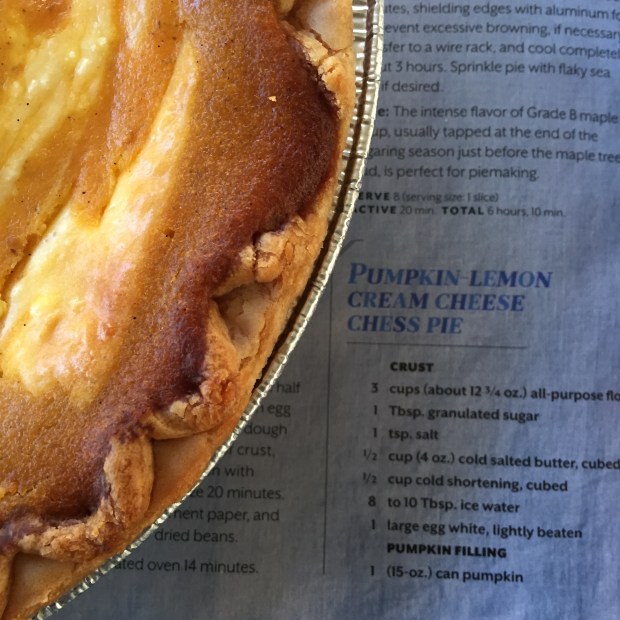
Weekend Eats Experiment: Pumpkin- Lemon Cream Cheese Chess Pie

IMG_3863.JPG

This month’s Southern Living Magazine includes a recipe for pumpkin pie, in addition to other classics like sweet potato and pecan. I used store bought pie crust to save time. The filling is enough for two deep dish pie crusts. For me, the combination of summery lemon cream cheese and fall pumpkin spice make the dessert one of the best pumpkin pies I’ve ever had. Sweet-tart, smooth-creamy and airy…like a two in one dessert that works very well. If you have ever wondered what happens when you put together a cheese cake and a pumpkin pie, try this. Its worth the small effort.

Wishing you happy Monday,

Hungryphil


Focusing (and Fries) Hungryphil

Dear Readers,

I need your help and indulgence.

For the next seven months, I’ll be cooking up a book project, Bittermelons and Brownies: Chewing Object-Oriented Ontology, about feeding humans from the perspective of a philosopher-mom.

I need to sit with my laptop and NOT do what is easiest for me. Blog. Instead, as all you writers out there understand I need to stare at my screen, recipes, notes, and maps… every day. So,  I give myself permission to concentrate on a sustained virtual dialogue with my daughters and other growing human beings about how to feed ourselves and others in this crazy world of things.

I’ll still blog when I need a quick shot of grounding satisfaction, like eating salty, oily, hot and steamy, thick-cut fries dipped in creamy mayonnaise or tart ketchup. Hopefully, very irregularly.

Here’s a recipe for thick cut french fries from Serious Eats.

Deeply grateful for your willingness to read my ramblings and share in my life,

Hungryphil


Chill Chili Event, Lafayette, Indiana

Local Chili Cook Off – At the Bindery (and Duncan Hall)

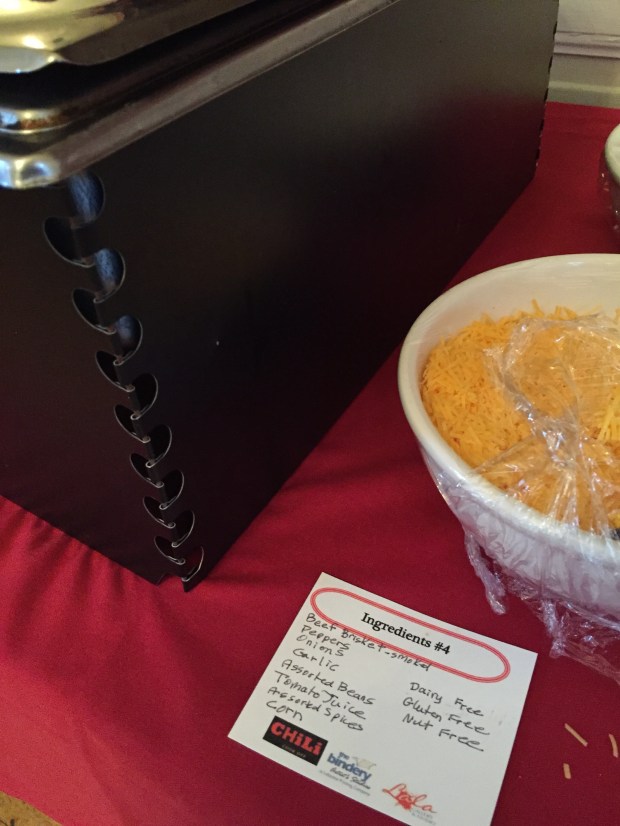
The chili cook-off, hosted by La La Gallery (thank you, Angela!) was a chill event featuring over a dozen pots of chili to taste and raised money for CASA kids funds of Tippecanoe County. Armed with a plastic spoon, we went around the two locations tasting chili in small cups and noting our favorites. There was quite a variety from Buffalo Chicken Chili, Vegan Chili, Brisket Chili, Turkey Chili etc. My beloved and I had fun strolling through the art studios slurping chili on a cool October Friday evening. No mad rush, no waiting in lines, no loud crowds. Very welcoming, warm and delicious. If you missed it look for it next year and find your favorite.

IMG_3806.jpgIMG_3807.jpg


Feeding the Reflections Group

This month I had the privilege of helping transform donated canned and frozen goods at a local shelter into shareable meals for the group. I’ve learned so much more than I have given.  Food, in the context of supporting the empowerment of women, can become a totem of ability, self-sufficiency, voice, and pleasure.  Maybe a bowl of fruit cobbler and ice cream can help someone feel cared for, included in a group and worthy of pleasure.

One of my favorite things as a mom has been making after-school snacks for my daughters in an attempt to welcome them home with yummy bites, to allow them to relax and to encourage them to share the day’s events. Nourishment in the fullest sense of physical and emotional support. It is the same reason we take food to an ailing or grieving friend. Cooking for the women’s group, working hard to find ease, is no different. Maybe there a group you would like to nourish and fuel.

Here is the intent, menu, and skills offered last week:

1. Nourishing and Building a family of supportive Women

2. Exploring cooking skills and techniques to nourish ourselves

3. Utilize available food resources And limit Food waste

Menu

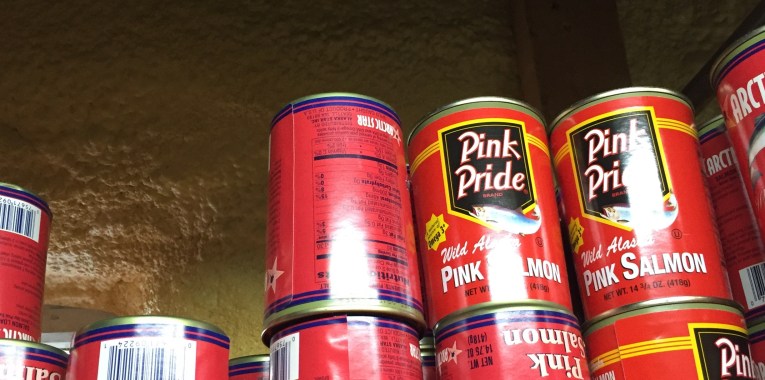
Southern Fried Salmon Cake Sliders [using canned salmon at the shelter pantry]

Coleslaw [this was my contribution]

Cherry Dump Cake [ one bag of cherries from the shelter freezer]

Skills and Techniques

Cake Patties:

Any canned protein or leftover meat + eggs + Starch (flour, breadcrumbs, crackers, cornmeal, mashed potatoes) + shallow fry = yumminess

Add sautéed or raw chopped vegetables for added moisture and flavor. Add favorite seasonings, like hot sauce, Old Bay or Italian, chicken etc. Using shelf stable items a salmon, tuna, meat patties can be a good last minute meal.

Dump Cake:

Mix any cake mix with a stick of melted butter sprinkle over any fruit pie filling, cherry, apple, peaches and bake at 375 for about 30 minutes until the crumbles are cooked and browned….again these items can live in your kitchen until sweet cravings hit.

Wishing all of you a nourishing weekend,

Hungryphil

Wobblyogi Wednesday – Patanjali 101, Week 3 Notes – Death

My favorite moment this week involved, Judith Lasater’s discussion of corpse pose, Savasana. Death. “By admitting death, Savasana teaches us how to live,” paraphrasing Lasater. She spoke about fully investing in our breath, intentions and movement as we practice asana so that we can let go during Savasana without restlessness.  Most poignantly for me, she connected the experience of corpse pose with our last moments. Will I have invested and lived fully enough to be at ease as I die? Will I be able to let go of my life without regret when the time comes?

The discussion reminded me of raising my girls. I had the privilege of being a full-time mom, even if distracted,  during their formative years. I find myself able to let go because I am comfortable with all the time we spent together as intentful and loving. I trust in our relationship. Maybe the practice of yoga is like nurturing and mothering my life , to build trust and to able to let go with ease when the time comes. Mortality becomes a reminder to live fully. Savasana becomes a reminder to move intently.

The second moment I enjoyed this week involved, Lizzie’s (and her mom’s) comparison between philosophers and yogis. “A philosopher watches the ocean, a yogi jumps into it.” Yoga demands engagement with life, at least in Hatha yoga. As a philosopher, I really like this comparison. I imagine, after watching for years, I got tired and found yoga to be my path towards wisdom beyond knowledge.

The third moment I want to mention is the discussion about whether “witness consciousness” makes us numb and indifferent. Lasater answered with a Kantian aesthetic condition of “disinterested interest” or in her words, “disinterested and fascinated.” For Kant, one can only judge beauty if it there is no ‘self’ interest in the judgment. Maybe,  yogic witness consciousness allows us to be aware without being subject to the intensity of emotional and physical strain.  It permits us to drop ‘self’ or ego-centric interest. Things are not happening TO me. They are just happening. Witness consciousness us to stay in the tension without trying to escape or wallow. Sometimes I call this my anthropologist research mode.

There are so many moments this week that made me think and wonder. Even the idea that vinyasa involves noticing the moments of linking, transition and change as accepting that life is ever-changing. This morning as I was teaching, I almost forgot a part of a sequence on the second side that involved moving from a high lunge, twisted high lunge, back to high lunge then stepping into a pyramid. As I started and noticed my oversight, I laughed and took a step back to recover. The 2 seconds and one step to recover my place seemed like a huge gap, a break in the flow. Despite my initial self-judgement and backward step, staying with the rhymic flow gave me an unanticipated ease the rest of the practice. As long as I keep moving forward (sometimes back) all is well.

May we all keep moving with ease (until it is time for the ultimate savasana).

Thank you, my fellow Patanjali readers.

Wobblyogi

Wobblyogi Wednesday – Self-Study (svadhyaya)

The kriya yoga component of svadhayaya or self-study naturally resonates with the philosophical imperative to pursue an examined life. In the triad of tapas-svadhayaisvarapranidhana-kriya-yoga (Pada 2, 1st sutra), self-study connects, the seemingly opposing directions of actively approaching the difficult and again actively surrendering. Self-reflection, in the yogic context,  is the necessary intermediate key between engagement and repose, desire and release, friction and ease, heat and light, existential conflict and transcendental subsumption. Self-study, reflection, examination, all actions and events that return us to ourselves are moments when we decide to accept or endure.

In the Patanjali 101 course, Judith Lasater spoke of doing one thing a day that is difficult for us as an exercise of tapas or self-castigation, self-discipline, burning-desire (a jumping off the cliff moment). She also wisely warns that not everything difficult is helpful. The value of tapas “roughness” she explains is that it invites awareness (like an aching tooth and an inquisitive tongue). We decide to make our response to an experience helpful or hurtful. I like to think that awareness leads us back to ourselves to notice and decide whether that experienced difficulty is a practice of self-discipline (tapas) or self-surrender (isvara pranidhana). We’ve all experienced these moments. Many of us appeal to faith and submit to divine will, having done everything we could. Many of us push forward as an exercise of self-discipline and perseverance. In any given situation when and how we decide the tone of our energy is uniquely our own, the balance of discipline and surrender is uniquely our own. Learning when to engage and when to let go, finding our personal edge is a constant inner-dialogue, on and off the mat….. and uniquely our own.

Judith Lasater asks us to consider each pose as a question to ourselves. How does it feel to be in a forward fold, can I release even further? Instead of telling my body where to go and what to do, can I ask my body and notice the response? Can I be disciplined enough to practice a pose difficult for me and surrender to the attempt?  How does the dance between self-discipline and self-surrender work for me?

An unexamined life may not be worth living, but yogic practice demands more…. the ability to let go.  So difficult.  Letting go requires discipline. Self-study holds us in that uncomfortable and unresolved human tension.

Wonderful second week of the course! Also very much enjoyed the conversation about cultivating contentment, another exercise of discipline (of not engaging in the negative) and surrender (letting go to what we cannot change).

I’m inspired by the importance of personal practice precisely to allow myself time and space for my own questions (poses) and aware responses. As Lizzie said, in order to find my “personalized dosage” of awareness, of svadyaya, self-study.

Honored to be “self-studying” with all of you,

the wobblyogi


Food Poem- Autumn Song by Daniel Mark Epstein

Little flower, you live in constant danger:
Likely to be crushed under foot or torn by wind,
Sun-scorched or gobbled by a goat.

These October days streaked with regrets and tears
Are like you, brindled flower, as they bloom
And fade, harried by heat as much as by the cold.

Our ship sets out to sea, not with ivory or gold
In the hold, but with fragrant apples for cargo. Just so
My days are not heavy but delicate, fleeting and vain,

Leaving behind the sweet, faint scent of renown
That quickly will vanish like the taste of fruit
Passing from the tongues and hearts of everyone.


from Writer’s Almanac http://writersalmanac.org/page/6/

Eating Object-Oriented Thinking

Last week at the Purdue Aesthetics Conference I spoke of four object-oriented thinkers who employ food references to demonstrate their defense of object wonder, vitality, complexity and gravity.

  1. Ian Bogost’s pound cake shows us complex “alien” encounters that yield a pound cake. He compares Alton Brown and Duff Goldman’s approach to cake baking.
  2. Jane Bennett’s berries and beef show us by comparison Nietzsche and Thoreau’s food preference as indicative of their philosophies.
  3. Timothy Morton borrows from the Shredded Wheat commercial slogan of “nothing added nothing taken away” to celebrate things as they openly announce their duplicity.
  4. Levi Bryant’s brazil nuts exemplify bright objects capable of exerting existential gravity on things around them.

My study of OOO was meant to help me develop a food-oriented strategy towards writing a cookbook. It is not about simply writing recipes for my daughters to follow but rather offer guidelines that might help them question all recipes (normative prescriptions) and find their own relationship with each dish (embodied and existential situation amidst other organic and inorganic things) in order to avoid living a correlationist life searching for correspondence to an abstract external “truth.”( I have to find a subtle way to insert the philosophy between the lines. Is there one?)

OOO offers strategies and orientations to think things, to speculate and imagine object lives and demands. I eat it…… is only one-half the story in any inter-object relationship. How it eats me…is the other half of the story…the more, imaginative, interesting, consuming part of any object story. And so, the task of Bittermelon and Brownies: Proclamations of a Philosopher-Mom is to show how we are ourselves ingredients in each recipe.

Now that I’ve announced the project I really have to do it! Yikes!

I’ve just started to work on the cookbook. Wish me patient consistent writing! I’m open to your advice and suggestions dear bloggers, hungry philosophers, food writers, chefs, and cookbook authors.

Here is a satirical example of a philosopher writing a cookbook that I find instructive and funny!

October 10

I find myself trying ever more radical interpretations of traditional dishes, in an effort to somehow express the void I feel so acutely. Today I tried this recipe:

Tuna Casserole

Ingredients: 1 large casserole dish

Place the casserole dish in a cold oven. Place a chair facing the oven and sit in it forever. Think about how hungry you are. When night falls, do not turn on the light.

While a void is expressed in this recipe, I am struck by its inapplicability to the bourgeois lifestyle. How can the eater recognize that the food denied him is a tuna casserole and not some other dish? I am becoming more and more frustrated.

From, The Jean-Paul Sartre Cookbook by Marty Smith, from the Free Agent, 1987

Wobblyogi Wednesday – ‘Nirodhah’ Finding Resolution

“In yoga, philosophy, and practice are married,” says, Judith Hanson Lasater in the first Q&A section of her (and her daughter’s) course, Patanjali 101.

Further on, she explains that to understand Patanjali intuitively we have to feel moments of self-doubt, to feel how our memory pulls us away from the mat, to feel how our to-do races us forward, to pause when we feel a pose, to let go when we have difficulty in a pose, it is not only doing the pose but also “thinking” the pose. How do I feel, respond, and think as I’m moving on the mat and then maybe begin to think about how we move in the world.

During my graduate studies in philosophy, I was never asked how I “feel” about a particular philosophy. The prejudice against feelings in philosophy stems from a fear that feelings  are subjective, volatile and obstructs clear, rational thinking and most importantly dialogue. We cannot connect and converse with others through emotions. To someone who says ” I just love Plato,” I cannot respond or negate her/his emotions. I can’t say, “No you don’t.” I can only respond and argue with reasons. The philosophical primacy centers on sustaining dialogue.

The nature of dialogue in yoga is different. Instead of philosophical intersubjective, the yogic dialogue  happens within the self as an appeal to the inner divine. What some yoga practitioners share are the Patanjali’s practices, most share the asanas. As a philosopher, yoga helps me feel what I understand of the world, but most importantly how I feel about my own responses. For me, the co-action of breath, movement and thought is what attracts me most to the material spirituality of yoga.

I look forward to learning more during the next 5 weeks.

The first week of the course centered on the first three sutras of the Patanjali and the mountain pose.

Yogah Chitta Vritti Nirodhah.

In choosing a Patanjali translation, Ms. Lasater recommends noting the translation of the word, nirodahah. She likes the word “resolved”, and explains, “I no longer use my mind to get stirred up. I can stand back and feel resolved, feel free. From that space the freedom to choose my actions.”

Here are seven other translations of the sutra:

  1. Yoga is the stilling of the changing states of mind. – Edwin F. Bryant
  2. Yoga is the restraining of the mindstuff. – Swami Vivkeananda
  3. Yoga is experienced in that mind which has ceased it identify itself with its vacillating waves of perception. – Mukunda Stiles
  4. Yoga is to still the patterning of consciousness. – Chip Hartranft
  5. Yoga is the uniting of consciousness in the heart. – Nischala Joy Devi
  6. Union, spiritual consciousness, is gained through the control of the versatile psychic nature. – Kindle edition of Patanjali
  7. The restraint of the modifications of the mindstuff is Yoga- Sri Swami Satchidananda.

Here is a pdf that compares four translations of the sutras side by side in a chart for my fellow yoga-nerds.

May we all find our own translation through practice,

Wobblyogi