Wobblyogi Wednesday – YTT Journal Week 5


yoga-timeline-all1.pngI find myself surprised to be at week 6 reporting on week 5. Where did the time go? It feels long in terms of how much I’ve learned and short in terms of knowing that there is so much more to learn. This week was mostly devoted to discussing the history, the branches and styles of yoga. Mapping the stylistically wide and historically deep world of yoga has left me happily lost.  What combinations would my yoga practice include: Hatha, Vinyasa, Yin, Jnana, Karma, Kundalini? This was as much about my own history and what brought me to yoga as it was about discussing the hazy, dense lineage of yoga practice that feeds into yoga teacher training in small-town Indiana.

Much like the practice of breathing and asanas that honor my body, it seems I have to feel my way through yoga history and principles in a way that honors my mind and my own personal background. Our discussions didn’t shy away from concerns about religious incompatibility, cultural discomfort with chanting and Sanskrit terminology, or distractions of disengaged students. “What is yoga to me?” is the question that resonated like a meditative chime throughout the week. For me, for now,  yoga is an attentive practice uniting mind, body and breath.

For us in the West, more important than the 5000 year old birth of yoga in India is the 1893 arrival of yoga to Chicago with the words of Swami Vivekananda. As Jacqueline explained, each of Khrishnamacharya’s students approached yoga differently. B.K. S Iyengar, himself sickly as a child, saw yoga as a therapeutic strategy involving attention to alignment and the use of various props. T.K.V Desikachar, learning from his father, saw yoga as an individual practice with attention to breath as shared, Pattabi Jois, saw yoga as a way to direct restless and active children-youth and thus developed more physically demanding sequences.  Indra Devi, the first woman and Westerner to be trained opened the first yoga studio in the U.S. and introduced yoga in China and Argentina.

Yoga in the modern world risks commercial dilution of principles while at the same time is recognized as a therapeutic and preventative path towards holistic health. Understanding and assessing contemporary yoga practices around us today, require awareness of our own preferences and needs. What you look for in a yoga teacher or studio will be guided by whether you want a rigorous fitness based practice or a restorative preparation for meditation…and all combinations in-between. One day your body may crave energy and another day calmness. Finding our way to what we need at that particular moment is the benefit of exploring the historical and pedagogical map of yoga. I have to restrain my philosophical penchant for definitions and just enjoy the path of attentive living.

Walk on and keep breathing wherever the day may take you. This is what I learned this week at yoga teacher training.

May we all find the corners of the yoga world that nourish us.

Bowing to the happy places inside you,

The Wobblyogi

Image from: http://gisyogafall2015.blogspot.com/2015/09/complete-notes-yoga-history-singleton.html

Suffragist cookbook

Happy International Women’s Day!

Story from NPR’s The Salt

http://www.npr.org/sections/thesalt/2015/11/05/454246666/how-suffragists-used-cookbooks-as-a-recipe-for-subversion?

Eating from the Same Pot

9781594204210.jpg

Can we call it eating together if we are not sharing from the same pot?

It involves a labor of love to honor the individual tastes of my blended family. Given the vast difference in culinary traditions, we could either alternate between Bengali and American food or create a mix. The few meals we can all eat from the same pot are almost exclusively Western, like Swedish meatballs, chicken stew, spaghetti and meatballs, chili and beef stew. Jim joins us Wednesday night when Atiya and I have our vegetable and fish focused Bengali food. Tuesday and Saturdays, take out or eat out nights, we eat separate individual dishes. My hope is to eat once a week from the same pot.

Food writer, Michael Pollan, writes about his experiment with “Microwave night” as resulting in one of the most disjointed family dinners he had since his son was a toddler. The 37 minutes it took to heat up the three separate dinners was not much of a time saver or worth the “airplane” food quality. The concludes his story by summarizing,

“The fact that each of us was eating something different completely altered the experience of (speaking loosely) eating together. Beginning in the supermarket, the food industry had cleverly segmented us, by marketing a different kind of food to each demographic in the household (if I may so refer to my family), the better to sell us more of it. Individualism is always good for sales, sharing so much less so. But the segmentation continued through the serial microwaving and the unsynchronized eating. At the table, we were each preoccupied with our own entree, making sure it was hot and trying to decide how successfully it simulated the dish it purported to be and if we really liked it. Very little about the meal was shared; the single serving portions served to disconnect us from on another, nearly as much as from the origins of this food, which, beyond the familiar logos, we could only guess at. Microwave night was a notably individualistic experience, marked by centrifugal energies, a certain opaqueness, and, after it was all over, a remarkable quantity of trash. It was, in other words, a lot life modern life.

Pollan talks extensively and poetically about the virtues of the pot. The pot:

… is a kind of second stomach, an external organ of digestion that allows us to consume plants …

… bears the traces of all the meals that have been cooked in it, and there a sense (even if it is only a superstition) in which all those past meals somehow inform and improve the current one. A good pot hold memories.

… what emerges from this or any other pot is not food for the eyes so much as for the nose, a primordial Dionysian soup, but evolving in reverse, decomposing rather than creating them. To eat from the pot always involves at least a little leap into unknown waters.

And finally referring back to “Microwave night,”

This might sound like a sentimental conceit, but compare the one-pot dinner to the sort of meal(s) that typically emerge from the microwave: a succession of single-serving portions, each attempting to simulate a different cuisine and hit a different demographic, with no two of those portions ever ready to eat at the same time. If the first gastronomic revolution unfolded under the sign of community, gathered around the animal roasting on the fire, and the second that of the family, gathered around the stew pot, then the third one, now well under way, seems to be consecrated to the individual: Have it your way. Whereas the motto hovering over every great pot is the same one stamped on the coins in our pocket: E pluribus unum.

I dedicate my fancy new red le crueset pot to good memories, leaps into the unknown and gathering together. At least for one night a week.

Wishing you one-pot meals,

Hungryphil


Baklava – Testing Michael Symon’s Rose Water Recipe

Making baklava was MUCH easier than I thought it would be! Its magic really… sheets of thin pastry, nuts and syrup add up to simple deliciousness of honey sweet and buttery tastes delivered by nutty and flaky textures. Everyone in my chopped and blended nutty family liked it! Except for chocolate chip cookies, that doesn’t happen very often. Its a miracle people!

I generally followed the recipe except I used a mix of walnuts and pecans and added a bit more lemon juice. I also didn’t cut the pieces as small. It would’ve been better smaller. As you can imagine the dessert is very rich and sweet. Cutting the raw baklava was making me nervous as it started to tear. I think the only rule of baklava making is: build FAST. The dump and simmer syrup needed the longest preparation time but necessary to get the sticky consistency.

I know people like baklava: nutty, sweet and just flaky enough to be fun. Like Baklava they are perfect for large parties. Invite a few and serve them some.


Food Network Baklava Recipe Courtesy of Michael Symon

Ingredients
For the syrup:
1 3/4 cups sugar
1/2 cup honey
1 tablespoon fresh lemon juice
1/2 teaspoon rose water (optional)
For the baklava:
1 pound chopped walnuts, pistachios, hazelnuts and/or almonds (about 3 cups)
1/4 cup confectioners’ sugar
3/4 teaspoon ground cinnamon
3/4 teaspoon pure vanilla extract
Pinch of kosher salt
2 sticks unsalted butter, melted
18 sheets frozen phyllo dough, thawed

Directions
Make the syrup: Bring 2 cups water, the sugar and honey to a simmer in a medium saucepan over medium heat, stirring occasionally. Reduce the heat to medium low; simmer until the sugar is dissolved and the syrup is thick enough to coat the back of a spoon, about 20 minutes. Stir in the lemon juice and rose water. Pour into a large liquid measuring cup or heatproof bowl and refrigerate until ready to use (or up to 1 day).

Make the baklava: Position a rack in the lower third of the oven; preheat to 375 degrees F. Pulse the nuts, confectioners’ sugar and cinnamon in a food processor until coarsely ground. Transfer to a bowl and stir in the vanilla and salt.

Brush the bottom and sides of a 9-by-13-inch baking dish with melted butter. Trim the phyllo to 9 by 13 inches with kitchen shears (fig. A); cover with a damp towel. Lay 1 sheet of phyllo in the prepared baking dish and brush with butter. Repeat with 5 more sheets of phyllo, buttering each sheet. Scatter about 3/4 cup of the nut mixture evenly over the phyllo stack. Top with 2 more sheets of phyllo, buttering each sheet, then top with another 3/4 cup of the nut mixture. Repeat to make 2 more layers (use 2 sheets of buttered phyllo and 3/4 cup nut mixture for each layer), then top with the remaining 6 sheets of phyllo, buttering each sheet (fig. B). Scatter the remaining nut mixture on top.

Cut the baklava into 32 triangles (fig. C). Transfer to the oven and bake until golden brown and crisp, about 40 minutes (tent with foil if the nuts are browning too quickly).

Remove from the oven and pour the prepared syrup evenly over the top. Let the syrup soak in, at least 2 hours.

Read more at: http://www.foodnetwork.com/recipes/food-network-kitchens/baklava-with-rose-water.html?oc=linkback

In a different mode, I also tested gluten free flour (krusteaz brand) in baking banana bread. It worked out well. Familiar texture, nice crunchy crust on top and moist. There was a slight bitter aftertaste possibly from the sorghum flour. What are your experiences with gluten free flour?

IMG_2456.JPG

Wishing all of you happy weekend eating ahead,

Hungryphil


Food Poem – Lobsters by Howard Nemerov

Here at the Super Duper, in a glass tank
Supplied by a rill of cold fresh water
Running down a glass washboard at one end
And siphoned off at the other, and so
Perpetually renewed, a herd of lobster
Is made available to the customer
Who may choose whichever one he wants
to carry home and drop into boiling water
And serve with a sauce of melted butter.

Meanwhile, the beauty of strangeness marks
These creatures, who move (when they do)
With a slow, vague wavering of claws,
The somnambulist’s effortless clambering
As he crawls over the shell of a dream
Resembling himself. Their velvet colors,
Mud red, bruise purple, cadaver green
Speckled with black, their camouflage at home,
Make them conspicuous here in the strong
Day-imitating light, the incommensurable
Philosophers and at the same time victims
Herded together in the marketplace, asleep
Except for certain tentative gestures
Of their antennae, or their imperial claws
Pegged shut with a whittled stick at the wrist.

We inlanders, buying our needful food,
Pause over these slow, gigantic spiders
That spin not. We pause and are bemused,
And sometimes it happens that a mind sinks down
to the blind abyss in a swirl of sand, goes cold
And archaic in a carapace of horn,
Thinking: There’s something underneath the world.

The flame beneath the pot that boils the water.

From http://writersalmanac.org/

Wobblyogi Wednesday – YTT Journal Week 4

My body and heart are beginning to feel the difference a month makes of regular yoga practice. I feel fantastic! Never better. Really. I can touch my toes in dandasana. I can reach a little further, breathe a little slower, quiet my mind faster and notice much more. I also am aware of all the I have yet to learn and be at ease with. While my legs feel stronger, my tummy feels pudgier. Despite myself, I accept I need to do more back strengthening-core activating poses (Betsy’s Hot Flow Classes…yikes) and maybe channel hungryphil away from delicious Baklava (recipe next post). This certainly will be a lifelong effort beyond the wonderful months of YTT.

Hot yoga is becoming less of a surprise. Less…gosh…its hot. Yin yoga was a new calming experience of effort and stillness.

We watched the first half of the documentary Yoga Unveiled. It offers a historical overview of the principles and systems of yoga practice. The historians and scholars in the documentary confronted the commodification and reduction of yoga to a physical exercise by offering cultural, historical and theoretical context to the practice. For example,  I was surprised to learn that among a host of other introductions, the Chicago World’s Fair also introduced yoga to the west through the September 11th, 1893 lecture of Swami Vivekananda. His message of universal spirituality and tolerance was very well received at the Parliament of Religions. My task and investment in yoga teacher training seems to be getting much deeper and broader than I thought it would.

During these weeks we have also shared a lot of ourselves with our fellow yogis by talking about animals we would wish to be and guests we would invite for an imaginary dinner. Last night we were asked to share our favorite childhood picture. Betsy led us through a meditation session that involved focusing on our inner child in celebration and apology. It was difficult for me. I was surprised by the wave of emotion I felt. I chose this picture with my siblings. They are the rocks of support, love and teasing behind me. My inner child certainly needs them around.

FullSizeRender.jpg

We are discussing chapters 3,4,5 of the Heart of Yoga soon.

These are my two favorite quotes this reading section because of the emphasis on breath as the intentional and internal connection between body and mind. More on the reading discussion next week.

The quality of breath is extremely important because it expresses our inner feelings. If we are in pain it shows in our breathing. If we are distracted we loose control of our breathing. The breath is the link between inner and outer body. It only by bringing body, breath, and mind into unison that we realize the true quality of an asana.

What is yoga after all? It is something that we experience inside, deep within our being. Yoga is not an external experience. In yoga we try in every action to be as attentive as possible to everything we do. Yoga is different than dance or theatre. In yoga we are not creating something for others to look at. As we perform the various asanas we observe what we are doing and how we are doing it. We do it only for ourselves. We are both observer and what is observed at the same time. If we do not pay attention to ourselves in our practice, then we cannot call it yoga.

Wow…that was a lot for a short week of YTT!

Much love,

Wobblyogi


Image below courtesy of Betsy Totti. Thank you Betsy!

IMG_2452


No Cook and Cooked

I have no weekend cooking experiments to report this Monday. To the relief of my family, once in a while I do cook the same dish twice. This Sunday Swedish Meatballs were requested. I used this easy tried and true recipe from food blogger Jo Cooks. The mixture of ground beef and chicken make these meatballs a bit lighter in texture and flavor. The meal also included broccoli, peas and roasted brussels sprouts. It was a tasty way to end the weekend. Sadly….no dessert. But….today I’m about to eat something delicious that I may have made up. Its an adaptation of a Jamaican rice recipe with coconut milk and a whole scotch bonnet pepper that soothingly accompanies refreshing black beans and spicy jerk chicken. My version involves sauteing a cup of rice with a tablespoon of oil, adding all my left over vegetables (in my case peas, broccoli, brussels sprouts, kale and mushrooms), a can of drained black beans, a can of coconut milk and a can a water. Simmer. The result is a hearty flavorful rice dish studded with beans and vegetables. The slight heat of the whole scotch bonnet contrasts gently with  the sweetness of the coconut milk. Can’t wait for this bowl of moist fried rice goodness, my Monday reward for surviving another busy weekend.

IMG_2447

I also want to sing the praises of the Netflix documentary Cooked. I binge watched all four episodes: Fire, Water, Air and Earth (and re-read Michael Pollan’s book by the same title). With Pollan we travel to far away places across the world and are also invited to his home as he brings home lessons learned. Visually the documentary is a work of art. I have never seen such beauty in a boiling pot or a heap of decaying food. Please see it for yourself. It is rare a celebration of our humanity practiced in making and sharing food. Makes me want to cook. More.

There is a bowl of coconutty veggie filled rice calling my name. Can’t wait to share it with my veggie loving baby, Atiya.

Wishing you happy Monday lunch,

Hungryphil


Food Poem – Men After Work by Dana Gioia

IMG_0969

Done with work, they are sitting by themselves
in coffeeshops or diners, taking up the booths,
filling every other seat along the counter,
waiting for the menu, for the water,
for the girl to come and take their order,
always on the edge of words, almost without appetite,
knowing there is nothing on the menu that they want,
waiting patiently to ask for one
more refill of their coffee, surprised
that even its bitterness will not wake them up.
Still they savor it, holding each sip
lukewarm in their mouths, this last taste of evening.

From the http://writersalmanac.org/page/3/

Wobblyogi Wednesday – YTT Journal Week 3

This week we were asked to team teach two fifteen minute sequences of standing and balancing poses. Both times, my partners and I tried to insert standing poses like the wide legged forward bend, trikonasona, extended side angle and the pyramid (or balancing poses like tree, dancer, half moon) smoothly into a sequence. Small  moves like turning the direction of our toes and gaze or stepping back or front became crucial components of a fluid transition. When leading the class, it felt like I was stuttering, as if the mind, body and breathing has yet to learn a new combined language.  I have a new appreciation for all those soothing and calmed voiced yoga instructors out there. Making anything seem effortless takes a whole lot of effort!

Betsy lead us through a Hot Progressive Yoga session. It was a combination of challenging poses and ease that builds in intensity through the session. Despite the intensity and sweat, the session did not conjure feelings of athletic breathless panting. I suppose this was my lesson for the week on and off the mat: to keep my breath steady regardless of ease and effort (and to focus on breathing and cue breathing when teaching).

At my third week of regular yoga practice, I do feel more grounded and grateful. I’m more aware of tight muscles and flexible muscles. I feel increased body awareness and am beginning to understand yoga instructions to “connect with your breath,” “ground through your feet,” “stack your hips” etc,. I’m discovering new questions like why is balancing with closed eyes harder? May that be a metaphor for something? I also continue to be amazed by my fellow yogis. What a combination of intelligence, kindness and grace! I am so lucky to breathe and flow with this inclusive and wonderful little community.

Oh….and we had our first test. It was a good reminder of all that we have learned already. And, of course of things we need to notice as important to remember.

It was a good week. We are no longer strangers. Wherever we started we have all started to deepen our practice.

This week’s yogi snack…dear readers I would love suggestions. What do you like to eat before or after practice? Vegan, vegetarian and/or gluten free options seem difficult to make portable and share-able. Thoughts? Any cook book recommendations out there?

Peanut Butter Cookies

1 cup creamy peanut butter
3/4 cup sugar
1 egg
Optional: 1 teaspoon vanilla, granola, jelly
1. Beat egg and sugar together.
2. Mix in peanut butter.
3. Drop tablespoons of dough. Flatten. Makes about 12-15 cookies.
4. Bake 15 minutes in a preheated 350 degree oven.
Cool completely before enjoying!

Recipe from Food Network, Damaris Phillips.

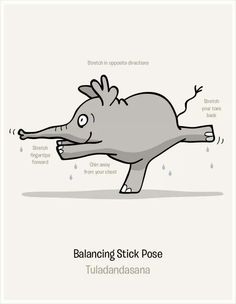
Yoga Elephant image from: https://www.pinterest.com/jenhaussmann/yoga/