Why Hungry Philosophy?

Its late. My once dull headache now pounds furiously. My mouth, so dry, can no longer hold words. The murmur of bubbling, gurgling emptiness inside now pervades my whole body with an angry pulse. I feel like an imploding star and my stomach growls in angry protest. I am caving in, hungry.

For us fortunate ones, writing in the comfort of a home with a well stocked pantry and fridge, it is difficult to describe the primal animal pangs of hunger. We have the audacity and luxury to ask “what’s for dinner?” They are too many of us who know hunger all too well and are not reading this blog or scouring the net for recipes. It occurs to me that I have yet to explain why “the hungry philosopher.” I have not “known” hunger. I have been an occasional tourist, when fasting or skipping an occasional meal. My few years in Bangladesh, notorious for hungry people, I enjoyed a steady rhythm of four meals a day (including tea) surrounded by lush fruit trees and the heavy scent of sauteing ginger, garlic and onions lazily wafting from the distant kitchen across the veranda. I have seen hunger. It looks like a strange combination of restless anxiety and despondent lethargy. Famed Bangladeshi artist, Zainul Adedin’s depiction of the 1940s famine (now housed in the British Museum) may help visualize.

P19=====012

from http://departmag.com

It is disheartening for me to know that where I live, one of richest countries in the world, dehumanizing hunger is allowed to exist. I am not an expert on hunger and cannot not speak on it’s ruthless behalf. My reference to hunger is perhaps ashamedly cerebral and poetic. Consider this both an apology and a belated explanation.

The hungry philosopher thinks by visualizing and tasting, by confronting primal anxieties through an awareness of life sustaining small things ingested and shared, like kale, bread and blueberries. This is merely an account of my struggle to conjure meaning out of suburban existence marked by grocery at Payless, soccer games on cold wet mornings, weekday afternoon dance classes, rushed dinners, rattling washer-dryers, sink full of dishes and repeat.  No grand Pioneer woman prairie vistas, Anthony Bourdain exotic layovers, Ina Garten Hampton elegance or Giada ocean views. No. This is a bitter cold winter and long summer twilight Mid-western small town. I hunger and long for escape to either exciting coast only to rush back to the safety and ease of the empty Indianapolis airport. We make small meanings here. The popcorn festivals, the farmer’s markets, the ice-cream socials, the community bbqs, the Mainstreet festivals, the school fundraisers, the “diverse world community” celebrations and yes, the family dinner are all a part of that struggle. I once heard there are only one of three reasons to live anywhere: family, job or beauty. Confessedly, for most of the year, beauty is not the reason to live in suburban West Lafayette, Indiana. The charm of sleepy small towns is lost on immigrants, like myself, craving the support of big city economic, racial, religious, sexual diversity and comforting anonymity. This blog is about finding myself in that real and imagined larger world, beyond cosmopolitan cities, across space and time through internet magic. Here you are reading my words. What do we have in common? We are all struggling to make meaning of our everyday through the meals we eat. We are a community of eaters aware of our visceral and virtual dependence on others for emotional and biological sustenance and assurance. The hungry philosopher in all of us is hungry for a plated robust life. I don’t know why you are still generously reading this, except that maybe wherever you are, you are hungry and struggling to plate meaning too. This blog is not about helping you make meaning but helping you recognize that you already are.

I’d like to end with how chef Gabrielle Hamilton’s describes her taste of hunger and why it is the organizing principle of her restaurant having “understood hospitality and care from a recipient’s point of view.” She writes,

I came to see hunger as being as important a part of a stage as knife skills. Because so much of starving on that trip led to such an enormous amount of time fantasizing about food, each craving became fanatically particular. Hunger was not general, ever, for just something, anything, to eat. My hunger grew so specific I could name every corner and fold of it. Salty, warm, brothy, starchy, fatty, sweet, clean and crunchy, crisp and watery, and so on.”

Diapers, Chickens and Smart- Hard Design Thinking

14818877769_f33dc4fedd_o

Chef Gabrielle Hamilton of Prune, writes in Blood, Bones and Butter of how running a restaurant prepared her for parenthood,

“I thought of telling them how changing a diaper reminds me, every time, of trussing a chicken. How sleepless nights and long grueling hours under intense physical discomfort were already part of my daily routine long before I had children. How labeling every school lunch bag, granola bar, juice box, extra sweater, and nap blanket with permanent Sharpie is like what we’ve been doing every day for thirty years, labeling the foods in our walk-ins. How being the chef and owner of a restaurant means you already by definition, mastered the idea of “systems,” “routines,” and “protocols” so that everyone who works for you can work smart-hard rather than work stupid-hard. So that by the time you are setting up your household and preparing yourself for adding children, you have a tendency toward this kind of order, logic and efficiency.”

This is a good description of design thinking across seemingly unrelated activities: parenting and running a restaurant. It also describes how working prepares us to parent rather than the other way around. I so enjoy her vivid imagery and hyphenated characterizations like, long herbal-tea-soaked conversations of “spirituality.” It is worth reading as a full course or in small bites of sentence fragments to be washed down with our own food memories. She describes such a rushed and gritty culinary education coupled with an equally elegant and comforting childhood. She lives in at least two worlds simultaneously: the spinning world of the ferociously hungry traveler and the opulent world of the aesthete. I’d like to eat at her restaurant, Prune and taste both worlds. Here are a few sentences from the chapter describing her restaurant philosophy,

“To be picked up and fed, often by strangers, when you are in that state of fear and hunger, became the single most important and convincing food experience I came back to over and over, that sunny afternoon humming around my apartment, wondering how I might translate such an experience into the restaurant I was now sure I was about to open down the block.”

further on she describes the table atmosphere in detail that would make her stage designer father beam with pride,

“There would be no foam and no “conceptual” or “intellectual” food; just the salty, sweet, starchy, brothy, crispy things that one craves when one is actually hungry. There would be nothing tall on the plate, the portions would be generous, there would be no emulsions, no crab cocktail served in a martini glass with its claw hanging over the rim. In ecstatic farewell to my years of corporate catering, we would never serve anything but a martini in a martini glass. Preferably gin.”

I clap with glee at the irony of her profoundly intellectual, anti-intellectualism. What a designer!

Catching up with kale


This post is dedicated to my friend Meg who showed up at my door last week with a bag of kale and a head of cabbage. How lucky am I to have friends who grow things and better yet share! I missed the superfood kale craze and the subsequent celebration of gluten substitute cauliflower. I suppose better late then never. Here is my belated homage to kale, thanks to Meg.

This salad recipe is a lesser version of a recipe posted on https://tastespace.wordpress.com/2012/01/02/raw-asian-kale-and-edamame-salad/

Didn’t feel like chopping garlic, so didn’t add any ( sorry if I’ve offended garlic lovers out there), next time I’ll add it, promise. Added a few red chili flakes. Had about 2 1/2 cups of shredded kale, instead of five that the recipe asks for. Despite my inauthentic recipe, I have to say, the salad is refreshing, bright and tasty. This is probably one of the few salads (that does not include jello) that tastes better as it sits and marinates. This was my first time making kale, in any way, ever. Kale, with its aggressive curls and fringes, does not like to be sliced or shredded. I had to fight it’s strong resistance to lie down flat. Respect. I had to take out the angry middle vein of each leaf. Also, it needed an extra loving wash able to flush all the curls. The recipe will tell you to “massage” the leaves for three minutes. For a superfood, it sure needs a lot of attention and pampering! I hope to absorb it’s unwieldy fringy flair (I already have the need for pampering massages).

Otherwise, easy and worth the three minute massage. I’ll have to try a cooked kale recipe but I suspect I’ll like this salad version the best. Happy to hear your favorite kale recipes and suggestions.

Wishing you all generous gardener friends like Meg,

Hungryphil

Eating Well = Living Well

51YDudEyXbL._SY344_BO1,204,203,200_

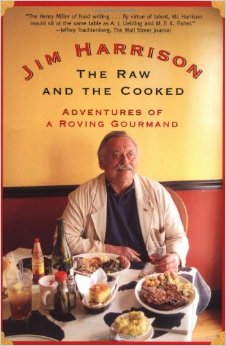
“Let’s all stop a moment in our busy day and return to some eternal verities. It’s quite a mystery, albeit largely unacknowledged, to be alive, and quite simply, in order to remain alive you must keep eating. My notion, scarcely original, is that if you eat badly you are very probably living badly. You tend to eat badly when you become inattentive to all but the immediate economic necessities, real or imagined, and food becomes an abstraction; you merely “fill-up” in the manner that you fill a car with gasoline, no matter that some fey grease slinger has put raspberry puree on your pen-raised venison. You are still a nitwit bent over a trough.”

One of my favorite quotes from:

Jim Harrison, The Raw and The Cooked: Adventures of a Roving Gourmand, New York: Grove Press Books, p. 29.

Cover Image from Amazon.com

Cook is a Four-Letter Word?

a66bf0af3856b001f521992fa94b8dbf

This post is dedicated to my sister, Cycee (pronounced Psyche) and all of you who declare cooking is a four-letter word. First of all, negation is also a relation (in fact, a very strong relationship as Theodor Adorno suggested). So, I want to argue that my sister has a secret love-hate relationship with food. Oh sure…she complains and wails about how cooking is the most horrible torture, usually while she is cooking big pots of chicken curries. But, she sure does like eating (chocolate chip cookies, to be precise). It is not cooking she despises, she despises the compulsion to feed the family, the obligation to have an answer to “what’s for dinner?” It is a classic case of transference. Who doesn’t hate compulsory, guilt laden, obligatory…..anything. Cooking has been falsely accused, I say.

Let’s say that she does in fact “hate” cooking. She is in good company, there are many people who don’t enjoy the process of heat, chopping and stirring. Which is why this blog is about food not cooking. My point is, how you eat is just as meaningful. How and what you order at a restaurant, how you assemble meals from store bought rotisserie chicken, beef brisket or taco meat to make salads, sandwiches…whatever, is effort, is a creative act. I compare her disdain for cooking with my love gardens and my disdain for gardening. Self-righteously judging the preferences of others is not a foodie creed. The point of a foodie community is to share in the enjoyment of food (We can argue about what constitutes food, a la,  Michael Pollen’s Food Rules, but that’s another post).

I could offer “home- assembly” recipes but we all know the difference between a Hungry Jack pancake mix and flour-egg-baking power-sugar- water is not time or effort but comfort and easier clean up. My sister the corporate attorney does not have the mind-space or energy to devote to dinner as event.  She’d rather read a trashy romance novel or watch the Agents of Shield. To her, I say, grab that bag of salad, throw in some store-bought grilled chicken and enjoy. I also want to note that picky eating is different than picky cooking. Picky eating is a judgment against what is offered, while picky cooking is a judgment against oneself. She is never a picky eater and has always been my best taste-tester. She may not like cooking but she’s a wonderful unwilling cook. One of my first fond memories of food is when she made me a breakfast of a fried egg with buttered toast with sugar (cut into little sparkling squares). I blame my love of food, partly on her. Maybe cook is a four letter word like, wait for it…….. Love. I can see her rolling her eyes.

To limit one’s thought about food is a choice. As long as it is deliberate, it is self-aware and philosophical. To her cooking may well be a four-letter word. So be it. Let’s go out for dinner, together. Or, better yet come over and share in my joy of cooking.

Haters and non-haters of cooking alike might enjoy these links:

http://blog.ruhlman.com/2014/10/what-if-you-hate-cooking-dinner/

http://www.delish.com/cooking/g577/recipes-with-rotisserie-chicken/

http://www.foodnetwork.com/shows/semi-homemade-cooking-with-sandra-lee.html

http://www.southernliving.com/food/whats-for-supper/quick-and-easy-rotisserie-chicken-recipes

97716462f74a565653e34bf2565e9035

Ohhhhhhkra! Two ways.

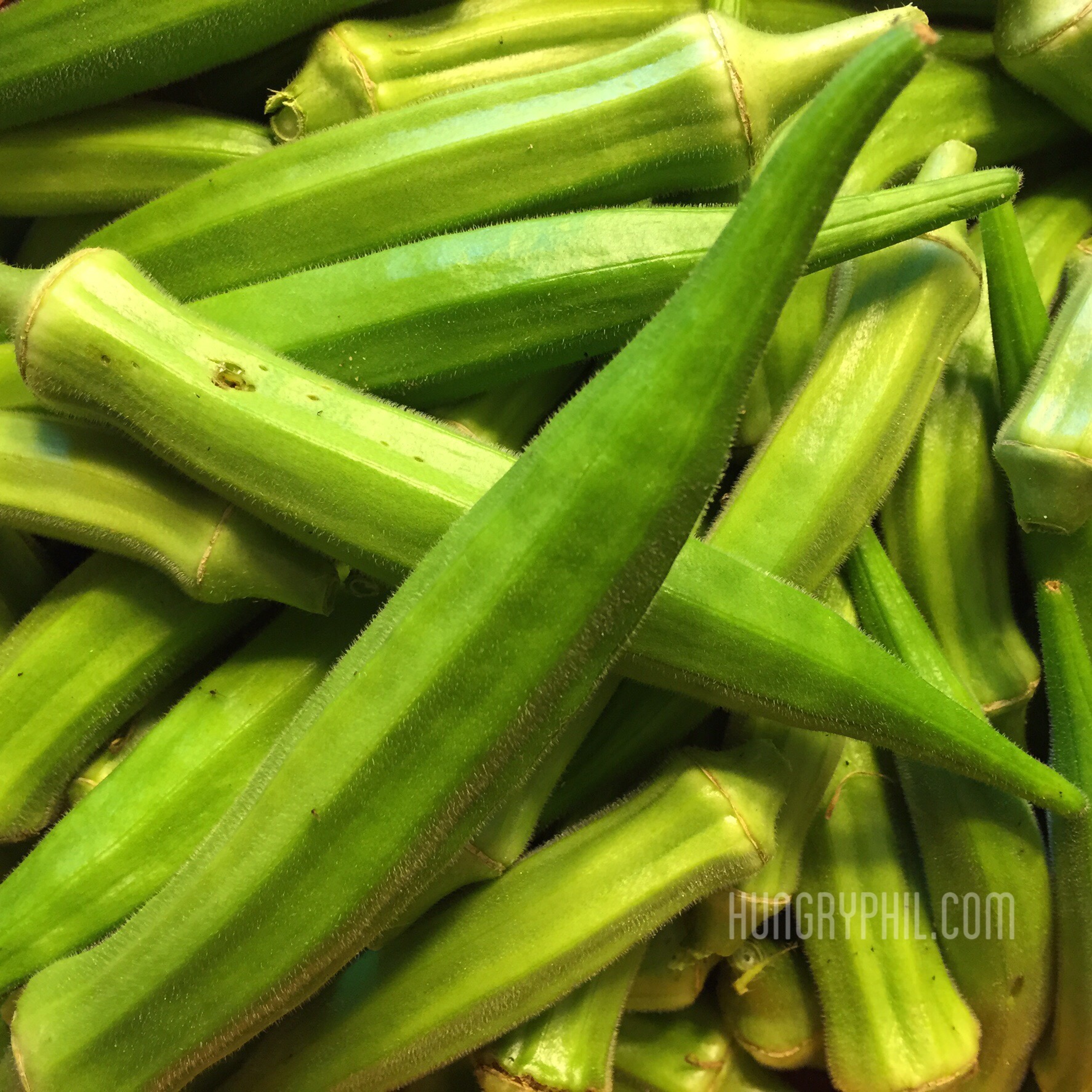
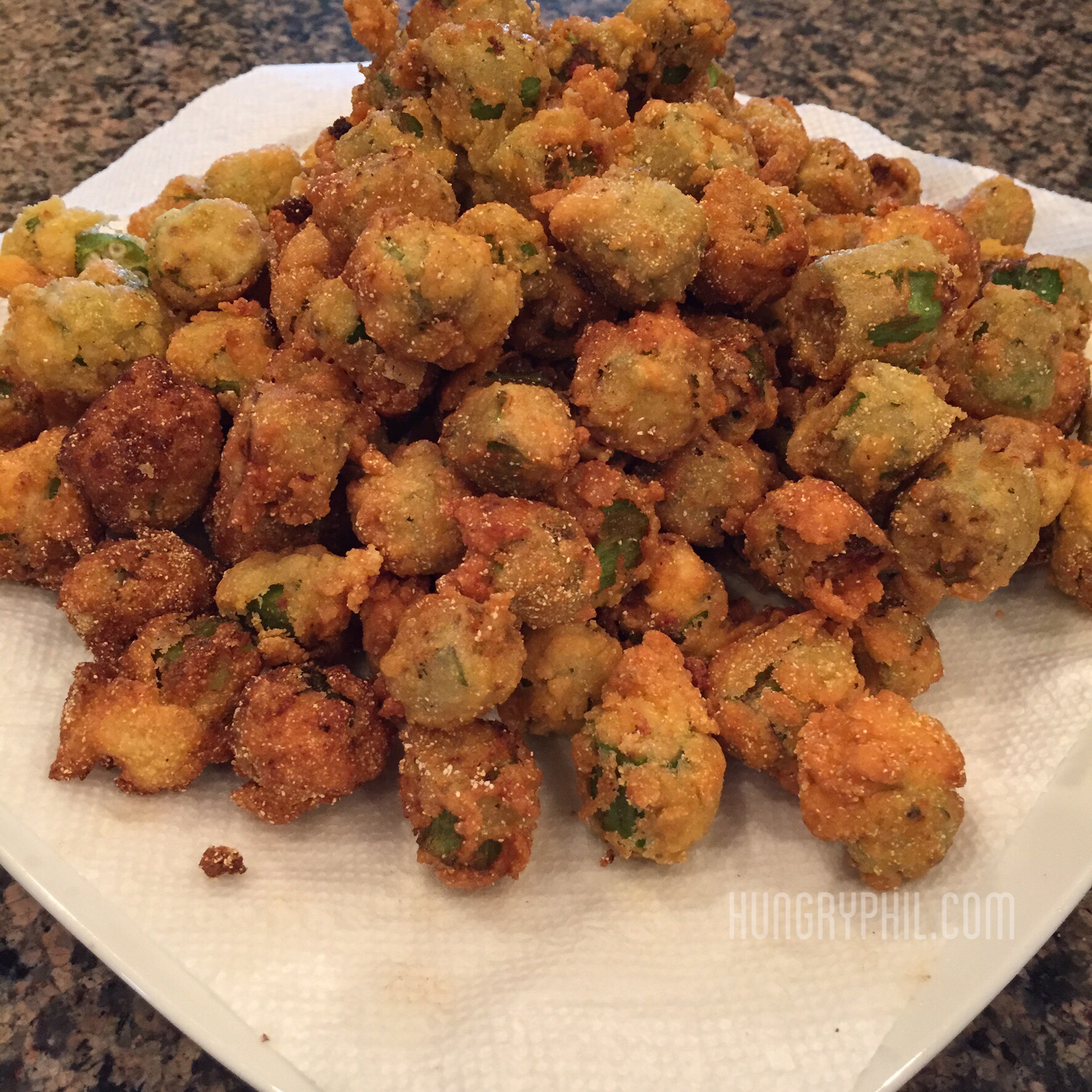
Who knew okra flowers were so stunningly beautiful! Apparently everyone who grows them. This beauty is from my super-gardener father-in-law, Dennis’ garden. I know…. okra can be sticky, fuzzy, and slimy when cooked. But somehow the beauty of the flowers helps me forgive those small okra vices. Not only did I get to marvel at the beauty of Dennis’ garden (which also included green beans, corn, peppers, eggplant and my favorite…. Tomatoes), I was also happy to receive the gifts of those blossoms. This is not fancy and abstract “farm to table” restaurant cooking. This is messy, personal and beautiful home garden cooking. My equally super-canner mother-in-law, Rachel, transforms the summer garden into bags of frozen fried okra, salsa, pepper jelly, creamed corn and more to enjoy year round. What a gift! Thank you, both for sharing the love, beauty and deliciousness of your garden. 

What to do when given a basket of goodies? I searched for recipes, of course! As you know, my fellow eaters, so much is out there. Most, very good. In the end, I didn’t want to take attention away from the okra experience by focusing on a new recipe. You know what it’s like….nervously shifting back and forth between screen and actuality, measuring, gauging, checking the images (like a correspondence theory of truth, hoping to match an idea with a reality, …..Very unsatisfying).

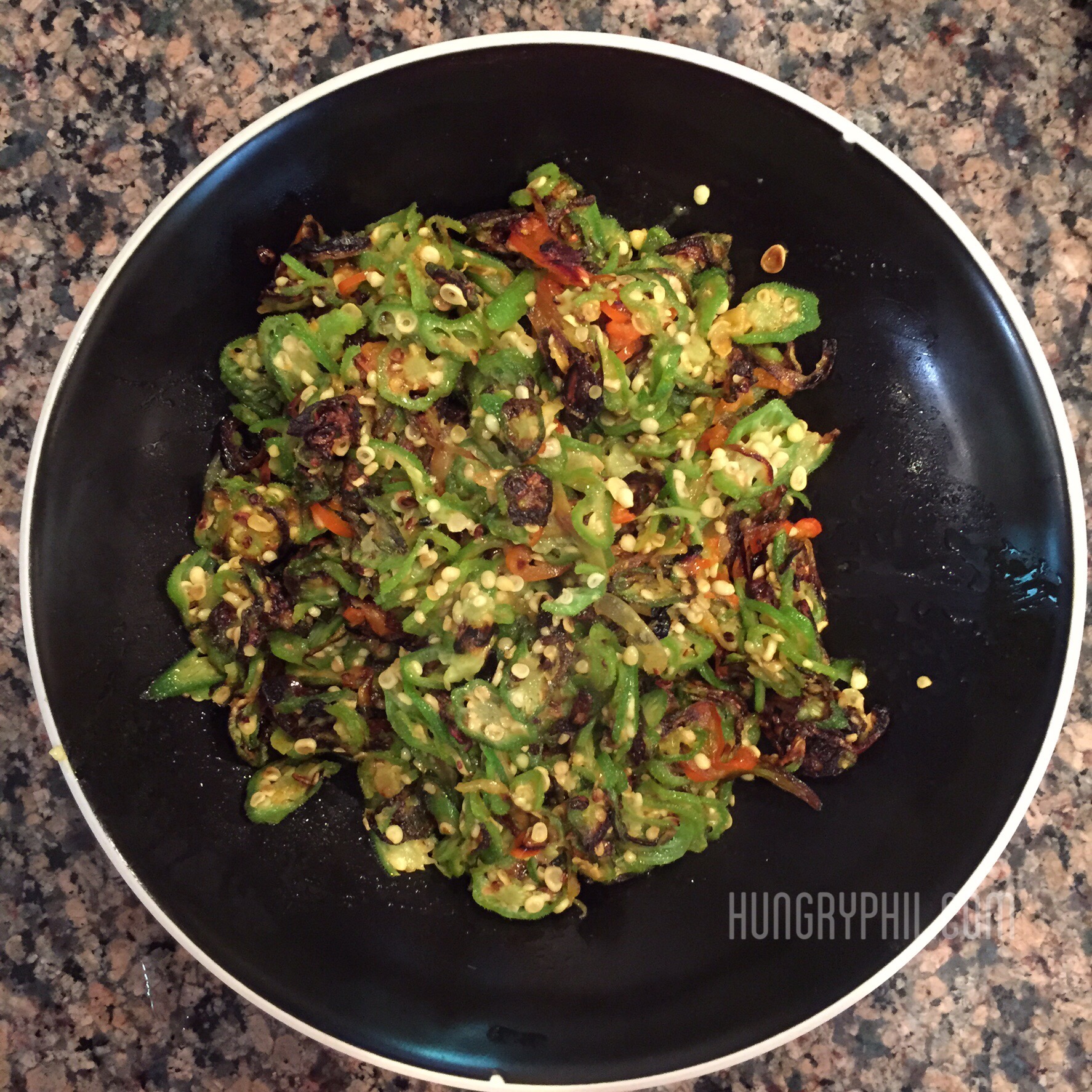
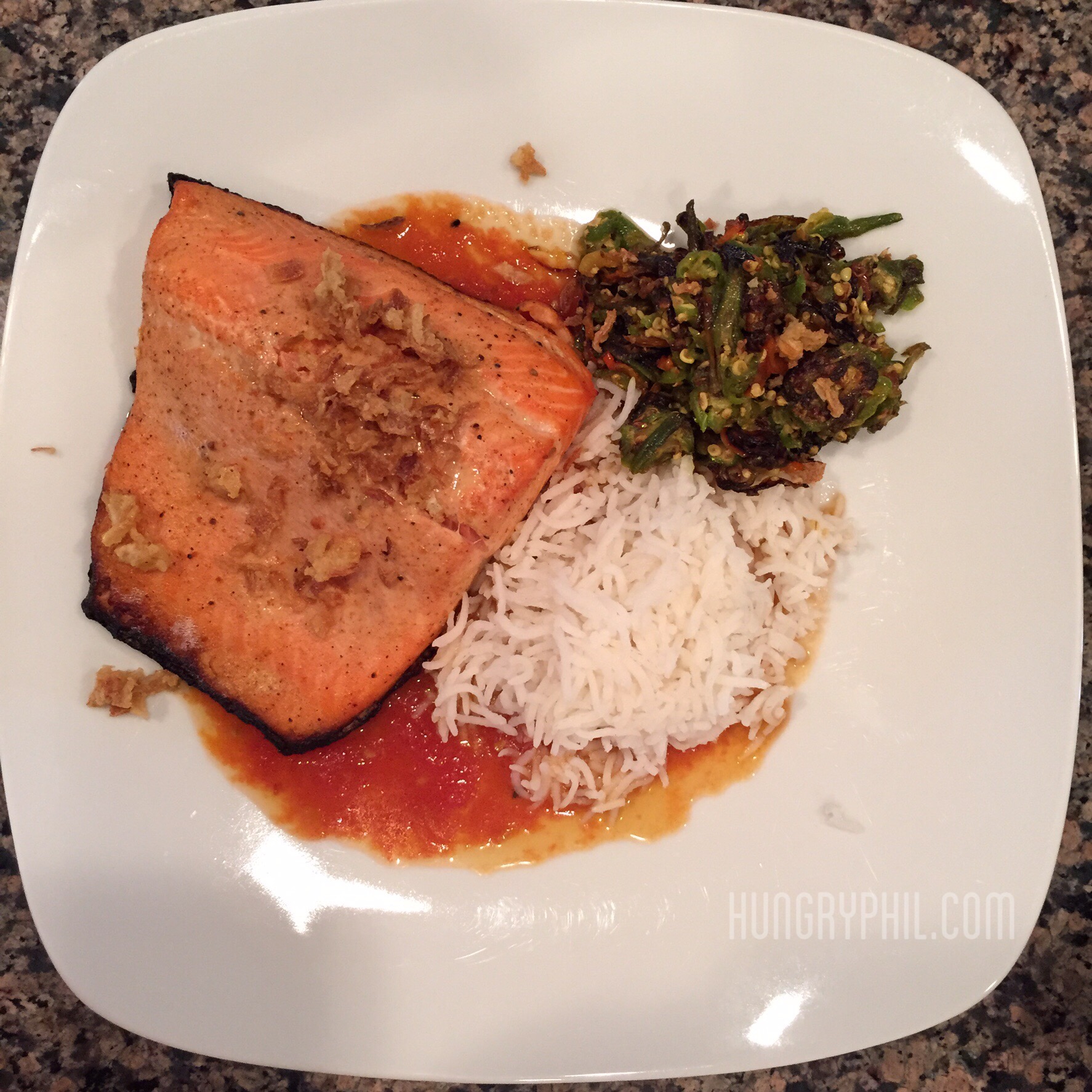
Instead, I decided to make two versions. My childhood version of okra, my mom’s favorite, Bengali bhaji, which basically means sautéed thinly sliced vegetables with sliced onions, tumeric, salt, chili peppers and other spices if desired. We had the okra bhaji with rice, salmon tikka (a south Asian version of bbq spice) and light a sweet and spicy tomato sauce ( made from garden tomatoes). I sent a picture of the dinner to my mom. She approved.

I also made fried okra to freeze, my new favorite. Did not turn out as yummy as Rachel’s, despite her gracious efforts to explain the process. Still very good. I cut the pieces a bit larger and added hot sauce to the buttermilk. I am concerned that the crispy bites will not make it to a freezer bag. Fried fish and okra is beginning to sound good for dinner tonight. 

What are your garden-cooking stories? Do gardeners cook differently from non-gardeners? Maybe they demonstrate an object oriented practice, by which the vegetables are not just ingredients but ways to absorb a beautiful and bountiful summer. It is magical, to be able to eat the experience of summer in the dead of winter, isn’t it? Or now…gotta go…time for dinner.

Wishing you happy summer eating or eating summer,

Hungryphil

Dear Meg, my friend who asked for the recipe. I just cut the okra in bite size pieces, soaked them in buttermilk, hot sauce, salt and pepper, as desired. Shake off excess. Coat with a cornmeal and flour mixture. Shake off excess flour. Fry in oil. Enjoy!

The Egg and GINA, A Tale of Two Cars

IMG_1714

My love of all things “egglike” is well documented. By me.  So, it was no surprise that at the end of the Indianapolis Museum of Art, Dream Cars exhibition, my “what dream car are you” personality quiz result was Paul Arzens’ 1942 L’Oeuf Électrique

img_321198_23471194_2

Image from: http://www.okoloweb.cz/projects/work-of-paul-arzens

Paul Arzen

Image from: http://www.fakeavatar.com/misc/dream-cars/

Designed during the German occupation of France when oil was in very short supply this short, pudgy, aluminum electric car perhaps does fit my personal obsession with food and design. Also like me it is not very safe or very fast. It’ll get you where you need to go in an odd, unconventional way. Maybe this dream car personality test is on to something.

Just to give you perspective, Jim, my geeky yet suave beloved’s dream car personality is the very cool BMW stretched fabric car GINA (2001).

bmw-gina

Image from: http://www.geek.com/news/this-cars-skin-is-four-times-lighter-than-paper-1611722/

Yep. We are both unique in our own way. Enough said…….

bmw-mainimages

Image from: http://www.materialconnexion.com/BMW/tabid/877/Default.aspx

http://www.atlantamagazine.com/news-culture-articles/high-museum-brings-antique-conceptual-cars-to-atlanta/

I hope you get to see these amazing concept cars if you haven’t already. And, take the personality quiz while you’re there!

Enjoy,

Hungryphil

Too Pretty to Eat?

You know that moment of pause in front of a beautiful plate of food when we think……wow! This is too pretty to eat.

What is that pause about? It doesn’t stop me from consuming and dismantling a beautiful banana split. Is that pause a moment of appreciation and recognition? Is attractive plating in fancy restaurants about extending the pause when our brain is confused by the paradox of “gosh, this is beautiful” and “I need to eat, enjoy and destroy it?” Maybe. Beauty has the power to direct us towards an ethical moment, a pause before destruction. Timothy Morton talks about beauty as recognized fragility. Recently, in a blog post, Levi Bryant asks a similar question, when he suggests,

I do think, however, that beauty might play a key role with respect to environmental issues and how we relate to other living organisms, but I’ll save that for another day.  I just wonder why it is that I find something beautiful or what is reflected back to us about ourselves in those things we find beautiful.

Beauty may be a way to interrupt our destructive relationship with the world and things with an ethical pause. How do artists, designers, chefs create things of beauty to be appreciated yet consumed? They may not answer, Levi Bryant’s question, “What is the ground of the ability to have, as Kant put it, “disinterested pleasure” or the ability to find things beautiful?”

But, makers of “(interest) dependent beauty” may offer some strategies capable of extending the ethical pause that makes us lament……this is too pretty to eat.

I need to eat something pretty now and think about this consumption-coexistence paradox provoked by beauty. Hmmmmm…

This question is in part a response to a blog post titled “Beauty” on the blog: Larval Subjects.

Beauty

Food Poem – Short-Order Cook by Jim Daniels

An average joe comes in
and orders thirty cheeseburgers and thirty fries.
I wait for him to pay before I start cooking.

He pays.
He ain’t no average joe.

The grill is just big enough for ten rows of three.
I slap the burgers down
throw two buckets of fries in the deep frier
and they pop pop spit spit…
psss…
The counter girls laugh.
I concentrate.
It is the crucial point—
They are ready for the cheese:
my fingers shake as I tear off slices
toss them on the burgers/fries done/dump/
refill buckets/burgers ready/flip into buns/
beat that melting cheese/wrap burgers in plastic/
into paper bags/fries done/dump/fill thirty bags/
bring them to the counter/wipe sweat on sleeve
and smile at the counter girls.
I puff my chest out and bellow:
“Thirty cheeseburgers, thirty fries!”
They look at me funny.
I grab a handful of ice, toss it in my mouth
do a little dance and walk back to the grill.
Pressure, responsibility, success,
thirty cheeseburgers, thirty fries.

“Short-order Cook” by Jim Daniels from Places/Everyone. © The University of Wisconsin Press, 1985.

From the Writer’s Almanac:   http://writersalmanac.org/page/4/

Booth or Table?

For the most part, this is an easy question for me to answer. Almost automatic. Booth, of course! Booths are soft , comfortable and feel more intimate. The only draw back for me is that being…. ahem…. “vertically challenged,” sometimes I need to prop myself up so I don’t feel like a kid in an adult chair. Also, having to ask the other diners to slide out of the booth in order to go to the rest room is not always comfortable. Again, when with family these issues matter less.

So, for me the decision depends on the intimacy level of a family dinner out or a conversation with a friend. For others, it may depend on the number of diners, work or family dining and comfort. There is quite an extensive discussion on the topic online. Here are just a few conversations:

http://chowhound.chow.com/topics/883922

http://articles.orlandosentinel.com/1987-05-31/entertainment/0130250186_1_tables-booths-restaurateurs

http://www.yelp.com/topic/portland-at-the-restaurant-booth-or-table-or-does-it-matter

https://answers.yahoo.com/question/index?qid=20110222102323AA8VpPO

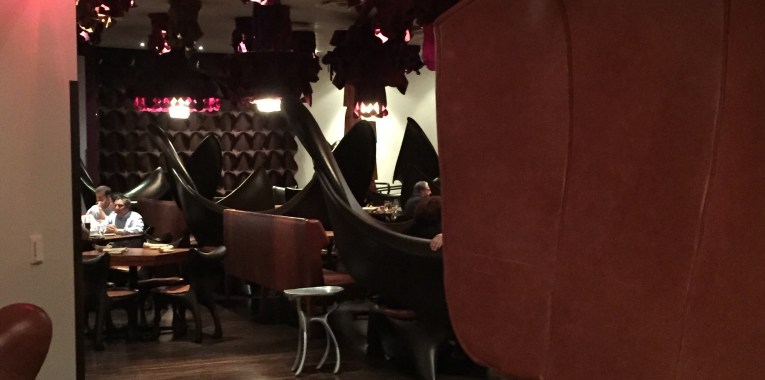
High back dining chairs (think turn of the 20th century Frank Lloyd Wright or C.R. Mackintosh) aim to foster an intimate dining experience at home. Breakfast nooks, picnic tables conjure the same atmosphere. In contrast, formal classical/neo-classical chairs (imagine a Downton Abbey dinner scene) were about pomp, glory and performance. Some restaurants combine the two in order to accommodate the divergent preferences. For example, I recently enjoyed lunch at Americas in Houston (River Oaks) with it’s impressive “maximalist” blossoming interior with giant leather petal chairs that make for a sequence of sculptural booths. Restaurant designers invest a considerable amount of energy in answering this question for us.

IMG_1569

When I think about it, the preference for booth or table becomes more involved. For a work lunch, I would prefer a table. Sometimes, a dinner with my husband where I don’t sink, is nice. The difference may not be as simple as formal-informal, intimate or open. Of course, the seating alone cannot create a desired dining atmosphere.  There are infinite other details like lighting, texture, number of guests, reason for dining out, weight, height and more. Now, all considered, what do you generally prefer: Booth or Table?

Maybe a quick poll would be fun?