Seductive Consolations of Food

How could I have written all these posts without having mentioned Elizabeth Gilbert’s Eat, Pray, Love? So here it is…… an excerpt describing her first moment of recognized contentment in Italy after a good meal. Note: I said good satisfying meal, not overindulgent-stuffing-our-disappointments-down-with-candy-ice-cream and chips. One must be careful about gastronomic self-soothing. I’m sure many of us can relate. Enough said.

Eat,_Pray,_Love_–_Elizabeth_Gilbert,_2007

The first meal I ate in Rome was nothing much. Just some homemade pasta (spaghetti alla carbonara) with a side order of sauteéd spinach and garlic. (The great romantic poet Shelley once wrote a horrified letter to a friend in England about cuisine in Italy: “Young women of rank actually eat– you will never guess it — GARLIC!”) Also, I had one artichoke, just to try it; the Romans are awfully proud of their artichokes. Then there was a pop-surprise bonus side order brought over by the waitress for me for free — a serving of fried zucchini blossoms with a soft dab of cheese in the middle (prepared so delicately that the blossoms probably didn’t even notice they weren’t on the vine anymore). After the spaghetti, I tried the veal. Oh and also I drank a bottle of house red, just for me. And ate some warm bread, with olive oil and salt. Tiramisu for dessert.

Walking home after the meal, around 11:00 PM, I could hear noise coming from one of the buildings on my street, something that sounded like a convention of seven-year-olds — a birthday party, maybe? Laughter and screaming and running around. I climbed the stairs to my apartment, lay down in my bed and turned off the light. I waited to start crying or worrying, since that’s what usually happened to me with the lights off, but I actually felt OK. I felt fine. I felt the symptoms of contentment.

Ruhlman’s Rule # 1: Think

Cooking is philosophical activity…..as the hungry philosopher, I  rest my case. It also helps to have Michael Ruhlman’s Rulman’s Twenty: 20 Techniques, 100 Recipes, A Cooks Manifesto that opens with the chapter, “Think: Where Cooking Begins.”

books

It’s underrated. If you have a recipe, do you have to think? When you open a book that says, “Combine A and B, add C, stir, and bake for 20 minutes at 350℉/180℃,” do you simply follow the instructions?

Cooking doesn’t work that way. Cooking is an infinitely nuanced series of action, the outcome of which is dependent on countless variables. What’s the simplest dish you can think of? Let’s say buttered toast. Can you write a perfect recipe for it? There is no exact way to convey how to make buttered toast and account for all variables. The temperatures of the butter has a huge impact on the final result, as does the type of bread, how thick it’s cut, and how hot your toaster gets. Because all the variables in cooking can never be accounted for, whether you’re cooking from a book or cooking by instinct, it stands to reason that the most important first step in the kitchen is simply to think, even if all you’re making is buttered toast.

Thinking in the kitchen is underrated.

Thinking.

Before you begin. Stand still. Think.

Biscuits (Poem)

Mostly when I’m vacuuming the carpet
in Mr. Besdine’s office
I don’t worry, just do the work
and know I’ll be sleeping in my own bed
when all the desks in all them offices
will have people sitting around them.
Sometimes I don’t hear the vacuum cleaner
and I’m quiet like when I play
Praise God From Whom All Blessings Flow
in the Mission Baptist Church.
There are other times I imagine fixing biscuits
unrolling my cloth from the coffee can,
flour still on it from the last time,
smoothing it out on the counter,
cloth white, flour white.
My mother’s biscuit cutter
made from an old Pet Milk can,
not a tack of rust on it,
presses in easy as a body to a hammock.
Some like biscuits and gravy,
I myself fancy biscuits with my homemade
muscadine jelly that comes from the
muscadine grape that grows wild.

“Biscuits” by Willa Schneberg, from In the Margins of the World. © Plain View Press, 2001. Reprinted with permission.

http://writersalmanac.publicradio.org/index.php?date=2014/09/14

Eating to be Human

15819028

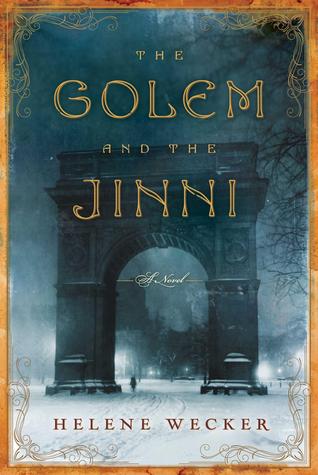
The tea she poured into the water -closet sink when no one was around. The toast and boiled egg she wrapped in a piece of waxed paper and gave it to the first hungry child she passed on her way to the bakery. She didn’t in fact have to do this; she discovered she could in fact, eat. On one of her last nights at the Rabbi’s, curiosity and boredom had overcome her lingering trepidation, and she decided to ingest a small piece of bread. …….The act of eating proved useful at the bakery, as she learned to make adjustments based on taste, and to eat a pastry occasionally as others did. But it was hard not to feel each prop– the cloak and the toast and the quickly eaten pastries — as a small pang, a constant reminder of her otherness.

Appetite (Poem)

Appetite

by Maxine Kumin

I eat these
wild red raspberries
still warm from the sun
and smelling faintly of jewelweed
in memory of my father

tucking the napkin
under his chin and bending
over an ironstone bowl
of the bright drupelets
awash in cream

my father
with the sigh of a man
who has seen all and been redeemed
said time after time
as he lifted his spoon

men kill for this.

“Appetite” by Maxine Kumin, from Selected Poems: 1960-1990. © Norton, 1990. Reprinted with permission. (buy now)

http://writersalmanac.publicradio.org/index.php?date=2014/09/06

SUPER Easy Chicken Curry….Seriously.

photoI’ll admit it, South Asian curries are sometimes not the best looking. This one with its deep red is reminiscent of a rich pasta sauce which makes it a less intimidating for those new to South Asian cuisine. The flavors and mouth feel of tomato and cream are also very familiar. Works well for my chopped and blended cultural family. You can chose to add more exotic flavors or not. Up to you and your picky, ahem….. “discerning” eaters.

I make this curry often since its so easy. I’m not kidding. Made this with my 10 year old. It’s a one pot, throw in, with no frying or sauteing. Put all the ingredients in a pot and simmer until the chicken is soft. If you cook it low and slow the flavors will develop like a rich bolognese.

Here’s the basics:

1. Six Boneless skinless chicken thighs cut into bite size pieces (did I mention the recipe is cheap too!)

2. Sour Cream 1/2 cup ( I had light sour cream on hand)

3. Tomato puree 1 small can

4. Salt and Pepper to taste

The rest of the ingredients are optional….add what you have or feel like. The base of sour cream and tomato puree will make a yummy sauce on its own. With the following spices the recipe approaches a restaurant butter chicken taste.

5. Ginger paste 1 teaspoon

6. Garlic paste 1 teaspoon

7. Chilli powder 1/2 teaspoon

8. Coriander powder 1/2 teaspoon

9. Cumin powder 1/2 teaspoon

10. Onion one small chopped

11. Cilantro chopped 1 tablespoon

12. Oil 2 tablespoons

Serve with rice or naan. IMG_1322


I made a Coconut Rice Pulau  to go with it.

Basmati rice 1 cup

Coconut milk 1 cup

Hot Water 1 cup

Chopped Onion 1 tablespoon

Cinnamon, a generous pinch

Cardamom, a pinch

Salt to taste

Ginger 1/4 teaspoon

Cumin Seeds 1 teaspoon

Raisins about 10-12

Almond Slivers

Peas, 1/2 cup

Saute the onions and cumin seeds in a tablespoon of ghee or oil.

Add all the dry ingredients except peas. Saute until the rice turns translucent and smells nutty. Add hot water and coconut milk. More water may be needed to finish cooking the rice.

Cook rice until the water evaporates and the rice kernels are soft and yummy. Add water if needed. Add peas. Simmer on low for a few more minutes, top with fried onions or cilantro and then enjoy!


Standing Ovation for my Stand Mixer

As some of you know, I have a love-hate relationship with recipes. As I am preparing for a trip to visit my daughter in college, I’ve been packing a variety of pound cake for her and her friends. I decided to try Martha Stewart’s Double Chocolate pound cake recipe for its simplicity and potential for easy travel. I also made mini apple cider pound cakes using a recipe from the fall’s Southern Living and my daughter’s favorite Zucchini bread with dried pineapple and cranberries (my sister-in-law’s wonderful recipe). But back to the magic of the stand-mixer.

The recipe calls for the butter and sugar to be mixed 8 minutes. Yes….8 minutes says the queen of precision. The reason Ms. Stewart explains is that the cake gets its lift from the whipped butter and sugar instead of baking powder. Skeptical, I started mixing the butter and eggs around minute 4 something magical began to happen. The butter and sugar turned pale and fluffy. By minute 8 the mixture doubled in volume and had the consistency of a thick whipped cream. I could not have done this with my own arm power. I could not have made this cake without a stand mixer. The machine truly made the cake. For today, my stand mixer, Rosie, has earned her place on my counter.

Here is the link for the Double Chocolate Cake recipe:

http://www.marthastewart.com/351772/double-chocolate-pound-cake

I’ll have to let you know how it tastes once it reaches its destination. But it does look and smell good. I couldn’t just “follow” the recipe so I added dark chocolate chips, cinnamon and a bit of ground instant espresso. If it doesn’t work out I assume responsibility and will eat the cake.

IMG_1323


Recipe for salad (poem)

Recipe for a Salad

by Sydney Smith

To make this condiment, your poet begs
The pounded yellow of two hard-boiled eggs;
Two boiled potatoes, passed through kitchen-sieve,
Smoothness and softness to the salad give;
Let onion atoms lurk within the bowl,
And, half-suspected, animate the whole.
Of mordant mustard add a single spoon,
Distrust the condiment that bites so soon;
But deem it not, thou man of herbs, a fault,
To add a double quantity of salt.
And, lastly, o’er the flavored compound toss
A magic soup-spoon of anchovy sauce.
Oh, green and glorious! Oh, herbaceous treat!
‘T would tempt the dying anchorite to eat;
Back to the world he’d turn his fleeting soul,
And plunge his fingers in the salad bowl!
Serenely full, the epicure would say,
Fate can not harm me, I have dined to-day!

“Recipe for a Salad” by Sydney Smith. Public domain.


http://writersalmanac.publicradio.org/

Dinnertime Stories: Clean your plate….

……. “because there are starving children in Africa (China, Bangladesh…anywhere non-western apparently)” is the proverbial rationale for not wasting food. As kids these stories shaped our relationship with our dinner. As parents we perpetuate these relationships. There are certainly alternate stories told to children to finish their food. One story I heard in Bangladesh is that if you don’t finish your food the leftover rice grains will cry and complain to God. Either way wasted food disrespects others. The Bangladeshi story interestingly also suggests that wasting disrespects the food itself.

At my own dinner table, I struggle with the simple story. Why should we finish our plated food? Why not waste? Especially since the “clean your plate” guilt trap has been associated with obesity. Can we really blame hungry children in Africa for obese children in Indiana? Perhaps, starting off with smaller portions is a possible solution. Why pour yourself a whole glass of milk, if you’ll drink a half, why fill your plate with pasta that you will not eat? Why only eat dinner in the hopes of dessert? At restaurants, why do we struggle to finish and then waste the rest? What should be our code of conduct with our dinner?

Every night as I scrape off the wasted food, now garbage, I search for a convincing argument. Sure, each time I scrape, I regret my own misspent time, effort and money. I regret the hungry children in the world. I regret the lost nutritional value. I regret the farmers who labored, the grocery stores, the advertising, the transportation and the whole system of food, now wasted. I regret the lack of grace and gratefulness. Mostly, I regret the careless consumption it represents. I am guilty just as anyone.

I apologize to all the grains of crying rice that I am responsible for. Please share your dinnertime stories below. If  you have a new and improved version, I’d love to hear it!

http://abcnews.go.com/GMA/video/parenting-stories-mom-children-clear-plate-19891828

Freedom in Ratios not Recipes


The fact is, there are hundreds of thousands of recipes out there, but few of them help you to be a better cook in any substantial way. In fact, they may hurt you as a cook by keeping you chained to recipes. Getting your hands on a ratio is like being given a key to unlock those chains. Ratios free you.

Ratios are about the basics of cooking. They teach us how the fundamental ingredients of the kitchen — flour, water, butter, and oils, milk, cream, eggs — work and how variations in proportions create the variations in our dishes, bread rather than past, crepes rather than cakes.

from Ratio: The Simple Codes Behind the Craft of Everyday Cooking by Michael Ruhlman

As with any craft there is a creative difference between using a template and understanding the logic of the template. Cooking is no different. Recipes offer us the comfort of measure, guidance and direction that yields something predictably delicious. Sometimes out of necessity we find alternatives for ingredients or methods and accidentally discover something yummy. We watch our grandmothers and mimic. As with any craft, the step from imitation to creation involves understanding, risk and speculative thinking. Informed guessing.

Ruhlman’s recipe book presents a ratio and demonstrates its varied uses for a range of menu items from chocolate ganache to bread. Theory and practice combine to show, for example, what are the basic characteristics of custard or the difference between sponge cake and pound cake (that have the same ratio of ingredients but different sequencing). For a cross cultural cook like me, understanding the fundamentals of ratios and methods allow me to thoughtfully play with my ingredients. Can I make a tandoori bearnaise sauce, a lemon mustard vinaigratte, or a almond cardamom custard? Ruhlman translates between all my thematic cookbooks from Bengali Regional Cooking to Lydia’s Italian Table to Southern Community cook books.

I like the possibility of creative home cooking and Ruhlman helps. A LOT. But, I think even he would say keep your cookbooks just like we keep great works of art around. For direction, inspiration, reaction and sometimes rejection.