Rain. Sorry, lunch is cancelled.

solar_kitchen_helsinki_3_guixe_project

http://www.designboom.com/design/marti-guixe-antto-melasniemi-solar-kitchen-restaurant

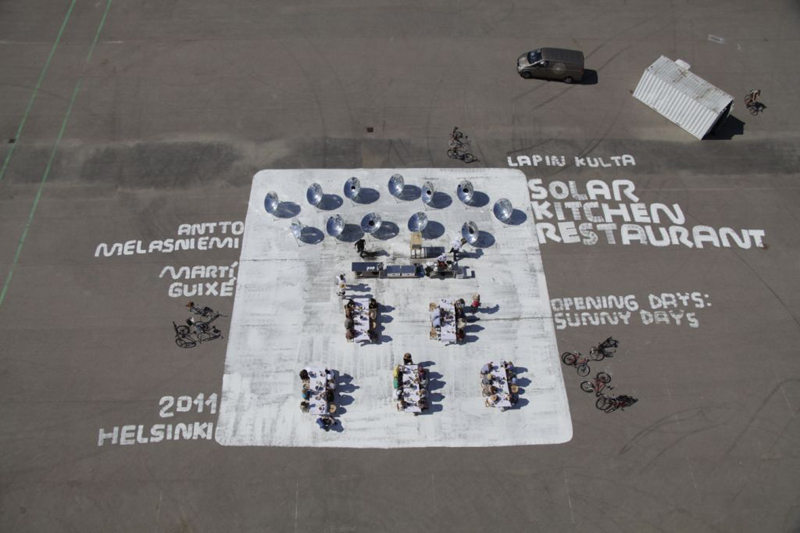
Marti Guixe and Antto Melasniemi’s Solar Kitchen Restaurant for Lapin Kulta is a fantastic exploration our tolerance for uncertainty coupled with our acceptance of complex natural and artificial processes. Since the meals are cooked with solar power, a cloudy day or rain can significantly affect the taste, timing and delivery of the meal. The restaurant invites consumers willing to be flexible participants of an orchestrated but not determined event. It challenges consumers models of mass and mechanical efficiency and product predictability with the joy of considered and uncertain localized experience. The factors that would make my lunch delicious would include not only the prowess of the chef, the freshness of the ingredients but also the weather and the strength of the sun. My lunch becomes a recognized cosmic event! Probably, not the best idea for a school cafeteria….or maybe the perfect idea to demonstrate the complex web of natural and artificial things that makes lunch possible.

Help! My Bread is Dead!

 Danbarber0709

The whiter flour became, the greater the demand. To be fair, that’s been the history of wheat for thousand’s of years. But for all its efficiency, steel couldn’t match the old-school grindstone in two key respects. In fully removing the germ- that vital, living element of wheat — and the bran, the roller mill not only killed wheat but also sacrificed nearly all of its nutrition. While the bran and the germ represent less than 20 percent of a wheat kernel’s total weight, together they comprise 80 percent of its fiber and other nutrients. And studies show that the nutritional benefits of whole grains can be gained only when all the edible parts of the grain– bran, germ, and endosperm — are consumed together. But that’s exactly what was lost in the milling process.

There was another cost as well, just as devastating. Stone milled flour retained a golden hue from the crushed germ’s oil and was fragrant with bits of nutty bran. The roller mills might have finally achieved a truly white flour, but the dead, chalky powder, no longer tasted of wheat — or really anything at all. We didn’t just kill wheat. We killed the flavor.

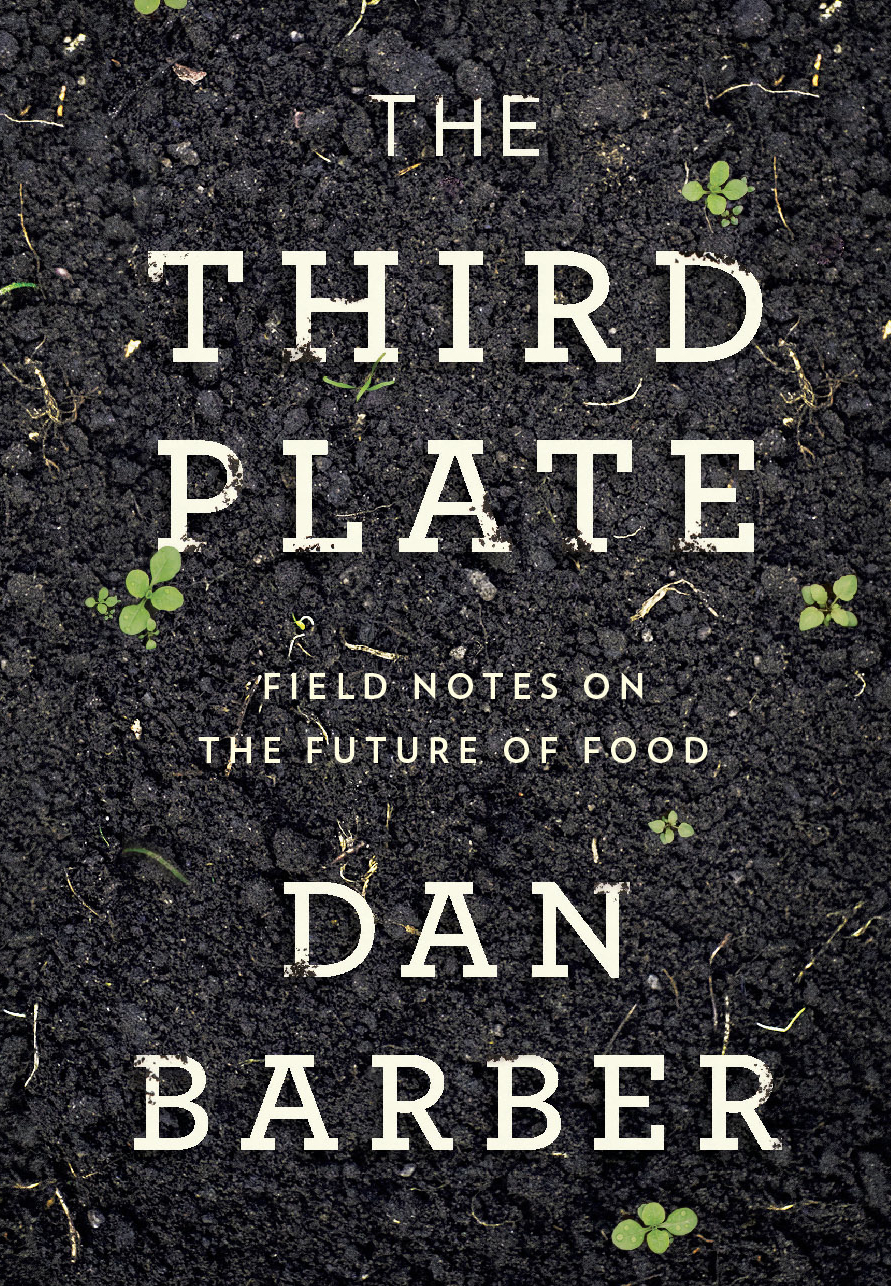
from The Third Plate: Field notes on the future of food by Dan Barber

I did not know that until the 1880s and the roller mill, ground flour only had a shelf life of one week. Barber’s book certainly prompts us to consider the unaccounted and problematic system of food production hidden behind current “farm to table” intentions to honor ingredients. The aesthetic and technological evolution of wheat that Barber describes makes me think about our odd preference for dead, white, preserved flour at the cost of nutritional value and taste. Can we call white flour merely ornamental gastronomic pleasure, lacking in functional nutrition? Is white flour symbolic art while stone ground wheat functional design? Does how our produce look outweigh how our produce tastes? If so why? Do we equate a pretty apple with a nutritional, good-for-me apple? How much of my food suffers from competing tastes, visual and gastronomic, I wonder.

http://www.washingtonpost.com/lifestyle/food/dan-barber-on-the-third-plate-farm-to-table–has-a-fallacy-attached-to-it/2014/07/07/b71ee83a-021a-11e4-8572-4b1b969b6322_story.html

Food, Trolleys and Trucks in Dallas

DSC_0070

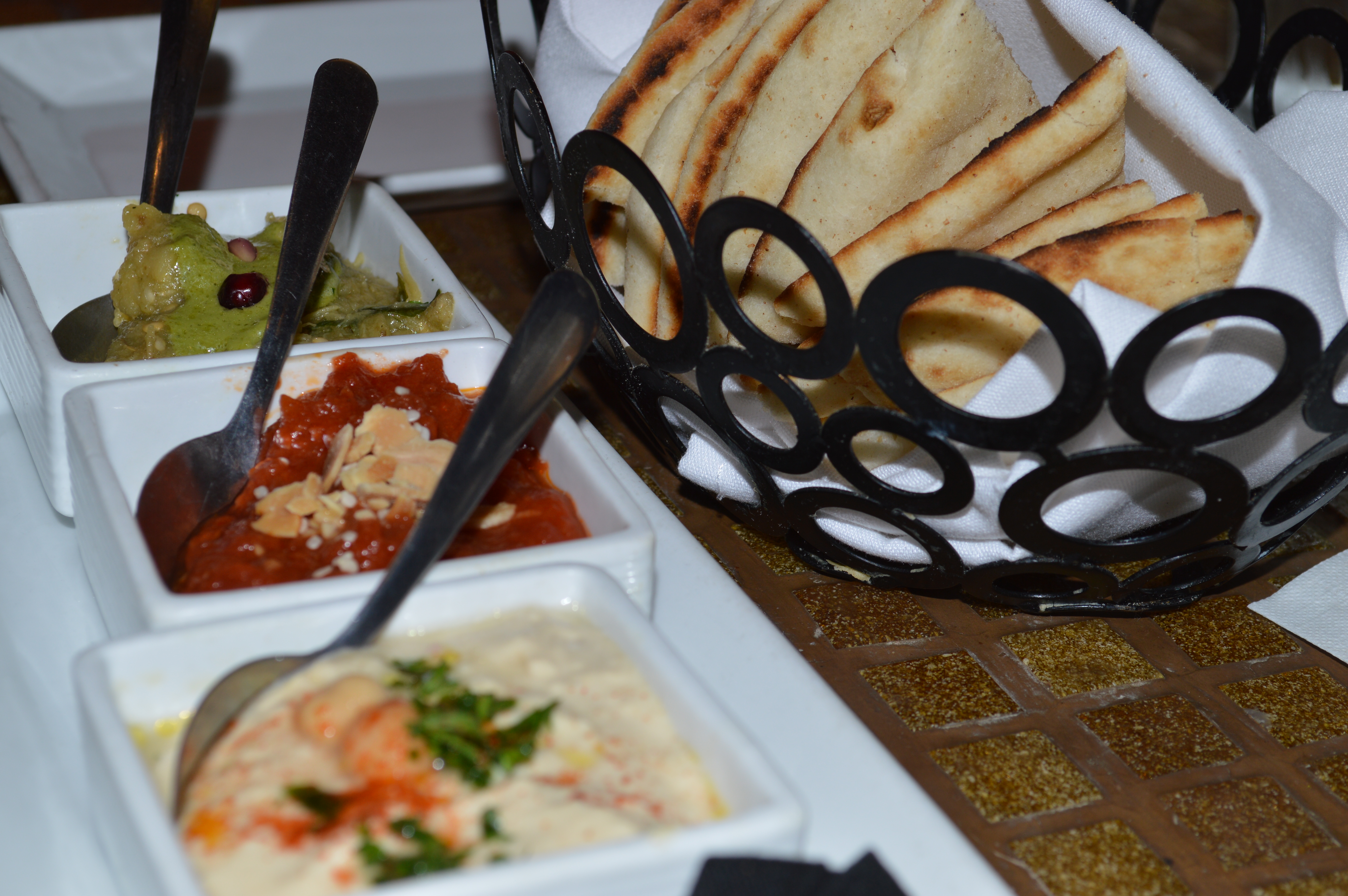
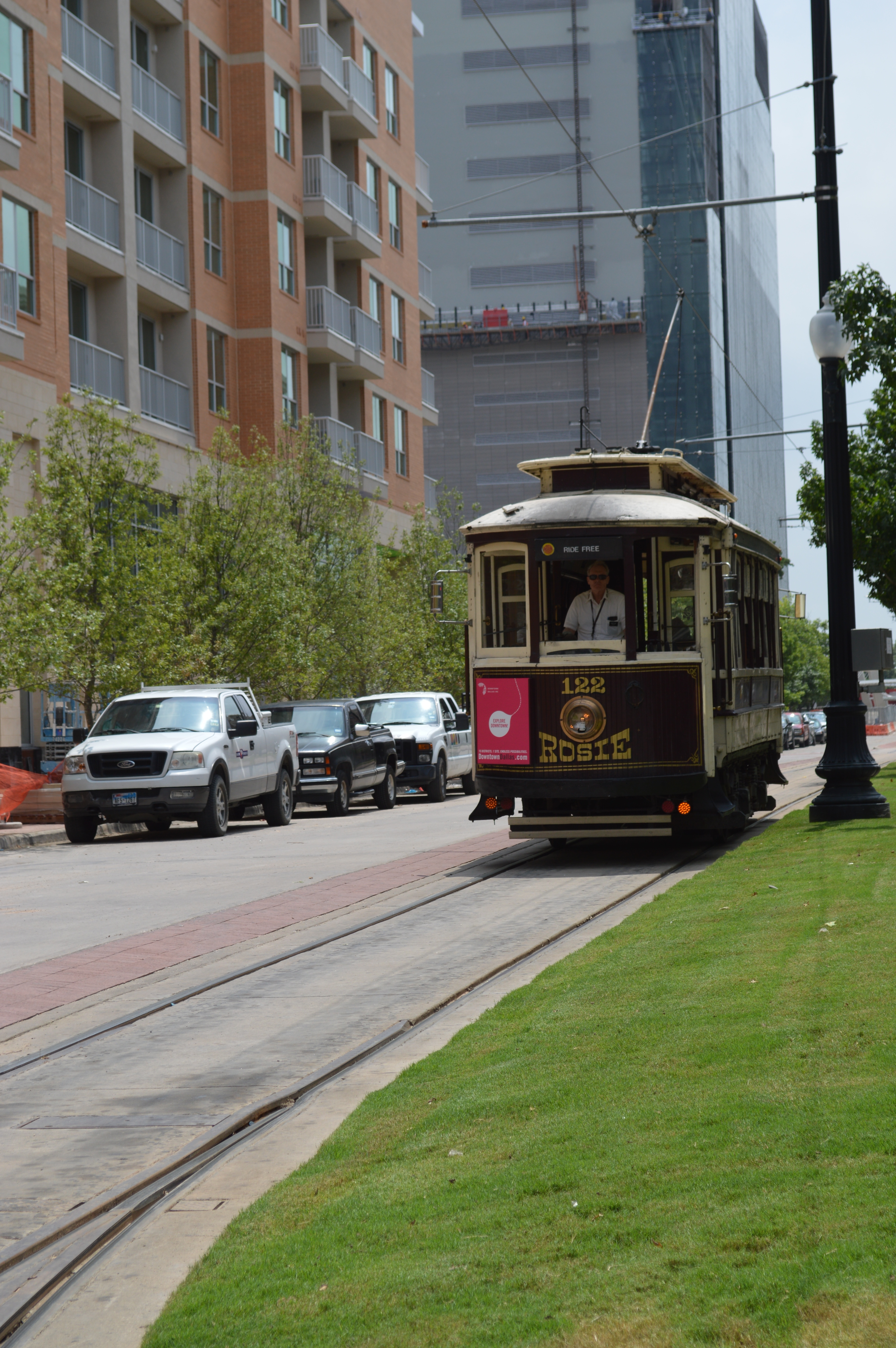
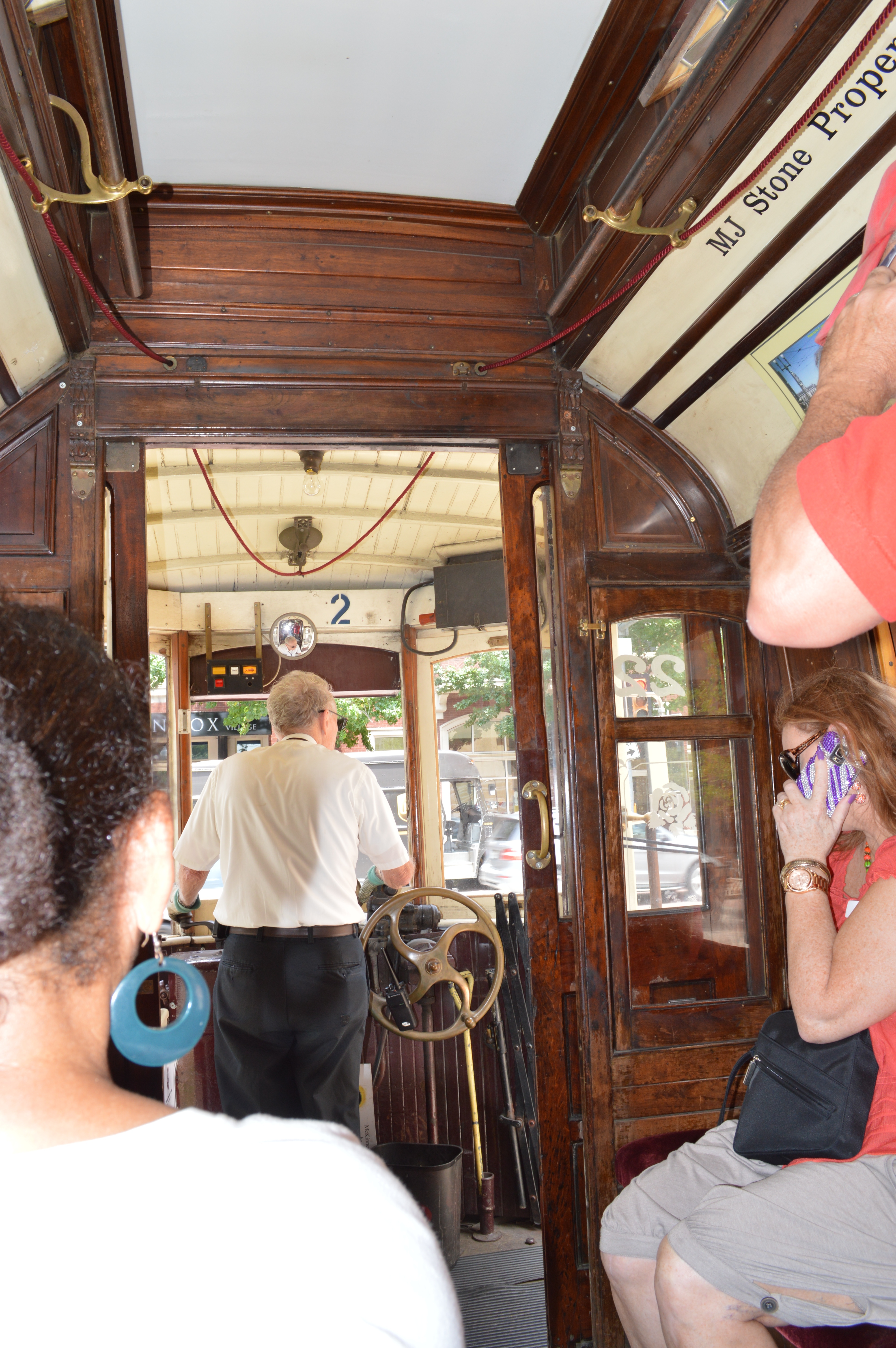
Who knew there was such a diversity of food in Dallas! The West Village Restaurant Hop offered a delicious and informative tour of cosmopolitan Dallas. Despite the “restaurant hop’s” focus on food, Jim our guide was well prepared and very knowledgeable about the area.  There were nine in our group making it a learning experience not only of Dallas food but also of each other. It was a fun activity to share and enjoy with my niece and daughter on a beautiful and unseasonably cool August day in Dallas. We even went back to the first restaurant after the tour ended to sip on sweet mint tea. I was surprised by the efforts of architectural preservation (many of the restaurants were converted homes) and the attention to civic space. The ride on a 1909 restored trolley was unexpected. As was the Arts District surrounding Klyde Warren Park (easily one of my favorite parks and civic spaces now). There were food trucks lined up  with tables in the park, including the architecturally inspired Ice-cream Sandwich Truck: Coolhaus. Sadly, after the tour, I was too full to try it. I must go back for a food truck tour on my next visit. People reading, eating lunch, kids with dripping ice-cream cones or just dripping with water after running through the dancing water sprinklers, all made for a beautiful relaxing way to spend an afternoon, even before entering the Art Museum or the Performing Arts Center. The food tour was a wonderful introduction to a tasty and beautiful Dallas I had not met despite my years in Texas. I’m convinced that the best way to know a place is eating through it, on foot with others. A culinary version of a Socratic dialogue.  Hmmmm, I wonder if its easier to listen to others because our mouths are busy chewing and we talk less because we’re eager to get back to eating. Sounds like a recipe for a good conversation. Eat, listen, talk, eat, listen, eat…eat…eat…repeat.

Wishing you happy consuming conversations in Dallas or anywhere,

The Hungry Philosopher

 DSC_0046

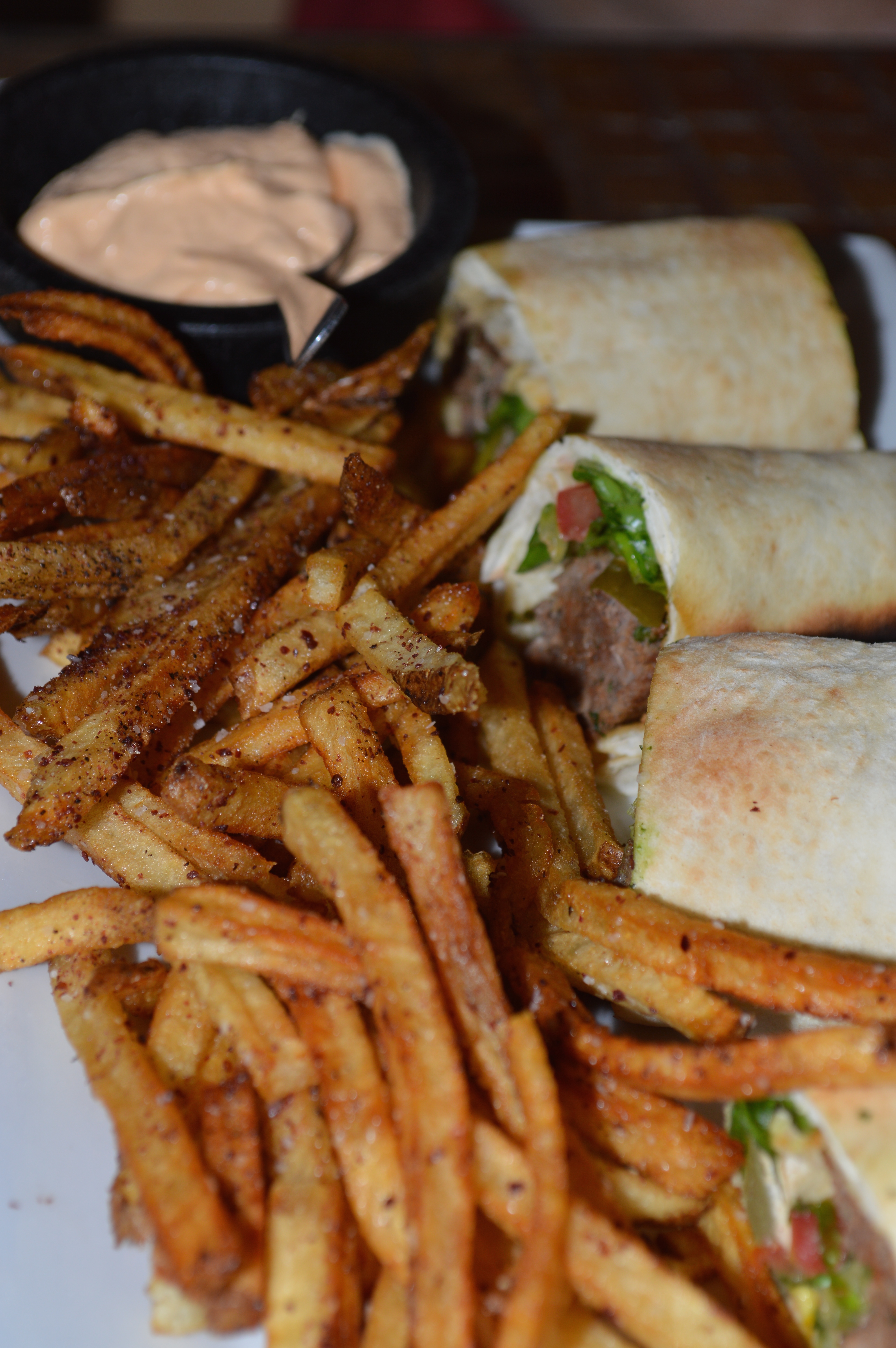
DSC_0047Moroccan kefta roll ups at Baboush was my favorite.


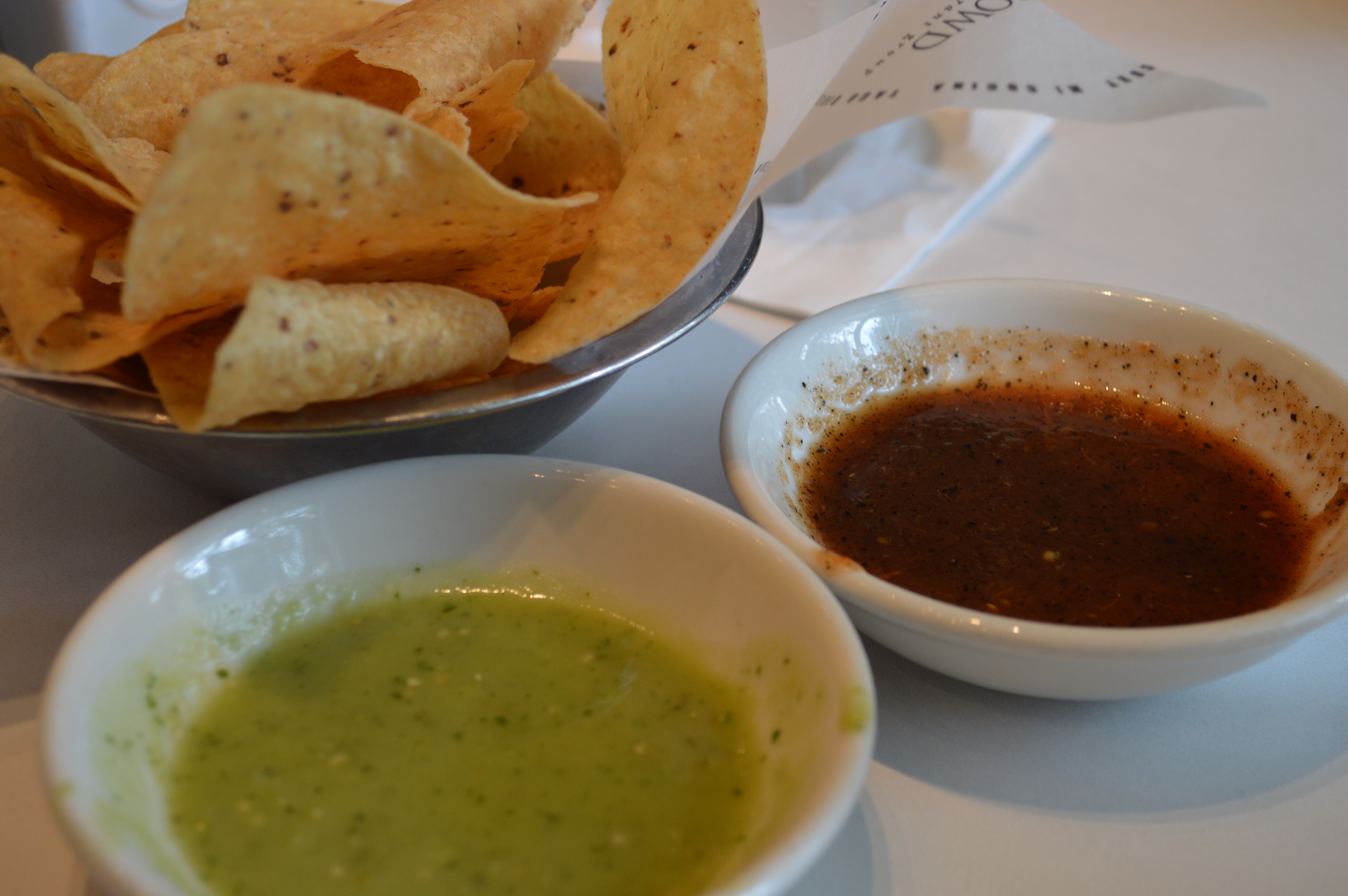
DSC_0052  DSC_0049  DSC_0051     The Salsas and Pineapple Chicken Tacos offered BIG flavors of roasty, sweet and spicey in small bites at TACO DINER.

DSC_0057

DSC_0058

DSC_0059              DSC_0085

http://www.toursdallas.net/

http://www.klydewarrenpark.org/

http://eatcoolhaus.com/

Kenny Shopsin’s Creative Process

As promised earlier, here is an excerpt from Eat Me: The Food and Philosophy of Kenny Shopsin about creativity.

“Cooking, for me, is a creative process, and I believe that people who are creative are creative for one of two reasons: Either they are going for truth and beauty, or they create as a way to dilute the venom produced by the subconscious minds. I cook for the second reason. When I cook, I am in a cathartic, recuperative process that calms me down and brings me from a neurotic state to a relaxed, functioning state.” ……

“I am not an Alice Waters type of cook who is inspired by ingredients and builds from there. The inspiration is mine — it comes from within me. But as a creative person, ingredients are the tangible medium I work with, so when I am inspired, when I am in the therapeutic, creative process of cooking, I start looking around, and the more ingredients I have, the more creative I can be.”

Cooking as creative therapy is certainly familiar to many us. When my children were young, cooking was a major creative outlet that I could share with my family everyday. I fondly remember my oldest sitting on the counter discovering new tastes as I was discovering new techniques and ingredients. Cooking became a visceral form of philosophy for me. I like Shopsin’s compulsive sense of creativity as a self-recovering urge. And, that his relationship with ingredients is collaborative rather than instructive. The emphasis on more….abundance, multiplicity, contradiction, duality (ying-yang bowls) reflects in his recipes. He is not searching for the true and the authentic. He talks about his “culinary fictions” that are dishes not authentically ethnic, like Carmine Street Enchiladas, but “feels” to him Mexican, Brazilian or Greek.

From a design historian point of view I see him adopting the early 20th century Aesthetic Movement stance that aspired to convey the sense and feel of  a culture, to mix and match as the designer or artist saw fit. It was a philosophy that embraced the joy of life and the freedom of artists, appropriately championed by Oscar Wilde. It was an era that produced incredibly standardization resistant, subjective and creative things like this, tongue vase by Christopher Dresser. IF

I feel like Kenny Shopsin would appreciate this vase. Although I don’t think we’ll find it at Walmart anytime soon.


Eat me – Shopsin’s Philosophy

41pV4Fd04hL

Eat Me: The Food and Philosophy of Kenny Shopsin is most definitely one of my favorite, cooking, food writing, philosophy and design books. Its witty, thoughtful, informative, blatantly honest and at times appropriately NYC gritty. I enjoy the images, as much as the words, that are profoundly mundane and real. Shopsin’s philosophy  implicitly fuels his life, cooking, business and becomes explicit, almost belatedly,  in his epilogue about the art of staying small,

“Running a restaurant for me is about running a restaurant. It is not a means to get someplace else. I wake up every morning and work for a living like a farmer. Running a restaurant is a condition of life for me. And I like everything about this life. I like waking up in the morning knowing I am going to the restaurant to cook, that something unexpected will happen to me in the kitchen, and that no matter what, I will learn something new. I like the actual process of cooking. I like shopping for the food that I cook, and I like my interactions with the people I meet while shopping. I like my customers, and I like working with my kids. It is a simple existence, but for me the beauty is in that simplicity. These are the things that bring me pleasure — and they bring me great pleasure on an extremely regular basis.

Living this way, pursuing your own happiness, is addictive and it’s the way I have tried to conduct my life. What this means is doing what it takes to make yourself feel good each day, not to make yourself less good today in the hopes that your life will be good in ten years because you’re working really hard now or because your property will be worth more money then. The way I figure it, if you make everyday of your life as happy as you can, nobody can take that away from you. It’s in the bank.”

Shopsin’s insistence on experience, on being in the present, on owning one’s pleasure, on loving a complete process, all point to his pragmatic life affirming philosophy just as his extensive menu is evidence of his lust for experimentation, learning and innovation. Next time, a quote about his thoughts on creativity. In the meantime,  read the book and its recipes. Its about food, philosophy and design that is perfect reading for hungry philosophers everywhere.


Rangpur Egg Curry

photo

IMG_0007

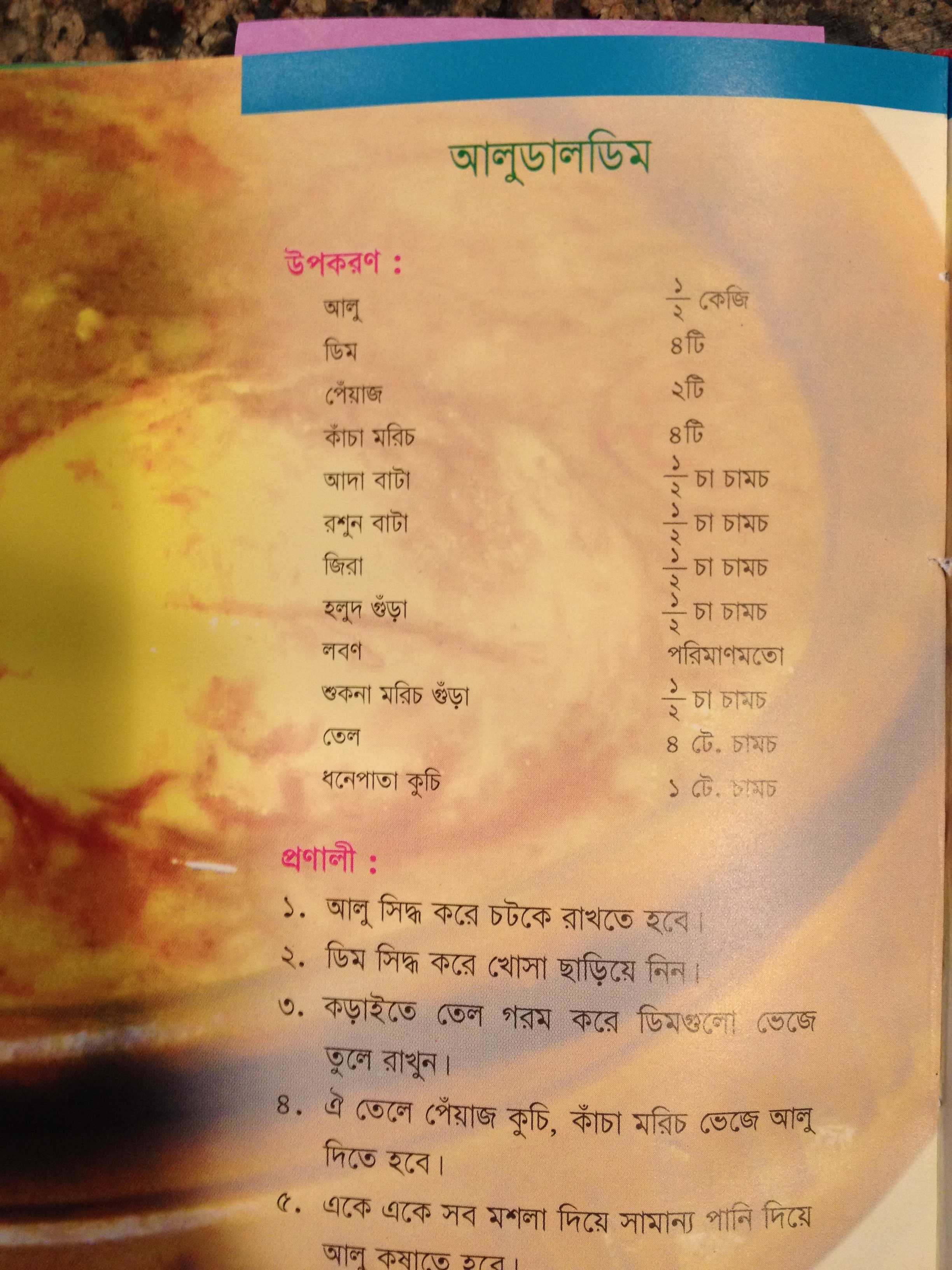
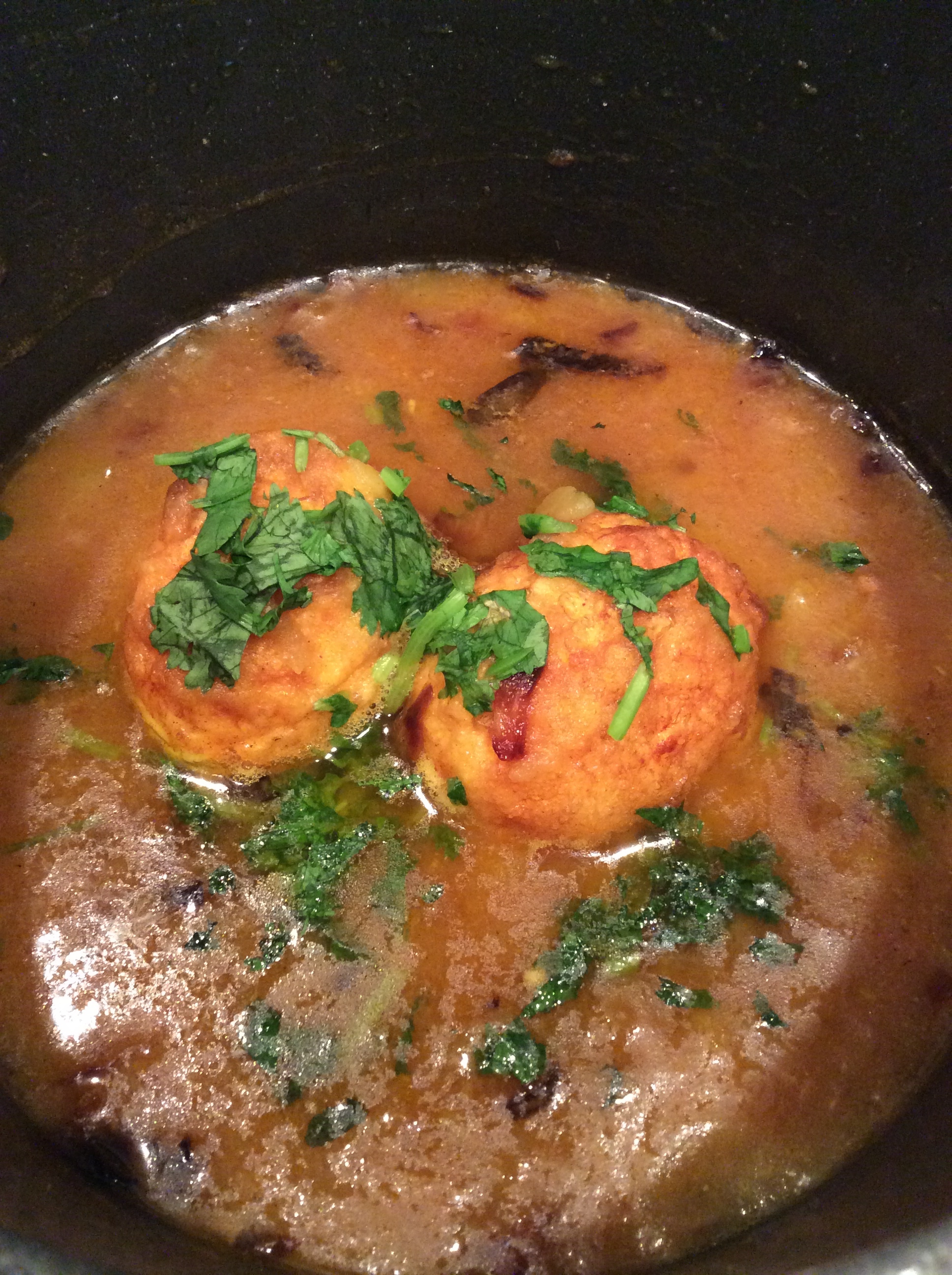
My mom gave me this cooking book about regional cuisine of Bangladesh. Most of the recipes I have never tasted. Its strange to re-taste a cuisine I thought I knew. Here is one of the recipes that I tried. Its an egg curry with a twist. The curry sauce includes potatoes that gives the sauce a delicious thick soup-like consistency. The flavorful sauce clings to the fried boiled eggs. Delicious with rice but would also be great to dip with bread. Here’s my translation and U.S. interpretation of the recipe from the Bangaladeshi Regional Cookbook by Runa Arefin.

Aloo Dal Dim

Potatoes 1lb (about 4-5 medium red potatoes)

Eggs  4

Onions 2 (1 large American yellow onion)

Green chili peppers, chopped 4 (I used 1)

Ginger Paste 1/2 teaspoon

Garlic Paste 1/2 teaspoon

Cumin Powder 1/2 teaspoon

Tumeric Powder 1/2 teaspoon

Salt to taste

Red Pepper Flakes 1/2 teaspoon

Oil 4 Table spoons

Cilantro 1 Table spoon

1. Boil potatoes and coarsely mash.

2. Boil eggs and peel.

3. Heat oil and fry eggs. The eggs will blister and the oil will pop…so be careful.

4. Take out eggs. In the same oil add and heat the onions and green chilies. Add Potatoes.

5. Add all the spices to the potato mixture. Add a little water. I put about 2 table spoons.

6. Once the spices are well incorporated and roasted. Add water to desired consistency. I added about 1/2 cup and simmered the curry a bit longer.

7. Add cilantro before serving.

Its not very spicy but feel free to adjust the heat or any of the spices to your taste. I just found the potato curry sauce an unusual surprise.


(De)sign for Homemade

_76293904_logo_afpmesturet2_624

http://www.bbc.com/news/magazine-28313666

A recent law aiming to protect the quality of French food requires restaurants to identify dishes that are cooked to order (not frozen or pre-made). Philosophically, the question of what makes something “homemade” is worth considering as is the new logo (a casserole dish with a house roof) that will alert consumers.

The basic claim was that “homemade” supports local produce and labor needed to cut, chop and peel the local produce in addition to supporting the culinary craft. The negotiated law however, allows frozen and packaged produce and according to critics undermines the initial intent. The law differentiates and requires restauranteurs to identify industrially produced from locally crafted food. But the differentiation itself is proving difficult. Hence, the controversy.

How do we personally identify a home-made dish? Last night we had grilled salmon with lemon, garlic butter, salad and bread sticks. The salad was prepackaged, as was the bread sticks, we grilled the salmon and the mixed the butter with lemon zest, lemon juice and a clove a garlic. We also had brownies and ice-cream for desert made from a prepackaged mix. Was that a homemade meal? I don’t know. Our tolerance for industrial food products, perhaps particularly in the U.S. has risen to an almost naturalized level. When we go out, do we expect a custom made dinner? When so many of our favorite restaurants are represented in the freezer section of the local grocery stores, the myth of a local customized dinner is not only shattered but celebrated. What is the line between convenience and craft? Shouldn’t there be a line? The battle over standardization and industrialization against craft and localization takes place on our dinner plate every night. Who are we as 21st century consumers?

What is at stake in the “homemade” logo is the responsibility of thoughtful, aware and discerning consumption. I wonder if someone is planning to study consumer behavior related to the new logo. Will customers choose the identified “homemade” more? Would you or I?


Hannah Arendt’s Cherries and Cigarettes

http://www.imdb.com/title/tt1674773/

Last night I watched the 2012 Hannah Arendt movie about her coverage of the Eichmann Trials and its subsequent public reaction. The movie depicts her own struggle to take public responsibility for her thoughts about thoughtlessness (i.e. banality) at the root of evil.  In an age where opinion polls, consumer reports and endless reviews easily replace ownership of personal thoughts and responsibility, Arendt’s call to think for oneself seems so simple, yet so impossible.

Here is a blog post from the Arendt Center that talks about Arendt’s love of philosophical debate over bowls of cherries and her love of cooking. Now, I will always think of Hannah Arendt as I, the ever hungry philosopher eat cherries. Hope you do too.

http://www.hannaharendtcenter.org/?p=4302

I won Hannah [Arendt] at the Ball with a comment made while dancing, that loving is that act by which something aposteriori–the by-chance-encountered other is transformed into an apriori of one’s own life. –This pretty formula naturally has not been confirmed.

—Günther Anders

In honor of Valentine’s week, we offer this account of Günther Anders courtship of Hannah Arendt. The quotation is taken from Günther Anders book, Die Kirschenschlact: Dialoge mit Hannah Arendt (The Cherry Battle: Dialogues With Hannah Arendt).  The Cherry Battle is an extraordinary window into Arendt’s early thinking.

I am always wary reading a book of biographical or personal content about Hannah Arendt. Her life is fascinating. I am always on guard against the seductive danger of reading too much of her biography into her work. And wow is this a riveting read.

Anders was Arendt’s first husband. A fellow Jew, they met in Martin Heidegger’s lecture hall where they both heard lectures on Hegel’s Logic and participated in a seminar on Kant’s Critique of Pure Reason. Arendt, at the time in love with their Professor, had little time for Anders (who went by his family name Günther Stern). Five years later, in 1929, they met again at a masked ball in Berlin, where he spoke the above words to Arendt while dancing.

Arendt and Anders were married not long afterwards and moved to Drewitz (now Potsdam) where they tried to make lives for themselves as independent writers. It was there, on the balcony of the apartment they sublet, that Arendt and Anders would eat bowls upon bowls of cherries.

We sat across from each other on the tiny balcony, between a colossal basket of cherries; on the left and right were empty marmalade jars, for we pitted the black, plump fruit, in order to cook it—what for her was a great joy, like cooking in general, which she mastered even as well as philosophy. We put the pits in one jar, the fruity flesh in the others. And always a few in our mouths—especially [Hannah], for she was just as desirous of cherries as she was of cigarettes…

Aside from Arendt’s passion for cherries, there is much to learn from Anders’ account of their early conversations. This is true even though the book is a reconstruction, part truth and part fantasy. As he writes, the dialogue itself is real (as is the scene of the cherry battle), but the words themselves are “just as much poetry as truth.”

The topic of the dialogue is one that would occupy Arendt and Anders both for much of their lives: “The Irrelevance of Mankind.” That is Anders formulation. What comes through in this magical dialogue is the joy in thinking and sparring by two young and gifted thinkers (Arendt was 22-23 at the time, Anders around 30). They punch and counterpunch, Anders taking up the Darwinian and scientific position that man is, in the end, merely one creature among others, not special or particularly relevant in any way. Or, as Arendt asks him, astonished: “You mean we are fully irrelevant? And unknown? And purely busybodies, things with no sense? Metaphysical busybodies?”

Arendt is, in Anders’ words, “too Jewish” to concede that human beings were simply “pieces of the world.” The world was, and remained for Arendt,  “created for mankind.”

At one point Anders insists: “we are simply not mature enough to concede the fact of our cosmic irrelevance; that we are too cowardly and possess too little civil courage to learn to accept that which has been that human modesty that follows from Copernicus.”

Arendt counters that all species think of themselves as the center of the world, to which Anders parries: the fact that we share a defect with other species does not make us better than they. To be met with what Anders calls Arendt’s “winning argument”: “Naturally not. But perhaps we are the only species that is conscious of this defect; that at the least has a monopoly on the insight into its non-monopoly position.”

We’ll have a full review of Die Kirschenschlacht: Dialoge mit Hannah Arendt before long. For now, just think, it is only a few months before the cherries are ripe.

-RB

 

The joys of Consuming (and capitalizing) Chance

9780762777501_custom-9edd7709f697db1925bf2326982638be2e94ee59-s2-c85

http://www.npr.org/books/titles/151450134/how-the-hot-dog-found-its-bun-accidental-discoveries-and-unexpected-inspirations

Here’s my book report of the week on “How the Hot Dog Found its Bun” by Josh Chetwynd. The book takes us on a historical food tour of  discovery that adds magic and meaning to mundane small meals like hotdogs, nachos, Caesar salad, Cobb salad, Mcdonald’s Filet o’ Fish and Tempura. Each is a lesson in cultural collisions (like Tempura, Chimichangas, nachos and Chicken Tika Masala), business (in the case of the Mcdonald’s fish filet sandwich) , morality (in the case of graham crackers, PEZ the anti-smoking mint), efficiency (like cookies and cream ice-cream or nutella) and such. All these short “origin” stories are worth the read alone.

For me, the theme of serendipity, chance and luck that tied the stories loosely together made for a larger philosophical claim: To  be open and willing to convert the disruption of falling sales on Friday or unexpectedly late restaurant patrons, into something new and delicious. To turn a mistake (Molten Lava Cake) into something cherished. To defy the discomfort of an accident and turn it into luck. Its a difficult lesson to hold on to at the moment when we’re searching for a way out of an embarrassing mistake or of being unprepared, as window into something delicious. We do this everyday when we substitute ingredients with what we have sitting in the fridge. Yesterday, I sprinkled feta cheese over my chicken enchiladas with salsa verde…..the tart sharpness of the feta was so yummy with the hot bite of green chilies, cilantro and tomatillos. In my mental recipe database, what was accidental just turned into intentional……and my very own discovery. Small victories and joys.

Here is something I learned about the history of serendipity from the book besides a wonderful collection of surprising food stories.

Behind these lucky discoveries are usually acts of serendipity, a concept first coined by Horace Walpole in 1754. He’d read a book about Serendip (modern-day Sri Lanka) called The Three Princes of Serendip and was fascinated by the title characters, who “were always making discoveries, by accident and sagacity, of things which they were not in quest of.” Using that quote as a definition, he started describing some of his work as serendipity.

What makes serendipity so fascinating is the combination of the lucky find and the smarts (or to use Walpole’s fancier term sagacity) to capitalize on the breakthrough. As Albert Einstein once said about discovery: ” The really valuable factor is intuition….There is only the way of intuition, which is helped by a feeling for the order lying behind the appearance.” The intuition to turn what looks like a blunder into something special comes up often throughout this book.”

Wishing all of you Good-Luck (as chance favors the prepared..according to Luis Pasteur) and happy reading,

The Hungry Philosopher

Happy 86th Birthday Sliced Bread! (and, Poem on the Fridge) on Writer’s Almanac

article-2358285-0C904E7B00000578-136_634x354

http://www.dailymail.co.uk/femail/article-2358285/The-greatest-thing—A-look-history-sliced-bread-jeweler-inventor-celebrates-85th-anniversary.html

http://writersalmanac.publicradio.org/

Poem on the Fridge

by Paul Hostovsky

The refrigerator is the highest honor
a poem can aspire to. The ultimate
publication. As close to food as words
can come. And this refrigerator poem
is honored to be here beneath its own
refrigerator magnet, which feels like a medal
pinned to its lapel. Stop here a moment
and listen to the poem humming to itself,
like a refrigerator itself, the song in its head
full of crisp, perishable notes that wither in air,
the words to the song lined up here like
a dispensary full of indispensable details:
a jar of corrugated green pickles, an array
of headless shrimp, fiery maraschino cherries,
a fruit salad, veggie platter, assortments of
cheeses and chilled French wines, a pink
bottle of amoxicillin: the poem is infectious.
It’s having a party. The music, the revelry,
is seeping through this white door.

“Poem on the Fridge” by Paul Hostovsky from Selected Poems. © Futurecycle Press, 2014. Reprinted with permission. (buy now)