
So….how’s the reading going? Do you find yourself noting moments of mindfulness during your day? Do you hear Judith Laster’s gentle advice to heed the feelings of impatience and fear? Somedays I am more self-aware than others. This week’s notes cover topics about our relationship with ourselves: faith, perspective, courage and relaxation.
“….I came to understand that belief is a preconception about the way reality should be; faith is the willingness to experience reality as it is, including the acceptance of the unknown.”
Spirituality in all forms begins with the premise that we can’t know how everything connects, a faith in something greater than our limited existence. I liked one of mantras for daily living that Lasater offers in the chapter: ” Faith is the quiet cousin of courage.” It prompted me to ask myself what do I have faith in? How does that faith guide my actions and days? Does faith help me to stay in the reality as it is or is it a belief in how reality should be?
“With our willingness to have perspective, not only do we increase our ability to disinguish the important from the unimportant, we also increase our capacity for compassion toward ourselves and others.”
To take life’s challenges big or small as an invitation to shift our perspective and our expectations is so difficult. What do I consider demanding or challenging? Why? How could that challenging person or event help me see differently? How do I let go of my stubborn perspective and let myself see from another person’s perspective? In the current political climate, I’ve been feeling particularly challenged to see from different perspectives who see immigrants and Muslims as potential threats, who see me as a potential threat to national security. Can I feel compassion for that fear? In an effort to see from a different perspective I’ve widened my collection of daily newspapers and reading [highly recommend: Strangers in their own Land by Hochschild and Between the World and Me by Ta-Nehisi Coates], refrained from deleting people from my media stream, I’ve appealed to my faith in the innate goodness of people and mostly I’ve cultivated my gratitude . Yes, perspective has lately required much effort. Lasater’s mantra, “The worse could happen; the best could happen. Life is usually somewhere in between.” helps.
The next topic that flows from perspective is courage; to act out of compassion instead of fear.
….those times when I have been most afraid were when I felt disconnected from God, from Sprit, from the Universe, from family and friends, and, most importantly, from my own heart. Courage cannot exist in isolation.
To have courage in the face of the unknown and of shifting perspectives is to rely on a deep commitment to the connections that sustain us. What is worthy of my courage, my action? What is worthy of struggle?
As if sensing our strain, from the demands of faith, perspective and courage, Lasater concludes the section about yoga within yourself with…..relaxation.
This is a key to living yoga. Watching thoughts of anger, greed, boredom, impatience, I was no longer at the mercy of them. I had some space to choose what I would say and do in a way I never had before. I began to recognize patterns; I began to take it all more lightly. By learning to relax, I experienced less physical tension, which allowed me to see my monkey mind, which allowed me to let go of it a bit, which allowed me to feel more connected to the present moment, which is another word for the Infinite.
Oddly, relaxation takes practice. To develop the skill of relaxation, I allow myself to be a spectator instead of an actor. As I witness my thoughts, actions, emotions, I begin to realize that I am more than all those aspects of myself. And, more importantly, the person next to me is also more than her actions, thoughts, and emotions. That “something more” is what we all share. It is not by accident that Shavasana or corpse pose is a reference to our shared mortality with all living things.
The progression of these chapters asking us to notice our faith, perspective, courage, and relaxation was difficult. How can we be both courageous and relaxed at the same time? How can we witness and act at the same time? How can we honor ourselves and other perspectives too?
Part two, about our connection with others, begins to address my concerns. Not surprisingly the first topic in the next section is compassion.
Tell me about your thoughts about reading. How do you feel about the topics? Are they challenging for you? How do you resolve the seeming contradictions that I see?
Wishing you happy reading and ease,
the Wobblyogi



 Book Patanjali Book One tells us why we practice yoga….to restrain the brain. These sutras present yoga as a combination of mental restraint and mindful reasoning, reflecting, rejoicing and recognizing the “I” that appeals to the universal. The self is both restrained and empowered by encouraging selfless and limiting selfish acts. Thinking should help us be kind, not right or worse righteous. Non-judgmental thinking is an incredible challenge. It is so easy to put things in boxes of right,wrong, good or bad. I don’t know if we can ever see our intentions clearly. Yoga, if anything is a working evolving practice of seeing ourselves in the world.
 I find myself surprised to be at week 6 reporting on week 5. Where did the time go? It feels long in terms of how much I’ve learned and short in terms of knowing that there is so much more to learn. This week was mostly devoted to discussing the history, the branches and styles of yoga. Mapping the stylistically wide and historically deep world of yoga has left me happily lost. What combinations would my yoga practice include: Hatha, Vinyasa, Yin, Jnana, Karma, Kundalini? This was as much about my own history and what brought me to yoga as it was about discussing the hazy, dense lineage of yoga practice that feeds into yoga teacher training in small-town Indiana.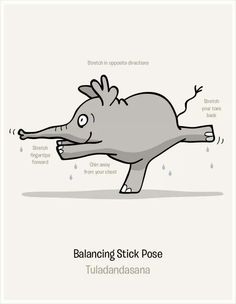

 The Hungry Philosopher