The Self-Examined Appetite

“To put it concretely, I am suggesting that critical self-awareness about food relates in fundamental ways to central issues of personal meaning in the life course of any person. From childhood onward, our ability to control what we eat, or whether we eat at all, is the single, most basic aspect of life in which we have full power to assert autonomy. When a young child refuses food, or spits out something disliked, he or she is taking a first important step toward self-determination. Viewed in this philosophical light, every child’s highchair can be seen as the site of a small-scale struggle for existential freedom.”

This is one of my favorite quotes from How We Eat by Leon Rappoport (ECW Press, 2003).

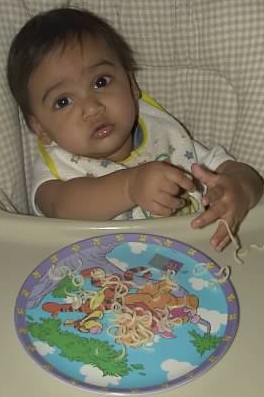
The quote also reminds me of an earlier blog post (forgive the self-reference) about Yummy Wet Noodles.

Rappoport argues that food habits as a form of self examination negotiate competing ideologies of hedonism, spiritualism and nutritionism. Each food choice contains our philosophical comportment towards pleasure, morality and health. This choice changes in response to our existential struggles. For example,  when we are young we look more to the pleasure of eating, as we age we become more attuned the needs of our dying body and in between, we struggle with social conformity. The child in a highchair throwing or sharing food is taking the first steps towards autonomy, in how he/she responds to what is given. How we eat, as the title of the book suggests, determines how we individually and autonomously receive the world and its offerings. In examining our food habits we examine our style of being in the world.

There were so many highlights in the book that I want to briefly mention. Related to childhood autonomy there is a section that follows the in utero development of taste, as well as breast milk as the medium of early tastes. There is also a discussion about gendering of food and the determination that chicken and oranges are bi-sexual. Marketing is a strange reductive activity. The discussion of war rations as possibly predictive of future trends, as well as historical references to Betty Crocker and others, made the book both entertaining and fascinating.

In the spirit of self-examination (and confession) I had a breaded chicken sandwich for lunch today. It was definitely a weak decision fueled by pleasure over spirituality or nutrition. I was looking for something, quick and easy in my freezer. It was easy to eat on the porch on a beautiful Indiana summer day while I read my book on how to eat. It made me think of my kids and nephews, who could live on chicken nuggets. I remember the moments when I popped a few in my mouth as I handed them their plate. Its a familiar taste. Certainly not a gourmet meal. Being self-reflective about what we eat doesn’t require a constant stream of deeply critiqued and crafted meals, it just requires receptivity, to yourself and your connection to others. Maybe, the chicken sandwich wasn’t a weak decision after all.


A Food tourist takes a walk on the Socratic Side

IMG_1047

The Wok Shop in San Francisco


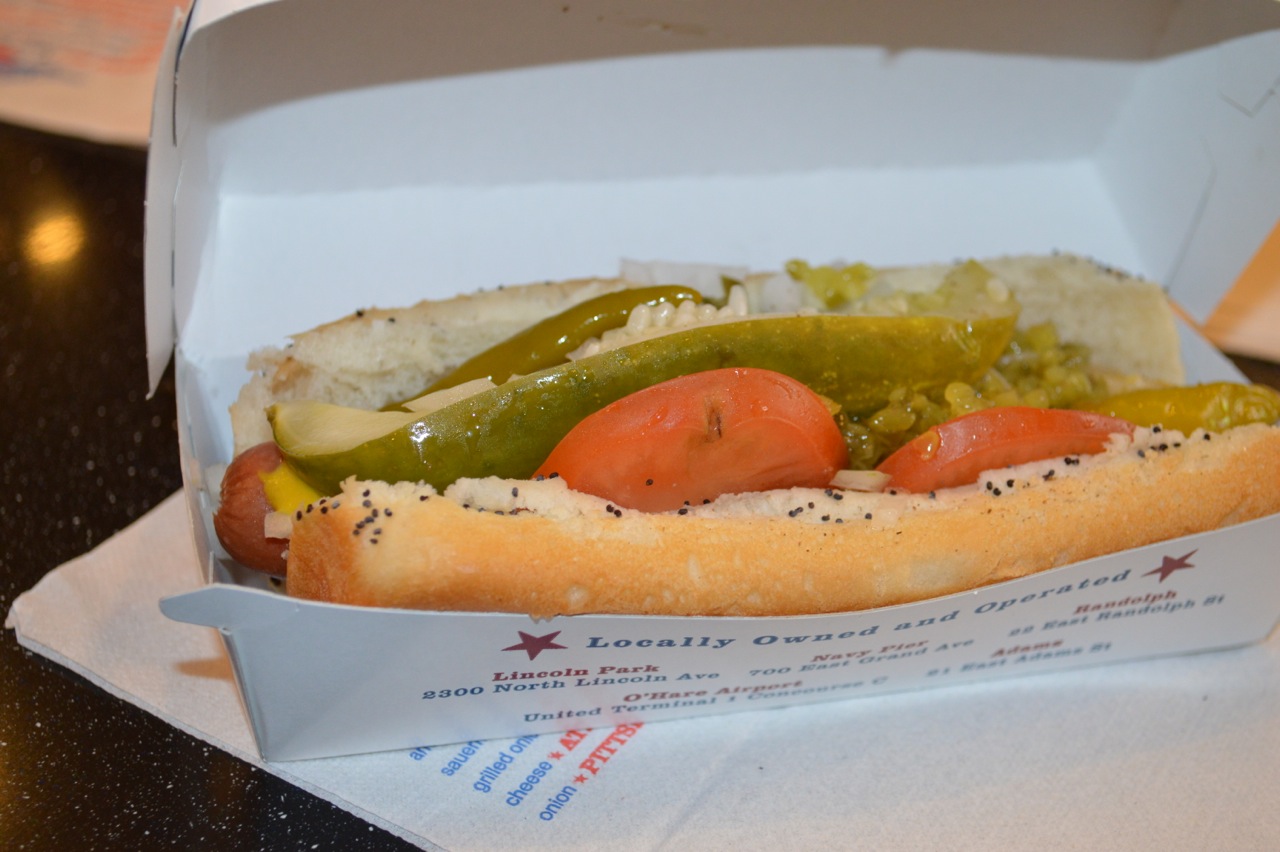
I’ve been on three food tours so far. First, Georgetown, D.C, second, San Francisco China Town and last week Chicago. I’ve learned a lot, tasted a lot, and enjoyed a lot. Food tourism might just be my new sport. There are a few practical advantages of a food tour besides the obvious excitement of eating cultural history.

First, a tour allows me to sample small dishes in various places without feeling guilty or sorry for the waiter.

Second, it allows me to follow someone around and focus on eating not locating.

Third, it allows me to meet interesting people happy to talk about their food experiences.

All good reasons to go on a food tour.

If you have dietary limitations, allergies or just don’t like trying new things, I would still encourage you to go. Here’s why: while food navigates the tour, the walk and associated stories themselves are well worth it. These discoveries are just as enjoyable as finding a new delicious taste. Like listening to owner of Wok Shop in San Francisco passionately defend the superiority of traditional Woks or looking at the Tiffany Domes in the Chicago Cultural Center while Jazz music floats in the air. These are moments when design and food, the aesthetic and the gastronomic touch in fantastically beautiful and delicious ways. Its better than walking through museums because we use all of our senses as the privilege of the objective eye diminishes. Food tours offer a taste of what might be a 21st century philosophical walk of consumption and shared meaning. The conversations during a food tour center around personal and shared nostalgia, vacation plans, personal taste preferences, favorite sports teams and so much more. The information shared is both public and intimate.

On a domestic level, The Philosopher’s Table by Marietta McCarty aims to help us engage in philosophical dinner conversation. Each dinner involves diners around a table with a question to consider and corresponding food. http://www.thephilosopherstable.com/

Here are a few images from my tours as provocation………to go on a tour and take a walk on the Socratic side.

DSC_0093  DSC_0097  DSC_0118  DSC_0120

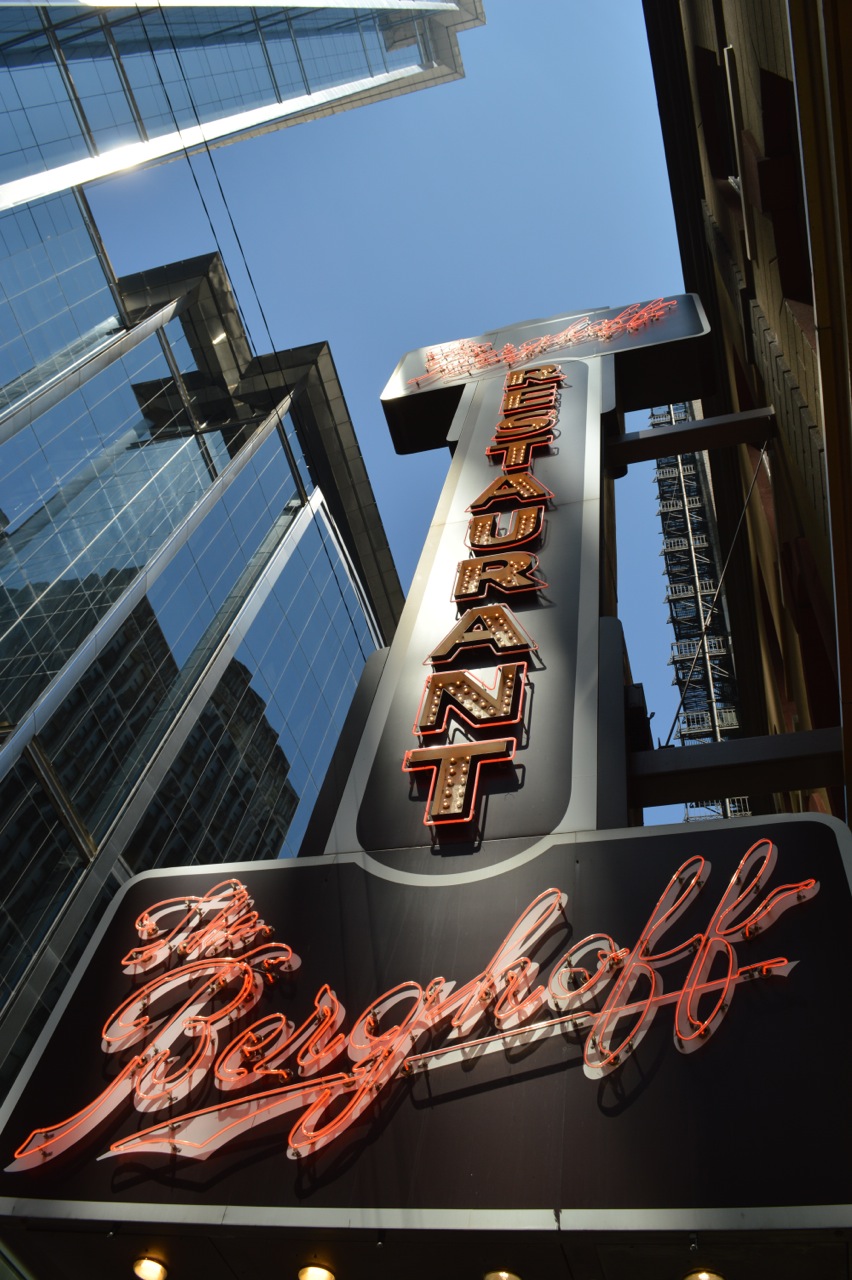
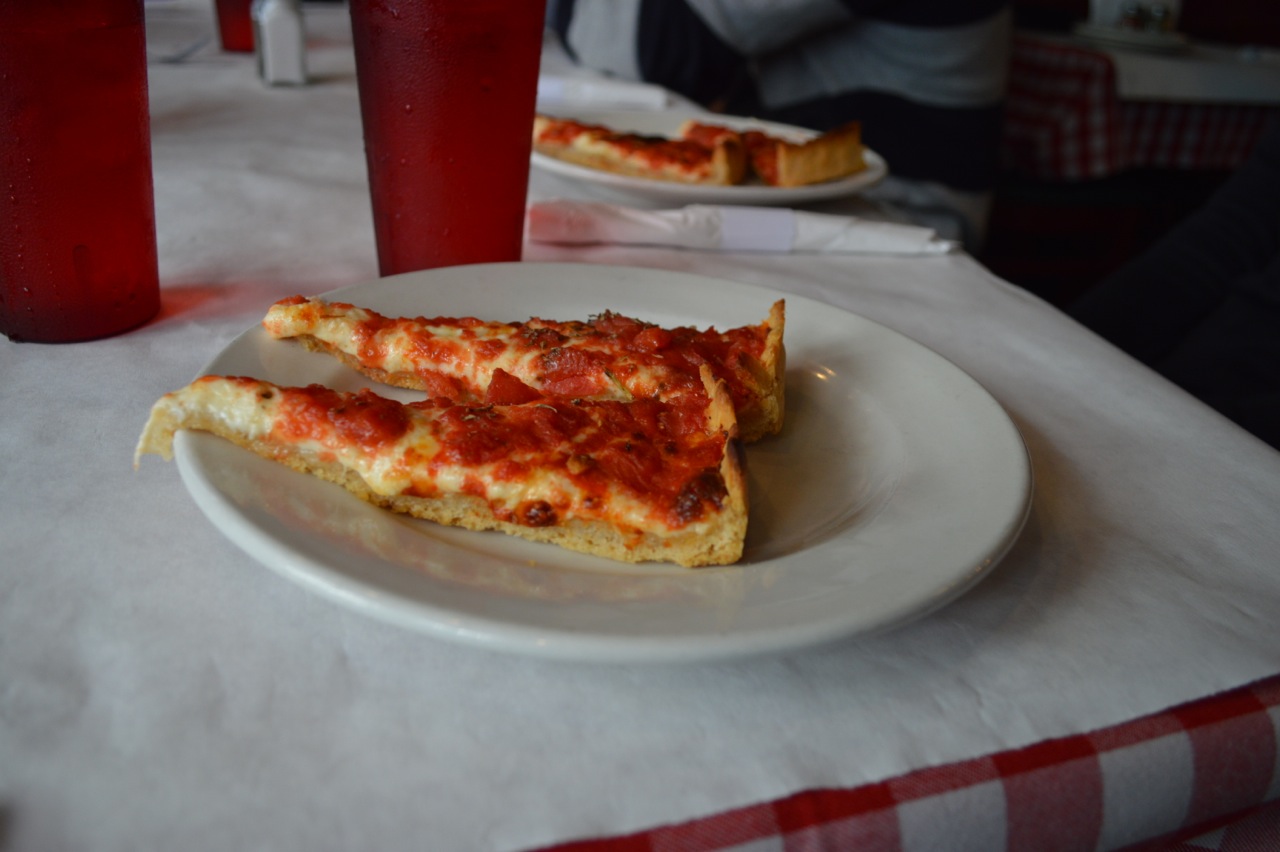
Taste of Chicago: Tastebud Tours http://tastebudtours.com/tours/chicago-tours/


← Back

Thank you for your response. ✨


Food, Color and Happiness

A-Moving-Riot-of-Color

Truck Image from: http://www.saglobalaffairs.com/features/1445-a-moving-riot-of-color.html

A blogger from Tasmania, Australia, Harry wrote an entry entitled The Happiest City in the World that referred to Rajshahi, Bangladesh, voted the happiest city on earth by the World Happiness Survey in 2006. What accounts for the happiness in such a difficult social, political and economic context? He asked. His blog entry was again published in The Bangladesh Reader (Duke, 2013) for its vivid description of his dinner and travel experience in Bangladesh. For me, hungryphil, the association of dinner and colorful trucks with general happiness supports my suspicion regarding the inherent sociality and creativity of consumption, both food and design. Here is an excerpt from Harry’s blog:  http://www.agentleplace.com/the-happiest-city-in-the-world-2/:

Dinner last night, had at Aristocrat roadhouse halfway between Rajshahi and Dhaka, was a perfect illustration of this. After my favourite Bangladeshi meal, dhal makhani, was served I watched as each of my Bangladeshi colleagues served each other before serving themselves and, having noticed the plate of the person next to them emptying, stopped eating mid-mouthful to add yet more naan to their culinary neighbour’s plate. Such displays of caring and gentleness cycled around the table throughout the meal, naturally amongst the customary pleas of ‘No, no, that’s too much.’ But it would be rude to deny the friendship and, after approaching proficiency in eating with my hands (right hand puckered into the shape of a badminton shuttlecock as it gathers up the food and elephant trunks it into your mouth; left hand avoiding direct food contact but used to spoon yet more dhal onto your plate and the plates of those around you) we rolled down the ornate Aristocrat stairs and into the waiting minibus. It was time to see more of Bangladeshi’s colour, and the road was as good a place as any to observe it.

Bangladeshi trucks must be of the most colorful in the world. With a framing coat of canary yellow, each panel is painted with utopian scenes of snow-capped mountains, meandering rivers, enchanted forests and fairytale palaces; verdant greens, royal blues, crimson reds and burnt oranges. No pastel shades for vibrant Bangladesh. Even the central hub of the rear differential is painted, usually mimicking that of half a large soccer ball. Whereas the trucks are simply glaringly colourful, the passenger rickshaws are both colorful and ornate. Gold, silver and bronze are added, as is the standard shocking pink. The flat-tray rickshaws don’t escape colour either: the slatted sides are painted in alternating blocks of yellow, red, blue, green and orange. Even the twin-light Victorian-style Rajshahi lampposts get the colour treatment with one bulb shining pink, the adjacent one green.

I wonder how I might conduct a study that attempts to find correlations between food sharing, use of color and happiness. In a land of poverty, sharing transforms into a self-negating and revolutionary act. The performance of serving and attending to fellow diners is both an obligation and right of the host. One always offers to fill up another’s plate. If only this sentiment translated into all our actions. Similarly, the brightly decorated trucks attempt to ameliorate the confusion of Bangladeshi roads and aggressive driving. As if the well dressed deserves the right of way. Hmmm. Color masks and highlights the threat of the Bangladeshi roads, just as dinner gestures of sharing masks and highlights scarcity. Is this another expression of what Dan Gilbert names synthetic happiness? The willful construction of joy. Synthetic happiness, Glibert argues is as potent as the natural happiness we experience when we get what we want. http://www.ted.com/talks/dan_gilbert_asks_why_are_we_happy

Could it be that food and design are both activities of synthetic happiness through which we fabricate shared joy despite our human condition? Is that the lesson of the World Happiness Survey?


Learning (and Eating) from Las Vegas

learning+from+las+vegas%24%24%24%24%24%24

fig0302

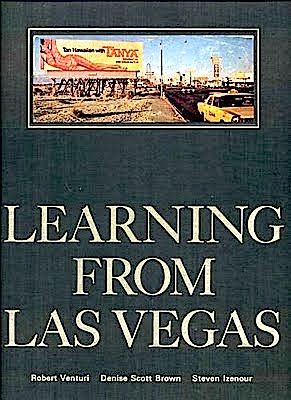
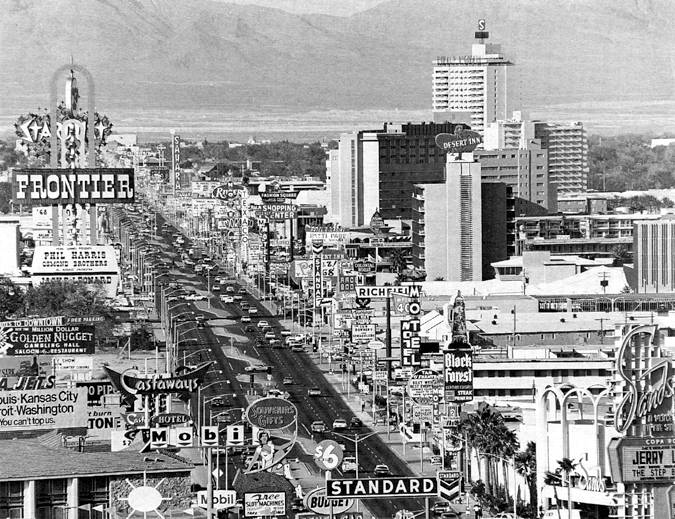
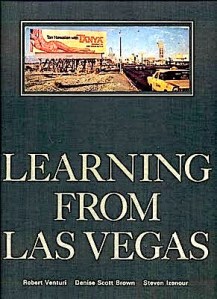
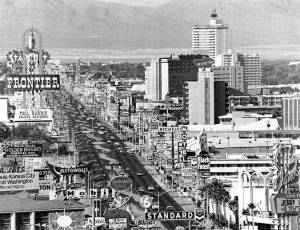
Learning from Las Vegas by Robert Venturi and Dennis Scott Brown, published 1977, was a postmodern call to celebrate the vernacular and everyday. The images of the strip bustling with billboards and signs challenged the way architects thought about the formal role of commercial and public buildings. The architects, Venturi and Brown, argued against modernist “holier than thou” purist abstraction and suggested that the Vegas strip satisfied a collective emotional longing for the imagined American main street. The post-modern architectural manifesto venerated buildings that spoke volumes through billboards and bright signs of human lust, gluttony and greed. Building that spoke of the messy reality of life instead of an idealized vision projected on a drafting table.

One might argue that today Las Vegas is anything but common and everyday and has lost its 1970s main street appeal. Sure the scale and brightness of the signs have grown to fantastic proportions yet the content is the same: gambling, entertainment and food.

Yes, FOOD.


The extravagance of Las Vegas buffets has long been legendary. My recent visit to The Bacchanal at Ceasar’s Palace certainly supports it’s fame by boasting over 500 international dishes. I felt both dizzy with the seemingly infinite choices and doomed in my incapacity to enjoy all of it. An existential crisis of sorts looking into the cauldron of infinite gastronomical choices. The scripted labels announcing each dish to the diner mimicked the billboards outside. The buffet is an easy architectural translation of gastronomic and aesthetic choice where individual preference has priority over collective good (for example: a school cafeteria lunch). The Bacchanal was NO school cafeteria.

I was surprised how deliberately and unrelentingly celebrity chefs and their restaurants were promoted. Indeed, food tourism has taken a very strong cross media hold in Las Vegas. As an avid Food Network, Cooking Channel viewer I was both soothed by the familiar and overwhelmed by the dominance of personality over food. Are we witnessing the rise of popular haute cuisine as inaccessibly expensive exercises of vanity and commerce or is it a sign of innovative gastronomic experiments? I imagine a bit of both, but how do I decipher the difference? First of all, I can’t afford the $$$$ Yelp range, so that takes care of that dilemma. Even so, there still remains much to choose from.

The privilege of individual preference particularly in Las Vegas makes my experience limited and almost too particular to be worth rational judgment. So, the following is not a review but merely an account of three meals touched by television celebrity. Were my expectations different? Did my food taste different? Did the “chef-signature” affect the quality of the experience? In the buffet of signs, architectural and gastronomic, how do we make a choice?

Yelp did not help me in this overwhelming situation where the quality is generally equivalent. Reviews only matter if you know what you personally like. Maybe I like standard overpriced well cooked steak and potatoes, maybe my feet are tired and despite mixed reviews and warnings of bad service, I’ll eat anything. Maybe I’m lost and I can’t find the four star rated restaurant and instead I have to settle for something else that turns out to be fantastic……………sometimes the uncertainty is too great for the collective might of Yelp. As it should be.


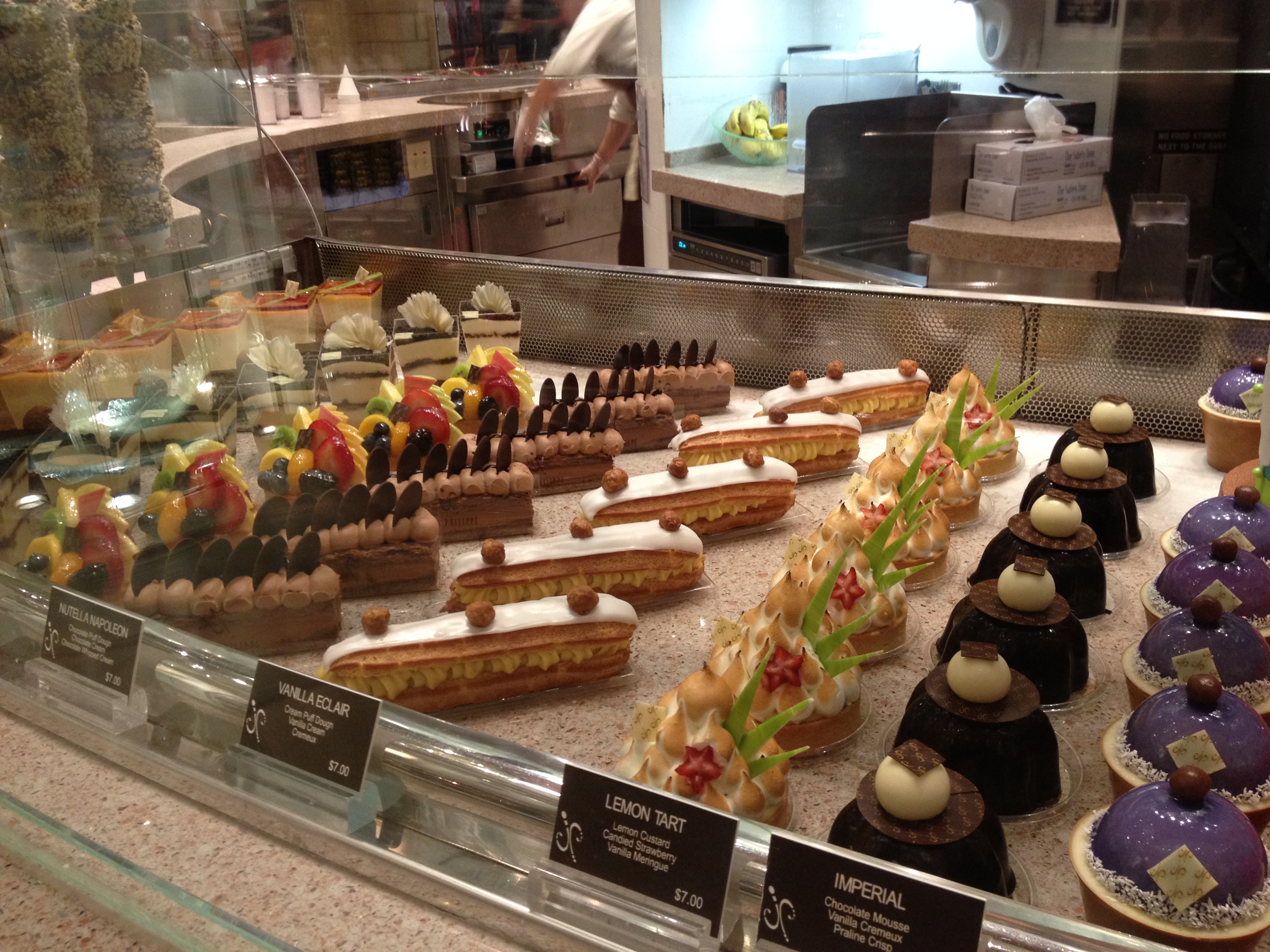
Pastry Chef Jean-Philippe Patisserie at the Bellagio

http://www.jpchocolates.com/
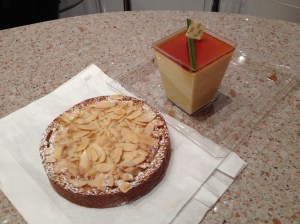
photo 4

photo 1

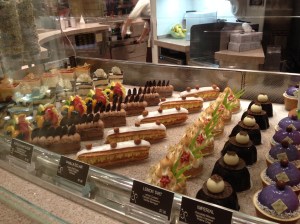
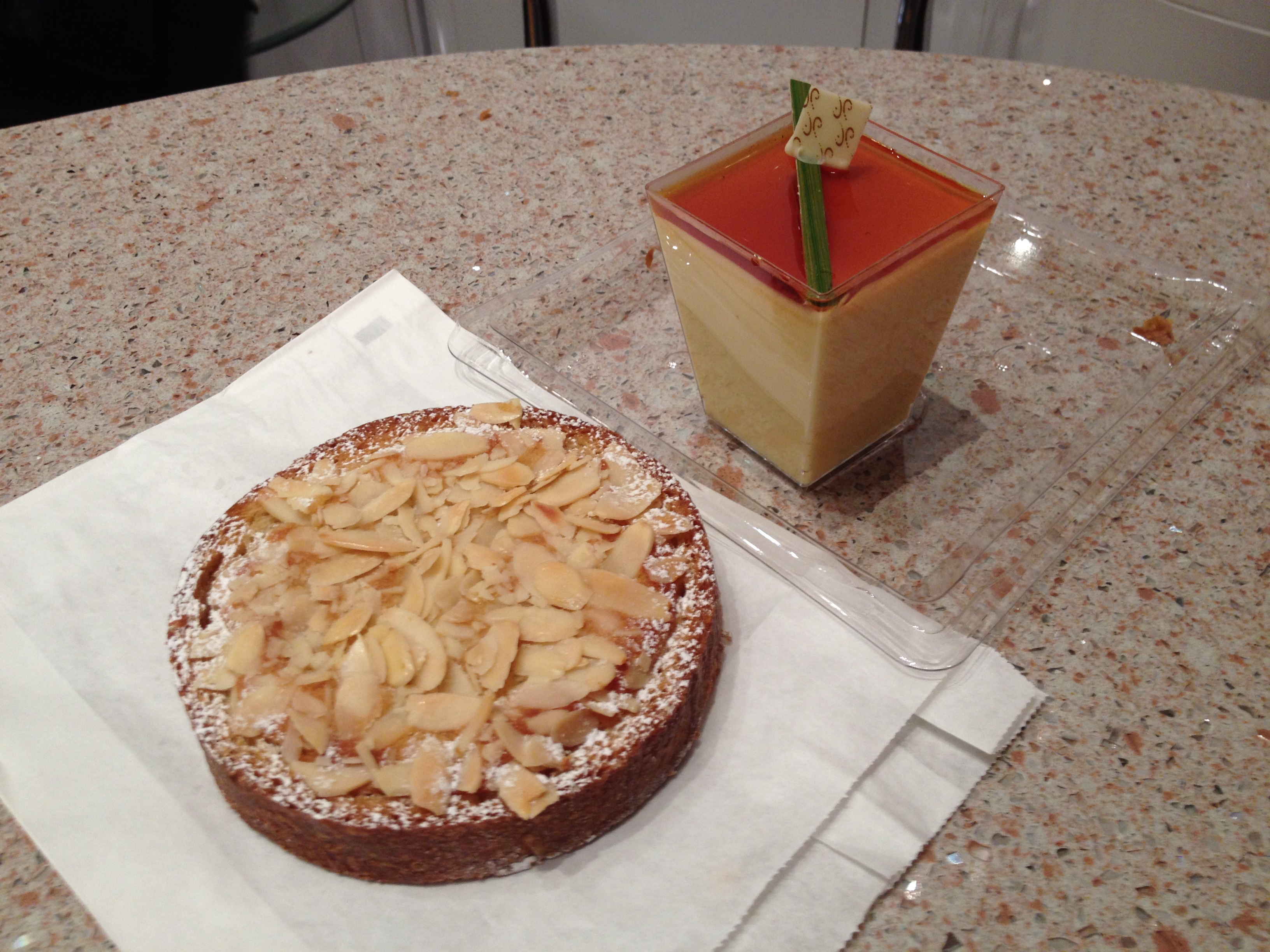
Boasts the world largest chocolate fountain. The choice to visit was easy. Did not know much about the chef and consequently did not have specific expectations. Had breakfast of an Almond Brioche. The bread was a beautifully toasted platform for the slightly sweet almond cream with roasted and crunchy almond flakes. It was delicate and substantive, creamy and crunchy, sweet and slightly salty from the almonds. It was early enough, without a crowd, to eat and enjoy the view of the chocolate fountain. The small and intimate scale of the space heightened the glistening and precious sweets beckoning beyond the glass cases. Next time, I’ll have to have something chocolate. In context, the chocolate fountain made sense and was not a mere publicity stunt. The chocolate fountain summoned us like a religious relic and we as pilgrims rejoiced at the sight and taste. The pastries were quite literally and visually the centerpiece of the establishment (not the personality of the pastry chef). I appreciate the obvious love of crafted sweets that converts indulgence into an art form.

Table 10 Chef Emeril Lagasse at the Palazzo

http://www.emerilsrestaurants.com/table-10
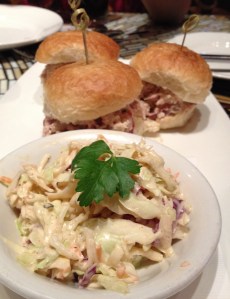
photo 5

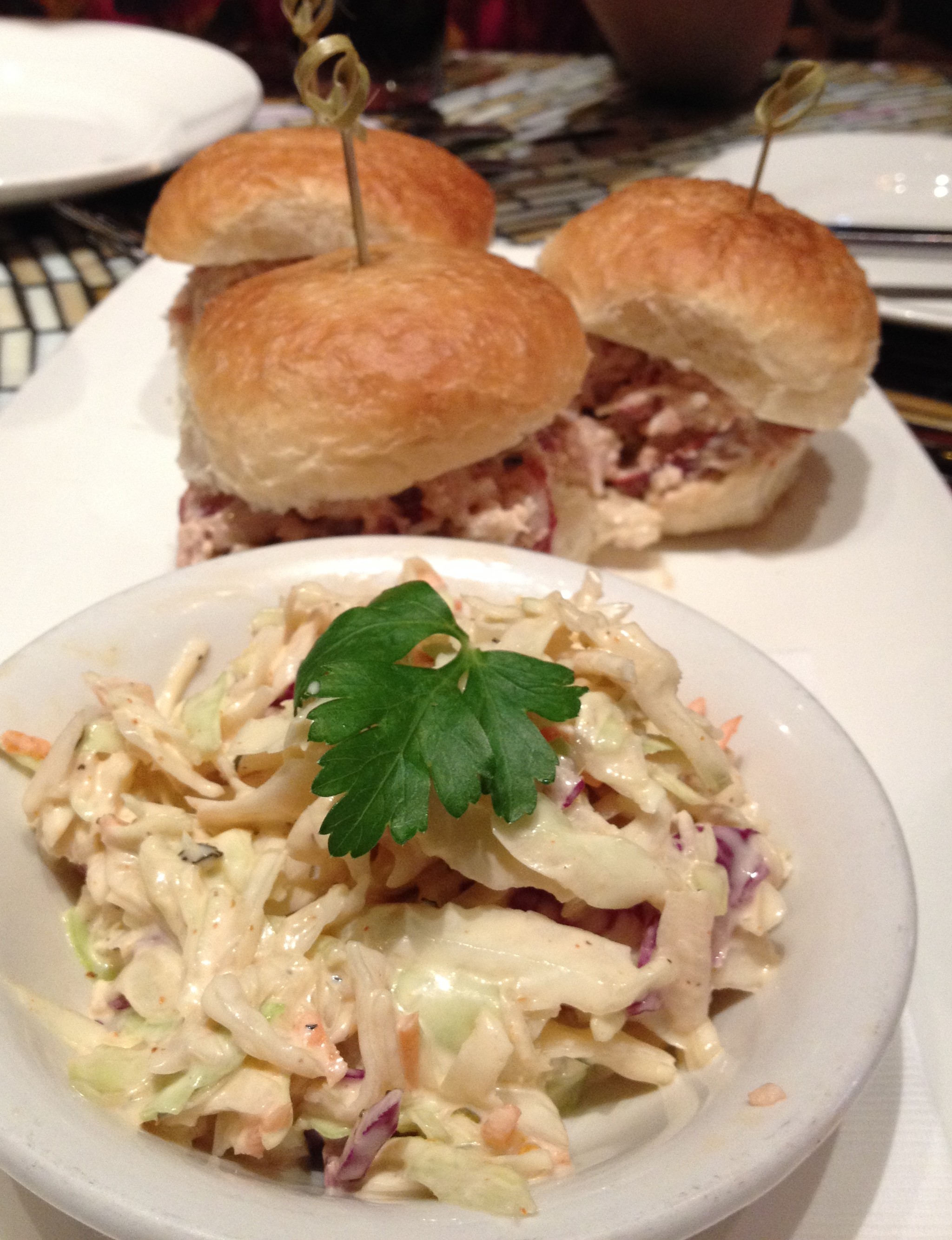
We were tired from walking in the sun and looking for a break around three in the afternoon. Table Ten was a lucky surprise. My sister and I shared the little lobster rolls. Our meal was too small and tame to justify the big personality of BAM! Emeril Lagasse. I can’t fault him for my sense of being underwhelmed. The décor that included multiple chef coats, Emeril spice mixes, cooking tools, alongside the open kitchen highlighted the celebrity chef appeal of the restaurant. The familiar taste of the lobster roll was amplified by a touch of celebrity vanity. Maybe the Lagasse signature convinced me that it was better than it was. Served the same thing anywhere else, my response would be “ Wow! this is very good” instead of “this very good and of course it should be.” Did my high expectations weaken my experience? Does more information enhance or diminish the taste? Like knowing how something is made or who made it?

China Poblano at the Cosmopolitan by Chef Jose Andres

http://www.chinapoblano.com/
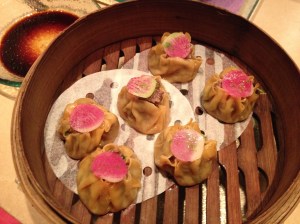
photo 2

photo 3

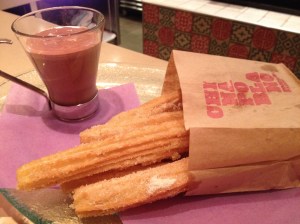
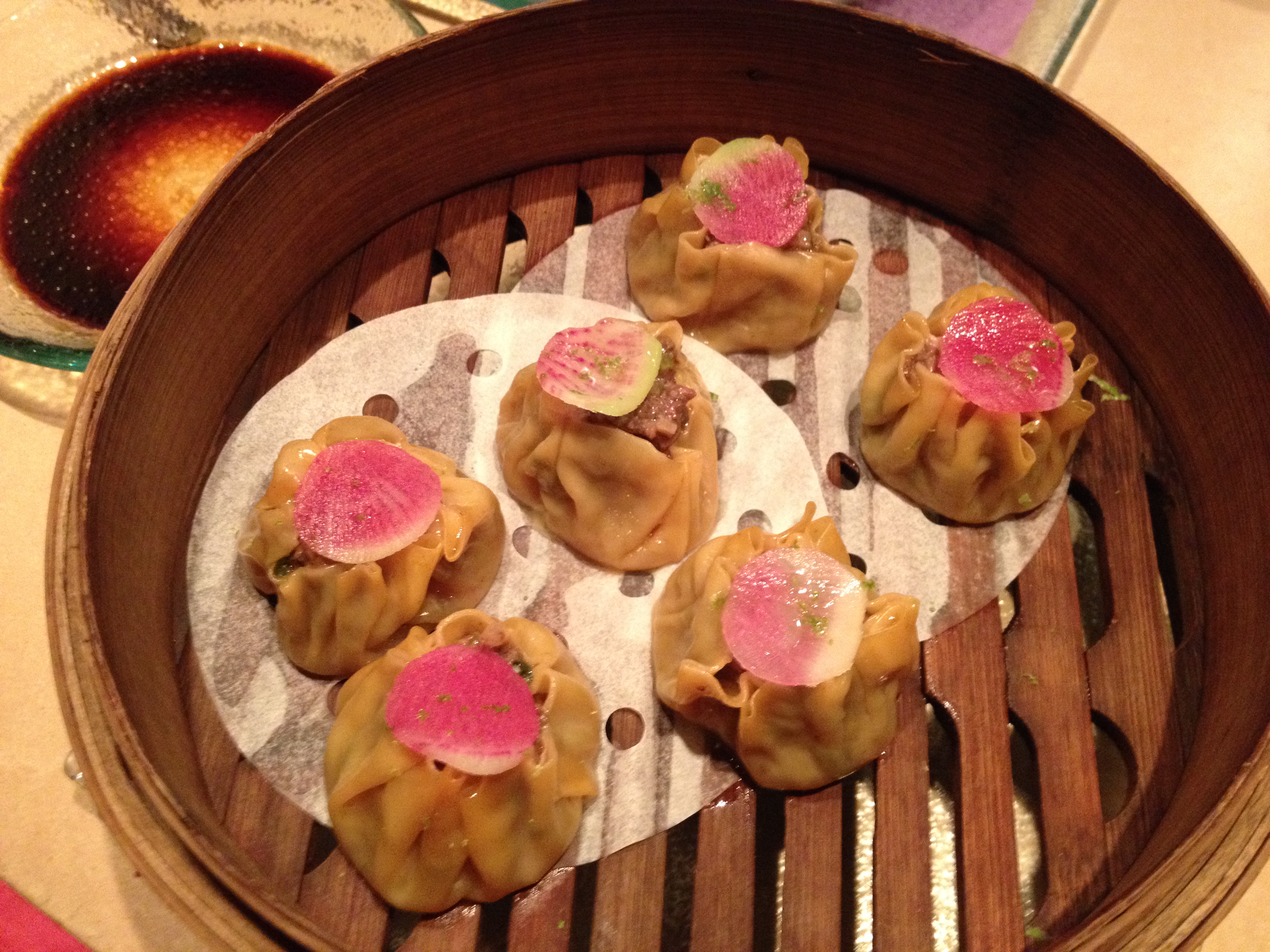
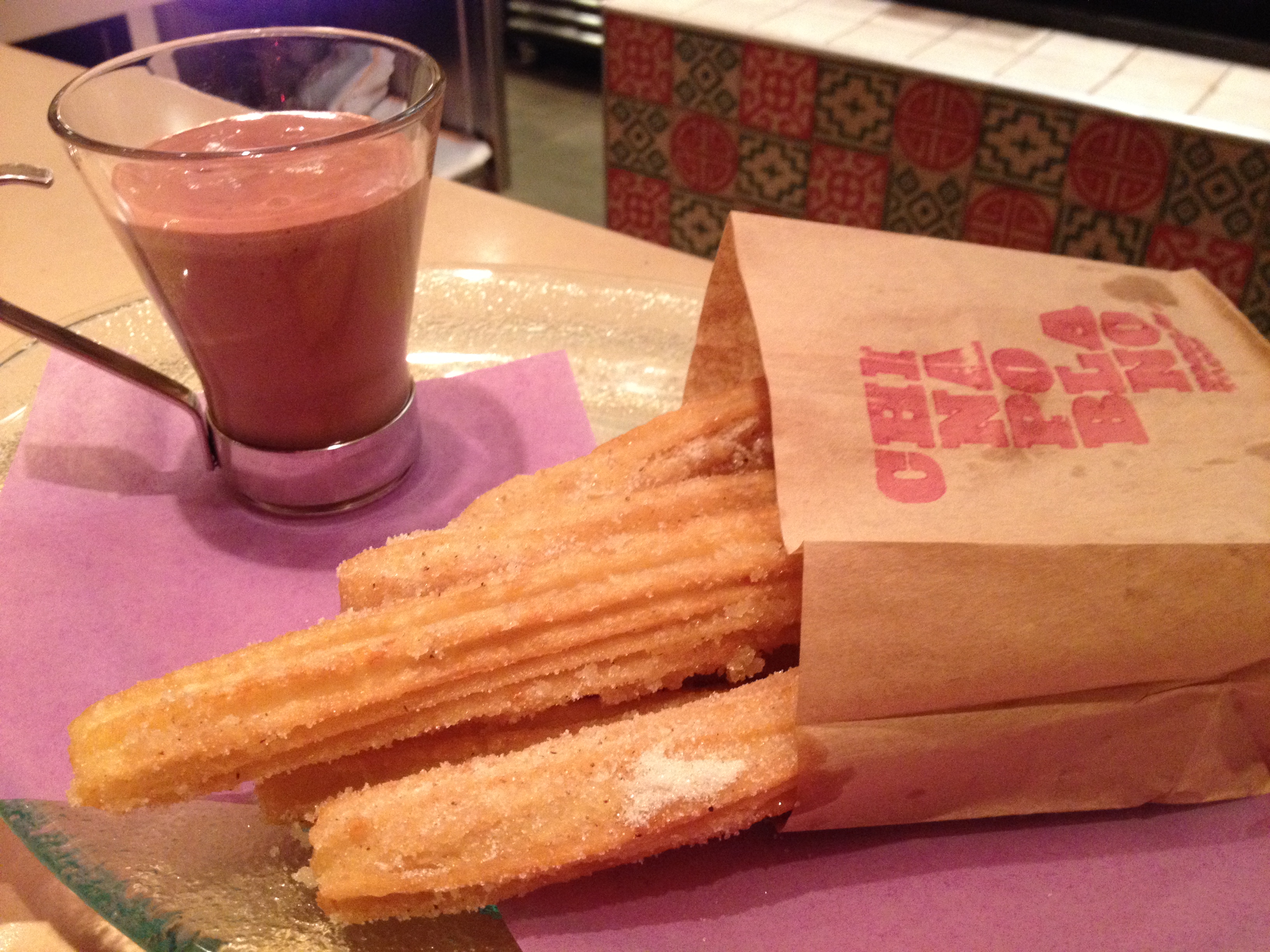
Intrigued by the hybrid concept, I hoped and planned for visiting China Poblano. Visually the restaurant maintains the duality by splitting the space into the China side with a dumpling-making area and the Mexico side with a taco-making area. Visitors seated at the “bar” that winds across both work stations can watch the busy construction of dumplings and tacos as they eat. The walls are decorated with masks and large prints depicting both cultures. The restaurant boasts a 40-40-20 split, whereby, each culture is represented 40% and 20% of the dishes represent a “marriage,” not a fusion, of flavors (this according to the hotel publicity channel). Owing to the dual theme (and being already very full from our visit to Table 10) we ordered the guacamole that was being made in front of us at the “bar,” salsa and chips and the beef watermelon radish suimai. Our order reflected the combination of cultures and as well as a combination of familiar and unfamiliar tastes. The beef suimai was new and unfamiliar, tasted like an exotic lemongrass flavored barbacoa wrapped in a dumpling noodle. Experimentation, playfulness, excitement infused the food and the environment. It is an appropriate restaurant for The Cosmopolitan. The theatricality of the space and food production was a happy surprise. It was a learning experience: of how the familiar can feel strange like fantastically fresh guacamole in warm corn tortillas and conversely, how the strange can feel familiar like beef suimai. The tastes were beyond judgments of good or bad: I don’t know if I “liked” the suimai. BUT…it certainly was interesting and thought provoking. To me, a philosopher, that’s worth it. I had also been to Jaleo, same chef but with a very different vibe (Spanish tapas), in D.C with my daughter for her birthday. The menu, atmosphere, food, wait staff, open kitchens everything about China Poblano conveyed its legend of a kidnapped Asian girl taken on a long voyage to Mexico. It makes me wonder about other possible legends, a Bengali in Bolivia? My visit to China Poblano was certainly a trip!

Bobby Flay’s Burger Palace was on my wish list. I appreciate the bright open welcoming design of the restaurant. The menu is visible from the street as are diners enjoying the fare. Again, much like the many restaurants in Las Vegas with open kitchens and dining rooms, eating is a spectacle at the Burger Palace. Alas, I had no room to take in the show.

The spectacle of food raised to level of theatrical entertainment competes for our attention and money. Images of the Cake Boss, Giada, Bobby Flay are displayed alongside the Beatles, The Blue Man Group, Cirque de Soleil, magic shows and adult entertainment. The visual and the gastronomic are now combined as the theatrical experience of Las Vegas hyperreality. This is not the era of static billboards but giant dynamic video screens. Celebrity chefs perform online, on T.V and through the fantasy of their restaurants. What I learned through visiting these three establishments is their vision as displayed and interpreted by designers and their taste as performed and imitated by local culinary talent. It’s a production like any other.

So, does the “signature-chef” experience affect the quality of the experience? Like all good philosophical questions the answer is both: yes and no.

For me (quality level being generally equal) the answer depended mostly on my expectation and my physical state (hungry, tired). How do you decide where to go, what to eat and how much you enjoyed the experience? In the buffet of restaurants what is your criteria? What LOOKS good to you?

It seems, there is still a lot to learn from Las Vegas both visually and gastronomically.

Pondering Brillat-Savarin’s Portait of a Pretty Gourmande

Jean-Anthelme_Brillat_de_Savarin_(1755-1826)

Those of us, who may have over-indulged on Mother’s Day Brunch, may find consolation in transcendental gastronomy. Very roughly summarized and perhaps twisted: women who eat are pretty and wrinkle free (although I don’t think 18th Century French secret food writer Brillat-Savarin would approve of either a buffet or the indulgence it fosters).  Nevertheless, I think he offers something to think about against the contemporary valorization of thin.

Brillat-Savarin’s meditations  The Physiology of Taste  (first published 1826) is full of fascinating observations about food in its fullest sense. The encyclopedic account of all things related to eating covers definitions (or rather meditations) of senses, taste, gastronomic sciences, appetite, specific food items like chocolate, sugar, truffles and fish (and their associated erotic properties), methods of cooking such as frying, thirst and drinks, obesity, cooking, illness ….and so on.

Meditation 11: On Gourmandism describes the pretty gourmande as follows:

Nothing is more agreeable to look at than a pretty gourmande in full battle dress: her napkin is tucked in most sensibly; one of her hands lies on the table; the other carries elegantly carved little morsels to her mouth, or perhaps a partridge wing on which she nibbles; her eyes shine, her lips are soft and moist, her conversation is pleasant, and all her gestures are full of grace; she does not hide that vein of coquetry women show in everything they do. With so much in her favor, she is utterly irresistible, and Cato the Censor himself would be moved by her.

…..ladies who know how to eat are comparatively ten years younger than those to whom this science is a stranger.

Brillat-Savarin continues his description of sensuality as both physical and gastronomic in his account of “Sensual Predestination”:

People predestined to gourmandism are in general of medium height; they have round or square faces, bright eyes, small foreheads, short noses, full lips and rounded chins. The women so predisposed are plump, more likely to be pretty than beautiful, and have a tendency toward corpulence. The ones who are most fond of tidbits and delicacies are finer featured, with a daintier air; they are more attractive and above all are distinguished by a way of speaking which is all their own.

It is by these outer traits that the most agreeable dinner companions must be judged and chosen: they accept everything that is served them, eat slowly, and enjoy reflectively what they have swallowed.

I doubt if Savarin’s physiological theory that people with “a general air of elongation” do not enjoy food.  Even so,  his coupling of the visual and the gastronomic could offer a clue to our current fascination with thin. Does minimalist modern design feed into the aesthetic and gastronomic sensibility of “thin”? Can we study design eras in relation to celebrated body types? I digress……

Happy Belated Mother’s Day to all those agreeable, pleasant, plump and pretty gourmandes everywhere. Hope you enjoyed your brunch buffet!


“Pie is the Ame…

“Pie is the American synonym for prosperity and its varying contents the calendar of changing seasons. Pie is the food of the heroic. No pie eating people can be permanently vanquished.” (published May 3, 1902 in New York Times)

A note related to Jack Kerouac’s 1957 On the Road from Fictitious Dishes by Dinah Fried. What a visual feast for book lovers!

“But I had to get going and stop moaning, so I picked up my bag, said so long to the old hotelkeeper sitting by his spittoon, and went to eat. I ate apple pie and ice-cream– it was getting better as I got deeper into Iowa, the pie bigger, the ice cream richer.” — Jack Kerouac

american_as_apple_pie


“…there was a…

“…there was a tradition called Amani, according to which the woman of the house would, the night before, soak rice and the twig of a mango tree in a pot of water and on the morning of the new year, sprinkle it on everyone of the family. This was based on a magical belief that the water would wash away the mistakes and negative aspects of the past year and bring peace to the family. This tradition is also empowering for women as they have the responsibility of this mangolik or wishing-well ritual.”

I knew mangoes were magical!

This quote is from an interview about the Bengali New Year celebration published in the “The Bangladesh Reader” (Duke University Press, 2013)

Soren Kierkegaard on food

Of all ridiculous things the most ridiculous seems to me, to be busy — to be a man who is brisk about his food and his work.


Happy Birthday Kierkegaard


Confessions of an Egghead

” The most private things in the world is an egg until it is broken.” …..from How to Cook a Wolf by MFK Fisher

250693

“So beautiful in conception! The symbol of progress! If the egg were any other shape, the life of the hen would be intolerable.” ….. Raymond Loewy,  French American Industrial Designer

Never-Leave-Well-Enough-Alone-cover

In the kitchen, the egg is ultimately neither ingredient nor finished dish but rather a singularity with a thousand ends.” ……Egg by Michael Ruhlman

Scrambled_Eggs_Michael_Ruhlman_Egg_Cookbook_Slideshow_DT-Ruhlman_www-700x441

Previously, I had mentioned my adoration of the egg. For my birthday, my Jim, gave me Ruhlman’s recent ode to the humble egg. It is the most romantic gift that I have ever received. I’m not being sarcastic. Really. The man obviously knows and loves me well.

The images are as sensual, as instructive, a gastronomic kama-sutra.  The chapters are divided into the multiple methods an egg can be employed:  in shell, out of shell, whole, separated, separated and reunited. Each recipe begins with a narrative that relates the history of recipe, the variations and sometimes even the limitations. The recipes are in both grams and cups! yay…thank you Mr. Ruhlman for indulging our American hubris. There is even a pull out flowchart (which I must frame)! Anyway, didn’t mean to write a review. (Sorry, force of academic habit.) Ahhhh. look at this. As I’m writing this blog with the cooking channel on,  I see Giada’s episode entitled, what else….”eggilcious.” I better go.

The point is…………..eggs are magnificent, comforting, binding, fluffy, frothy, sweet, salty, spicy, hard, soft, liquid, fragile, hard and so much more. What did I have for my birthday breakfast, you might ask? A sunny side up egg with a dash of Tobasco sauce on white buttered toast with guava jelly. Yum. I love eggs.

Yummy wet noodles

-1

If we all just ate for mere nourishment there would be no need for the culinary crafts, no need for critics, no need for gourmet groceries or special tools, television shows, recipe books, blogs, festivals….candy or ice-cream. Yummy food embodies choice and ability, as well as decadence and gluttony.  We can’t but want to share a delicious meal with our loved ones. Who among us hasn’t reached across the table with a loaded fork and said “try this”? Ironically, we can only share the experience of a delicious bite if we are willing to part with it. The structure of shared taste is grounded in limiting self-interest. Sharing at the table can be an ethically beautiful moment. Sure, there is the compulsion for aesthetic gastronomic agreement that aims to solicit common identity. If you like the food on my plate, you accept my taste and by extension me. Related to this compulsive search for commonality, I suspect the multi-dish restaurant experience of sharing is a 20th century phenomena in contrast to the the rustic biblical images of breaking a shared loaf of bread together. Sharing has become complex and discursive. It is not merely chewing the same meal or reaching from the same plate but rather pondering our shared and divergent experiences of “yummy” at the very same table. Sharing food from another’s plate implies a level of intimacy. Many people don’t welcome the intrusion into their plate and or taste (this makes me think of an episode of Modern Family). This weekend I’ve been reading Carolyn Korsmeyer’s Making Sense of Taste: Food and Philosophy. Her book offers a wonderful philosophical history about the meaning of food and warns against overly romantic notions of the shared table. After all, poison and cannibalism are instances when food is weaponized. Still, I think, as African American culinary chef and historian, Micheal Twitty reminds us, “yummy” retains its enslaved African American roots of cajoling young children to “yum-yum”…. to eat. I remember my youngest, when learning how to feed herself would always offer a cold wet, baby drool laden noodle with her uncertain little hand to me, her dad or her sister. While I may not have always wanted to accept the wet noodle, I still appreciate the gesture. I’m sure you have pictures of your kids feeding you, as you have fed them. Beautiful primal and human moment, isn’t it?