Deep in Our Refrigerator – Food Poem by Jack Prelutsky

Deep in our refrigerator,
there’s a special place
for food that’s been around awhile…
we keep it, just in case.
‘It’s probably too old to eat,’
my mother likes to say.
‘But I don’t think it’s old enough
for me to throw away.’

It stays there for a month or more
to ripen in the cold,
and soon we notice fuzzy clumps
of multicolored mold.
The clumps are larger every day,
we notice this as well,
but mostly what we notice
is a certain special smell.

When finally it all becomes
a nasty mass of slime,
my mother takes it out, and says,
‘Apparently, it’s time.’
She dumps it in the garbage can,
though not without regret,
then fills the space with other food
that’s not so ancient yet

from: http://www.poemhunter.com/poems/food/page-1/37365112/

IMG_2055

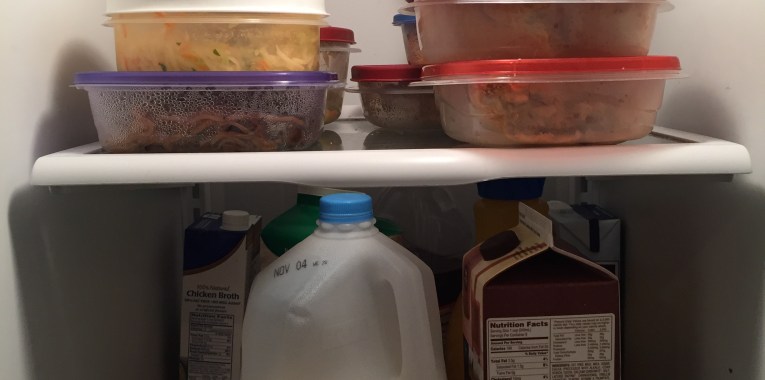
I have long struggled with this question about when to let go of left over food. There are times, as I am filling a container, I know that the contents will not be eaten. Ever again. I can either throw it out right then and avoid clogging up the refrigerator or I can with a guilty heart keep the unwanted leftovers to throw out another day. As if, the waste becomes justifiable when allowed to form mold that absolves us of guilt. Of course, It’s the mold’s fault I have to throw it out, not my own wastefulness. All of us make these decisions when asked at a restaurant “do you need a container” or when we cooked too much or not very well. Confessedly, there are many times I’ve thrown out edible but unfortunate cooking experiments hoping to make the evidence of my failure disappear as quickly as possible. Other times I’ve saved a meal so I might transform it into a different meal. Most often the celebrated left-overs get divided into lunch containers and taken to work or frozen. Left over delight lunch becomes own very own homemade buffet experience. Often I ask Jim to share left over baked goods at work. Some foods are easier to share or easier to waste than others. Each dish, meal has its own waste potential that varies according to who eats it. I haven’t found my rule or criteria, yet.

What criteria do you use to throw food out? To waste? What’s in your refrigerator now?
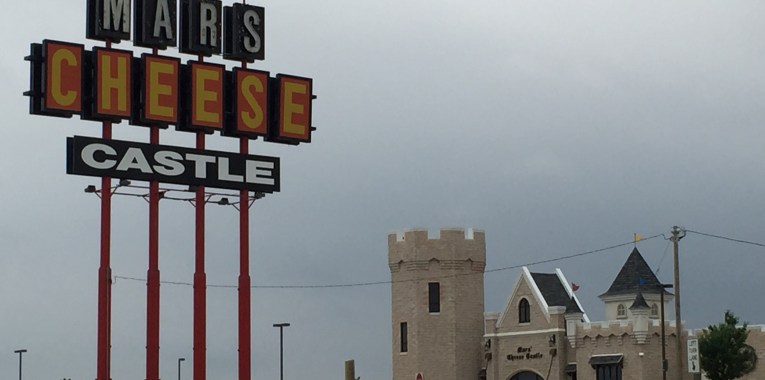
O Cheese – Food Poem by Donald Hall

In the pantry the dear dense cheeses, Cheddars and harsh
Lancashires; Gorgonzola with its magnanimous manner;
the clipped speech of Roquefort; and a head of Stilton
that speaks in a sensuous riddling tongue like Druids.

O cheeses of gravity, cheeses of wistfulness, cheeses
that weep continually because they know they will die.
O cheeses of victory, cheeses wise in defeat, cheeses
fat as a cushion, lolling in bed until noon.

Liederkranz ebullient, jumping like a small dog, noisy;
Pont l’Évêque intellectual, and quite well informed; Emmentaler
decent and loyal, a little deaf in the right ear;
and Brie the revealing experience, instantaneous and profound.

O cheeses that dance in the moonlight, cheeses
that mingle with sausages, cheeses of Stonehenge.
O cheeses that are shy, that linger in the doorway,
eyes looking down, cheeses spectacular as fireworks.

Reblochon openly sexual; Caerphilly like pine trees, small
at the timberline; Port du Salut in love; Caprice des Dieux
eloquent, tactful, like a thousand-year-old hostess;
and Dolcelatte, always generous to a fault.

O village of cheeses, I make you this poem of cheeses,
O family of cheeses, living together in pantries,
O cheeses that keep to your own nature, like a lucky couple,
this solitude, this energy, these bodies slowly dying.

“O Cheese” by Donald Hall from Old and New Poems. © Ticknor & Fields, 1990.

From the Writer’s Almanac, September 20th, 2015

http://writersalmanac.org/page/5/

Zen and the Art of Mushroom Washing

crimini

image from: http://humanelivingnet.net/2013/09/30/creating-healthy-dishes-with-crimini-mushrooms/

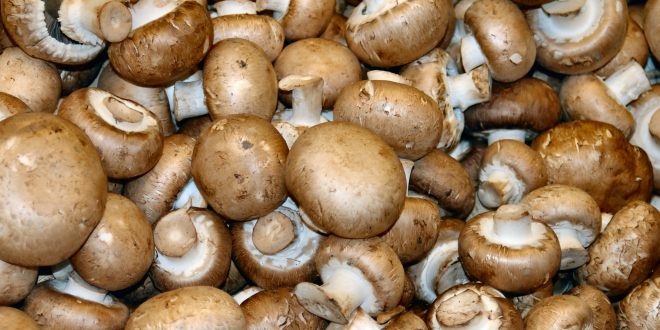
Mindless repetition is tedious, while mindful repetition is meditative. This is the lesson I learned as I washed large bins of cremini mushrooms. Individually.  For three hours. Before you judge, the preferred method of wiping mushrooms would’ve taken even longer. So in all her wisdom and experience, Chef Liz of Second Helpings suggested I wash the rescued grocery mushrooms. Smart chef.

Spending a considerable amount of time devoted to a single task as any craftsman, line cook, factory worker knows, makes one REALLY absorb the material. I can close my eyes and smell the earthy ground, feel the difference between firm and fresh mushrooms versus slimy, spongy mushrooms, I can follow the curves, the fragile stems. Given these were rescue mushrooms, my mode of inspection was heightened in order to discard anything fuzzy and green.

Yes, there were moments when I felt the weight of the repetitive task and hoped my time with the mushrooms would end. I also knew that soon these mushrooms would be sliced, roasted and then added to dishes that would feed so many. I suppose it is this stretch of the imagination and shared work that brings all of us volunteers into the kitchen everyday.

Admittedly, there was something else besides such abstract musings of a beneficent outcome. I had an odd sense of being present with this mushroom held under a stream of water. Everything else receded. It was strange that I could oscillate between complete mushroom awareness and complete mushroom annoyance. This explains so much about how I live life. I feel always immersed and burdened at the same time.

I wonder how you emotionally and intellectually process repetitive peeling, chopping, washing, stirring, shaping or wrapping. Thoughts?

Here is one thought I found in the essay, “The Nourishing Arts,” by Michel de Certeau and Luce Giard (from Food and Culture: A Reader edited by Carole Counihan and Penny Van Esterik)

I discovered bit by bit not the pleasure of eating good meals (I am seldom drawn to solitary delights), but that of manipulating raw material, of organizing, combining, modifying, and inventing. I learned the tranquil joy of anticipated hospitality, when one prepares a meal to share with friends the same way in which one composes a party tune or draws: with moving hands, careful fingers, the whole body inhabited with the rhythm of working and the mind awakening, freed from its own poderousness, flitting from idea to memory, finally seizing on a certain chain of thought, and then modulating this tattered writing once again. Thus, surreptitiously and without suspecting it, I had been invested with the secret, tenacious pleasure of doing-cooking.

… The sophisticated ritualization of basic gestures has thus become more dear to me than the persistence of words and texts, because body techniques seem better protected from the superficiality of fashion, and also, a more profound and heavier material faithfulness is at play there, a way of being-in-the-world and making it one’s home.

That’s my story for today.

Wishing you all good food stories,

Hungryphil

For those of you, hungry philosophers, in the Indianapolis area please check out this amazing organization with a three-pronged mission to rescue food, cook for the community and train people to enter the food industry.

Home

(Food Poem) The Health-Food Diner by Maya Angelou

The Health-Food Diner
No sprouted wheat and soya shoots
And Brussels in a cake,
Carrot straw and spinach raw,
(Today, I need a steak).

Not thick brown rice and rice pilaw
Or mushrooms creamed on toast,
Turnips mashed and parsnips hashed,
(I’m dreaming of a roast).

Health-food folks around the world
Are thinned by anxious zeal,
They look for help in seafood kelp
(I count on breaded veal).

No smoking signs, raw mustard greens,
Zucchini by the ton,
Uncooked kale and bodies frail
Are sure to make me run

to

Loins of pork and chicken thighs
And standing rib, so prime,
Pork chops brown and fresh ground round
(I crave them all the time).

Irish stews and boiled corned beef
and hot dogs by the scores,
or any place that saves a space
For smoking carnivores.

From:

http://www.poemhunter.com/poems/food/

Milk Carton History

95293-425x282-Milk_Bottles

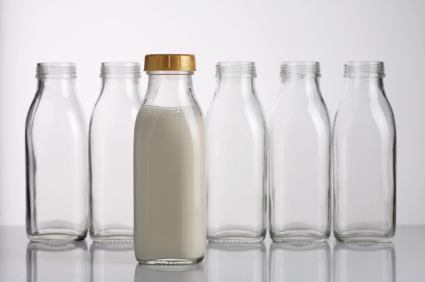
I recently discovered the podcast Food: Non-Fiction where the hosts were discussing the history of the milk carton. Worth a listen if you ever wondered what happened to those wonderful glass milk bottles? Or, if you wondered why were there images of missing children on the paper cartons during the 1980s?

Here is a few interesting facts:

  1. The milk carton essentially developed along with the refrigerator. Its an example of one technology changing related objects. One, following Levi Bryant’s argument in Onto-cartography, could say that the gravity of the refrigerator mediated the shape of the milk carton.
  2. John Von Wormer developed and patented the carton in 1915. It took at least three decades for both the refrigerator and the milk carton to catch on.
  3. I wonder what prompts the gallon milk jugs? Thoughts?
  4. In the future, our refrigerators will be able to scan the bar codes and keep track when our milk spoils.

internet-of-things-5

LG Smart Refrigerator:  https://uxmag.com/articles/the-internet-of-things-and-the-mythical-smart-fridge

Other links:

http://www.foodnonfiction.com/2015/07/designing-milk-carton.html

http://www.theatlantic.com/national/archive/2012/08/the-surprising-history-of-the-milk-carton/260587/

http://www.ideafinder.com/history/inventions/milkcarton.htm

image from http://antiques.lovetoknow.com/Antique_Milk_Bottles

Second Raw Spice Bar Journey: Jamaican Fish Tacos


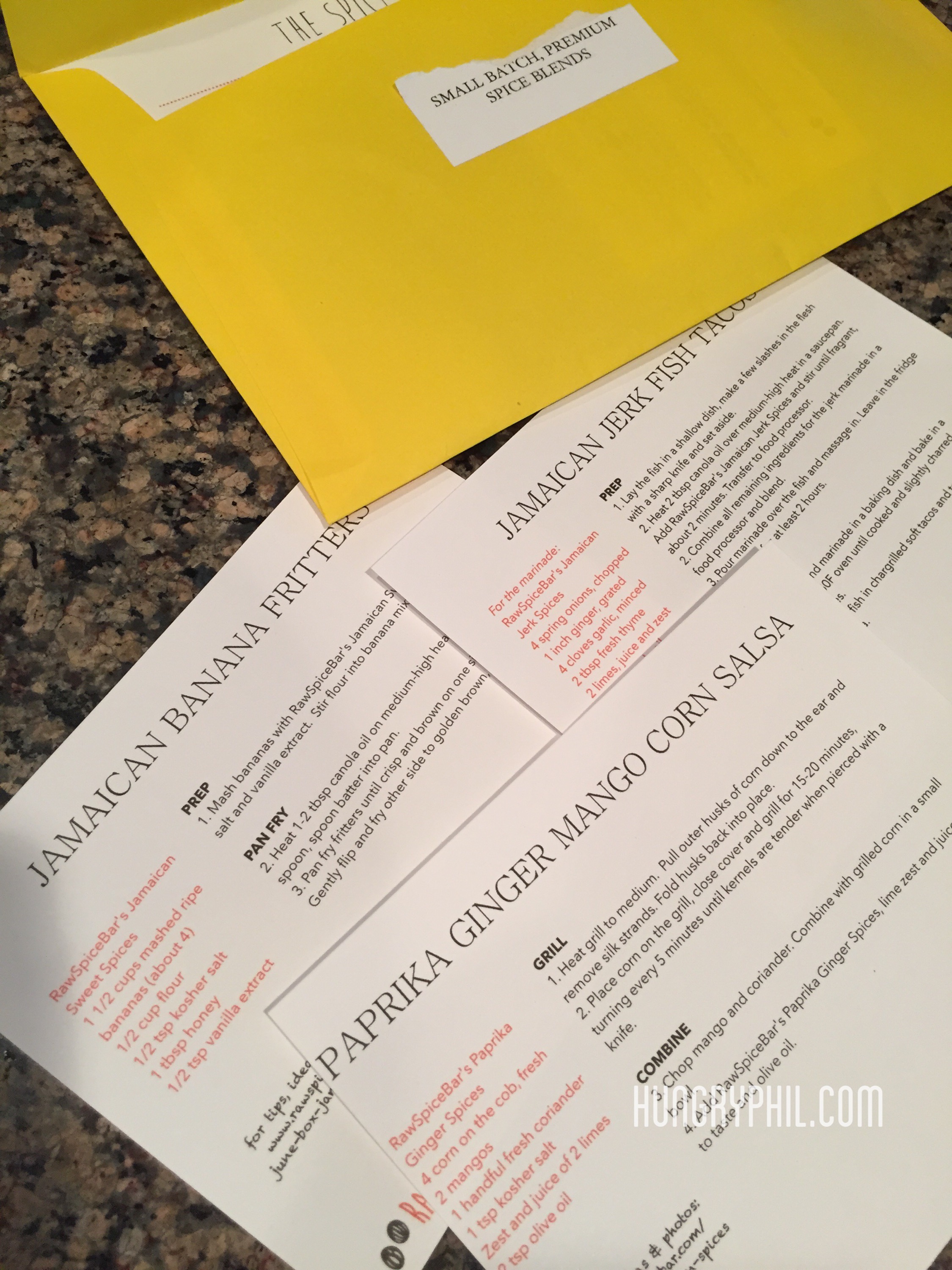
My June culinary trip courtesy of my subscription to the online spice purveyor, Raw Spice Bar was to Jamaica. With all the summer fun and travel, it was August before we had the chance to use the delicious recipes and accompanying spices. The delightfully light and tropical menu involved jerk fish tacos, mango corn salsa and banana fritters.  The fish tacos were layered with smoky and fresh flavors, as was the ginger corn salsa.  The combination of heat and fruit gave the meal a distinct island feel. Really good. My food writing is not doing the meal justice. The recipes taught me a few new techniques, like grilling the corn in the husk for 20 minutes for the salsa. And, that salsa can have warm, hearty flavors like ginger and paprika. I also learned that white flaky fish can stand up to heavily spiced marinades and the substantive chew of corn salsa. These were not dainty and delicate fish tacos. I have to confess, like my first experiment and trip to Peru, the dessert was not my favorite. But, I was happy to be challenged by the unusual spicy sweet banana fritters. What a wonderful way to spend an Indiana summer evening on the porch with friends tasting far away flavors together! Thank you, Les and Kara for gastronomically traveling to Jamaica with us and bringing the pina coladas.

https://rawspicebar.com/june-jamaican-spice-box/

If as philosopher Levi Bryant writes, “A recipe is a machine that performs operations on a cook, leading that cook, in her turn, to perform certain operations on various cooking utensils and ingredients” then this culinary trip to Jamaica made me mindful of  all the negotiated details that involved the spice packets, the recipe directions, the ingredients, the cooking methods and utensils, the cultural tastes, my skill level and taste preference, online shopping, reliable mail delivery, producers and collectors of the spices, and more. It mediated a different organization of familiar ingredients. I’ll be thinking about the gravity and media of Jamaican Fish Tacos for a while. More later on recipes as machines, ala Levi Bryant’s machine-oriented ontology.

Splitting an Order – Food Poem by Ted Kooser

I like to watch an old man cutting a sandwich in half,
maybe an ordinary cold roast beef on whole wheat bread,
no pickles or onion, keeping his shaky hands steady
by placing his forearms firm on the edge of the table
and using both hands, the left to hold the sandwich in place,
and the right to cut it surely, corner to corner,
observing his progress through glasses that moments before
he wiped with his napkin, and then to see him lift half
onto the extra plate that he had asked the server to bring,
and then to wait, offering the plate to his wife
while she slowly unrolls her napkin and places her spoon,
her knife and her fork in their proper places,
then smoothes the starched white napkin over her knees
and meets his eyes and holds out both old hands to him.

“Splitting an Order” by Ted Kooser from Splitting an Order. © Copper Canyon Press, 2014. From the Writer’s Almanac

http://writersalmanac.org/page/2/

Visualizing Hungryphil: An Exercise of Food and Design

For the past few years this blog has been my space to play with tastes, images and thoughts that relate food, design and philosophy. You, my gracious readers, have endured the thematic restlessness between inauthentic recipes, food poems, food writing excerpts and random questioning. Still, sometimes I don’t know how to explain what this blog is about. So, I decided I needed to show it. Design to the rescue! I needed a visual representation of food, design and philosophy that was playful and somewhat irreverent (decidedly not authoritative). I whined and emailed my friend, graphic designer extraordinaire with a wicked sense of humor, David Wischer. Despite  his busy schedule teaching graphic design at the University of Kentucky he came to my rescue. He sent me about 4 initial ideas (which he doesn’t want me to show because he thinks they are not good….sheesh…artists). I assure you, all were funny and well executed ideas. We decided to merge two of the ideas and worked through the color combinations to arrive at this angry, straining to think owl with a fountain pen and steak knife encased by the web address. I love it!

BanuLisaColorSticker

I hope you like it (and the new blog theme) as well. I’m working out the new look, so please forgive awkward moments the next few weeks.

Thinking through the logo design was helpful in focusing my obsession with complex connections between organic and inorganic consumption.  What would your logo look like?

Find David Wischer and his work at:

http://finearts.uky.edu/faculty/art/david-wischer

http://www.davidwischer.com

instagram: @wischer

Cherry Tomatoes – Food Poem by Anne Higgins

IMG_0760

Suddenly it is August again, so hot,
breathless heat.
I sit on the ground
in the garden of Carmel,
picking ripe cherry tomatoes
and eating them.
They are so ripe that the skin is split,
so warm and sweet
from the attentions of the sun,
the juice bursts in my mouth,
an ecstatic taste,
and I feel that I am in the mouth of summer,
sloshing in the saliva of August.
Hummingbirds halo me there,
in the great green silence,
and my own bursting heart
splits me with life.

“Cherry Tomatoes” by Anne Higgins from At the Year’s Elbow. © Mellen Poetry Press, 2000. from the Writer’s Almanac

http://writersalmanac.org/page/5/

Eating Well = Living Well

51YDudEyXbL._SY344_BO1,204,203,200_

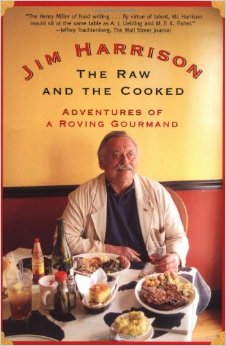
“Let’s all stop a moment in our busy day and return to some eternal verities. It’s quite a mystery, albeit largely unacknowledged, to be alive, and quite simply, in order to remain alive you must keep eating. My notion, scarcely original, is that if you eat badly you are very probably living badly. You tend to eat badly when you become inattentive to all but the immediate economic necessities, real or imagined, and food becomes an abstraction; you merely “fill-up” in the manner that you fill a car with gasoline, no matter that some fey grease slinger has put raspberry puree on your pen-raised venison. You are still a nitwit bent over a trough.”

One of my favorite quotes from:

Jim Harrison, The Raw and The Cooked: Adventures of a Roving Gourmand, New York: Grove Press Books, p. 29.

Cover Image from Amazon.com