Wobblyogi Wednesday: Sutra Inspired Gentle Sequence

Today’s Gentle Yoga Practice was based on one of my favorite sutras that reminds us: Yoga is NOT a quick fix.

A yoga practice requires consistency, duration and intention. Like anything in life, small steady steps lead us through any desired change of habit or state. When I find a pose difficult this sutra gives me assurance. When I feel the road ahead long and impossble, it’s a gentle reminder about the greatness of small consistent steps.

Here it is according to Georg Feuerstein’s translation:

Yoga Sutra 1.14:

But this [practice] is firmly grounded [only after it has been] cultivated properly and for a long time uninterruptedly.

For our asana practice, I used circles: arms, hips, legs, toes as a way to give shape to the idea of steady continuity and repetition. For our meditation, we focused on gratitude for something that gives us consistency and steadiness to our days.

IMG_5010


Yoga Poem – Lucky by Luis Jenkins

Here is a beautiful poem about gratitude for you —

All my life I’ve been lucky. Not that I made money,
or had a beautiful house or cars. But lucky to have
had good friends, a wife who loves me, and a good
son. Lucky that war and famine or disease did not
come to my doorstep. Lucky that all the wrong
turns I made, even if they did turn out well, at least
were not complete disasters. I still have some of my
original teeth. All that could change, I know, in the
wink of an eye. And what an eye it is, bright blue
contrasting with her dark skin and black hair. And
oh, what long eyelashes! She turns and with a slight
smile gives me a long slow wink, a wink that says,
“Come on over here, you lucky boy.”

“Lucky” by Louis Jenkins from In the Sun Out of the Wind. © Will o’ the Wisp Books, 2017.

From the Writer’s Almanac at  http://writersalmanac.org/

Wobblyogi Fall Schedule

IMG_4947

Hot Vinyasa

Join me for a steady, mindful, and warm practice that cultivates a calm heart despite sweat and effort. Let’s burn and detox from what no longer serves us.

12:15 pm – 1:15 pm Tuesday and Thursday

Community Yoga, West Lafayette, Indiana

For more information and to register go to: 

Home

“tapah svadhyaya isvara pranidhanani kriya yogah”

concentration- self-reflection-surrender


IMG_4948

Gentle Yoga

Join me for a mindful practice that helps develop body awareness, range of motion, and overall mind-body-spirit health. We will use relaxation, breathing, and meditation techniques to help us stay in ease and balance.

Wednesday 10:00 am – 11:15 am

Session 1: September 6th – October 11th (6 weeks)

Theme of Yoga Philosophy (Sutras)

Session 2: October 18th – November 15th (5 weeks)

Theme of Great Questions (What, When, Where, How and Why)


Morton Community Center, West Lafayette, Indiana

For more information and to register go to:

http://www.westlafayette.in.gov/department/division.php?structureid=131

“sthira-sukham-asanam”

The posture steady and comfortable

IMG_4946

Continuing Yoga (Gentle – Intermediate)

Join me for a mindful practice that helps develop body awareness, range of motion, and overall mind-body-spirit health. We will use relaxation, breathing and meditation techniques to help us stay in ease and balance.

Thursday 9:30 am – 10:45 am

Session 1: September 7th – October 12th (6 weeks)

Theme of Yoga Philosophy (Sutras)

Session 2: October 19th  – November 16th (5 weeks)

Theme of Great Questions (What, When, Where, How and Why)


McCallister Community Center, Lafayette, Indiana

For more information and to register go to: 

https://in-lafayette.civicplus.com/458/McAllister-Center

“heyam duhkham-anagatam”

That which is to be overcome is sorrow yet to come.


Happy Birthday Refrigerator

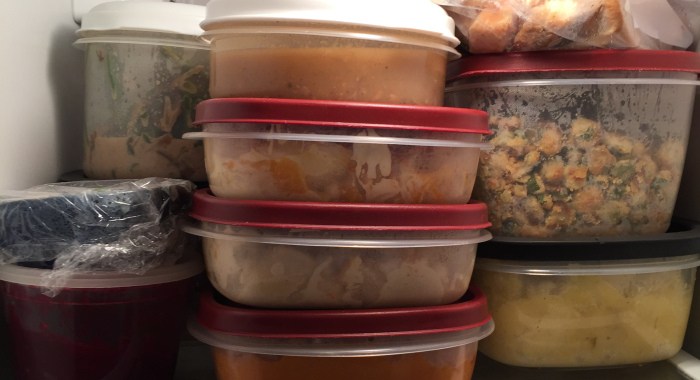
We thought our refrigerator was getting old. It was humming, sweating and not cooling enough. One day my husband reached under and realized the filter hadn’t been cleaned perhaps…..ever! Once the thick collection of fuzzies was removed, our old fridge was vindicated and fine. It just needed some love and attention, and cleaning.

Thank you dear refrigerator for holding vegetables to be cooked, various condiments to lather over salads and fries, drinks of all sizes and flavors to soothe thristy kids, and oh so precious left-overs. Because of you, I dont have to go to the grocery store everyday, because of you I have a ready supply of frozen vegetables and ice-cream, because of you I just had a blueberry smoothie blended with orange juice and yoghurt. It was refreshing.

Although you are wonderful, you are not blameless. Sometimes, things sit and rot in the bins, sometimes left-overs are forgotten, sometimes sour smells waft.

My stainless steal double door refriegerator owes much to Raymond Loewy’s 1934 Sear Coldspot Super Six that introduced the clean deco beauty of modern kitchens. That historic moment of profit by aesthetics fueled the new profession of industrial design. Kitchens became the domestic locus of modernity and replaced the hearth as the center of a home. After all, when my kids come home, we find them infront of the refrigerator, not the fireplace or stove.

Happy Birthday, Refrigerators!

Thank you Writer’s Almanac for the reminder:

The first refrigerator was patented in the United States on this date in 1899. The practice of preserving food by keeping it cold had been around for hundreds of years. At first, this meant burying it deep in the ground, or submerging it in cold streams. In 18th-century England, people collected sheets of ice in the winter and put it in specially constructed underground ice houses, where it was salted and wrapped in flannel to preserve it until the summer. That led to the development of the slightly more portable icebox: a wooden box lined with tin and insulated with cork or sawdust. A Scot named William Cullen publicly demonstrated the first artificial cooling system in 1755, but he didn’t put his invention to any practical use.

Modern artificial cooling systems work by compressing gas into a liquid state, and then allowing it to evaporate into a gas again, in a small space. This process removes heat from the surrounding area, and its discovery paved the way for the development of more advanced artificial cooling machines in the early 1800s. At first they were used in a hospital setting, to cool the air for yellow fever patients. But these early refrigeration machines used toxic gases, which created serious problems if the compression system developed a leak.

None of these early attempts — successful though they may have been — were granted a patent in the United States. It was the work of Albert T. Marshall that was finally deemed worthy, and the U.S. Patent and Trademark Office issued the first American refrigerator patent on this date in 1899. In 1918, the Frigidaire Company was founded to manufacture home refrigerators. The market grew in the 1920s and ’30s with the development of Freon, which was a safe alternative to toxic gases; by the end of World War II, no modern kitchen was without one. It wasn’t just a convenience for housewives. Artificial refrigeration revolutionized the way food was produced, and refrigerated rail cars made it possible to transport perishable foods over great distances.

Here’s a food poem Deep in Our Refrigerator


May I Be Happy Workshop Invitation

Hello Local Yogis,

I’m planning snack boxes for our upcoming yoga book club workshop! You know that I, hungryphil/wobblyogi am super excited about combining my two loves: food and yoga.

Summer is Pitta season. According to Ayurvedic tradition, summer is the time to enjoy bitter, astringent and sweet tastes (eat less sour, pungent or spicy foods). So, I’m looking for tasty afternoon bites that would be cool and light. Please sign up for the workshop ahead of time so I know how many snack boxes to make. Here is more information about the workshop [Saturday, August 12, 2-4].

Let’s try these treats together………………….

Summer Samosas

Baked light and flaky pastry filo- dough filled with potato and cauliflower spiced with summer Pitta-seasoning (includes warm sweet spices like fennel and coriander)

Sweet Coconut Dusted Raisin Almond Balls

Almonds and raisins ground together and rolled in shredded coconut

Cooling Co-Cu-Mint Mocktail

A blend of coconut water, cucumber, mint, and lemon

If you read “May I be Happy” by Cindy Lee, wonderful! Jacqueline will lead an extended asana practice inspired by themes from the book that will be familiar to you. If you haven’t read the book, you’ll enjoy the practice focused on cultivating personal happiness, just as much. The book is not a prerequisite, only an inspiration to ask: How may I be happy?

And, there will be snacks!!! I don’t know about you but that makes me happy 🙂

Enough said.

Hope to see you in a few weeks,

Wishing you a lovely late summer,

the hungry and wobbly yogi

May I Be Happy Workshop Flyer


Food Poem – Gravy by Raymond Carver

Today’s Food Poem by Raymond Carver uses gravy to describe feelings of gratitude, the extra sauce of life. Carver is such a master of little things and moments. Maybe it’ll add to your “gravy” today. Enjoy!

No other word will do. For that’s what it was. Gravy.
Gravy, these past ten years.
Alive, sober, working, loving and
being loved by a good woman. Eleven years
ago he was told he had six months to live
at the rate he was going. And he was going
nowhere but down. So he changed his ways
somehow. He quit drinking! And the rest?
After that it was all gravy, every minute
of it, up to and including when he was told about,
well, some things that were breaking down and
building up inside his head. “Don’t weep for me,”
he said to his friends. “I’m a lucky man.
I’ve had ten years longer than I or anyone
expected. Pure gravy. And don’t forget it.”

“Gravy” by Raymond Carver from All of Us. © Knopf, 1998. From the Writer’s Almanac today, July 25th, 2017.

Image from Food Network and Alton Brown’s Best Gravy Ever Recipe

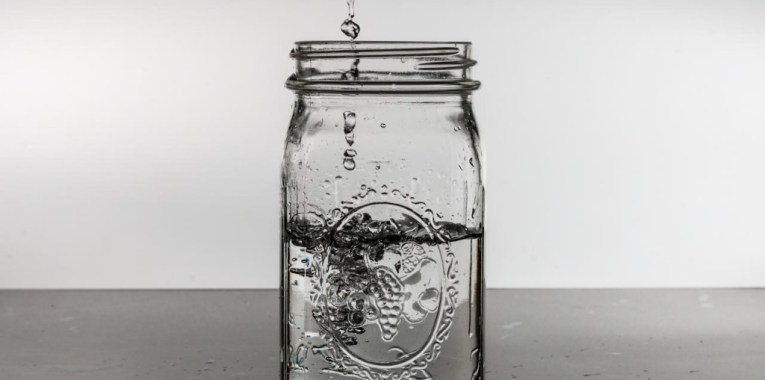
Food Poem – Carrying Water to the Field by Joyce Sutphen

Poet Joyce Sutphen is able to conjure such vivid and intimate experiences through small everyday objects. I so enjoy her work. Hope you do too! Here is a poem about a mason jar of water from today’s Writers Almanac:

And on those hot afternoons in July,
when my father was out on the tractor
cultivating rows of corn, my mother
would send us out with a Mason jar
filled with ice and water, a dish towel
wrapped around it for insulation.

Like a rocket launched to an orbiting
planet, we would cut across the fields
in a trajectory calculated to intercept—
or, perhaps, even—surprise him
in his absorption with the row and the
turning always over earth beneath the blade.

He would look up and see us, throttle
down, stop, and step from the tractor
with the grace of a cowboy dismounting
his horse, and receive gratefully the jar
of water, ice cubes now melted into tiny
shards, drinking it down in a single gulp,
while we watched, mission accomplished.

“Carrying Water to the Field” by Joyce Sutphen.

The beautiful image that makes water drops look like glass sculpture is from:  http://www.taylourwhite.com/2012/03/18/mason-jar-and-water/

Mason_Jar_and_Water-2-1024x680

Food Poem – What I learned from my Mother by Julia Kasdorf

Hope you find this poem that offers food like flowers as a form of healing presence, as reassuring as I do. Happy Tuesday my fellow hungry philosophers.

I learned from my mother how to love
the living, to have plenty of vases on hand
in case you have to rush to the hospital
with peonies cut from the lawn, black ants
still stuck to the buds. I learned to save jars
large enough to hold fruit salad for a whole
grieving household, to cube home-canned pears
and peaches, to slice through maroon grape skins
and flick out the sexual seeds with a knife point.
I learned to attend viewings even if I didn’t know
the deceased, to press the moist hands
of the living, to look in their eyes and offer
sympathy, as though I understood loss even then.
I learned that whatever we say means nothing,
what anyone will remember is that we came.
I learned to believe I had the power to ease
awful pains materially like an angel.
Like a doctor, I learned to create
from another’s suffering my own usefulness, and once
you know how to do this, you can never refuse.
To every house you enter, you must offer
healing: a chocolate cake you baked yourself,
the blessing of your voice, your chaste touch.

“What I Learned from My Mother” by Julia Kasdorf from Sleeping Preacher. © University of Pittsburgh Press, 1992.

From the Writers Almanac, June 27th, 2017

Food Poem – The Scent of Apple Cake by Marge Piercy

Yet another benefit to baking: “to make sweetness where there is none.”  I also loved the part about the sweetness of babies before “their wills sprouted like mushrooms.” Hope you enjoy the poem as I do!

My mother cooked as drudgery
the same fifteen dishes round
and round like a donkey bound
to a millstone grinding dust.

My mother baked as a dance,
the flour falling from the sifter
in a rain of fine white pollen.
The sugar was sweet snow.

The dough beneath her palms
was the warm flesh of a baby
when they were all hers before
their wills sprouted like mushrooms.

Cookies she formed in rows
on the baking sheets, oatmeal,
molasses, lemon, chocolate chip,
delights anyone could love.

Love was in short supply,
but pies were obedient to her
command of their pastry, crisp
holding the sweetness within.

Desserts were her reward for endless
cleaning in the acid yellow cloud
of Detroit, begging dollars from
my father, mending, darning, bleaching.

In the oven she made sweetness
where otherwise there was none.

“The scent of apple cake” by Marge Piercy from Made in Detroit. © Knopf, 2015. from the Writer’s Almanac, June 15th, 2017

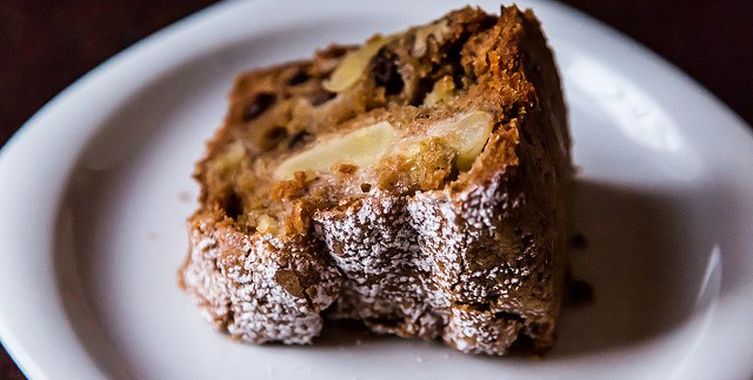
Image and Recipe for teddie’s apple cake from Food52.com

Wobblyogi Wednesday – Summer Book Club!

May I Be Happy: A Memoir of Love, Yoga and Changing my Mind

by Cyndi Lee

e2363034c16cdbea6fb845c1df63e8e3.jpg

Take this book to the beach with you as you relax in the sun and bask in your own happiness. Read a few pages, pause, close your eyes and reflect.  Cyndi Lee talks about body image issues, mom issues, spouse issues, teaching issues and almost everything in between. Some I related to and other I did not. Eitherway the book offers a good focus for conversation about how we each invite yoga principles into our lives.

Here is my favorite passage:

I’ve learned to listen to feelings in my body, as another form of meditation practice. Often when I’m walking home form the studio, I’ll realize that I have a butterfly in my stomuch or I’m gripping the strap of my yoga bag too hard. I practice being curious about it. It’s fun. I investigate by asking myself, “Okay, what’s bothering me?” The answer is usually right there on the surface and then I can puzzle it through, either coming to a resolution or at least gaining enough awareness of the issue to be able to table it for now and bookmark it for later. The body knows, the mind clarifies, and when I can get them to hold hands with my breath, things usually work out all right.

I wonder what questions the book sparks for you. Share your comments here or come join us (whether you read the book or not) for discussion, an asana practice, snacks and more August 12th 2:00 pm-5:00 pm at Community Yoga, West Lafayette, Indiana

Sign up online at https://communityyogalafayette.com/workshopsevents/

May you be safe, may you be healthy, may you be happy,

the Wobblyogi