Food Poem – Everybody Made Soups by Lisa Coffman

After it all, the events of the holidays,
the dinner tables passing like great ships,
everybody made soups for a while.
Cooked and cooked until the broth kept
the story of the onion, the weeping meat.
It was over, the year was spent, the new one
had yet to make its demands on us,
each day lay in the dark like a folded letter.
Then out of it all we made one final thing
out of the bounty that had not always filled us,
out of the ruined cathedral carcass of the turkey,
the limp celery chopped back into plenty,
the fish head, the spine. Out of the rejected,
the passed over, never the object of love.
It was as if all the pageantry had been for this:
the quiet after, the simmered light,
the soothing shapes our mouths made as we tasted.

Lisa Coffman, “Everybody Made Soups” from Less Obvious Gods. From Writer’s Almanac 2/2/2022

Wishing you warm “quiet afters” on this snowy day in the Midwest,

Hungryphil

Food Poem – In the Produce Aisle by Kirsten Dierking

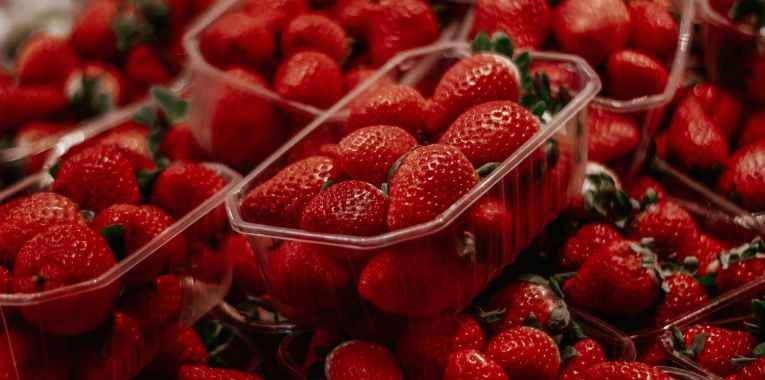
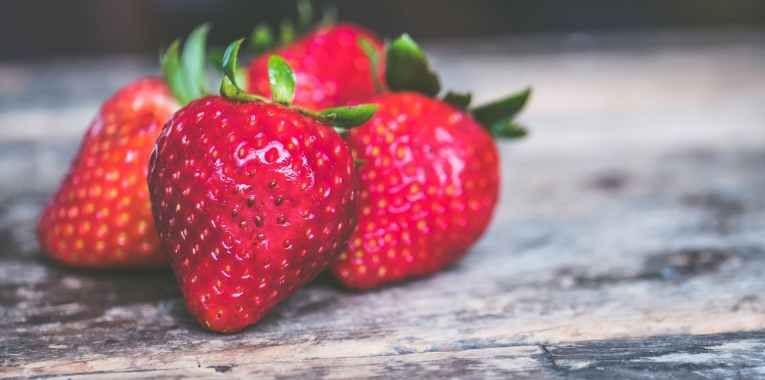
In the vivid red
of the fresh berries,
in the pebbled skin
of an emerald lime,
in the bright colors
of things made
to be transitory,
you see the same
loveliness
you find in your own
delicate flesh,
the lines fanned
around your eyes
charming like
the burnish
of plums,
your life like
all the other
fragile organics,
your soft hand
hovering over
the succulent apple,
you reach for it,
already transforming.

Kirsten Dierking, “In the Produce Aisle”  from Northern Oracle. © 2007 Kirsten Dierking published by Spout Press. From 1/5/2022 The Writer’s Almanac

Food Poem – Jack Kerouac

“The world you see is just a movie in your mind.
Rocks don't see it.
Bless and sit down.
Forgive and forget.
Practice kindness all day to everybody
and you will realize you’re already
in heaven now.
That’s the story.
That’s the message.
Nobody understands it,
nobody listens, they’re
all running around like chickens with heads cut
off. I will try to teach it but it will
be in vain, s’why I’ll
end up in a shack
praying and being
cool and singing
by my woodstove
making pancakes.”

from https://www.goodreads.com/work/quotes/1354192-the-portable-jack-kerouac

Food Poem – Monday by Cindy Gregg

On this first day of November
it is cold as a cave,
the sky the color
of neutral third parties.
I am cutting carrots
for the chicken soup.
Knife against carrot
again and again
sends a plop of pennies
into the pan.
These cents,
when held to the gray light,
hold no noble president,
only stills
of some kaleidoscope
caught being pensive...
and beautiful,
in the eye of this beholder,
who did not expect
this moment of marvel
while making an early supper
for the hungry children.

Cindy Gregg, “Monday” from Suddenly Autumn. © 2010 Cindy Gregg published by Wordplay Press. From The Writer’s Almanac November 1, 2021

Blooming Character: 12 Advantages of Aging

Next time you feel burdened by your slowness, call your daughter by your son’s name, catch yourself repeating stories or wonder if it will be your last time on a long road trip, embrace the chance to rediscover yourself. When you do, you may see your character shine, as your story sparkles bright through the inevitable dimming of the body. There are profound reasons to celebrate aging, explains Jungian psychologist James Hillman in his 1999 book, Force of Character. According to Hillman, there are at least 12 ways your soul shines in a lasting and leaving life:

  • Crystallized Character

Your mental capacities and physical vitality may decline in old age, as might your mobility weaken, yet your character shows ever more energy as your form becomes more actualized.”

In old age, an individual’s pattern of life becomes crystallized and embraced. The force of energy comes from evidence of experience “this is how I do things” or “it’s always worked for me this way.” We stop fighting ourselves. Our style emerges without apology. While in youth with feel pushed by outside forces, in old age we feel pushed from within, from lifelong habits, patterns and character. For better or worse we become the thoughts, feeling and actions we practiced repeatedly. Old age amplifies our best and worst characteristics.

  • Role Integration

“Character is characters; our nature is a plural complexity, a multiphasic polysemous weave, a bundle, a tangle, a sleeve. That’s why we need a long old age: to ravel out the snarls and set things straight.”

Circumstances require us to be different things to different people at different times. Age allows those compelling circumstances to lose grip and we begin to see ourselves as a whole person beyond the fragments of our functions, relationships, and actions. We begin to see our life as a unified path instead of a multiplicity of destinations and roles. We learn to hold the complexity and contradictions in our character. As our eventual destination becomes clear we can focus on our path, our style, what makes our approach to life unique.

  • Mindful Slowness

“Once we were down the stairs and out the door way ahead of our feet. Now who knows when the trick knee will give out or the foot miss the tread. Once we learned from the fox and the hawk; now the walrus, the tortoise, and the moose in a dark bog are our mentors. The adventure of slowness.”

Slowness invites mindful awareness that includes possibilities of both discomfort and accomplishment. We begin to notice our own interactions with vulnerable curiosity instead of the assumed privilege of youthful invincibility. A trip up or down the stairs becomes an exercise of skillful awareness, a brave adventure into unknown pain, and an acceptance of our own unsteady weight. It is no longer simply an unthought means to getting somewhere, it is a journey step by step.

  • Ordinary Magic

“Transcendence of the daily does not occur until the epiphany of the last time.”

The awareness of finality infuses seemingly mundane events with fragile beauty. The possibility “that this could be the last time” adds a film of nostalgia and romanticism. We look to save the last voicemail message, remember the last time she went to the park, he made coffee, the last time in the car, the last time something ordinary happened that now seems extraordinary in absence. Old age gives us the lived awareness of human finitude, vulnerability, temporality. We see the cut flower as both beautiful and dying. Old age teaches us that meaning lives in the small, daily activity of living.

  • Embodied Insight

“In old age, interest shifts from information to intelligence. By this I mean that information brings news, while intelligence searches it for insight.”  

Old age opens our power to see beyond details into wide connections and relevance. We filter out unimportant minutia through the sieve of our experience. We reinforce and sometimes stubbornly holdfast to what we believe our own life has taught us as our truth. The flood of information often feels overwhelming, repetitive, and confusing. Intelligence cultivated over a lifetime and corroborated by experience distrusts abstract data.

  • Inquisitive Curiosity

“Inquisitive curiosity into the lives of others extends our lives. This is not sharing; it is artful listening. The other person is a fount of lifeblood, which transfuses vitality into your soul if you can provoke the other with your listening. Probing—sniffing for lowlife, tidbits of scandal, tasty morsels of salacious gossip that awaken the appetite for the teeming life around you—loosens the limits of personal self-occupied concerns. Backward, downward, outward extend a life beyond its borders and free it from attachment to personal identity, character freed of that greedy bully, Me.”

In efforts to engage and probe others, old age, shows us the breadth of life lived by many. As we become experts of our own lives, we crave to learn more about others. We become nosy and escape the struggles of our lives by engaging life around and beyond us. What are the neighbors’ doing? How are the kids? Where are our friends?…are ways to live vicariously, depending on our character with compassion or with judgment. 

  • Rhyming Repetition

“By means of repetition the psyche forms significance from the ordinary. It is as if the soul begs for the same stories so that it knows that something will last.”

“Did I already tell you this, never mind, let me tell it again.” We become the old people who repeat stories to the annoyance of everyone. We practice our own narratives, fragments of memories, stories of love and loss in order to meet our craving for consistency. We supply the comforting known, if the world will not provide it. Repetition is how character announces itself as cultivated style. Next time you find your eyes rolling as someone repeats a story for the 4th time in two days, understand this person is trying to rehearse and recover meaning from the past. It is a form of appreciation like the security of reheated leftovers the next day.

  • Wide Connection

“By muddling differences among the individuals of the family we may be getting closer to what we essentially share with them. The apple does not fall far from the tree, but first you have to see the tree.”

Have you called your daughter by your son’s name or vice versa? This certainly annoys them, perhaps assuming that you are not noticing them or paying attention to their uniqueness. Old age guides us to drop the details and focus on connections. In this case the son and daughter occupy the same category of nurtured beings, the specific name is secondary. In this fuzzy old age landscape, relationships, pathways, style, life simplifies into categories of love and fear. Depending on the force of your character, your mental landmarks reveal themselves in your established relationships and those you relate to.

  • Fantasized Sensuality

“The sexualization of the old mind is part of its unusual wisdom. It shows a character that no longer separates pleasure from virtue. It places no restrictions on imaginative freedom. It presents character strengthened by imagining rather than by stiff-lipped willpower. The strength of this character lies less in controlling its lustful fantasies than in understanding their transpersonal nature as a cosmic dynamic.”

The proverbial dirty old man (or hypersexual old woman) challenges social decorum of restricted and functional sex. Old age exposes sensuality beyond procreational and sexual power. This fascination with sexuality is grounded in the lust for the connecting power of life. There is no goal or restriction. The old mind is free to imagine pleasurable intimacy free of expectations of egoistic virtue. As the sharpness of sensation softens, sensuality along with factors of slowness, integrated self, curiosity, and connection, allows the old mind to spark the old body with cosmic imagination.

  • Built Integrity

“A structured character is not necessarily one laced together by moral virtues; its pattern may be facile, sneaky, even corrupt. But this, too, forms fate. Integrity does not mean having a granite jaw. A filigree is also a pattern; a house of cards is also a structure. The idea of integrity asks only that one be what one is and nothing more or other.”

Old age affords us integrity of soul earned through a lifetime of choices and experiences. Related to integrating and owning all the complex twists and turns of our lives, old age integrity is grounded in self-recognition: This is who I am, uniquely flawed. This acceptance quiets self-hatred with mercy and grace. One is complete, even when feeling physically broken.

  • Focused Resourcefulness

“Climbing the stairs, you pause and pant. Lasting whispers: “Your lungs; the heart can’t take the sudden strain; you are getting weaker every day.” Leaving says: “Why are you still climbing, still pushing yourself upward, step after step? Is there no other way to reach another level?”

In admitting weakness and fragility, old age, asks us to infuse each act of effort with mindful self-curiosity. Why am I doing this? Wanting to last long in life reduces each ache and twitch to a betrayal. Old age as an attitude of leaving the body, Hillman argues, makes our soul shine brighter through cracks in the body. The graceful exit allows compassionate adjustments without moral judgments of weakness. My body is leaving life, how my heart accommodates this inevitability is where my choice and freedom exists.

  • Loving Imagination

“Where imagination focuses intently on the character of the other—as it does between opposing generals, guard and hostage, analyst and patient—love follows. The human connection may benefit from exhortations to love one another, but for a relationship to stay alive, love alone is not enough. Without imagination, love stales into sentiment, duty, boredom. Relationships fail not because we have stopped loving but because we first stopped imagining.”

Old age can help us nurture relationships with people unlike us, people who do not serve our needs, or whose needs we are not obligated to serve. A breadth of life experience sparked by imagination allows us to see in our opposite. Love erupts from honoring the character in the other, as we recognize our own force of character. If I can’t help who I am, can I expect the other person to do so? As we become less functional ourselves, we become willing to understand others who are not related to me functionally. We stop instrumentalizing others and ourselves. Love flows between souls illuminated by the force of their own character. We learn to imagine love as curiosity about other lives, beyond functional roles.

Advantages of aging gently help us find embodied acceptance of life as preciously finite. Our character ripens in the softness of the body. We become who we practiced being. We finally accept our character as an inevitable force, as we recognize the character of others. There is profound purpose in the wise old man or crone in showing the way through and out of life’s constrictions and life itself.

Instead of merely staying alive, may we all leave life well.

Hungryphil

Food Poem: Living in the Body by Joyce Sutphen

Body is something you need in order to stay
on this planet and you only get one.
And no matter which one you get, it will not
be satisfactory. It will not be beautiful
enough, it will not be fast enough, it will
not keep on for days at a time, but will
pull you down into a sleepy swamp and
demand apples and coffee and chocolate cake.

Body is a thing you have to carry
from one day into the next. Always the
same eyebrows over the same eyes in the same
skin when you look in the mirror, and the
same creaky knee when you get up from the
floor and the same wrist under the watchband.
The changes you can make are small and
costly—better to leave it as it is.

Body is a thing that you have to leave
eventually. You know that because you have
seen others do it, others who were once like you,
living inside their pile of bones and
flesh, smiling at you, loving you,
leaning in the doorway, talking to you
for hours and then one day they
are gone. No forwarding address.

Joyce Sutphen, “Living in the Body” from Coming Back to the Body from the Writer’s Almanac, 9/20/21

I eat a slice of chocolate cake every year to celebrate a loss I’ve had. This poem reminds me of living and of celebrating despite and because of loss. Some years I bake a cake to freeze slices to enjoy throughout the year. A way to keep both the sadness and the gratitude in my body.

The body is everything. Let’s promise to be in ours today.

With warmth,

Hungryphil

P.S. Next time I bake a cake for the occasion, I’ll have to take a picture to share. For now, I rely on stock photos online.

Invitation to “know thyself”

Three months ago I launched an online life-consulting practice: The Self-Curious Project. In this short time, I had at least 50 meaningful and honest conversations that taught me more than any academic program. So many questions worth exploring:

  • how do I not feel anxious about moving far from home?
  • how do I make friends and ease my social anxiety?
  • how do I stop nervous talking?
  • how do respond to “what will people say?”
  • how do not feel like a failure?
  • how do I live up to my parent’s expectations?
  • how do I get over a break up?
  • how do I deal with my grandmother’s death?
  • how do I adjust to grown-up children and their choices?
  • how do I feel more confident?
  • how do I like how I look?
  • how do I let go of my past hurt?
  • how do I move on and forward?
  • how do I………..

The answer depends on what each person brings with the question, in their mind, heart and body. My work with them involves making space for the uncomfortable thoughts, feelings and sensations. To make it safe to feel those feelings without judgement and with support.

My training in architecture, philosophy, social work and yoga perfectly align to this mission of supporting embodied self-curiosity. I can guide their conceptual understanding (philosophy), their awareness of inner-space within an outer world (architecture), their life circumstances and context (social work) and their moving shape (yoga). Having my own practice affords me time to explore the dynamic life of each person without rushing, without the pressure of insurance forms, without one-size-fits all conceptual impositions, without pathologizing functioning human experience. After each session, instead of notes, I write each client a summary email, recounting meaningful moments during the session, skills practiced, and yes, I give homework. There is always action. Learning without empowering action is a pointless waste of precious energy, time, space and connection. Self-acceptance requires a relentless practice of self-curiosity. It is not an event, a therapeutic breakthrough, a quick fix. Hence, the need for a witness, coach, consultant, counselor, or therapist.

Sitting with clients has taught me to slow down, to carefully listen for answers hidden in their own questions. Sometimes I feel like an archeologist, helping excavate hidden hopes and treasure. It is magical to see a person recognize themselves in their own fears and joys. I welcome the tears and I welcome the smiles. It is all the dazzling array of life examined, accepted, and thus worthy.

This blog is my self-curious playground. Thank you for reading, keeping me company and being my listener. The self-curious project is about you, fed by what I learn about myself here. It is the professional face of my personal inspirations. As readers of my private curiosities, I invite you to visit: https://theselfcurious.com/.

I offer a complimentary 30-minute consultation mostly because I enjoy connecting with people, and also so you can make an informed choice of whether self-exploration is worth your time and money. Signing up for a time-slot is easy. If not, email me.

Let’s have a architectural, embodied, philosophical and therapeutic conversation about what it’s like to be you. If I don’t see you there, no worries, hope to still see you here. I’m so thankful for your presence.

Stay in goodness. Stay in ease.

Lisa

Food Poem: Breakfast by Joyce Sutphen

My father taught me how to eat breakfast
those mornings when it was my turn to help
him milk the cows. I loved rising up from

the darkness and coming quietly down
the stairs while the others were still sleeping.
I’d take a bowl from the cupboard, a spoon

from the drawer, and slip into the pantry
where he was already eating spoonfuls
of cornflakes covered with mashed strawberries

from our own strawberry fields forever.
Didn’t talk much—except to mention how
good the strawberries tasted or the way

those clouds hung over the hay barn roof.
Simple—that’s how we started up the day.


Joyce Sutphen, “Breakfast” from First Words, Red Dragonfly. from the Writer’s Almanac, Monday 9/13/21

A simple start to the day with a loved one is so comforting. What is your favorite morning ritual?

Making space for mindful time in 3 simple steps

Feeling rushed by obligations and buried in chaos?

Morning space and time may help you set a confident pace for your day. Crafting mindful mornings is an art that needs intentional space for full expression. As a loss and life adjustment consultant trained in architecture and philosophy here is how I make room for my morning mindfulness routine.

Step 1: Clear one seat. Not a room. Not a big space. Just one comfortable chair, yoga mat, bed, step, any place where you can get comfortable. Don’t get sidetracked into cleaning an entire room. This adds yet another obligation to your load. My seat is a simple orange upholstered wide sofa in my study that I try to keep clear and open.  

Step one is about identifying and giving yourself a space, location, and foundation for you-time.

Space for Time

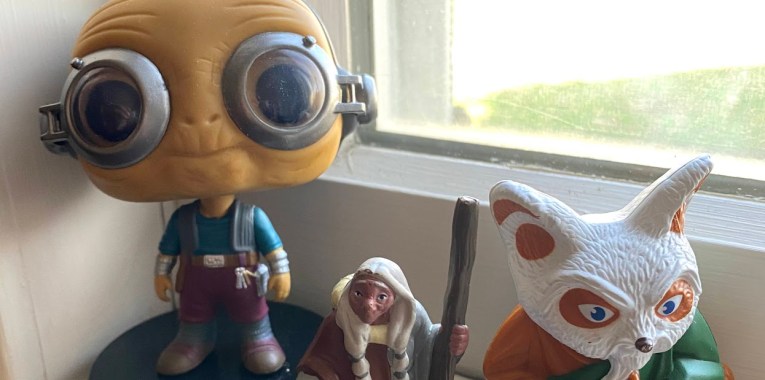
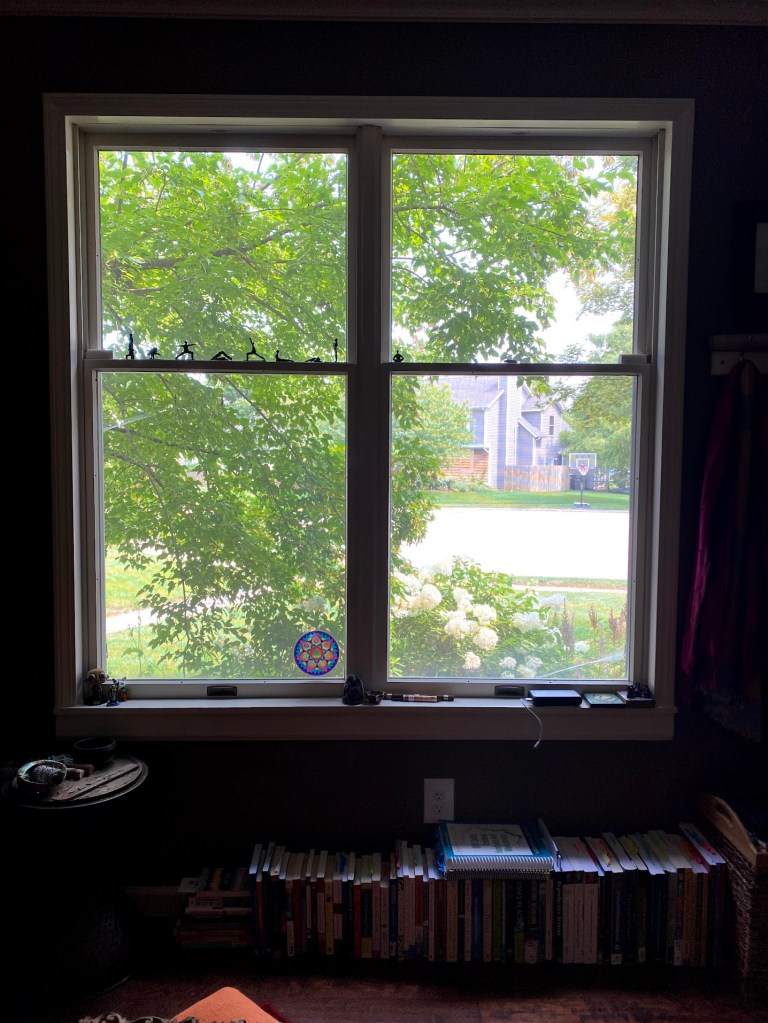
Step 2: Clear space for one view. It can be a window, a picture, a candle. My window looks onto a suburban cul-de-sac, so I added little things I find beautiful, funny and calming on the window sill. Again, focus on just one view, spaces on your side and behind you can be filled with laundry, dishes, papers, toys, the mess of life. The key here is to curate a supportive perspective unique to you.

Step two helps you build emotional connections and boundaries, walls and windows that set and clarify your perspective from your chosen seat.

Step 3: Choose something to touch. Something soothing like a blanket, a pillow, or a stuffed animal.  Choose something to hear like music, wind-chimes or nature sounds. Choose a comforting smell like incense, perfume, fruit, candles. I keep jasmine incense, a soft pillow to hold, and bird feeder outside my window. All three remind me of my time growing up in Bangladesh. For me, holding the warm cup of tea on my soft pillow while incense swirls in front of the window and birds chirp outside is calming.

Step three aims to support sensory comfort and safety through your personal choices.

Something to hold

How would you design your space for time?

Try sitting in your space for mindful time for 21 days. See if you notice any shifts in your self-confidence and let me know.

Food Poem by Brad Ricca

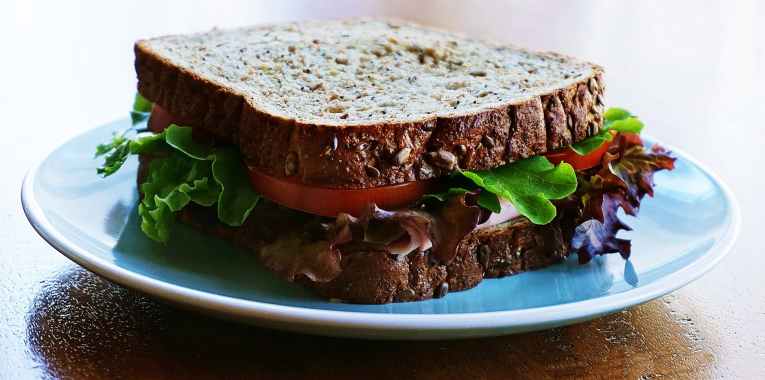
The Beautiful Sandwich

She could always make
the most beautiful sandwich.
Laced swiss cheese: sliced
crossways, folded once.
Ham in rolls like sleeping bags.
Turkey piled like shirts.
Tarragon. Oregano. Pepper.
Herb dill mayonnaise the color of
skin. On top: the thin, wandering line of
mustard
like a contour on a map
in a thin, flat drawer.
Or a single, lost vein.
The poppyseeds hold on,
for now.

Placed on a plate like isolated
driftwood
or a large, solemn head.
The spilled chips in yellow piles
are like the strange coins
of tall, awkward islanders.
The thin dill pickle: their boat
slides into
the green-sour sea.

Brad Ricca, “The Beautiful Sandwich” from American Mastodon, © Black Lawrence Press. Shared from the Writer’s Almanac email, Wednesday, February 17, 2021

What a beautiful landscape of designed care in a sandwich!

Happy sandwich making,

Hungryphil