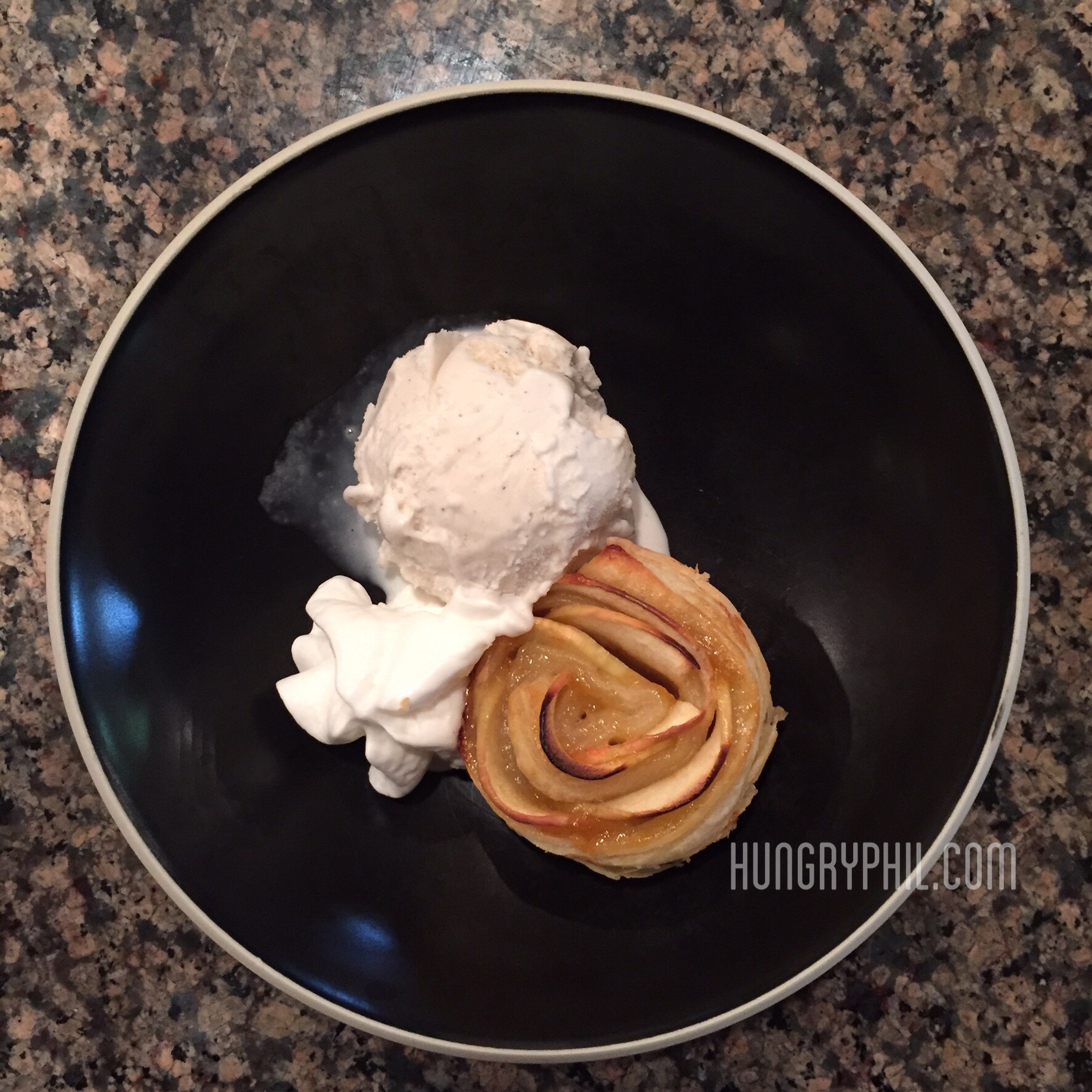
Testing Easy Apple Roses Recipe

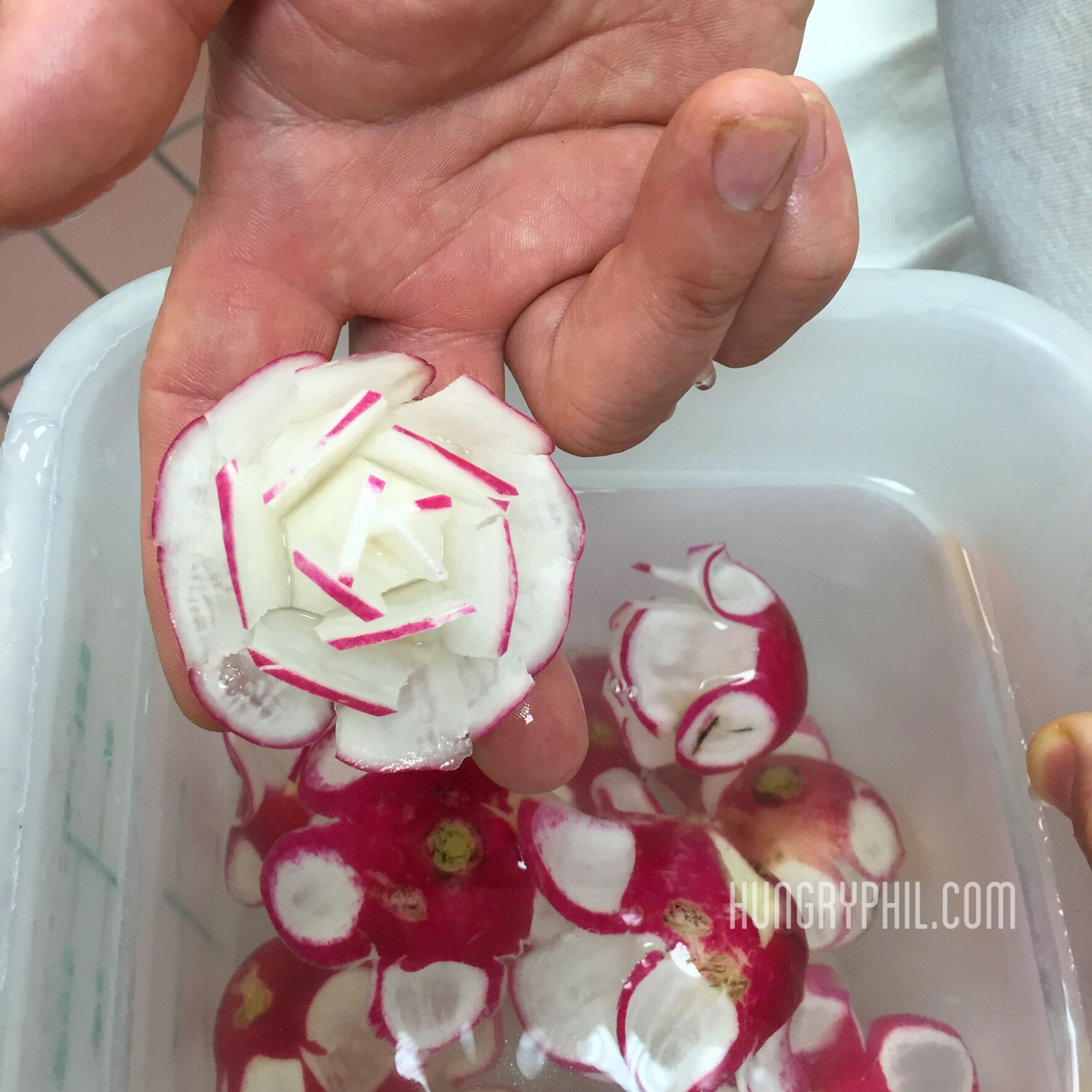
Like many of you, I was fascinated by the apple roses recipe posted on facebook last week. Last weekend, I thought I’d test it. It was supposed to be super simple. Basically roll sliced apples in puff pastry, bake and taaa daaaa….delicious dessert.

Almost….

Few issues. Tried to make it from my faulty memory.

  1. Didn’t heat the sliced apples in order to make them flexible. So it was a bit difficult to wrap. I broke a few peices.
  2. Didn’t spray the bottom of the muffin tin. It was difficult to get the roses out.
  3. Didn’t bake it long enough for fear of burning the uncooked apples. The pastry was a bit doughy.

Despite these issues. It was still delicious and beautiful. Happy to test it again and again.


There are quite a few recipes online. I don’t know which one I glimpsed as I scrolled down my facebook page. Here is one:

Did you try the recipe?

Delicate Balancing Act at Brookville, Charlottesville VA

IMG_6964

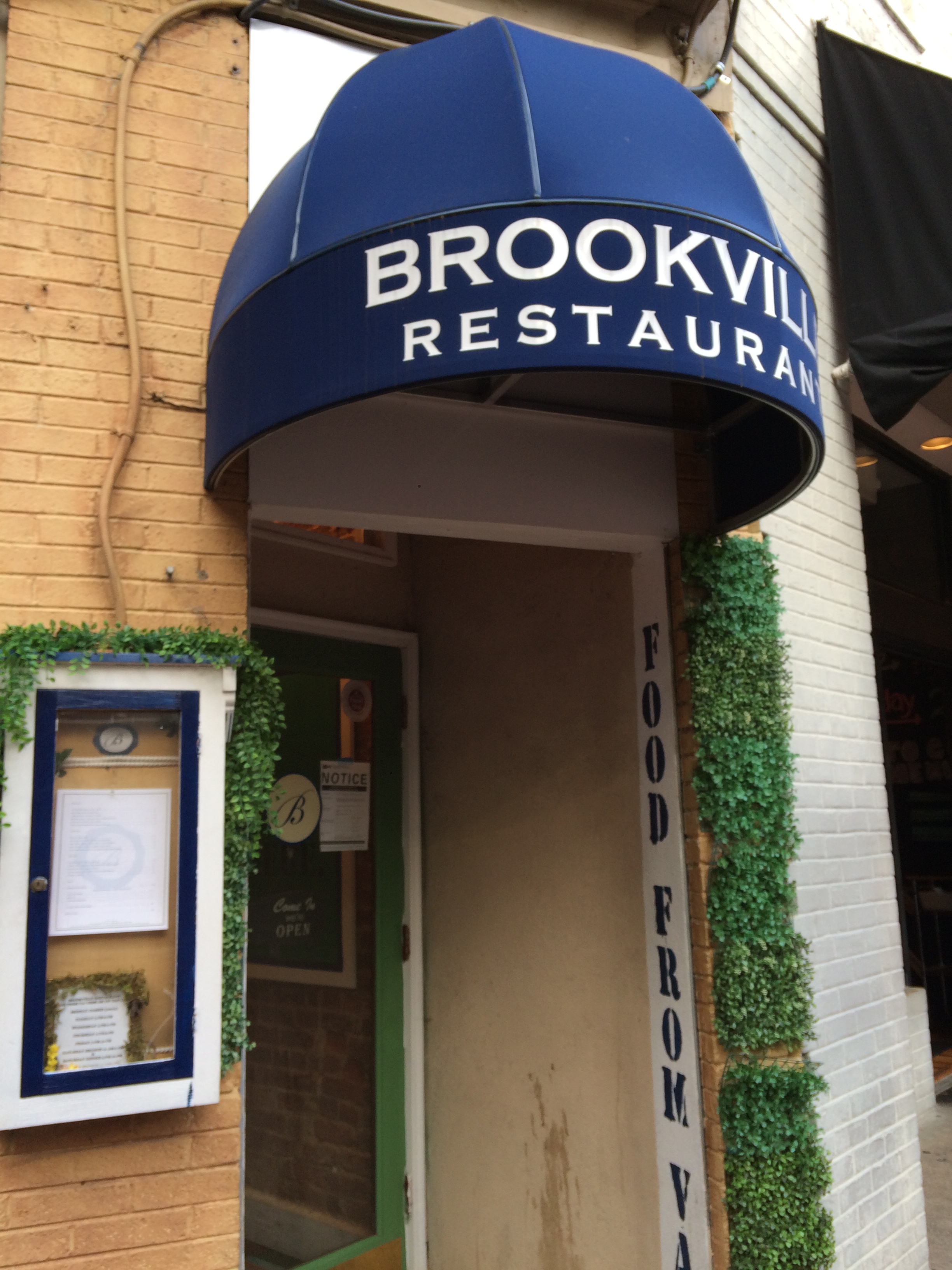
This unassuming entrance lead to a wonderful meal when visiting my baby in college a  few weeks ago. She works there during the week and it was my chance to be in a space she spends a lot of her time and clearly enjoys.  From the moment we were greeted at the door through the entire meal I felt the care that infuses the restaurant. The space itself is comforting with warm lighting, an intimate arrangement of tables, textures of brick and wood, books…oh yes, books…why don’t more restaurants have them?

I was prepared to like anything (in the proud and happy glow of my daughter) that was served.

But.

I REALLY liked the food! I didn’t have to struggle to find good things to sing about. I didn’t have to break into teacher mode, looking for positive comments that hide my disappointment. Thank you, Brookville. I can see why my food-loving baby not only enjoys working there but why she respects the chef and people she works with. They are clearly a talented bunch.

It was such an incredibly thoughtful meal. The website describes the restaurant as “farm to table” comfort food. I would describe Chef Harrison’s style as hearty and refreshing, comforting and elegant. Let me explain through the courses (the images do not do justice) :

IMG_1935

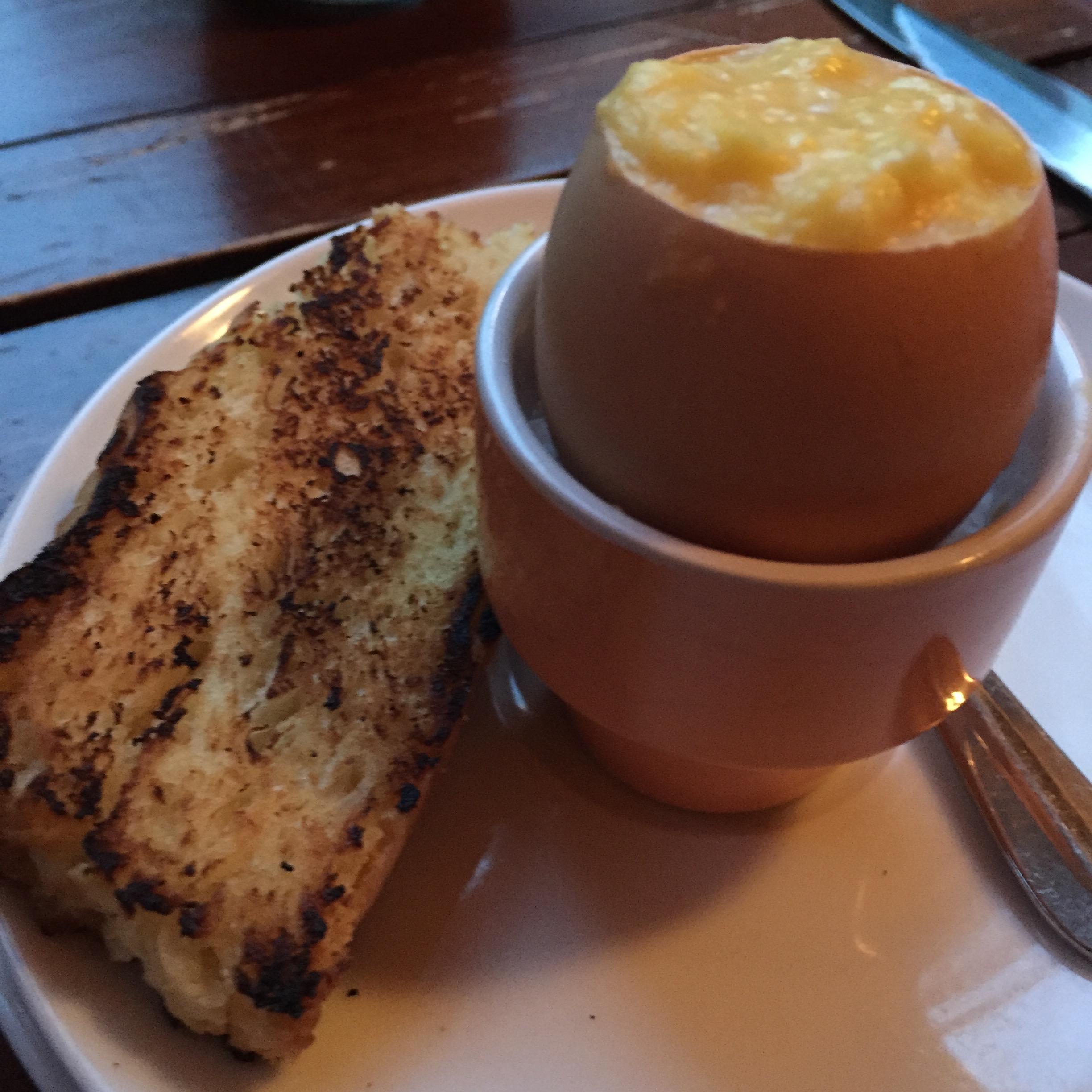
First Course: Soft Scrambled Eggs and Biscuit Toast

The traditional southern dish of eggs and biscuits is a hearty and comforting treat. Chef Harrison’s presentation couples that instant recognition with luxuriously soft scrambled eggs served in the shell (like a soft boiled egg) and lightens the dish. Similarly the biscuit is transformed from hearty to elegant when sliced and toasted. This taste of transformed tradition accompanies the entire meal.

IMG_1936

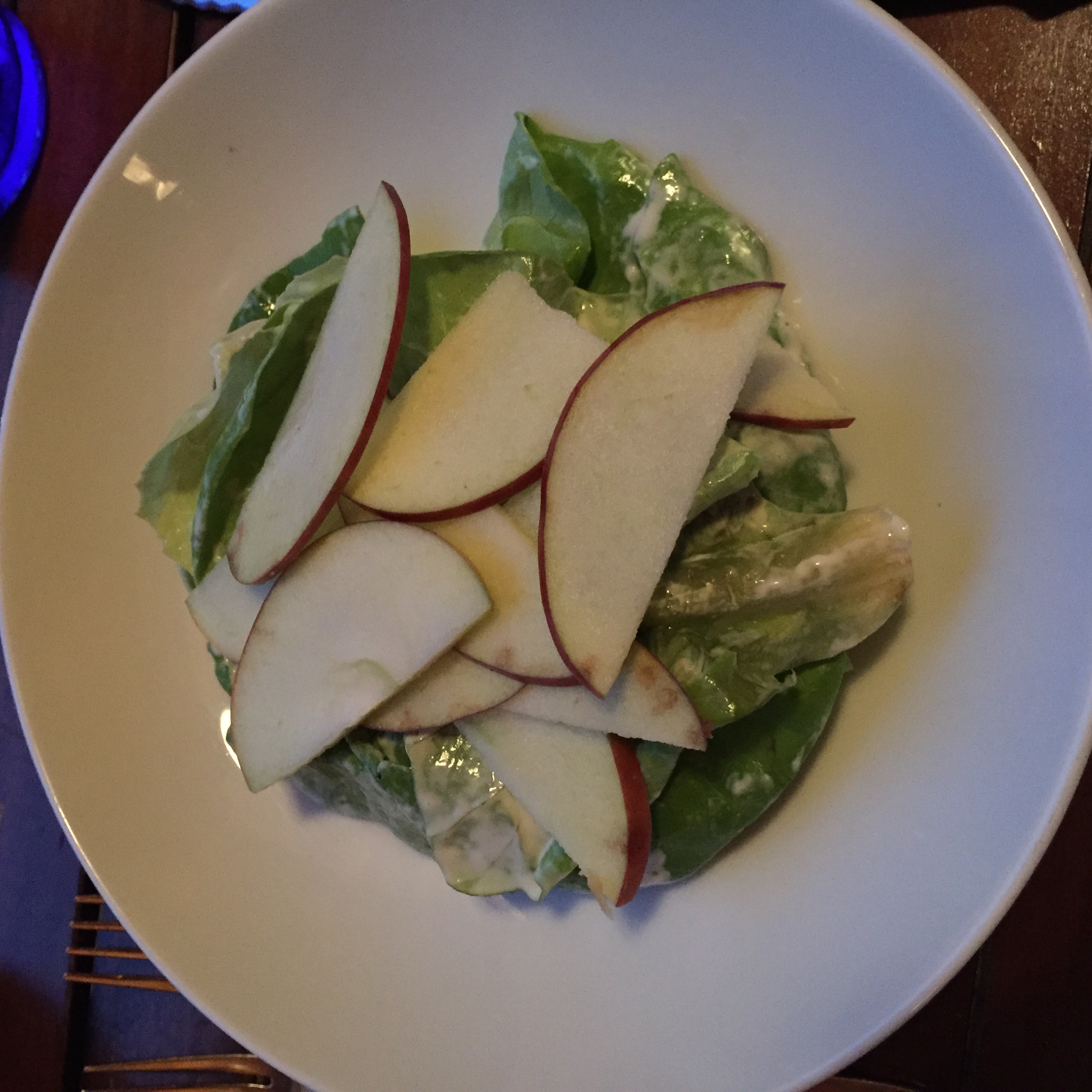
Second Course: Salad with crisp apples

Thin sliced apples, restrained dressing transforms a hearty apple salad into an elegant combination of creamy and crisp textures.

IMG_1937

Third Course: Fresh pasta with mushrooms

Pasta and mushrooms would be a hearty, earthy, creamy and often heavy dish. In offering a light mushroom sauce with fresh pasta, Chef Harrison created a hearty feel with a light taste.

IMG_1938

Fourth Course: Chicken panzanella salad

The moist and delicately flavored chicken could have easily been lost against the crunch and chew of the salad. Instead, the chicken was complimented and highlighted by the salad. Simple, elegant, hearty and refreshing. Smartly crafted.

IMG_1939

Fifth Course: Champange Cake

A perfect end that combined and continued the simplicity and elegance of the meal.

I learned a hearty meal doesn’t have to be heavy. Traditional flavors can be transformed through presentation. Southern food can be casual, welcoming and thoughtfully elegant, just like Brookville, itself.

Thank you, chef Harrison for a wonderful dinner with my daughter and an elegant taste of Virginia.

http://www.brookvillerestaurant.com/

The Martian – Food an Enabling Constraint of Survival

The_Martian_2014

Recently I enjoyed the book and the movie “The Martian.” No spoiler alerts. Although the plot is public for anyone who reads. I would like to point out for all my fellow hungry philosophers that throughout the movie (especially during the first half) the protagonist is almost always eating. His survival depends on his ability to continue eating. He is not happy when he runs out of ketchup and coffee, a crushing blow to his humanity. Food is a central character in the movie that demands attention and sets the pace. The book details Mark Watney’s food rations, his allotment of “real meals” for celebration, consolation and congratulations, his caloric calculations, his arduous process of farming, his cooking of potatoes etc. Imagine if we all did the same. Makes me want to start a food journal.

The podcast Food: Non-Fiction interviews the author, Andy Weir and worth a listen. Enjoy.

http://www.foodnonfiction.com/2015/10/space-food-with-chris-hadfield-and-andy.html

Invitation to West Lafayette Hungry Philosophers

Dear Hungry Philosophers,

Please join us for what promises to be a wonderful discussion about GLOBAL FOOD from our local perspective: October 22nd, 3:30-5:30 pm. Nelson Hall 1215, Purdue University.

Global Food Studies_10.22.15

I would like to thank our panelists for their willingness to share their time and experience with us. Below is a brief introduction to each restaurant and associated panelist. They have much to teach us about making ourselves at home by serving, learning and eating together. For more, please join us in our efforts to extend local goodwill through global food.

La Scala and Restauration

IMG_2014

FullSizeRender

Crafted, complex and whole are the words Kristen Serrano uses to describe La Scala, a Lafayette Indiana Italian restaurant that she co-owns with her chef-owner husband, Francisco Serrano. Every dish is freshly crafted to order and aims for complex layered tastes. The board at the entrance shows that every effort is made to source from local farms. Extending and centering on this principle of celebrating local produce and products, the couple, also opened Restauration.

Growing up in an Ohio home with an one-acre yard, Kirsten learned to appreciate home grown, cooked and baked foods early. The connection to soil, ground, earth, land (she repeats these words through out our conversation) is important enough for her to live and work on a 5-acre farm now. This nature focused gastronomic DNA serves both La Scala and Restauration well.

It was, however, family food allergies and dietary limitations that pushed Kirsten to learn more about healthy foods and implement her knowledge of holistic nutrition at the restaurants. Restauration, dedicated to their daughter, champions the cause of allergen free, simple, creative and grounded eating.

Due to a nightshade allergy Kirsten can no longer enjoy her favorite eggplant parmesan. However, now she does enjoy the pork steak at Restauration sourced from Sheepdog Farms, brined in apple cider and served with a cider reduction. The dish represents the principles of a simple entree, locally grounded ingredients and creative technique (she credits chef Alex Hernandez).

The Serrano family evolution from La Scala (2000) to Restauration (2015) is a telling example of American transnational food experimenting between old world tastes and a new world of local eating.

http://www.lascalaitalianrestaurant.com/

www.restaurationlafayette.com

Basil Thai and Thai Essence

IMG_0117

When looking for a space in West Lafayette to open his Thai restaurant, Chef Ake recalls the confusion of the real estate agent who asked, “What is Thai Food?,” “Is it rice? Or noodles?” Undeterred by the agent’s discouraging attitude, Chef Ake continued his search. Almost by accident he and his wife Nan discovered the location of Basil Thai when they stopped at bubble tea shop up for sale in Chauncey (where they continue to sell bubble tea now). That was over ten years ago. Now they have another location, Thai Essence, with essentially the same food served in a fine dining atmosphere.

Chef Ake owes his confidence in opening a Thai restaurant in small town Indiana to a keen understanding of students having catered many university events (where he was also a student working on a MFA), as well as having worked as a private chef. For him, running the restaurants requires earning the trust of his customers, taking ownership for all details no matter how small and a willingness to learn and adapt.

Basil Thai and Thai Essence are products of the classic American immigrant drive that involves the journey of a well-established film-maker who wanted better, moved to the U.S., worked through a variety of grueling jobs, between jobs out of sheer determination earned a graduate degree and in the process became a business owner and a cultural translator. Given his own difficult students days, one can understand his particular attention to serving student needs. For example, even in our short conversation in preparation for the panel discussion, Chef Ake’s primary concern was making sure we would have hand sanitizer and napkins to ensure no student would get sick. With a caring and generous spirit, he and his wife, Nan, through Basil Thai and Thai Essence are feeding and building a community of adventurous and at home, eaters.

http://www.thaiessence.net/

Shaukin

IMG_2013

IMG_2020

Himanshu and Minal Bhatt relocated, seven years ago, from Orlando (where they owned two Indian street food restaurants) urged by their Purdue-attending son. A familial quality infuses the restaurant. You will find them both running the register, cooking and explaining the menu, as needed. This is an exemplar of a mom and pop store (who happens to be immigrant Indian). The street food menu represents all the regions of India, giving non-South Asians a broad introduction but also South Asians the possibility to enjoy unfamiliar regional tastes. It is a place for casual, fresh food to be enjoyed with friends. In classic deshi (South Asian) familial style they insisted on feeding me. I didn’t resist or complain. It was delicious.

For the Bhatt’s the restaurant is an extension of their family. Even the name, Shaukin is a combination of the names of their daughter and daughter-in-law. Incidentally, the name also references the Hindi word for favorite or favored. They were most excited and proud to share the notes and glowing reviews from their customers. I won’t be surprised if they have all the comments memorized. They thrive on the energy of happy customers. The menu reflects their kind, fun, joyous and accommodating personalities. This small Indiana town suits them well despite the weather where they find people more accepting and appreciative. Or maybe, that assessment is in part a reflection of their own mindset.

http://www.shaukinfoods.com/

I hope you can join us, October 22nd, 2015 at Purdue and celebrate our very own, small town Indiana, GLOCAL eating!

A very special thanks to Kera Lovell, American Studies Ph.D. student and instructor,  for thinking of this and organizing this event!

Warm wishes,

Hungryphil

3 Reasons Why Being a “Bad” Cook, isn’t Bad

1275694

Reason 1: Cooking is a range not a hierarchy.

There are reasons why there is a proliferation of packaged, frozen, canned, boxed, shipped meals. Shocking I know. But. Not everyone likes to cook. Let is be said without sanctimony or disdain that despite recipe books, cooking shows, magazines, blogs, cooking for some remains an unattractive task. Convenience foods along with all modern appliances (refrigerators, microwaves, convection ovens, blenders, standing mixers, food processors) exist because “cooking” has a loose definition that includes opening a bag of Bertolli’s Chicken Florentine to growing and transforming produce into a fancy, farm to table meal, a la, chef Dan Barber’s Blue Hill Farms.  We all have to, individually, discover our own comfort zone with cooking. Sharing take out is much better than joyless cooking (and eating). The family meal may be important but  its the “sharing with the loved ones” (not the”look what I made”) part that’s most important. Particularly, difficult to remember when not everyone around the table is enjoying their meal. Which brings me to…..

Reason 2: Not everyone likes home cooked foods.

I know, I know, if you feed your children fresh, unprocessed foods early, they will not know of the evil fast food options. We all know, life is far more complicated than ideology allows. Who among us hasn’t craved a horribly, unhealthy treat (the trick is not make it a habitual choice).

Jim Gaffigan talks about joyless childhood Sunday dinners when he would’ve much rather have fast food, writing,

I remember being a kid and never being able to find a multicourse meal appealing. I couldn’t understand why we couldn’t just have McDonald’s for Sunday dinner. My eight-year old palette was already accustomed to fast food, and expanding it beyond that has been a lifelong struggle for me. My mom could make thick and juicy home cooked hamburgers on some fancy roll, but I still preferred a thin, tasteless McDonald’s hamburger on that wonderbun.

Gaffigan’s story makes me think of one of my step daughter’s love of Bertolli’s Chicken Florentine. For her, the packaged pasta is a taste of dad’s house. Who am I to take that from her? She knows of other options but for now it is not my place to enforce healthy eating over comforting familiarity. My other step daughter, on the other hand, is a big fan of curries, naan and fresh vegetables. One must account for differing personalities. My daughters will eat anything I cook because they are used to it. My cooking is their home-cooking. Do not cook trying to please everyone. You won’t. The stress of pleasing everyone often accounts for reluctant cooks.

Reason 3: One cook (usually the woman) is not enough.

We cannot ignore the gendered aspect of food preparation at home. Historically, women have been assigned and/or taken on the role of primary home cook, grocery shopper, heater upper and the person to whom the question “what’s for dinner?” is most often aimed. Food can be a creative outlet, an empowering control exercise and it can be a laborious second job. Unless everyone shares in the preparation, no matter how much or how less one enjoys the task, cooking can be unpleasant and lonely. No other domestic task carries such potential for resentful obligation. If you don’t like cooking, don’t do it out of obligation. Not worth it. Make a lot of friends. Go to someone’s house who does like to cook if you are craving a home-cooked meal. Bring flowers. Build a supportive non-judgmental community of eaters. I am not promoting any particular diet, except to make deliberate choices, to design, to eat with awareness. What is your ethics of eating?

Dear “Bad” Cooks (there are no bad cooks, only reluctant and uninterested cooks)

May you buy your prepared meals with pride, choose wisely and consume meaningfully (according to your own culinary cause). We are all just doing our best. Make your non-home cooked meals the best they can be for you.

Wishing you a joyous and empowering time at the table,

Hungryphil

Chicago Food Tour – hosted by Kitchen Art

Yesterday’s Chicago food tour continued this morning with sunny-side up eggs, croissants from Delightful Pastries and a warm cup of black coffee.  A delightful morning indeed! Saturday was a day full of wonderful and delicious culinary discoveries. Thank you Larry for curating an amazing experience that included, fish, doughnuts, Indian food, spices, chocolate, olive oils, pastries and a mega mall size experience of Italian food. Thanks to the trip I have new spices to play with like, sumac, Chinese five spice and zaatar. Besides the flaky buttery croissants, we also sampled a piece of chocolate cake, a lemon bar, a peanut butter raspberry bar, a slice of tiramisu, samosas, laddoos…what am I forgetting? Oh yes…and we fried the fresh fish. Did I mention that was just today AFTER the food tour yesterday. I feel like the hungry caterpillar in the children’s story. Tomorrow I have an appointment with the treadmill and the yoga mat. What weekend culinary discoveries fuel you this week?

Wishing you a delicious week ahead,

Hungryphil

Gateway Deshi Dishes – Three Levels

There is a fair amount of gastronomic seduction and education involved in inviting another to one’s native culinary tastes. This is particularly the case when two people from different culinary traditions fall in love and regularly dine together. Jim and I have been together for five years. Through each other and with each other we have discovered many new tastes. This blog is partly an account of our dinner conversations. It is quite possible that we shared every meal you see posted on this site.

In the past five years, I learned to bake (a technique I unknowingly under-utilized before), cakes, chicken, casseroles, vegetables and more. I learned to make a variety of sauces. I learned to appreciate biscuits and gravy, grits and cheese and a variety of sweets I didn’t know existed, like Ritz crackers with peanut butter dipped in chocolate. I appreciate steaks and burgers as worthy treats. Pastas and salads have become very familiar. My pantry is the most diverse and global it has ever been. It is rare for us to go a week without dining on at least three different cuisines. This week, for example, we had Cajun inspired, Japanese inspired and Indian inspired meals.

But, my culinary evolution is small compared to Jim’s. He went from a diet of burgers, salads and packaged Italian meals to willingly eating fried anchovies and spicy vegetable curries. Food is so much better shared. I’m glad Jim is my food buddy.

Here was my intuitive strategy to introduce him to Bengali (South Asian) food:

photo 1

Level 1: Comfort: Unfamiliar flavors with a familiar twist.

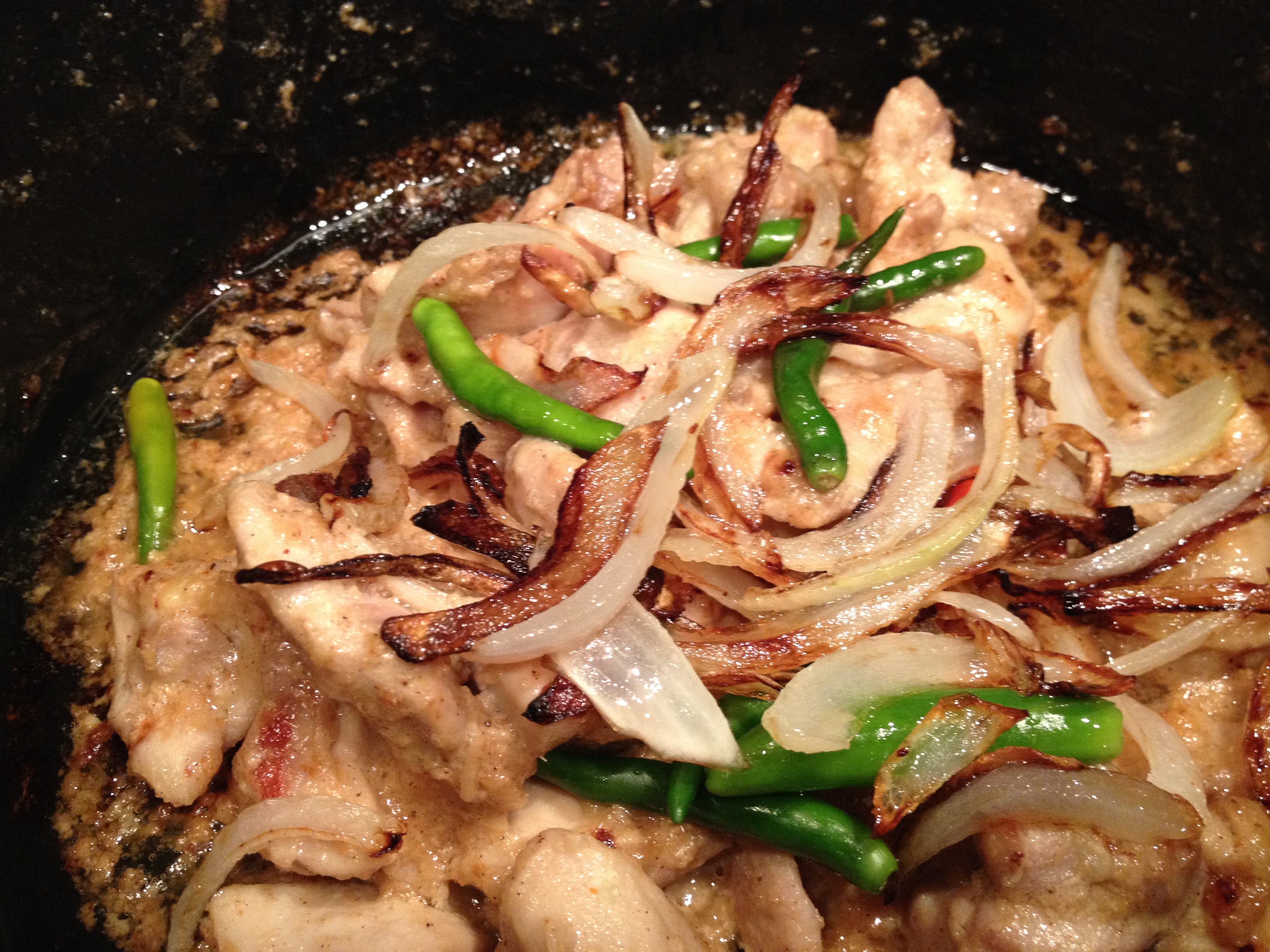
  • Add cream/ sugar. Dishes like chicken rezala (an earlier posted recipe) made with a yogurt, ginger, garlic sauce work well. [Quick note: The layer of floating oil is unappealing to unaccustomed eyes. The aggressive look of red thick spicy sauce with a film of oil should be avoided as much as possible.]
  • Cover with pastry: If I can’t see the unfamiliar filling then I can’t be too scared of it. Wrapping hides the unknown. Potato croquettes, samosas, vegetable koftas or fritters work well.
  • Fry or grill: anything fried or grill has an automatic familiarity. Example, chicken tandoori.

photo

Level 2: Complexity: Building expertise and letting go of familiar level 1 culinary crutches.

  • Add more traditional ingredients: In stage one, I focused on familiar spices like ginger, garlic, onions, cinnamon, chili with the inclusion of no more than three unknown flavors, like turmeric, coriander, cumin etc. As familiarity builds, I felt okay adding saffron, cardamom, fennel seeds, mustard seeds etc,. For example, shrimp and pumpkin curry with coconut milk, coriander, cumin, garlic, onion, turmeric and chili.
  • Remake restaurant dishes: Somehow standardized restaurant food acquires a level of shared cultural currency. We know Indian restaurant food well (unlikely we cook it at home), sag paneer, butter chicken, karahi ghost and the famed chicken tikka masala. The process of trying something together at a restaurant and then trying to cook it at home, makes it a shared discovery. For example, easy fake out butter chicken (recipe posted previously).
  • Introduce traditional flavor combinations and progression. For example, a cucumber raita accompanies dry kabobs and biriyani dishes, not light currries, dal or vegetables. Or, rice flavored with curries is the main dish, not the meat curry.

IMG_0152

Level 3: Comfort: Search for Variations

  • This is when floating oil, involved and complex sauces and whole spices in the curry become less intimidating. For example, the spicy Shrimp curry recipe posted last month. Or the plate above with shrimp, dal and cabbage bhaji. This is the phase of native familiarity without the childhood nostalgia.
  • Remake home cooking and regional variations. Now I feel comfortable making dishes I remember eating without worrying whether Jim will like it. His dislike at this point would be a personal taste preference instead of a quick reaction to the unknown.

As you can see, I thought about introducing Jim to flavors I love very consciously. I am thankful that Jim responded as well as he has. I am not alone in pondering these questions of cultural interpretation and translation. In the book, Food: The Key Concepts, Warren Belasco, writes about American preferences (for sweet and meat) and quotes culinary historian Laura Shapiro’s characterization of the Americanization of other culinary cultures by “blunting the flavors and dismantling the complications.” While the strategy of tempered flavors and complexities served well to introduce Jim to Bengali food, the continued discovery now makes it a shared adventure. For example, our first Michelin starred five-course dinner at San Francisco’s  Compton Place (more on that meal later).

Wishing you gateway dishes that take you far away and bring you closer together,

Hungryphil

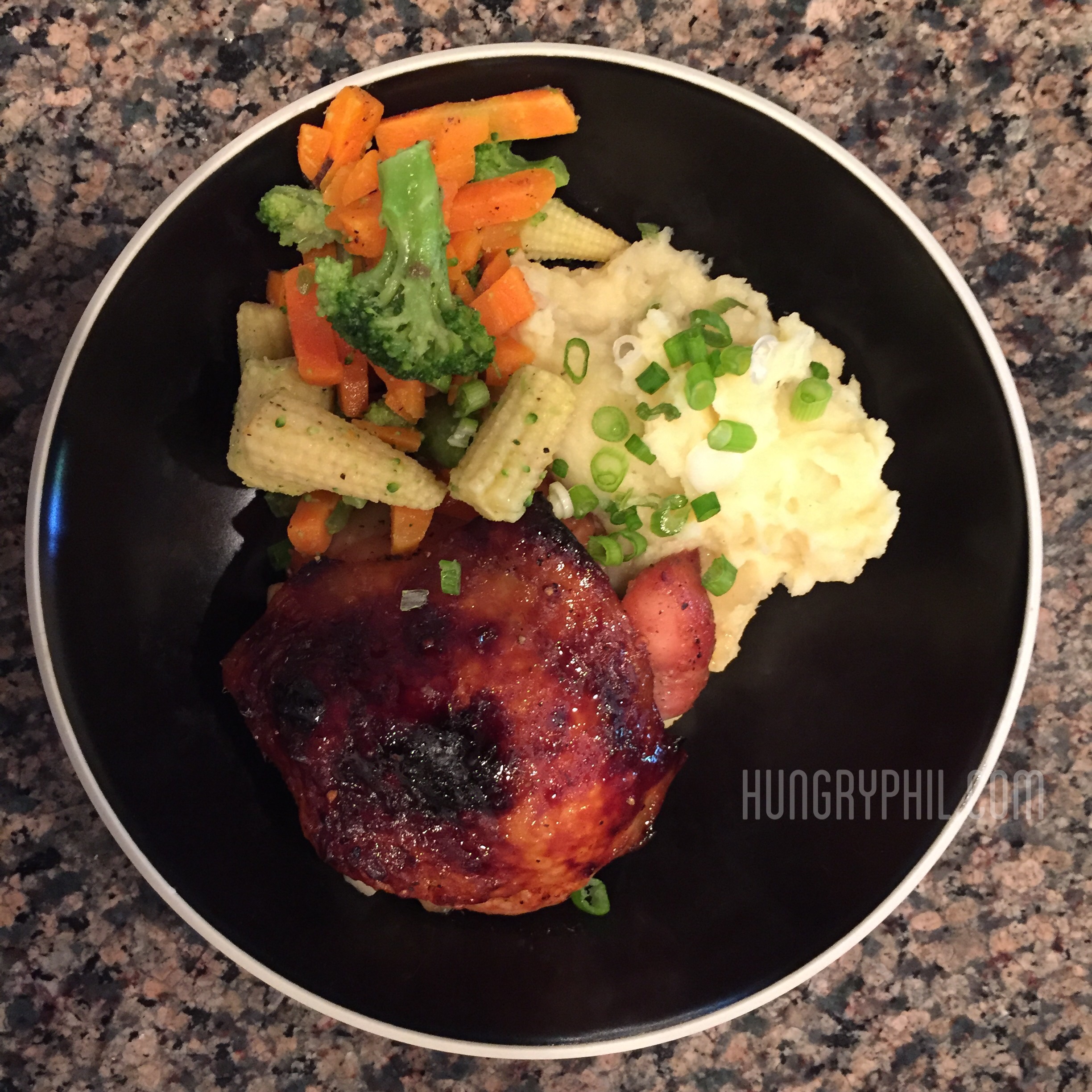
Honey Ginger Chicken with Wasabi Mashed Potatoes

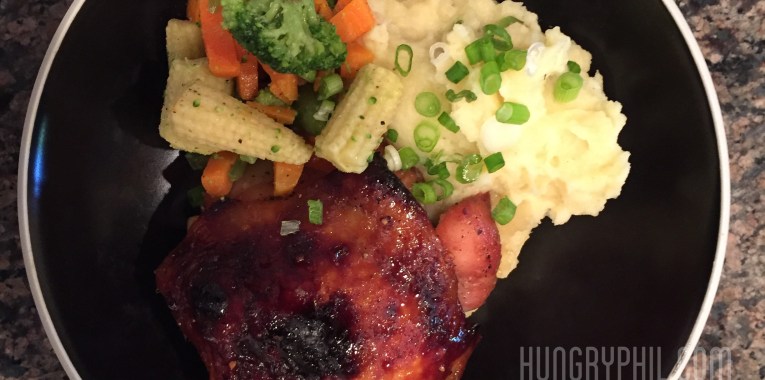
Honey Ginger Chicken: Marinate four chicken thighs with 3 tbs soy sauce, 3 tbs oil, 3 tbs honey (I was so close to finishing my honey bear bottle that I just emptied it into the marinade, making it more like 4 tbs honey), 1/2 tsp garlic crushed/paste/minced, whatever you have and 1/2 tsp garlic paste, salt, pepper. Marinated for three hours. I added a few sliced green chili peppers. Baked at 425 for 20-30 minutes.

Wasabi Mashed Potatoes:  Just regular mashed potatoes. Boil potatoes. Mash. Butter 2 tbs. 1/4 cup heavy cream or sour cream. Salt and pepper. Add 1 tsp of wasabi mustard. Top with green onions.

I can’t take credit for the vegetables. It was just a bag of Bird’s Eye Asian Vegetable Medley. But I have to say the baby corn with its metal flavor was NOT my favorite.

Good dinner. Caramelized skin, succulent warmly spiced chicken, creamy and spicy potatoes. Did I say it was super easy?

You can marinate the chicken things in a bag over the weekend and just bake on a weeknight for an easy no prep dinner. I imagine yummy with noodles and rice too. Let me know how it goes, if you try it.

Amani, I hope you try it in your college kitchen, its cheap, quick and neutral enough to suit many taste palates.

Wishing you delicious improvised and inauthentic dishes,

Hungryphil

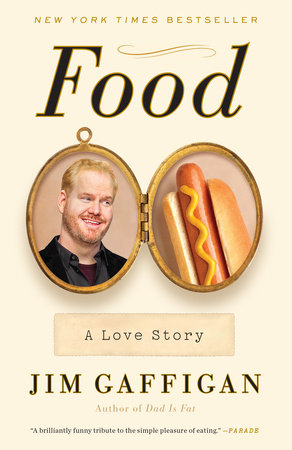
Food: A Love Story by Jim Gaffigan

9780804140430

There is nothing unique or innovative about the Hot Pocket concept. It is fundamentally just meat with a pastry-like cover. This is nothing new. I remember initially looking at the Hot Pocket product I saw in commercials and thinking, Well, that’s just a calzone. I imagined all the South Americans exclaiming, “Hey! That’s our empanada!” And the Jamaicans insisting, “No, that’s our meat pie!” It seems like every culture has a version of the thing we Americans have come to call a Hot Pocket. While these other countries’ dishes seem like real food with some special kind of history, the American version seems like a cheap imitation. The Hot Pocket is sort of a symbol of the way we eat in America. The early development of the Hot Pocket appears to have begun with the TV dinner, the hominid of the Hot Pocket evolutionary chain. In the middle of the last century, our lives got busier, and we got lazier in our food preparation habits. In the 1950s, the TV dinner made it possible for us to conveniently eat in front of our television. The microwave made it possible for us to make the TV dinner faster so we could watch more television. I imagine intravenous food streaming from the television is about a decade away.
This was the best travel read in a long while for me. I laughed out loud to many passages, which I admit, rarely happens. The balance between his and his wife Jeannie’s eating preferences was helpful orientation … and hilarious. The venn diagram of fruitcake and the map of American food according to Gaffigan is worthy of considered study. The visuals, like the diagrams, maps and photos throughout the book were effective in justifying his claims that for example no one likes vegetables or fruits, everyone likes ice cream etc,. Despite my love of vegetables and fruits, I still very much agreed with Gaffigan’s analysis of American food.  As a philosopher how could I not appreciate such unabashed honest self-aware eating!

All joking aside, Gaffigan comically highlights quite a few oddities about the serious problem of American eating and obesity. The quoted passage above helps explain my interest in American food from a design perspective. Notice the mediation of technology in the American Hot Pocket example. After all, a Hot Pocket is a designed object. An ontographic map, a la Levi Bryant, of the Hot Pocket would show that the supermarket, the freezer, the microwave and the television exert gravity absent in traditional variations of empanadas or calzones. The technological intervention and preservation, the emphasis on speed of preparation and the association with television and entertainment, make the Hot Pocket, according to Gaffigan, quintessentially American like Las Vegas all-you-can-eat-buffets.

Food: A Love Story is a personal conceptual and comic exercise of food studies, design studies and American studies. Jim Gaffigan is an exemplary hungry philosopher. I am humbled. And, now very hungry for a cheeseburger.

http://www.jimgaffigan.com/books/food-a-love-story/excerpt

http://www.pastemagazine.com/articles/2015/07/the-10-best-food-jokes-of-jim-gaffigan.html

Image from: http://www.penguinrandomhouse.com/books/236811/food-a-love-story-by-jim-gaffigan/