Deshi in the Dorm Kitchen- Moli’s Moghlai Porota

FullSizeRender

This recipe is an expanded version of my sister Moli’s recipe. When I asked her she said….oh its so easy… you just stuff the packaged porota with keema and bake it in the middle of oven. This is what happens when you ask an experienced cook for a recipe. So, this is my attempt to explain the process for Amani, my baby deshi in the dorm.

Here’s what you need:
IMG_1694

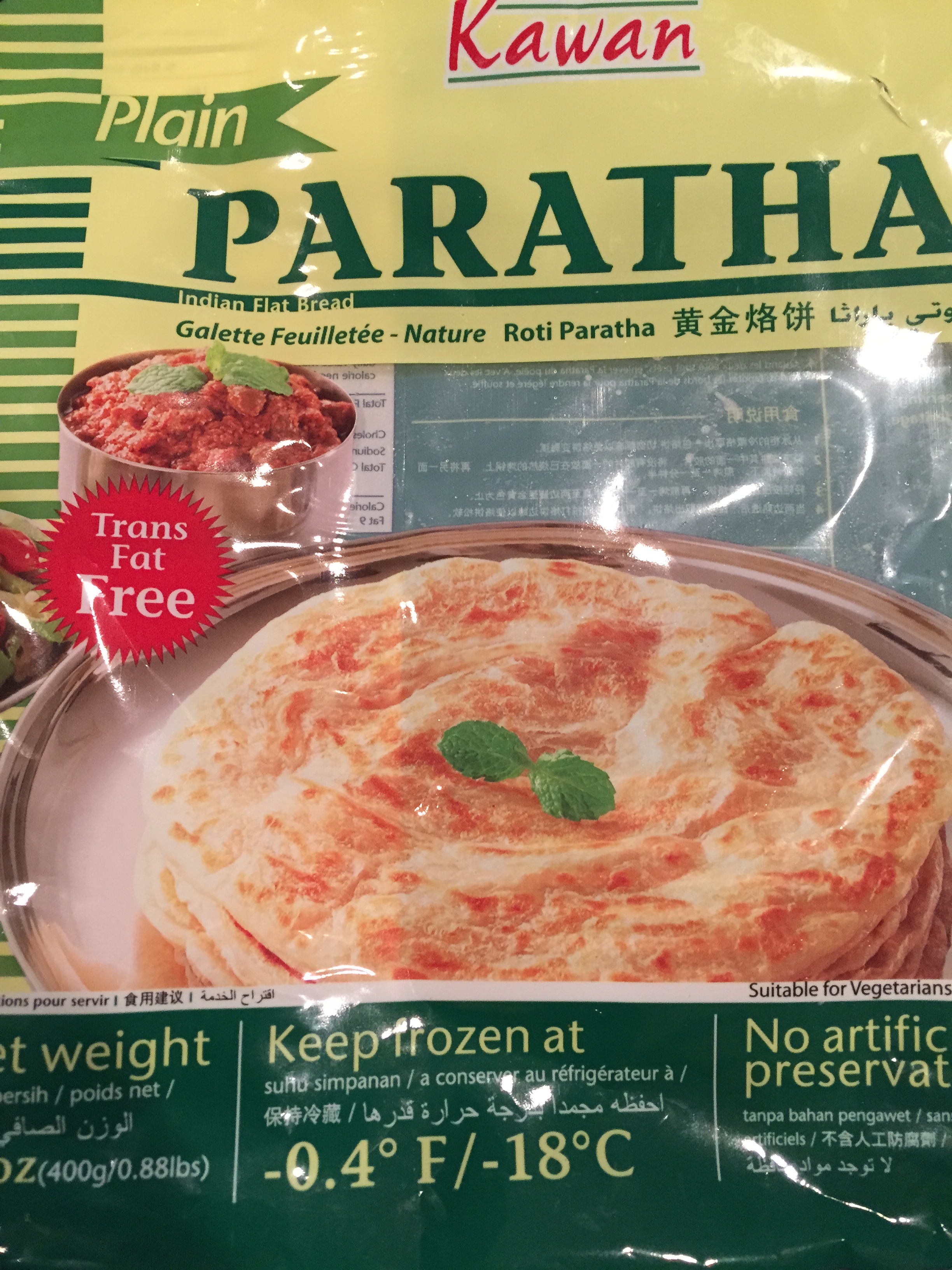
2 packages of frozen Paratha (I ran out and tried it with frozen chapati…not as yummy)

You’ll get five stuffed porathas out of this recipe.

Keema

2 Eggs (beaten)

Here’s a quick recipe for keema (the beef stuffing)

1 lb of ground beef

1 tsp ginger paste

1 tsp garlic paste

Salt and Pepper

1/2 cup cilantro, 1/2 large onion, 2 chilli peppers…chopped fine.

IMG_1690

Brown beef with a 1/2 cup of water, ginger, garlic, salt and pepper.

Optional: Sprinkle a teaspoon of garam masala, 1/2 teaspoon of sugar, 1/4 of a lime juice.

Turn off stove. Top browned beef with onion mixture, cover and let sit for 10 minutes.

IMG_1691

Now your keema is done. You can use it for this, for samosas, aloo chops, patties….for any deshi filling.

1.Preheat oven to 350 degrees

2. Defrost porota enough to be pliable

3. Spray two oven trays with oil.

4. Place five porotas on the trays.

5. Brush each with egg.

6. Top each with keema (about 3 tbs/each). Reserve extra for later.

7. Add more egg on each if desired (warning, the egg might leak out if you put too much)
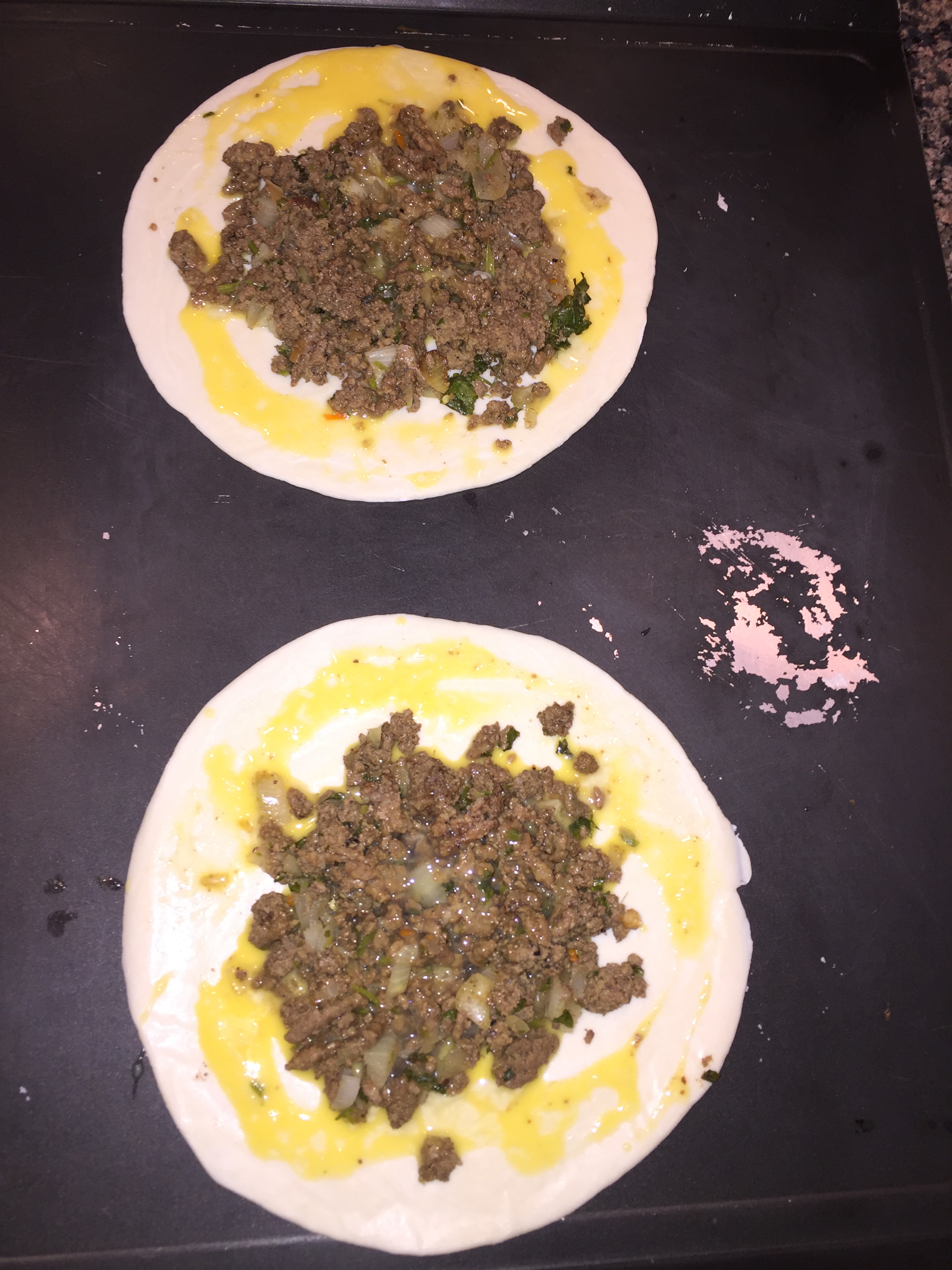
IMG_1692

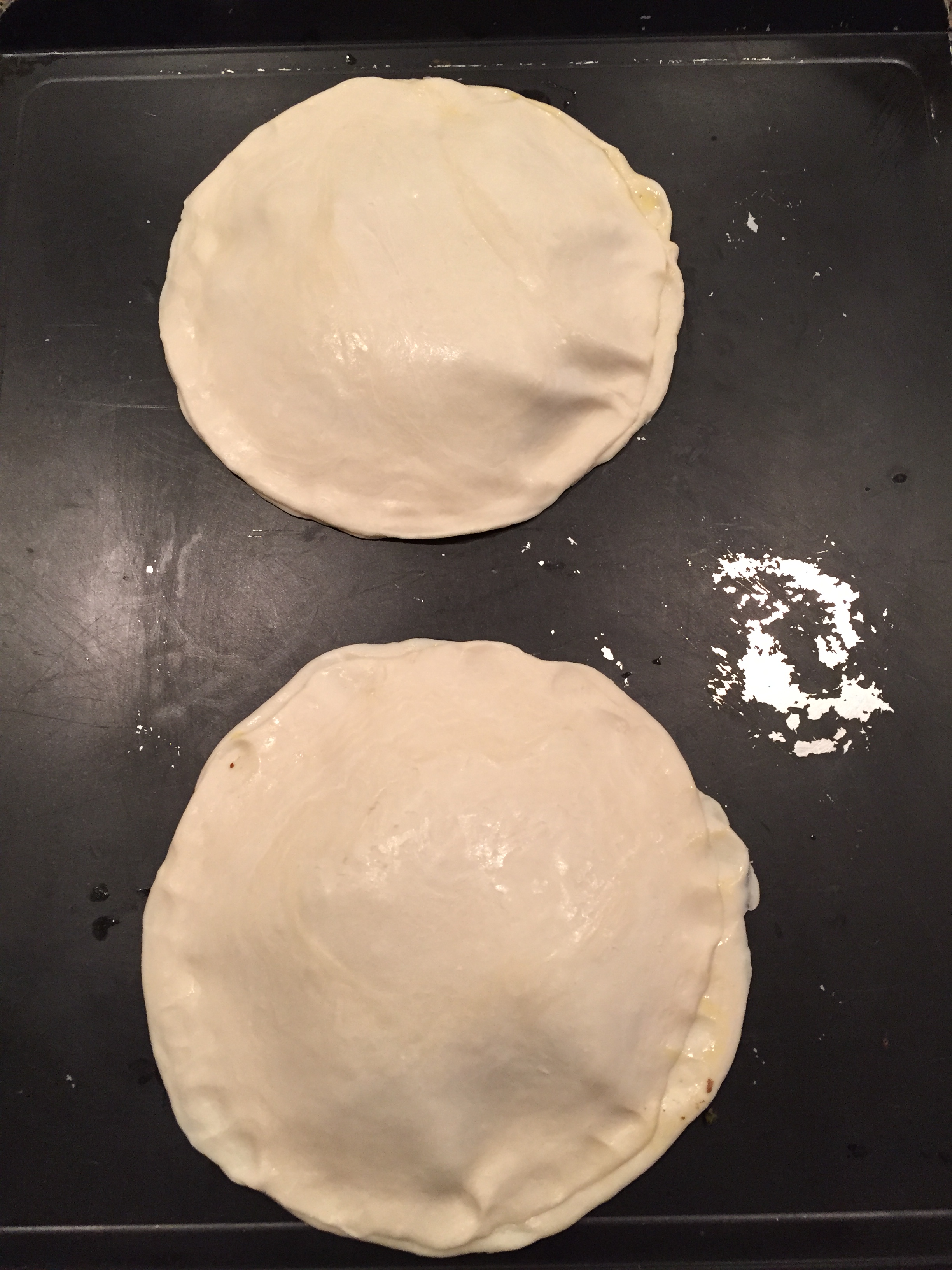
8. Cover each with another porota.

IMG_1693

9. Bake for 30 minutes. Center of oven. May need flipping in order to brown all over.

It tastes like a spicy, flaky and delicious meat pie. Great as a snack with sweet chai.

Enjoy! Thank you, Bhabi!
BakingPhil Project 5: Extra Fancy Cinnamon – Rolls

IMG_1546

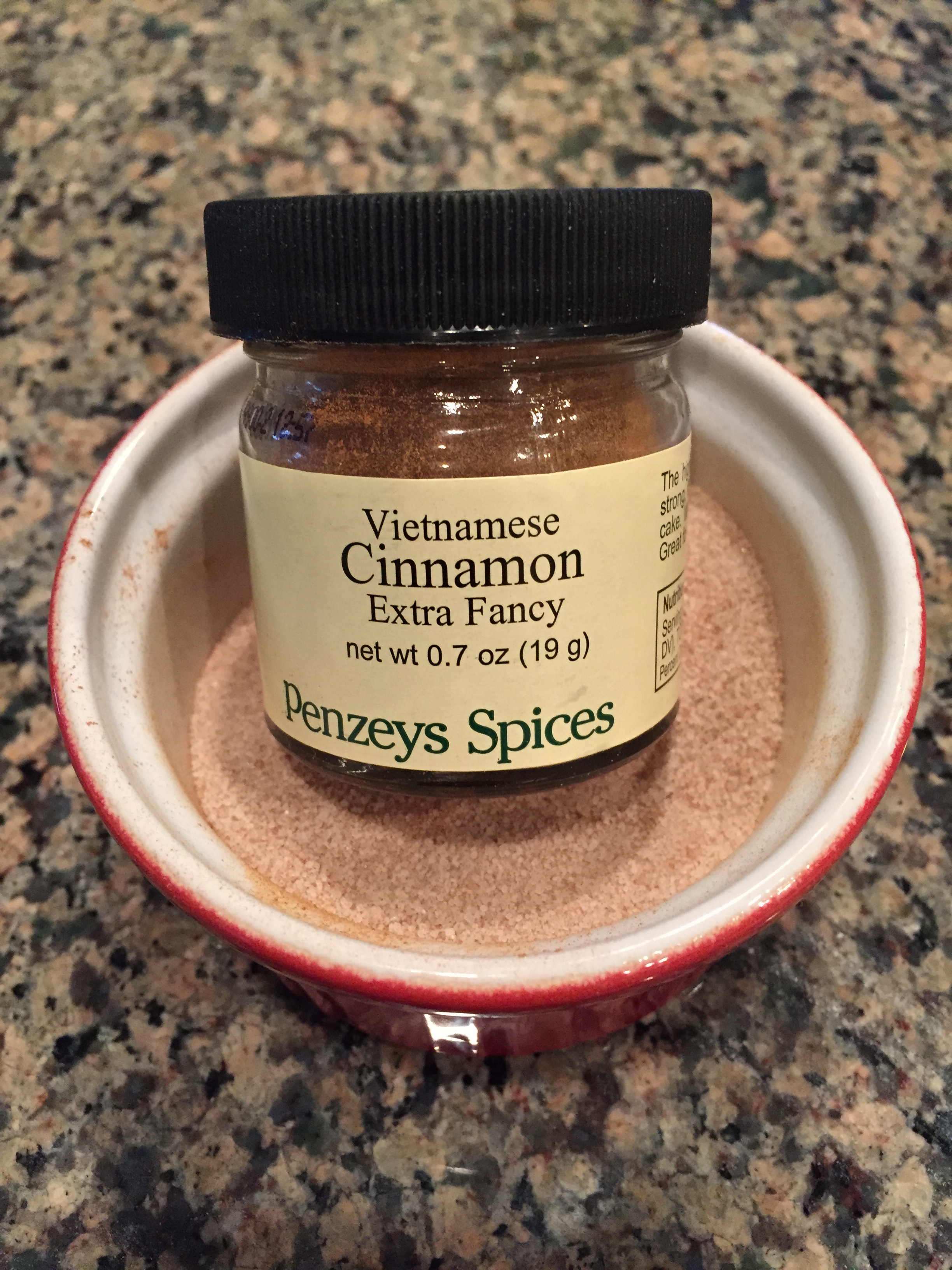
My friend Kathy gave me a jar of extra fancy Vietnamese cinnamon. Naturally, the first thought I had was….Cinnamon Rolls! It just is the best way to showcase the spice. Navigating recipe websites I landed on the Vegan Recipe for Cinnamon Rolls by the Minimalist Baker. (Thank you Minimalist Baker!)

The World’s Easiest Cinnamon Rolls

Small disclaimer: I’m not a vegan and I used butter for this recipe. I’m just a big fan of almond milk and the “minimalist” approach.

The recipe calls for activating the yeast in lukewarm bath water temperature for the almond milk and butter mixture. I now realize I take VERY hot showers and bath. I basically cook myself.  I may have killed the yeast as the minimalist baker warned. Oh well. I’m anxiously waiting the prescribed hour for the dough to double. Literally only time will tell. Will my dough make it….oh the drama. Is there a way to know if the yeast is developing properly BEFORE adding the flour?

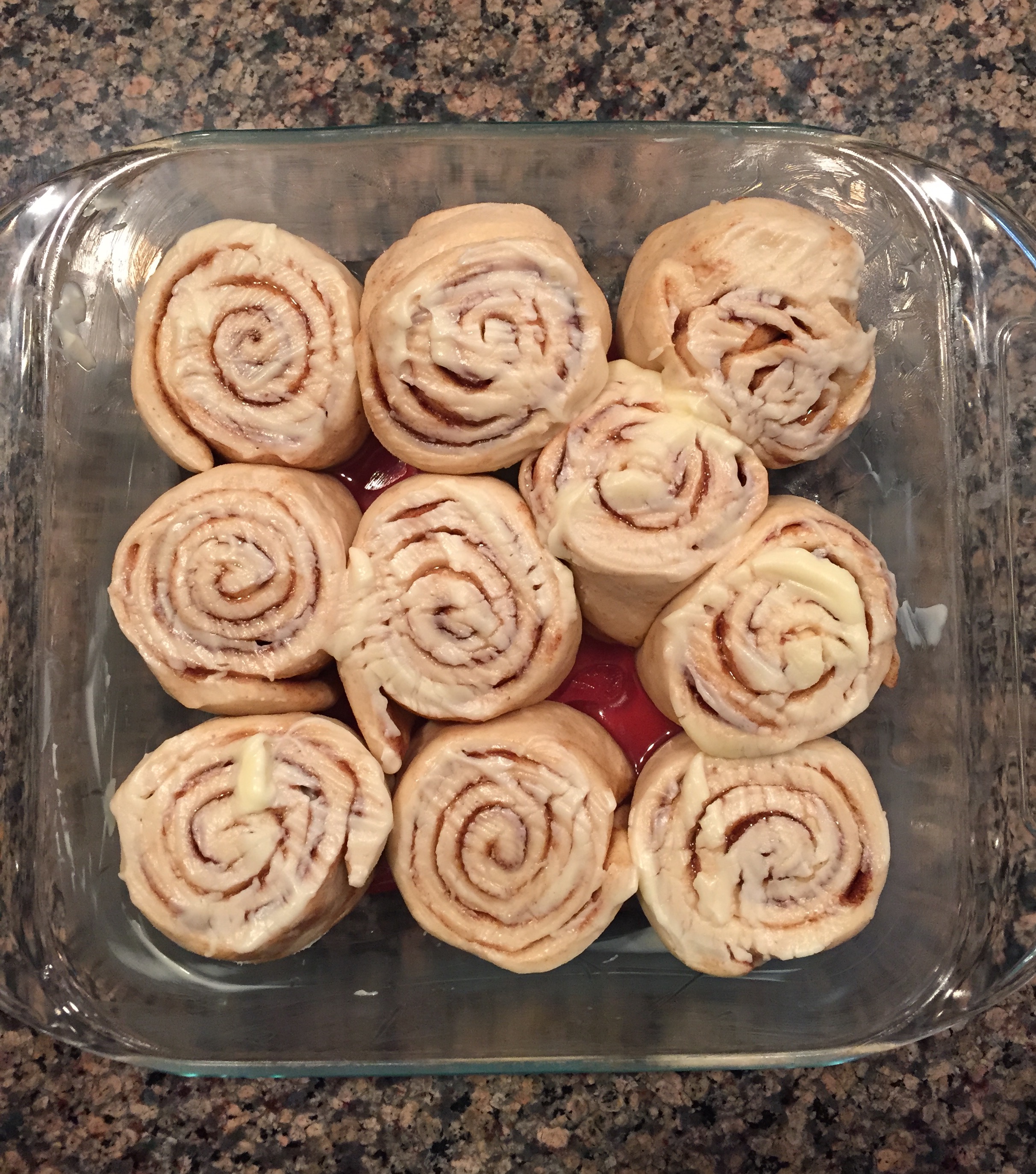
Okay….so far so good. The dough did rise (thankfully). It’s a wonderfully soft yet pliable dough. Rolled out easy. Rolling it up after brushing on the butter and sprinkling with the cinnamon sugar was easy. My favorite moment in this whole process has to be slicing the roll and exposing the hypnotic swirls.  Just magical.

FullSizeRender 3

Now waiting again….just for ten minutes while the oven heats up to 350 degrees. I guess I’ll unload the dishwasher while I wait.

The rolls have blossomed into beautiful swirls. Into the hot oven. In a half an hour the rolls should be done.

FullSizeRender 2

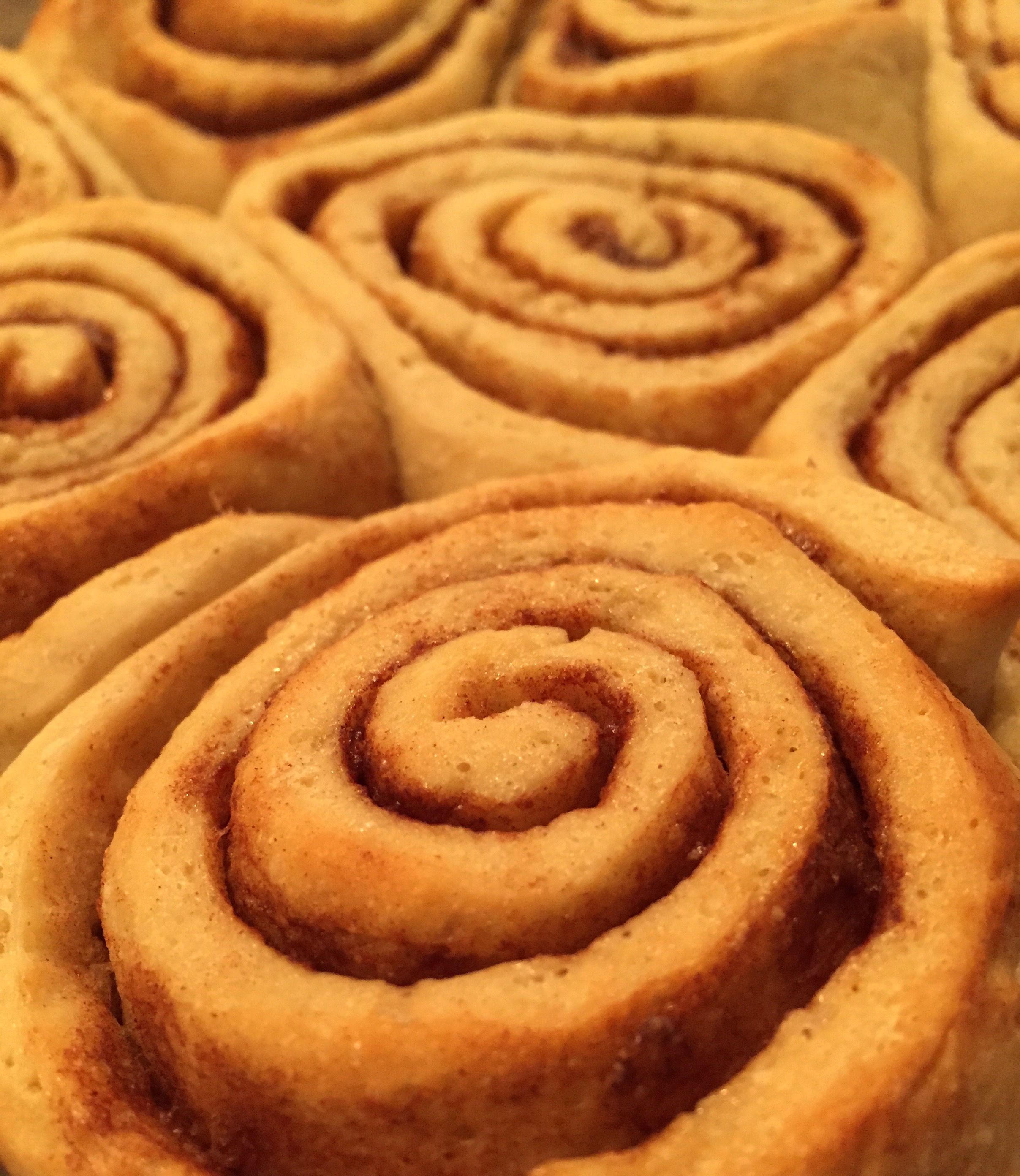
I’ve decided not to slather it with sugar icing. Many in my family will hang their head in disappointment…..”The icing is the best and most fought after part of the cinnamon roll” they would cry. But, I think I’ve already lost them with the “vegan” qualifier (although it really isn’t because of the butter). They don’t need to know. Anyway, I’m sticking to my vegan story, if it lets me have it my way in its naked cinnamon sugar glory. Shhhhh….

I can smell the yeasty, cinnamoniness at my desk…… this is going to be good. Time to get my tea, plate and fork ready. Who am I kidding…I’m not going to need a fork or a plate.  Hope Tiya gets back from school soon to try this with me.

Look at it….really…can you blame me for not covering it with icing?

FullSizeRender

Kathy, thank you for the jar of cinnamon that started this tasty journey. Next time, let’s make it and eat it together. For now, excuse me, while I peel my swirly sweet snack away from the pan, unswirl and eat.

P.S.  Okay…fine….I did end up slathering it with sugar icing after I ate a piece. I’m sure a family crisis was averted.

A Drink of Water by Jeffrey Harrison

When my nineteen-year-old son turns on the kitchen tap
and leans down over the sink and tilts his head sideways
to drink directly from the stream of cool water,
I think of my older brother, now almost ten years gone,
who used to do the same thing at that age;

and when he lifts his head back up and, satisfied,
wipes the water dripping from his cheek
with his shirtsleeve, it’s the same casual gesture
my brother used to make; and I don’t tell him
to use a glass, the way our father told my brother,

because I like remembering my brother
when he was young, decades before anything
went wrong, and I like the way my son
becomes a little more my brother for a moment
through this small habit born of a simple need,

which, natural and unprompted, ties them together
across the bounds of death, and across time …
as if the clear stream flowed between two worlds
and entered this one through the kitchen faucet,
my son and brother drinking the same water.

“A Drink of Water” by Jeffrey Harrison, from Into Daylight. © Tupelo Press, 2014. Reprinted with permission. (buy now)

Posted from the http://writersalmanac.org/

BakingPhil Project: Gluten-Free Foccacia Detour

IMG_1540

As I mentioned in a previous post, I’ve run into the challenges of industrial, professional level baking instructions in the text On Baking. Mainly, the issue of scale. Even if I could eat two sheets of brownies, should I? So instead of relying on the single book for this baking project, I’ve decided to try different books and methods.

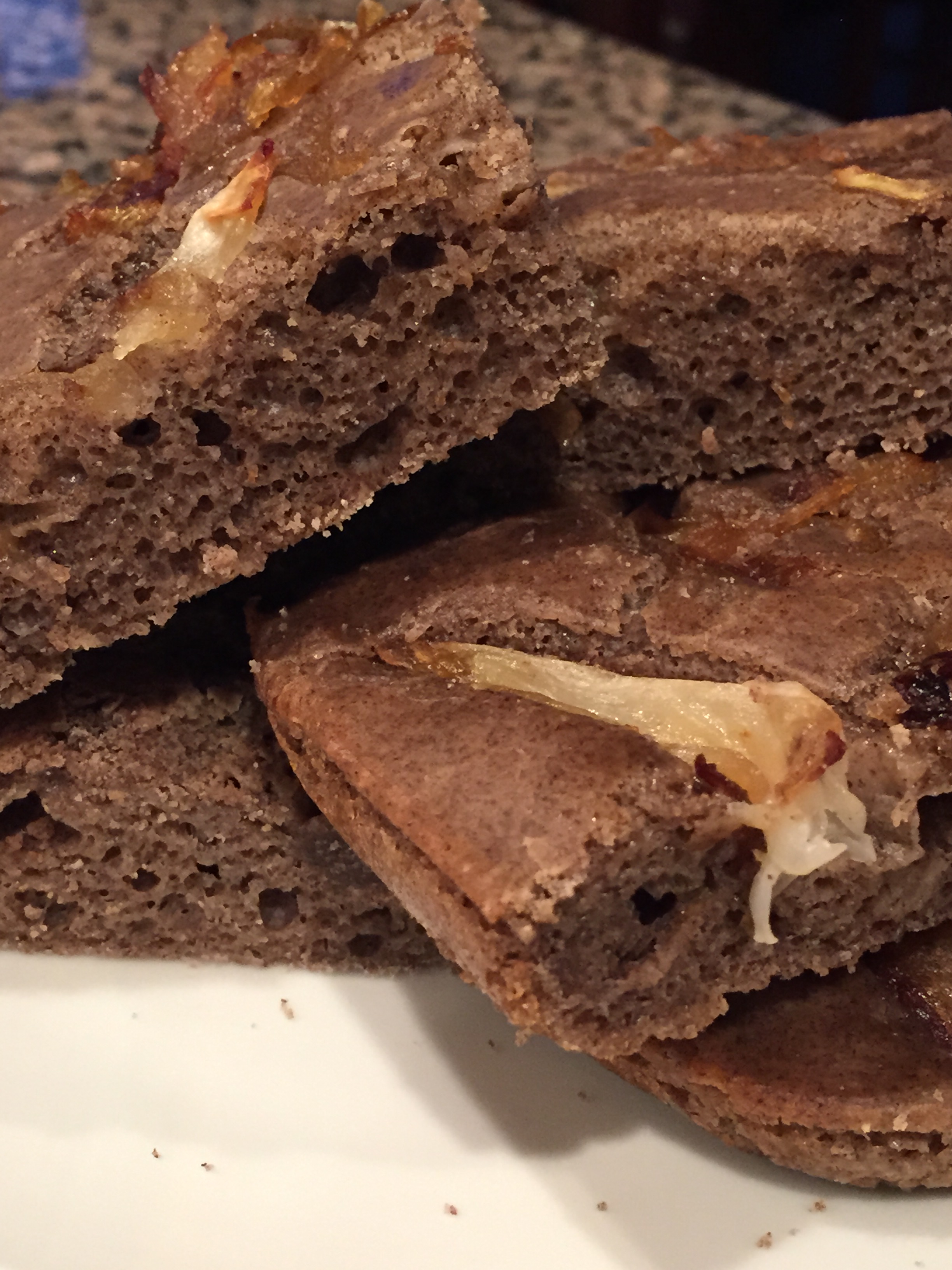
This week I tried a recipe from a gluten free baking cookbook. Really, how different can GF baking be? Silly me. The answer is…..very different. First of all, the ratio of liquid to dry ingredients is almost the inverse, with about a 110% liquid. This makes the “bread dough” batter-like and very unwieldy. Relatedly the process of mixing is different. A food processor is used instead of a standing mixer. The liquid, a mixture of oil and milk, is usually heated, cooled and mixed along with eggs before being added to the “flour” tapioca, buckwheat, almond or coconut. This will take me a while to get used to. Despite the effort and strangeness, the end product yields an airy flavorful bread. Given my recent lesson in focaccia, I decided to try the gf focaccia recipe to have with a bowl of warm lentil soup, dal.

I’ve made at least two mistakes so far:

  1. The recipe called for light buckwheat. I got regular buckwheat. So, although the focaccia is tasty, it doesn’t have the look of a Roman focaccia. Instead, it looks like brownies. What a cruel joke for someone imagining the taste of a decadent chocolate confection! When making healthier options, looks are very important. Next time definitely, LIGHT buckwheat.
  2. The recipe warned to mix thoroughly. I didn’t. The two lumps I found were horrible and grainy to taste, like having sand in my mouth. Yuck. I’m suffering from the gentle mixing dictates of regular baking and am having a difficult time adjusting to batter than needs a heavy hand. Oh well…..its a learning process. Baking is fascinating. Gluten-free and regular baking, are like two different languages with similar end products but very different methods and ingredients.

The other gluten-free recipe I tried this week, unrelated to baking, was Cauliflower Fried Rice. Amazing how the finished dish looks like regular fried rice. As I said, when offering healthy alternatives, aesthetics is SUPER important. It was easy to make and delicious to eat. Will make this again and again regardless of my flexible status as a gluten free eater.

IMG_1541

I appreciate and enjoy the creativity involved in these gluten-free dishes. Makes me rethink ingredients, textures, ingredients, aesthetics and taste. While GF cooking is not without its own challenges, GF Baking feels paradoxical and ironic.

As you know, I savor irony.

Wishing you Happy Guilt-Free, Gluten-Free eating,

Hungryphil

BakingPhil Project 4: Pecan Sticky Buns (Recipe 8.13)

IMG_1534

This chapter on enriched yeast breads continues to build on the techniques of quick breads and yeast breads. The increased amount of sugar and fat of breakfast pastries can inhibit the gluten from developing. Breads without too much fat can be mixed using the straight dough method, otherwise the sponge method is (where yeast is activated before adding fat) recommended. Parisian Brioche is, for example, 50% butter and so needs the sponge method. This concept that fat inhibits gluten growth is new to me. Actual “yeasty breadiness” is lost in order to achieve the decadent taste. Here the yeast and flour is reduced to being a mere vehicle of sugar and fat. I feel bad for the yeast. But….these enriched morsels sure are tasty and worthy of special occasions. This is not the type of bread to gorge on. It is the type to share, where a little should go a long way.

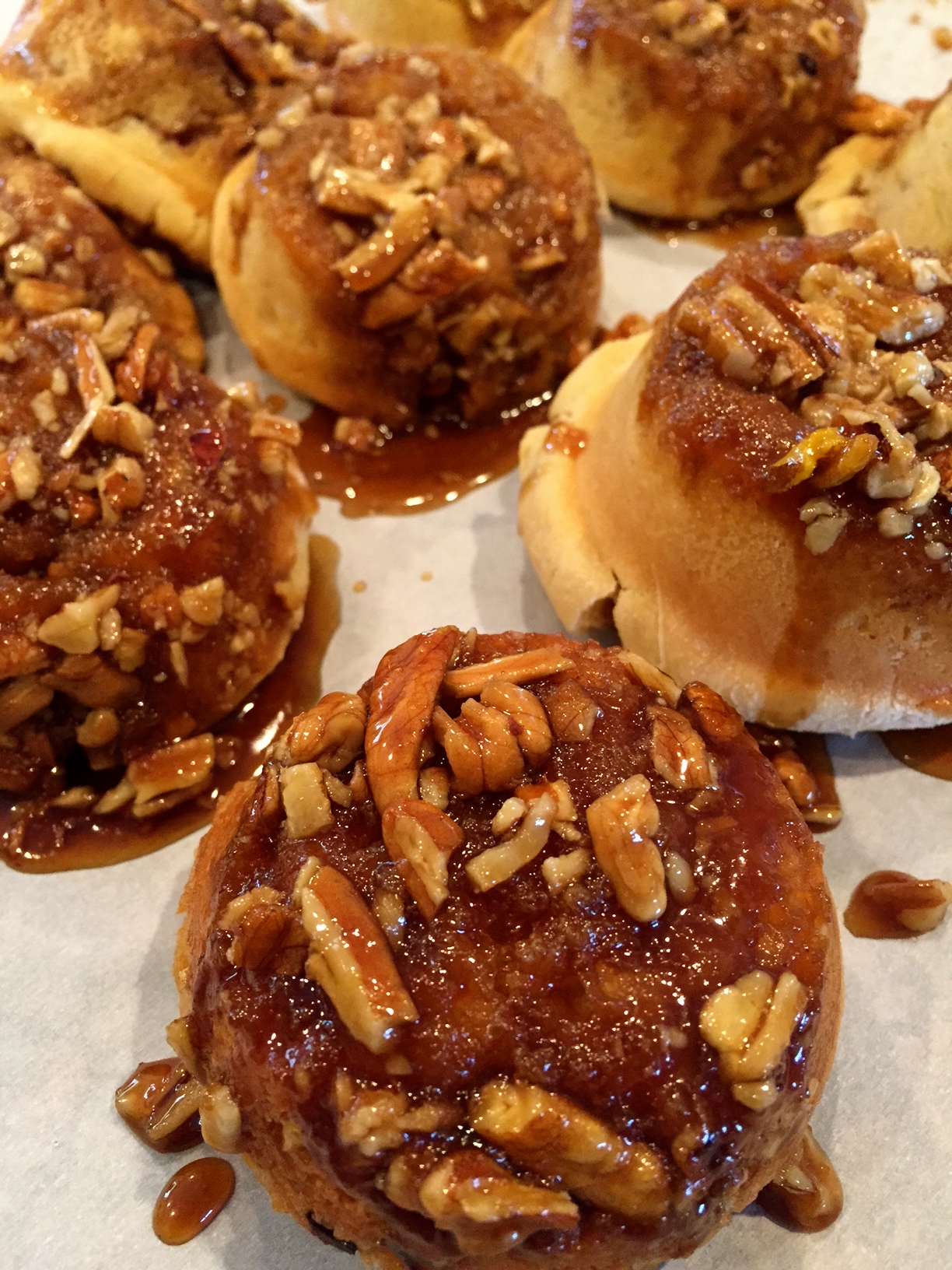
The recipe I chose to try is for Pecan Sticky Buns.  At 480 calories a piece, these buns were certainly worth sharing and eating slowly. Studded with cinnamon pecans inside and coated with honeyed pecans on the outside, this bread felt extravagant in every way. The dough felt fragile under the weight of sugar and nuts. Rolling up the layer of brown sugar, nuts and cinnamon in the inside was like hiding treasure. After baking, the rolls became sponges for the slow drip of the caramelized honey. The whole process had an aura of guilty pleasure. In light of my gluten free, sugar free, milk free, first days of the year, these rolls were just……wrong.

This is rococo extravagance where the ornamental and pleasurable cover functional structure. The fragility of dough under my hands as I was shaping the roll was scary and soothing at the same time. Strange. No rolling pin was needed. I just gently pushed and pulled the dough into shape. How odd that luxurious taste is defined by such fragility!

Desserts may not have practical function but are loaded with symbolic function. The pastry chef constructs a dream landscape of sugar in every confection. An escape from the demands of nourishment, these bites are moments of death defying, excess. When consumed as a matter of habit, pastries loose the symbolic function of living a life beyond practical need (and become death inviting). The proportions so crucial to baking parallel the balance of life well lived energized and shaken by moments of excess and loss. Pecan Sticky Buns definitely ranks as a moment of excess.

Once we enter the realm of cookies and cakes, all practical function is lost. As a bun, the pecan sticky bun is uncomfortably poised between bread and cake, self-aware of its own messy, practical fragility and its heavy symbolic sweet glaze. Sometimes, we all have sticky bun moments torn between a nutty, spicy inside and a sticky shiny, sweet coating.

Credits: Many bees sacrificed their labor for this project, butter made from cow milk, sugar, pecan trees, cinnamon bark, lemons, flour, mixers, muffin pans, bowls, lots of spoons, dish washers, children willing to eat the sugar, etc.

IMG_1532

Coffee in the Afternoon (A Poem by Alberto Rios)

IMG_0969

It was afternoon tea, with tea foods spread out
Like in the books, except that it was coffee.

She made a tin pot of cowboy coffee, from memory,
That’s what we used to call it, she said, cowboy coffee.

The grounds she pinched up in her hands, not a spoon,
And the fire on the stove she made from a match.

I sat with her and talked, but the talk was like the tea food,
A little of this and something from the other plate as well,

Always with a napkin and a thank-you. We sat and visited
And I watched her smoke cigarettes

Until the afternoon light was funny in the room,
And then we said our good-byes. The visit was liniment,

The way the tea was coffee, a confusion plain and nice,
A balm for the nerves of two people living in the world,

A balm in the tenor of its language, which spoke through
our hands
In the small lifting of our cups and our cakes to our lips.

It was simplicity, and held only what it needed.
It was a gentle visit, and I did not see her again.

“Coffee in the Afternoon” by Alberto Rios from The Theater of Night. © Copper Canyon Press, 2007. Reprinted with permission.  From The Writers Almanac, http://writersalmanac.org/

BakingPhil Project 3: Focaccia (Recipe 7.34)

IMG_1531

I’ve reached chapter 7 about yeast breads in the textbook On Baking. This project could have easily been just about this chapter. It is overwhelming and challenging! Oh my…. Thank goodness I don’t have an exam to pass. The biology of yeast and the chemistry of fermentation and baking are complex. There are types of yeast, appropriate water temperature, climate control, hand and machine kneading, shaping etc. to consider. There are 10 production stages: scaling, mixing, fermenting, punching, proportioning, rounding, shaping, proofing, baking and cooling. Each stage has specific requirements. I completely understand why bread making was the first domestic task to be outsourced and professionalized. I am humbled. I have two logistical issues at this point of project:

  1. First, the recipes in the book are aimed for large production kitchens that yield for example 64 rolls. While I’m happy to make, eat and share, I fear my home standing mixer may not be able to technically accommodate the kneading and mixing. Sure I can try to reduce the recipe but I don’t trust my math skills or my understanding of baking proportions.
  2. I don’t have some of the ingredients readily (or specific tools). I doubt any home kitchen would have old dough or sourdough starter.

Based on the limitations I decided to try the recipe for Focaccia (Recipe 7.34) using the straight dough method. I didn’t have fresh rosemary. Sprinkling sesame seeds didn’t work well (just fell off without any agent to help them stick to the bread). Regardless, the bread was delicious. The onions and the brushed olive oil made it savory. The inside was soft and outside crisp. I would make it again. Tomorrow I’ll make fresh tuna salad sandwiches with tomato and lettuce or maybe a melt. Maybe both and have a hot-cold taste test. I’m eager to try other focaccia recipes now. The variations seem endless. The yeasty and oniony scent in the house is so comforting on a cold Indiana day. There is also something intrinsically satisfying about witnessing dough grow and double. Like watching a flower blossom. Despite my earlier laments about the complexity of the process, the play-dough moment of mixing and shaping is so soothing. Maybe I should bake bread once a week for as therapeutic recovery. Speaking of baking for the soul and what I learned……

Every stage of bread making offers philosophical insight. My favorite: the lesson from punching down the dough. Why would we work so hard to develop the yeast only to punch the dough down? According to the text, punching down redistributes the gas pockets, evens out the temperature, relaxes the gluten and it reactivates the yeast. Who among us hasn’t felt punched down on occasion? I can imagine myself as a loaf of rising dough just punched down and ready to be more consistent, relaxed, reactivated. It is hard to imagine a literal or metaphorical punch as anything but violent. But in this case the punch is meant to provoke a second rise. Making anything involves modulated violence, mixing, beating, kneading, whipping, punching, fermenting as much as shaping, forming, resting, blooming. As I said, baking, like life,  is complex.

Credits: Special shout out to yeast, the tiny living creatures that make bread possible, flour, olive groves, olive presses, and oil, salt, flat half sheet pans, Roman culinary history, onions, knives, ovens, cold weather outside, fireplaces inside, stand mixers, counter tops, etc.

IMG_1529

Baking – Poem

On Approaching Seventy

Watching the hands of my son
kneading challah dough
on the maple cutting board
in my kitchen, a memory

rises of my mother
bending over our kitchen table
in Flatbush, pressing, stretching,
folding flour, water, eggs

into a living elastic.
Sometimes in my dreams, Mom
appears, whispers of her mother
in her kitchen in Zurawno

in the pre-dawn dark,
by the light of the kerosene
lamp, pulling and pushing
the yeasty challah dough

until my son covers it
with a clean white cloth
and leaves it in the warm
electric oven to rise.

“On Approaching Seventy” by Joan Seliger Sidney from Bereft and Blessed. © Antrim House Press, 2014. Reprinted with permission.  (buy now)

http://writersalmanac.org/page/2/

BakingPhil Project 3: Lemon Tea Bread (Recipe 6.17)

IMG_1446

The last two mixing methods, biscuit and muffin have been exercises of gentility, of assembling an aggregate of ingredients. Learning to mix “just until combined.” It required trust that the heat of the oven will meld all the pieces into a final tasty product. This week’s mixing technique “creaming” usually seems partner to with “folding” too. These mixing motions are different in speed and direction from the collecting mode of biscuits and muffins. There are many websites that offer good explanations of “creaming” that you can find at the end of this post. Creaming is a multi step process of creating a light and fluffy mixture of whipped butter and sugar that is then folded into the dry ingredients (eggs and milk are usually added in between). It’s like going to a party with a friend and then mixing/ socializing with others, as a pair. In architectural terms, creamed butter and sugar is like cement in a building, except fluffy and delicious.

What I learned:

  1. Room temperature butter is essential. It will not cream without this step. This means, I have to think ahead when using this method in order to let the butter come to temp. There it is……the waiting. It’s not only a “mise-en-place” in space but also in time.
  2. The proportion of butter and sugar makes a difference in texture and fluffiness. This recipe had 3 oz of butter and 10 oz of sugar. The mix was not a cream at all. It was like grainy sand. Maybe this recipe isn’t the best example of the creaming method…but what do I know.
  3. Sometimes baking can be like nesting dolls. Ingredients are paired and combined then combined again to other combinations of ingredients. It is very formulaic and sequenced. When you ask for a recipe, the ingredients will only tell you half of the story. You’ll have to ask for directions and the sequence of events that leads up to the production of yummy.

{[[(Cream+Sugar) + (milk+ eggs)+(flour, baking powder, salt)]+ lemon zest ]+heat} + (lemon juice +sugar)

Or something like this……. I was never good at math.

The taste: The lemon tea cake was VERY moist. I could hardly get the piece out of the pan without breaking it. [confession: the recipe DID say, take out the cake and THEN pour the syrup….but did I listen…noooooo] The recipe called for pouring lemon sugar syrup over the hot cake. Very suspicious. Seems strange to be pouring liquid over our spongy, airy efforts. By the time we took a bite the syrup had infused the cake with a fresh lemon flavor. Even though added after the cooking process, the syrup was surely not ornamental. It’s like a cake version of a lemon bar. My tiny taster, Ava and I decided it needed some whipped cream. Really good recipe and would definitely make it again (next time I’ll take it out of the loaf pan).

Credits

Lemons produced somewhere warm for us in cold places to enjoy thanks to the miracle of the trucking industry, microplane manufacturers, flour, milk, refrigerators that keep milk cold, sugar, butter, eggs, bowls, loaf pans, ovens, timers, whisks, spatulas, the recipe, language and numbers and so much more…….

More on the Creaming Method:

http://www.craftybaking.com/howto/mixing-method-creaming

http://www.completelydelicious.com/2013/05/baking-essentials-the-creaming-method.html

http://www.bakeinfo.co.nz/Facts/Cake-making/Creaming-method

Here’s the recipe:

IMG_1447

BakingPhil Project 2: Morning Glory Muffins

IMG_1434

I am not a morning person. The idea of morning glory seems to me ironic. I love irony. So, for the second bakingphil project I chose Morning Glory Muffins (Recipe 6.8) that employs the “muffin” method of mixing. Never made this before. What could be bad about a muffin that boasts nuts, fruits and spices? Nothing. Unless, I over mix and create a “condition known as tunneling.” These elongated holes in muffins occur when we mix until smooth, warns the textbook. There seems to be a theme here with quick breads. Don’t over mix.

The muffin method requires the fat to be liquid (opposed to the biscuit method) when combined with the flour and other dry ingredients. Instead of aggregate biscuit dough that is rolled out, muffin batter is supposed to be lumpy. The incomplete incorporation of ingredients is the key to protecting the space for the bread to rise to soft and sweet tastiness.

One important point I forgot to mention last time is about the proportions. As I said before baking is all about a heated modulating and measuring of flour (structure, presence) with air (space, absence). These proportions determine the difference between pound cake and sponge cake (for more information see Rulman’s book Ratio). Its important to remember all measure is determined from the amount of flour. So, for example in this recipe, flour is 100%, sugar 112%, eggs 62% and on and on. Baking if anything is the art of proportion like light and airy Greek architecture that parted the walls invented the column. Greek architecture is like a sponge cake, while Etruscan a pound cake and Minoan architecture muffins. That may require another post to explain. For now, back to Morning Glory Muffins and the liquid medium of relationships.

What I learned:

  1. What does it mean to “mix just until combined”? I mixed until there was still just a bit of flour visible.
  2. Just like all baking, the temperature and time needs adjusting.
  3. How much to fill a muffin cup takes experience that would allow me to leave enough room for the expected rise. Standards only arise out of repetition. I am woefully without standards.

Dear expert bakers, now its time for the “diagnose my muffin” portion of the blog.

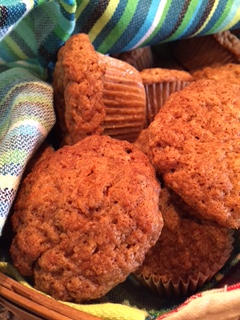
Look at the muffins at the top of the picture below. Notice the craters or dents in the middle. Is it because I didn’t bake them long enough?

IMG_1433

Also, notice my first batch towards the bottom is smaller, while the second batch at the top are bigger. Is there an optimal muffin size?

IMG_1431

Thanks for your help.

Credits

Coconut, apple, carrot, pecan, grapes (and the sun that makes them raisins) growers, pickers, shredders, packers, distributors, grocery stores, warm and cold climates, muffin pans, metal, ovens, heat, fire, eggs and chickens that produced them, oil (how does one make vegetable oil anyway?), sugar, mixing bowls, dishwashers that wash them, my whisk, measuring cups and spoons, oven mittens, kitchen, sink, water etc. etc.