Whose fault is loneliness?

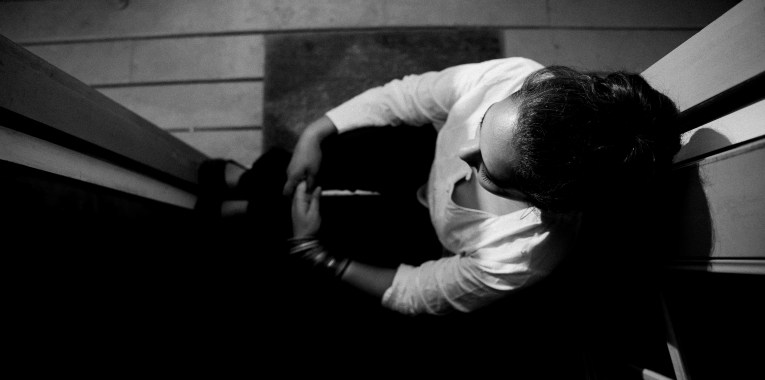
How often do we feel in ourselves or notice in others the pangs of isolation and loneliness? We feel misunderstood, judged, rejected and diminished by others, and so we begin to self-isolate. In reading Irvin Yalom’s Existential Psychotherapy I came across a shift in perspective. What if I am responsible for my loneliness? What if, I am the one misunderstanding, judging, rejecting and diminishing others and myself? Do I have proof of perceived judgement or am I simply assuming it and using the assumption to push people away? In isolating myself and blaming others, am I fulfilling my own prophesy of the being too special or too unique?

What does loneliness feel like for you? Consider this quote from Existential Psychotherapist, Irvin Yalom:

Love problems are not situation-specific. Love is not a specific encounter but an attitude. A problem of not-being-loved is more often than not a problem of not loving.

May you send and receive love in equal measure,

Hungryphil

Photography by Nate Dale – New Adventure Production

Empowered Filter

“OOO holds no grudge against the socio-political interpretation or effectiveness of art, but simply insists that not all of the elements of the context of an artwork are relevant to that work, and that an artwork either admits or forbids its surroundings to enter through a fairly rigorous process of selection.”

Harman, Graham. Object-Oriented Ontology (Pelican Books) (p. 102). Penguin Books Ltd. Kindle Edition.

The above is a quote by Object Oriented Ontology philosopher Graham Harman. It makes me wonder how would an artwork “admit or forbid its surroundings to enter”? Suppose I am a human object aspiring to be an artwork, how I relate or negate my context, how I compound or distance myself from other objects would reshape me as a sensual object. Right?

Me as an object among other objects am not just a “person in environment” as social work teaches us, but enmeshed, compounded, yet distinct. Depending on how I admit or reject my context, other things, other objects shifts my status as a quadruple object, a sensual object and a composition of sensual qualities. Maybe at the moment of filtering there is freedom? Maybe as an object I can change? I can recreate my compound object existence? What is my own process of “rigorous selection”? Can I think through this quote about artwork in the context of counseling?

To what extent do you consider yourself a product of your context?

When you introduce yourself, what elements of your context are relevant ? Where you grew up, went to school, what you do, your parents, your family, children, your race or religion………

Just a wondering. I need to sit with this for a while.

Photography by: Nate Dale – New Adventure Productions

(Travel)-Guide Post

My dear fellow readers, writers, yogis, therapists, eaters and travelers,

I want to share this first with you. I’m nervous and you have already patiently and generously read about my loves and losses. Thank you for being my sounding board and inspiration.

Suspecting that I’m not alone in my travel anxieties and discomforts, I wrote a journal while traveling last winter. It took me this summer to edit and format it. I’m still finding edits to make! It is imperfect and well-meaning, like me. Maybe you’ll find it entertaining, maybe helpful? Please share your travel stories in the comments below if you’d like. How do you endure a long flight? Maybe we can write the next edition together?

Inflight Therapy: In support of those traveling far and within.

Find it at: https://www.amazon.com/Inflight-Therapy-support-traveling-Philosopher-ebook/dp/B07WG98T5G/ref=sr_1_1?keywords=banu&qid=1565714004&s=digital-text&sr=1-1

With rooted and blossoming gratitude,

Hungryphil

Photography by Nate Dale – New Adventure Productions

Food Poem- Eggplant by Richard Jones

Eggplant

by Richard Jones

I’ve never liked the taste,

which, I think,

is a shame,

because some days

when my wife goes to work

and I walk to the grocery store,

I stand in the produce aisle,

admiring those gorgeous

purple fruits––

wine colored,

sensuously curved––

and can’t help but reach out

and pick one up, just to hold it,

so silky smooth, so luscious looking

I almost fall in love,

but then remember

who I am:

a man not fond of eggplant.

Nonetheless,

I linger and look

and there in the bin

under the misters and lights,

I find it––

the perfect eggplant,

the glossy flesh unblemished,

meat firm under the fingers,

the stem and cap

bright green.

The fruit heavy in the hand,

I place the eggplant

in my cart,

taking special care,

knowing an eggplant is delicate

and wounds easily.

I carry the grocery bag home

through a light rain

and arrange the eggplant

on a white tablecloth,

the opulent purple orb

lustrous in the window light

and quietly beautiful

as if lying on satin sheets.

Then I sit in the wing chair.

The house grows dark

as the rain falls harder

and I wait for my wife

to come home from work,

shake off her raincoat,

turn on the lamp,

and behold the eggplant.

“Eggplant” by Richard Jones from Stranger on Earth. © Copper Canyon Press, 2018. Reprinted with permission. (buy now)

Writers Almanac, July 5th, 2019

https://www.spreaker.com/show/the-writers-almanac?goal=0_c98caf23a9-5abfe0bc33-75192181&mc_cid=5abfe0bc33&mc_eid=0ad47c9aab

Here’s what I’d do with a beautiful purple eggplant:

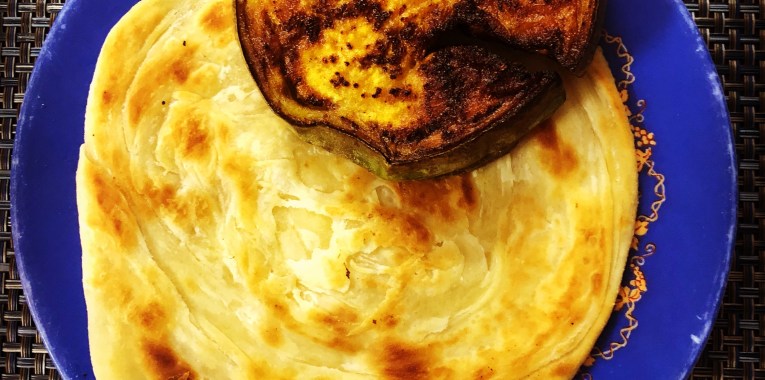
If a rainy summer day, fry sliced rounds smeared with salt, ground turmeric, and chilli pepper. Eat with flaky paratha/ flat bread.

OR,

If hot and sunny summer day, grill it until soft. Smash and mix it with salt, lemon juice, sliced onions, chopped cilantro, chopped thai chili pepper, and a drizzle of olive oil or mustard oil. Serve with bread or rice and light daal.

You?

Cherophobia – Am I afraid of happiness?

The symptoms of cherophobia or fear of happiness can often be confused with depression. While depression is a persistent feeling of anhedonia (inability to feel pleasure), cherophobia is an active avoidance of things that might bring joy.

Cherophobia can be culturally prescribed. For example, I remember growing up with the Bengali (or was it a family saying?) proverb “Joto Hashi, toto kanna”… roughly translated, however much you laugh, you will cry. I was in my mid-thirties before I recognized this attitude to be a life sentence of suffering fueled by judgement and anger.

According to this article, here are the symptoms of Cherophobia:

  • Anxiety when you’re invited to a social gathering.
  • Passing on opportunities that could lead to positive life changes due to the fear something bad will happen.
  • Refusing to participate in “fun” activities.
  • Thinking being happy will mean something bad will happen.
  • Thinking happiness makes you a bad or worse person.
  • Believing that showing happiness is bad for you or your friends or family.
  • Thinking that trying to be happy is a waste of time and effort.

I’m still a bit averse to what others might consider fun but I don’t actively avoid or judge joy anymore. Allowing myself to feel joy without guilt, whether sleeping in, laughing uncontrollably, dancing or dressing up has ushered in a sense of deep gratitude, instead of a sense of false superiority based on sadness. I can enjoy a dazzling sunset knowing that night will follow.

It is a misconception to think sad events that happen to us give our lives meaning and depth. Rather, it is what we do and how we overcome sadness that gives our lives meaning. Meaning is always an active construction, never simply given.

You may be asking, how can I be happy if my loved one is suffering. Out of empathy and respect, shouldn’t I also be unhappy and suffering? In a healthy and loving relationship, one would never expect another to suffer on their behalf. If I were suffering, I would want my children, husband, friends to keep finding joy instead of reflect my pain. Would’nt you?

You may be saying, happiness is stupid. Refer to the symptoms.

You may be saying, why am I always sad? Maybe you are surrounded by sad people and out of emotional loyalty decided to be sad too .

You may be saying, I don’t believe in happiness. I believe in contentment. Maybe you are allowing yourself culturally permissible doses of happiness.

If you are sad and depressed, ask yourself:

Do I want to feel happy but don’t know how, or do I want to feel sad and holier-than-thou?

Either answer can be right. For you.

Self-awareness and self-acceptance can be so liberating and yes, even joyful. The choice to look inward and ask these difficult questions is yours alone.

Wishing you joy, happiness, peace, contentment, rejoicing “chero”

Hungryphil

Cookie Monster and Oscar’s Guide to Life

As long as I can look back and say “There’s no way I could have been grouchier,” it was good day.

Oscar the Grouch, The Pursuit of Grouchiness

I aspire to Oscar’s about the author page… “Oscar the the Grouch doesn’t need to explain himself to you. He lives in a trash can on Sesame Street.”

My hero.

Early bird gets worm. But cookie tastes better than worm. So me sleep in.

Cookie Monster, The Joy of Cookies

Life, for me is a balance between the unapologetic self-acceptance of Oscar the Grouch and the laser focused cookie pursuit of the Cookie Monster.

These wise monsters demonstrate Dialectical Behavior Therapy Skills of Radical-Self-acceptance and Meaning-making.

If there is a why, then a person can figure out the how.

Victor Frankl

Oscar the Grouch and the Cookie Monster know their “whys.”

I’m still working on mine. How about you?

Wishing you enough cookies to share and a smelly trash can to rest in,

Hungryphil

Cooking is my coping skill

Like you, Hungyphil has many dimensions and manifestations: Wobblyogi and now Angstytherapist. This blog started as a way to retain and share food experiences, it grew to add yoga and mindfulness, and now counseling and therapy. Like the Very Hungry Caterpillar, Hungry Philosopher is munching away at life one leaf at a time. Not sure if a butterfly will ever emerge through these efforts but it sure is fun to try.

the-very-hungry-caterpillar-1-728.jpg

So, how am I going to combine food, mindfulness, AND therapy? Here is my first attempt.

The last four months I did my internship at a partial hospitalization program (PHP) and an intensive outpatient program (IOP) for kids between the ages of 8-18. I’ll be sharing more from that experience in the coming weeks. All sorts of sad and hurt ranging from homicidal thoughts, incest, suicidal thoughts, self-harm, anxiety,  depression and trauma brought these kids to the programs. One of the main tasks of the programs were helping them develop distress tolerance and coping skills that could would work for them individually.

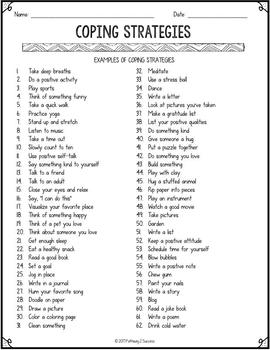
Here is a sample list of coping skills from https://www.teacherspayteachers.com/Product/100-Free-Coping-Strategies-2955800:

original-2955800-3.jpg

Number 59 is Blog. I also use eating, cooking, reading, writing, yoga, meditation and drawing. Coping skills sounds very much like general and generic things I just like to do.

They are.

So how can things I just like to do help me ease anxiety and depression?

Its a simple principle.

When life tastes bitter, add activities, tastes, sights and smells that you love. Change the recipe.

Easier said than done. Let’s talk more about it. For now,

What are your coping skills?

Wishing you self-aware ease,

Angstytherapist-wobblyogi-hungryphil

Sing The Black Sheep Gospel

The following is dedicated to all my artists, poet, philosopher, weirdo friends who like me often feel like they don’t belong. Here’s to you!

I particularly like number 5 🙂

1. Give up your vows of silence which only serve to protect the old and the stale.

2. Unwind your vigilance, soften your belly, open your jaw and speak the truth you long to hear.

3. Be the champion of your right to be here.

4. Know that it is you who must first accept your rejected qualities, adopting them with the totality of your love and commitment. Aspire to let them never feel outside of love again

5. Venerate your too-muchness with an ever-renewing vow to become increasingly weird and eccentric.

6. Send out your signals of originality with frequency and constancy, honouring whatever small trickle of response you may get until you reach a momentum.

7. Notice your helpers and not your unbelievers.

8. Remember that your offering needs no explanation. It is its own explanation. Go it alone until you are alone with others. Support each other without hesitation.

9. Become a crack in the network that undermines the great towers of establishment.

10. Make your life a wayfinding, proof that we can live outside the usual grooves.

11. Brag about your escape.

12. Send your missives into the network to be reproduced. Let your symbols be adopted and adapted and transmitted broadly into the new culture we’re building together.

Turner, Toko-pa. Belonging: Remembering Ourselves home (Kindle Locations 1106-1109). Her Own Room Press. Kindle Edition.


How to Eat Like a Yogi

A long time ago there was a yogini, Giri Bala who lived without food – Yogananda tells us in the in the Autobiography of a Yogi. At age 12 responding to her mothers-in-law taunts that she eats too much, Giri Bala with the help of her Guru stopped eating in order to prove that humans are sustained by spirit not matter.

To me, Ayurveda, as a holistic medicine practice, is related to yoga as another practice of cultivating connection with the universe, others and within. I am drawn to the view of eating as a cosmic event where elements collide.

There are too many conflicting accounts of yoga principles to account for here. The details are less important or interesting. The idea that I am a location where streams of cosmic energies like earth, water, fire and air whip up into a special climate is fascinating. My encounters with others shape my physical, emotional and spiritual environment, my personal reformed and reflected universe.  For example, spicy food can fuel my anger, yet energize another.

This is certainly not a medical prescription, for weight loss, Ayurveda is a way to use food as a spiritual practice.

Here are the principles worth considering:

  1. The principle of Power: Everything has qualities and powers.
  2. The principle of Balance: Like qualities increases like qualities and balancing requires inviting the opposite quality.
  3. The principle of Doshas: Eat things with qualities and powers that balance your constitution (inside)
  4. The principle of Seasons: Eat things according to the season (outside)

When we pay attention, we know when we’ve eaten too much or too little, we recognize that something is fighting us in our stomachs resulting in gas or heartburn, we know when something smells or feels wrong in our mouth. If we mindfully eat and digest, we feel when we need something heavy and grounding and when we need something light and soothing. Usually, we don’t eat mindfully or pay attention to our bodies, we eat with our eyes, our memories, our expectations and worse, our stress.

Your stomach is your internal universe that transforms matter into energy. What is it craving now?

Being Extra: the sauce of life

I am an extra.

I am a non-speaking character in a coffee shop background sipping coffee and staring at my laptop. There are raindrops on the windows, a blade of grass moving in the wind outside, cars moving past on the road, murmuring conversations, a large orange sculpture, a concrete floor, a sneeze, a ding, words, a child’s cry, salt and pepper shakers, iphones, mugs, music wafting above the hum of mid-morning conversations, a green shirt, smell of eggs and coffee, fingers on the keyboard, people behind the counter waiting, people behind the counter making lunch, yellow road signs, an itch on the neck, words on the wall, wood tables, metal chairs, stripes and me.

I don’t despair being an extra. Extras in books, movies or television are never credited with names, just actions, like, “shop keeper” or “crying child.” I am a silent actor in your story, a voiced actor in mine. You can only see my actions, my role as an extra. You don’t see my inner monologue, my struggles, my joys, my worries or my guilt. Recognizing that I am an extra in the world, a silent actor is surprisingly empowering. As you walk by my table where I type, I can trip you or smile, I may not change your story but I color it with my actions. I don’t have to be the main protagonist. The main character depends on the extra. That is the secret: we are all extras. Being extra. I came to see myself as an extra and found an extraordinary life. I stopped trying to be named, stopped trying to be the main character, a proper noun.

Philosophy, art, religions all try to address our longing to connect to something larger, more meaningful than us. This is another attempt. An extra attempt.

We all share the small things, like coffee cups, salt, phones, chairs and walls and the big, like cities, roads, landscapes, clouds, and water. How we focus shape how our individual perspectives live and interact. You are an extra in the stories of almost everyone you meet today. You can probably count the people in your life who are essential on your fingers.

You are an extra.

Moving beyond identity politics, religion, gender, into object-hood into being extra. Being both more and less. Being Extra.

Depending on your outlook you could interpret the title “Being Extra” as either as being more, extraordinary or being waste, extraneous. We are always both: extraordinary and extraneous. It depends on your taste.

I arrived at this question when reading Adolf Loos’ modernist manifesto Ornament and Crime. All sauces he said was ornamental. The modern man eats roast beef. From my South Asian perspective, beef was ornamental, mostly used as a flavoring for curries and only the main component twice a year, weddings and celebrations when a sacrifice was offered. Always ritualized and associated with a momentous occasion.

Adolf Loos’ food example to explain modern architecture and design stuck in my thoughts.

What are your favorite sauces? Your favorite extras? Do you add spicy hot sauce to your dishes, maybe sweet-salty honey mustard, or maybe tart-sweet bbq sauce? How do you flavor your life?

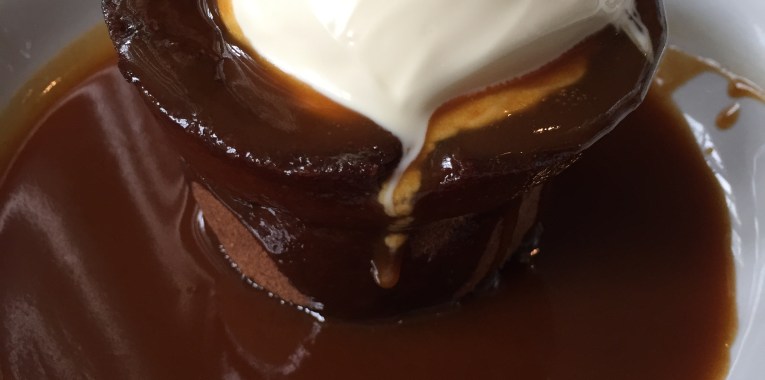
Dessert is always extra, more than, beyond functional, ornamental and as a habit, dangerously unhealthy. Maybe that’s why we crave it. A British Toffee Pudding Cake draped in sweet toffee sauce is definitely extra. Here is a recipe.

Wishing you extra,

Hungryphil