Anticipating Restriction

Anticipating the lean back
Photography by Nate Dale – New Adventure Production

You know the feeling when you wait for the person in front of you on an airplane to lean back and restrict you even further in to the the tight small seat?

You know that feeling, right? Wishing and hoping they won’t but at the same time realizing that they are perfectly right do so. Should I lean back too? Let the seat backs cascade down the aisle? This anticipation of discomfort to come is not the best feeling. (For a fuller account of airplane discomfort you can read, Inflight Therapy: For those traveling far and within on amazon kindle.)

For now the question is simple, how do you brace for impact, for being leaned into, for constriction, for discomfort?

As Thanksgiving travel and associated anxiety approaches in a few months, what are your strategies for coping? Music, breathing exercises, reading, meditating? Anticipating and thinking of coping skills ahead of time can reduce our anxiety response. Accepting and addressing the discomfort to come helps ironically ease it. Just recognizing discomfort without a related alleviation attempt, I imagine would increase anxiety. So, it might be worth taking the time to think ahead to this moment and find your empowered coping strategy. Resist the lean, at least emotionally 🙂

Wishing you ease,

Hungryphil

Self-Aware Ease

It is not surprising that I’m drawn to Existentialist Psychotherapy in the lineage of Rollo May, Irvin Yalom, Vicktor Frankl practicing the philosophies of Kierkagaard, Nietzsche, Heidegger, Sartre, Husserl and others. The basic premise as Irvin Yalom explains below is the humble defense of the ancient belief that self-awareness leads to a meaningful fulfilling life even if the process of self-discovery is painful:

Wisdom does not lead to madness, nor denial to sanity: the confrontation with the givens of existence is painful but ultimately healing. Good therapeutic work is always coupled with reality testing and the search for personal enlightenment; the therapist who decides that certain aspects of reality and truth are to be eschewed is on treacherous ground.

Irvin D. Yalom. Existential Psychotherapy (Kindle Locations 190-192). Kindle Edition.

In working and volunteering at different contexts such as hospice, domestic violence shelter, food pantries, community health, grief and loss counseling, my role and mission is simple: To invite self-aware ease in myself and in others with me. Sometimes that means asking gentle guiding questions, sometimes breathing, sometimes guiding meditations, sometimes just sitting in silence and making space for self-inquiry.

Self-inquiry is painful, as Plato describes in the Republic, the released prisoner is blinded and stumbling, heading out of the cave. The turning towards truth or meaning is daunting and frightening. The journey inward can only be sustained by moments of ease. Self-awareness rests on self-care. This is the balance I’m trying to learn and practice. Each person sitting with me teaches me a different version.

The existential position emphasizes a different kind of basic conflict: neither a conflict with suppressed instinctual strivings nor one with internalized significant adults, but instead a conflict that flows from the individual’s confrontation with the givens of existence. And I mean by “givens” of existence certain ultimate concerns, certain intrinsic properties ties that are a part, and an inescapable part, of the human being’s existence in the world.

Irvin D. Yalom. Existential Psychotherapy (Kindle Locations 107-109). Kindle Edition.

I hope to practice the humility of the Existentialist perspective: I can never know your experience, your suffering, your confrontation with life, however, I can guide you to map your internal valleys and mountains, joys and sorrows, to know yourself . I am able to do so because I walk with self-aware ease despite the sufferings of my own life. This of course leads to concerns of therapeutic transference. That exploration will have to wait for another post.

Whether you are a counselor, therapist, teacher, creative, what is your mission? Why is it your mission? How do you confront the givens of existence: death, isolation, freedom or meaninglessness?

Bring self-aware ease. Seems so simple, yet it is a life’s work. Mine.

Wishing you self-aware ease,

Hungryphil

Photography by Nate Dale – New Adventure Productions

Cookie Monster and Oscar’s Guide to Life

As long as I can look back and say “There’s no way I could have been grouchier,” it was good day.

Oscar the Grouch, The Pursuit of Grouchiness

I aspire to Oscar’s about the author page… “Oscar the the Grouch doesn’t need to explain himself to you. He lives in a trash can on Sesame Street.”

My hero.

Early bird gets worm. But cookie tastes better than worm. So me sleep in.

Cookie Monster, The Joy of Cookies

Life, for me is a balance between the unapologetic self-acceptance of Oscar the Grouch and the laser focused cookie pursuit of the Cookie Monster.

These wise monsters demonstrate Dialectical Behavior Therapy Skills of Radical-Self-acceptance and Meaning-making.

If there is a why, then a person can figure out the how.

Victor Frankl

Oscar the Grouch and the Cookie Monster know their “whys.”

I’m still working on mine. How about you?

Wishing you enough cookies to share and a smelly trash can to rest in,

Hungryphil

Cooking is my coping skill

Like you, Hungyphil has many dimensions and manifestations: Wobblyogi and now Angstytherapist. This blog started as a way to retain and share food experiences, it grew to add yoga and mindfulness, and now counseling and therapy. Like the Very Hungry Caterpillar, Hungry Philosopher is munching away at life one leaf at a time. Not sure if a butterfly will ever emerge through these efforts but it sure is fun to try.

the-very-hungry-caterpillar-1-728.jpg

So, how am I going to combine food, mindfulness, AND therapy? Here is my first attempt.

The last four months I did my internship at a partial hospitalization program (PHP) and an intensive outpatient program (IOP) for kids between the ages of 8-18. I’ll be sharing more from that experience in the coming weeks. All sorts of sad and hurt ranging from homicidal thoughts, incest, suicidal thoughts, self-harm, anxiety,  depression and trauma brought these kids to the programs. One of the main tasks of the programs were helping them develop distress tolerance and coping skills that could would work for them individually.

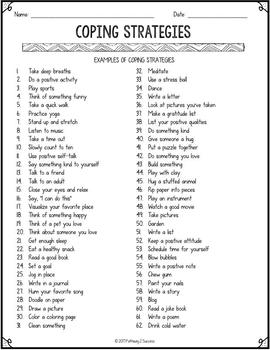
Here is a sample list of coping skills from https://www.teacherspayteachers.com/Product/100-Free-Coping-Strategies-2955800:

original-2955800-3.jpg

Number 59 is Blog. I also use eating, cooking, reading, writing, yoga, meditation and drawing. Coping skills sounds very much like general and generic things I just like to do.

They are.

So how can things I just like to do help me ease anxiety and depression?

Its a simple principle.

When life tastes bitter, add activities, tastes, sights and smells that you love. Change the recipe.

Easier said than done. Let’s talk more about it. For now,

What are your coping skills?

Wishing you self-aware ease,

Angstytherapist-wobblyogi-hungryphil

Sing The Black Sheep Gospel

The following is dedicated to all my artists, poet, philosopher, weirdo friends who like me often feel like they don’t belong. Here’s to you!

I particularly like number 5 🙂

1. Give up your vows of silence which only serve to protect the old and the stale.

2. Unwind your vigilance, soften your belly, open your jaw and speak the truth you long to hear.

3. Be the champion of your right to be here.

4. Know that it is you who must first accept your rejected qualities, adopting them with the totality of your love and commitment. Aspire to let them never feel outside of love again

5. Venerate your too-muchness with an ever-renewing vow to become increasingly weird and eccentric.

6. Send out your signals of originality with frequency and constancy, honouring whatever small trickle of response you may get until you reach a momentum.

7. Notice your helpers and not your unbelievers.

8. Remember that your offering needs no explanation. It is its own explanation. Go it alone until you are alone with others. Support each other without hesitation.

9. Become a crack in the network that undermines the great towers of establishment.

10. Make your life a wayfinding, proof that we can live outside the usual grooves.

11. Brag about your escape.

12. Send your missives into the network to be reproduced. Let your symbols be adopted and adapted and transmitted broadly into the new culture we’re building together.

Turner, Toko-pa. Belonging: Remembering Ourselves home (Kindle Locations 1106-1109). Her Own Room Press. Kindle Edition.


Being Extra: the sauce of life

I am an extra.

I am a non-speaking character in a coffee shop background sipping coffee and staring at my laptop. There are raindrops on the windows, a blade of grass moving in the wind outside, cars moving past on the road, murmuring conversations, a large orange sculpture, a concrete floor, a sneeze, a ding, words, a child’s cry, salt and pepper shakers, iphones, mugs, music wafting above the hum of mid-morning conversations, a green shirt, smell of eggs and coffee, fingers on the keyboard, people behind the counter waiting, people behind the counter making lunch, yellow road signs, an itch on the neck, words on the wall, wood tables, metal chairs, stripes and me.

I don’t despair being an extra. Extras in books, movies or television are never credited with names, just actions, like, “shop keeper” or “crying child.” I am a silent actor in your story, a voiced actor in mine. You can only see my actions, my role as an extra. You don’t see my inner monologue, my struggles, my joys, my worries or my guilt. Recognizing that I am an extra in the world, a silent actor is surprisingly empowering. As you walk by my table where I type, I can trip you or smile, I may not change your story but I color it with my actions. I don’t have to be the main protagonist. The main character depends on the extra. That is the secret: we are all extras. Being extra. I came to see myself as an extra and found an extraordinary life. I stopped trying to be named, stopped trying to be the main character, a proper noun.

Philosophy, art, religions all try to address our longing to connect to something larger, more meaningful than us. This is another attempt. An extra attempt.

We all share the small things, like coffee cups, salt, phones, chairs and walls and the big, like cities, roads, landscapes, clouds, and water. How we focus shape how our individual perspectives live and interact. You are an extra in the stories of almost everyone you meet today. You can probably count the people in your life who are essential on your fingers.

You are an extra.

Moving beyond identity politics, religion, gender, into object-hood into being extra. Being both more and less. Being Extra.

Depending on your outlook you could interpret the title “Being Extra” as either as being more, extraordinary or being waste, extraneous. We are always both: extraordinary and extraneous. It depends on your taste.

I arrived at this question when reading Adolf Loos’ modernist manifesto Ornament and Crime. All sauces he said was ornamental. The modern man eats roast beef. From my South Asian perspective, beef was ornamental, mostly used as a flavoring for curries and only the main component twice a year, weddings and celebrations when a sacrifice was offered. Always ritualized and associated with a momentous occasion.

Adolf Loos’ food example to explain modern architecture and design stuck in my thoughts.

What are your favorite sauces? Your favorite extras? Do you add spicy hot sauce to your dishes, maybe sweet-salty honey mustard, or maybe tart-sweet bbq sauce? How do you flavor your life?

Dessert is always extra, more than, beyond functional, ornamental and as a habit, dangerously unhealthy. Maybe that’s why we crave it. A British Toffee Pudding Cake draped in sweet toffee sauce is definitely extra. Here is a recipe.

Wishing you extra,

Hungryphil



An Architect, a Philosopher, and a Social Worker walk into…

An OSCE (Objective structured clinical exam). For, “social work?” you might be asking. Indiana University uses the OSCE exam to assess student’s clinical assessment ability. It is a way to document and measure how responsive, intentional, empathetic and helpful, I can be as a social worker.  Of my first four classes in the MSWD program, this was my most challenging. And, in beautiful irony, one where I learned the most.

Throughout the semester we were given scenarios to practice and play out with our peers. The contexts (after all social work is all about context) varied, for example ranged from client escaping domestic violence arrives at a homeless shelter, to diabetic client admitted into the ER or woman gives birth to a baby with marijuana in her system. The final exam involved serving a homeless veteran suffering from PTSD.

In learning how to listen to others, I learned so much about my own strengths and resistances. I learned how I think and how I might think differently. Here is an example:

In responding to the interviewed veterans statement “I feel overwhelmed and unable to do anything…..” I had three minds working at the same time………

My architect, beautiful problem solver mind wanted to fix it as soon as possible, as uniquely as possible for the client. Where and when do you feel overwhlemed? What do you need to not feel overwhelmed? What makes you feel better? What does being overwhelmed look like?

My philosopher, existential examiner mind, wanted to understand the condition as shared human struggles of alienation and dread. Why do you feel overwhelmed? What kind of overwhelming sensation is it? Why are you unable to do anything? What stops you?

My budding social worker, empowering listener mind, needed to wait for the specific, unique and individual experience of ‘being overwhelmed’ without assuming that the experience needed to be fixed, or that it was universally shared. In either case, I am reducing the person to a problem needing to be solved or a diminished example of a larger event. I needed to hear the expression ‘ being overwhelmed’ as if for the first time, with the curiosity to ask, how do YOU feel overwhelmed? How does it feel for you to be unable to do anything? Tell me more. It required the humility to drop all assumptions about the word “overwhelmed” and its meaning. This is hard for a recovering academic. I want the security of knowing things!

Certainly, these three disciplinary perspectives can overlap and reinforce each other. In best circumstances it should, I should work to find the client a home, I should work to connect the client with help related to PTSD but first and foremost I should be the client’s advocate, holistically, contextually. As a social worker, I am tasked to understand and intervene in a particular context in which this human being, here and now in front of me, is not fully self-realized.  I sigh as I type this. This seems an impossible task. Who among us can claim such completion. As long as we feel we are moving, even if slowly, in the positive direction, all is well. Case-work is not to just designing the shoes or giving directions but walking a few steps with. As an architect and philosopher, I designed and analyzed. I haven’t been trained to be with others.

This practice-based education pushes me in ways I hadn’t imagined. In a way teaching yoga better prepared me. In learning how to teach yoga, I learned to move with others, to sequence sensations and feelings, to encourage each person to find their own pose, to notice what their body needs regardless of what I am proposing.

So I suppose the title of this blog post should be: an architect, a philosopher, a yogi and a social worker walk into an interview……. to support human dignity and individuality.

Hmmmm….how does the hungry philosopher, eating and cooking fit into this? I’m quite sure it does, just haven’t thought about it yet 🙂

I learned a lot. I’m both afraid of and looking forward to semester 2. Sometimes this disciplinary dependence on others feels overwhelming and confusing to me. Muddy.

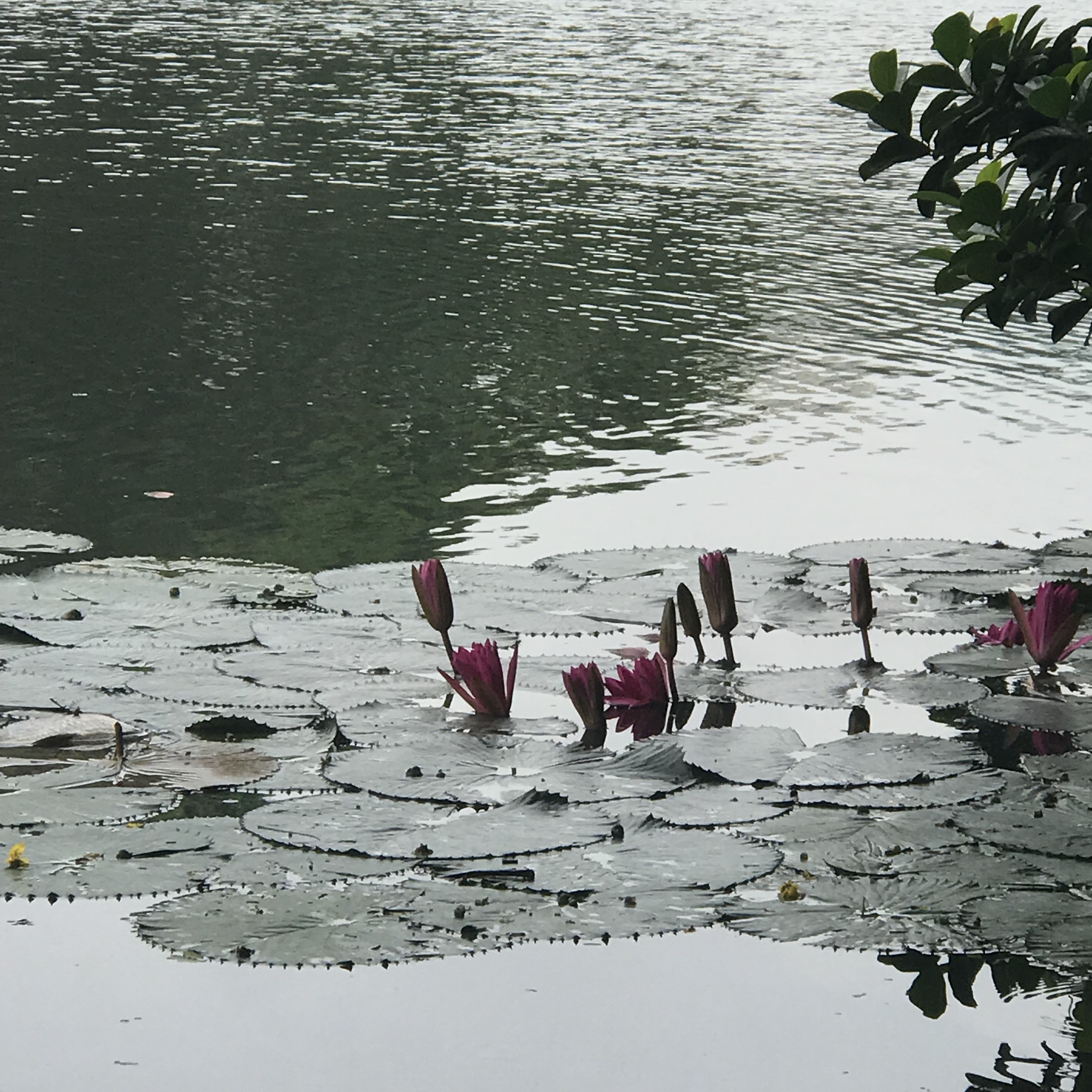
I’ll take yoga teacher Susan Lasater’s words to heart……………… may I be like “the lotus at home in muddy waters.”

May you be too!

Hungryphil

IMG_5986

Attending, listening Yoga-style

“The art of listening is the marriage of ear and space.” – Remski interpretation of Patanjali’s sutra 3.41

In my Theory and Practice Course for Social Work, we are learning the art of interviewing. Step one involves achieving a compassionate and empowering balance between attending and reflecting. Here is an ancient yogic way to develop the super power of deep listening by being mindful of our tendency towards “automatic self-referral” as explained by Matthew Remski,

Internal space is also utilized to broaden the gap between “your story” and “my story”. This space is most commonly disrupted by communication habits that fail to nurture the gap of otherness. For instance, if one friend begins to tell another friend of her marriage problems, the second friend can begin to “hold space” for the first by simply reflecting the feelings she hears. This allows the first objective of communication — being heard — to be fulfilled. But if the second friend begins to “false-empathize” with the first by immediately saying, “Oh I know what you mean: let me tell you what my partner did”, she has blocked the space of otherness through a pattern that Miles Sherts (2009) calls “automatic self-referral”. The first friend will not feel heard, and her feelings will become more isolated and compressed, a combination that invites suppression.

Remski, Matthew. Threads of Yoga: A Remix of Patanjali-s Sutra-s, with Commentary and Reverie (p. 180). BookBaby. Kindle Edition.

I’m still working on this super power. Maybe you are too.

Happy listening to “the gap of otherness,”

Hungryphil


The Gift of Grief Recovery

Last weekend I had the joy of attending a certification training for the Grief Recovery Method.  What a gift! I have to admit that I stepped into the training with trepidation and a healthy dose of skepticism. As a philosopher, I worried that the training would be a trite appeal to non-discursive subjective feelings. As a yoga instructor, I worried that it would deny the grief harbored in the body and become a cerebral lecture. My worries were unfounded.

The 12 and 8-week group programs and the individual 7-week program (among others) that made up our training, focused on a sequence of questions and actions that were individually addressed and then shared. There was attention to systemic progression, individual exploration, and small group communication. The focus on giving voice to specific and embodied experiences of grief through visual, verbal and performative expression protects the process from abstraction. The role of the facilitator is just that. No lectures, no advice, no judgments. Similarly, small group partners are asked to be “soft hearts with ears” and to refrain from verbally reacting. We were all there to simply listen, to others and most importantly to ourselves (much like a yoga practice). The logo of a heart in a speech bubble is exactly what the program offers.

I am thankful to have made 11 new friends who have listened to my heart and look forward to sharing the program and learning more as a newly certified grief recovery specialist.

May we listen to our hearts,

Hungryphil